
41,401 views ·
62 replies
41k views
62 replies
Discovered a large hole next to the neighbor, what to do?
Hello!!!
We have encountered a problem. When we were tearing down the kitchen, we discovered a hole next to the neighbor. This is in the kitchen, so what you see inside the hole is the back of their frame. The wood is bone dry but dark in places, I would guess that there has been a fire here before, hence the hole. An old landshövdingehus.
Honestly, I am not comfortable with a large hole in the wall. And I'm also not comfortable that the wall isolating us is a bone dry decaying wooden wall, it’s possible to pull pieces off. If I had my way, I would tear it down and build a new wall, but I can't do that without affecting the neighbor. We moved in two months ago but only recently started renovating. What would you do in my situation?
We have encountered a problem. When we were tearing down the kitchen, we discovered a hole next to the neighbor. This is in the kitchen, so what you see inside the hole is the back of their frame. The wood is bone dry but dark in places, I would guess that there has been a fire here before, hence the hole. An old landshövdingehus.
Honestly, I am not comfortable with a large hole in the wall. And I'm also not comfortable that the wall isolating us is a bone dry decaying wooden wall, it’s possible to pull pieces off. If I had my way, I would tear it down and build a new wall, but I can't do that without affecting the neighbor. We moved in two months ago but only recently started renovating. What would you do in my situation?
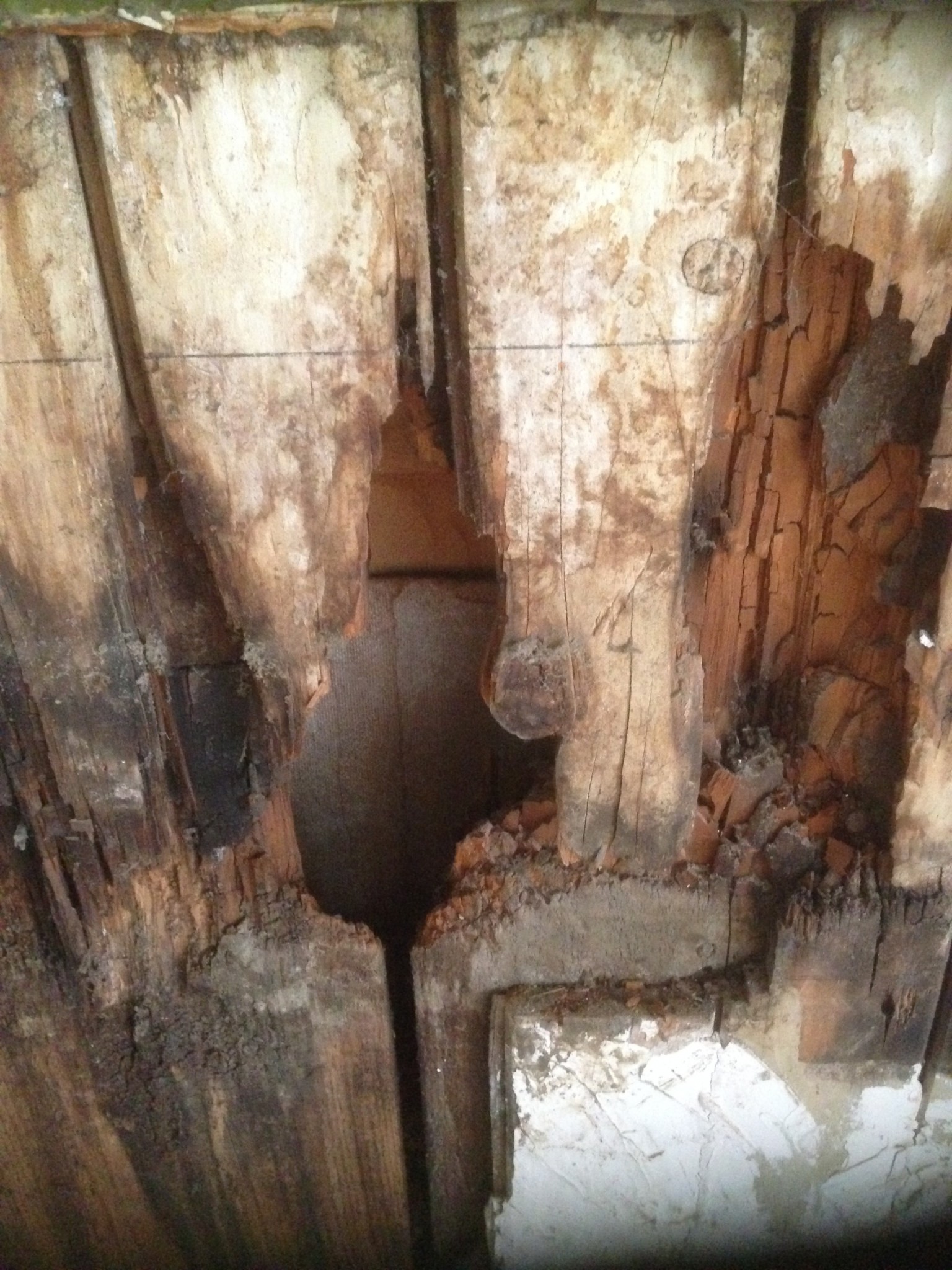
Brf?! Call the association's board!!! That's the strangest thing I've seen. How can they just build that in?
Apartment-separating walls do not belong to your apartment except for the surface layer. So you should not do anything with it and let the association handle it. Walls between units should be fire-rated.
I would also bring in the neighbor so they know you have holes between the apartments.
Apartment-separating walls do not belong to your apartment except for the surface layer. So you should not do anything with it and let the association handle it. Walls between units should be fire-rated.
I would also bring in the neighbor so they know you have holes between the apartments.
Yep. Regardless of the hole, it is not a proper apartment separating wall.
The wall is to be repaired, but whether it is a proper apartment-separating wall or not should probably be assessed based on the building regulations that existed when the house was built. Landshövdingehus is an 1800s construction that ended sometime in the 1920s to 1930s. Most of them were built starting in the late 1800s.
So I wouldn't be surprised if the wall is actually fundamentally correct based on the house's origin but damaged and should be repaired.
So I wouldn't be surprised if the wall is actually fundamentally correct based on the house's origin but damaged and should be repaired.
Member
· Västernorrland
· 12 077 posts
if it's just limited to that area, can't you just cut it clean and insert some new wood? can't be that big of a deal if you're already demolishing and working on it?
Feels obvious to me that regardless of how it looked when the house was built (and it didn't become a cooperative housing association in 1920?), the wall should be constructed to meet the correct fire classification. It usually involves needing several layers of drywall.
It became brf in the mid-00s. I feel the same way, especially since there are kitchens on both sides, I think it's extra important that it is fireproof. I just hope this doesn't drag out or that our neighbors on the other side get upset.
No, the measure is probably not that extensive. BUT, it's the association's responsibility. I don't think TS wants to stand with sole responsibility for faulty construction in the event of a fire. Additionally, the association should pay for it.Stefan1972 said: