I am currently looking at houses in Italy and have found a very charming townhouse from the 1500s in a medieval village that I am seriously considering. The house is under renovation and will be in a renovated state upon sale.
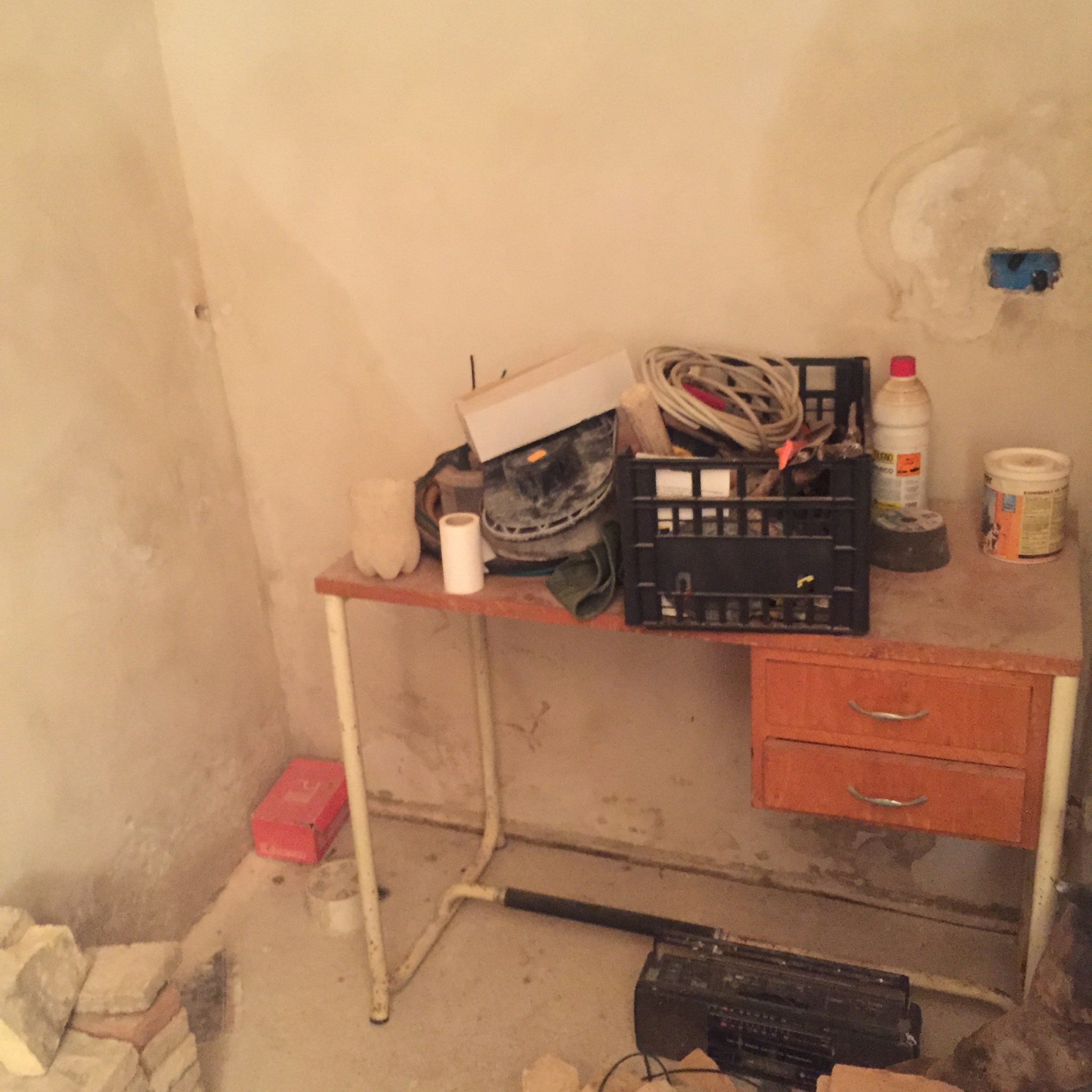
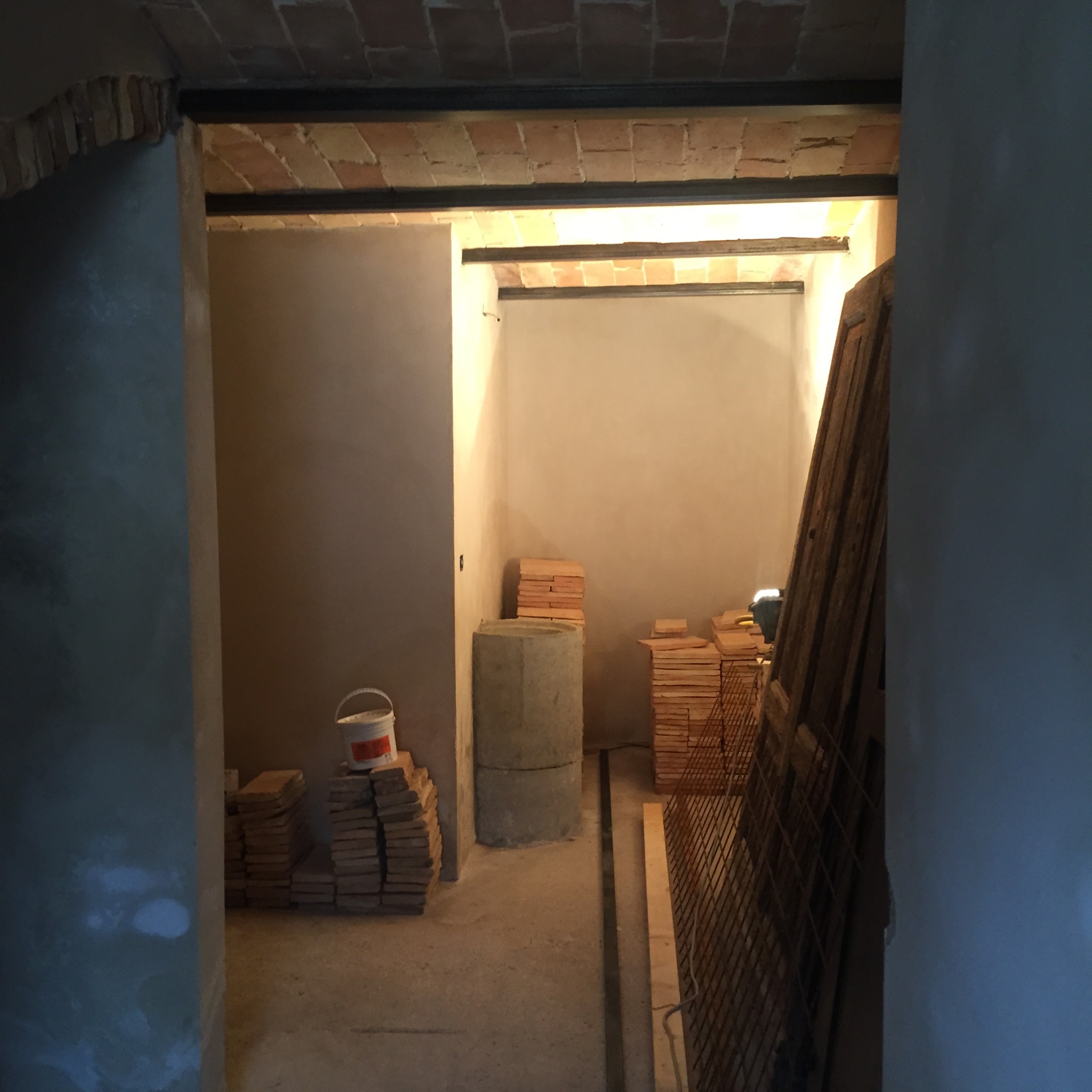
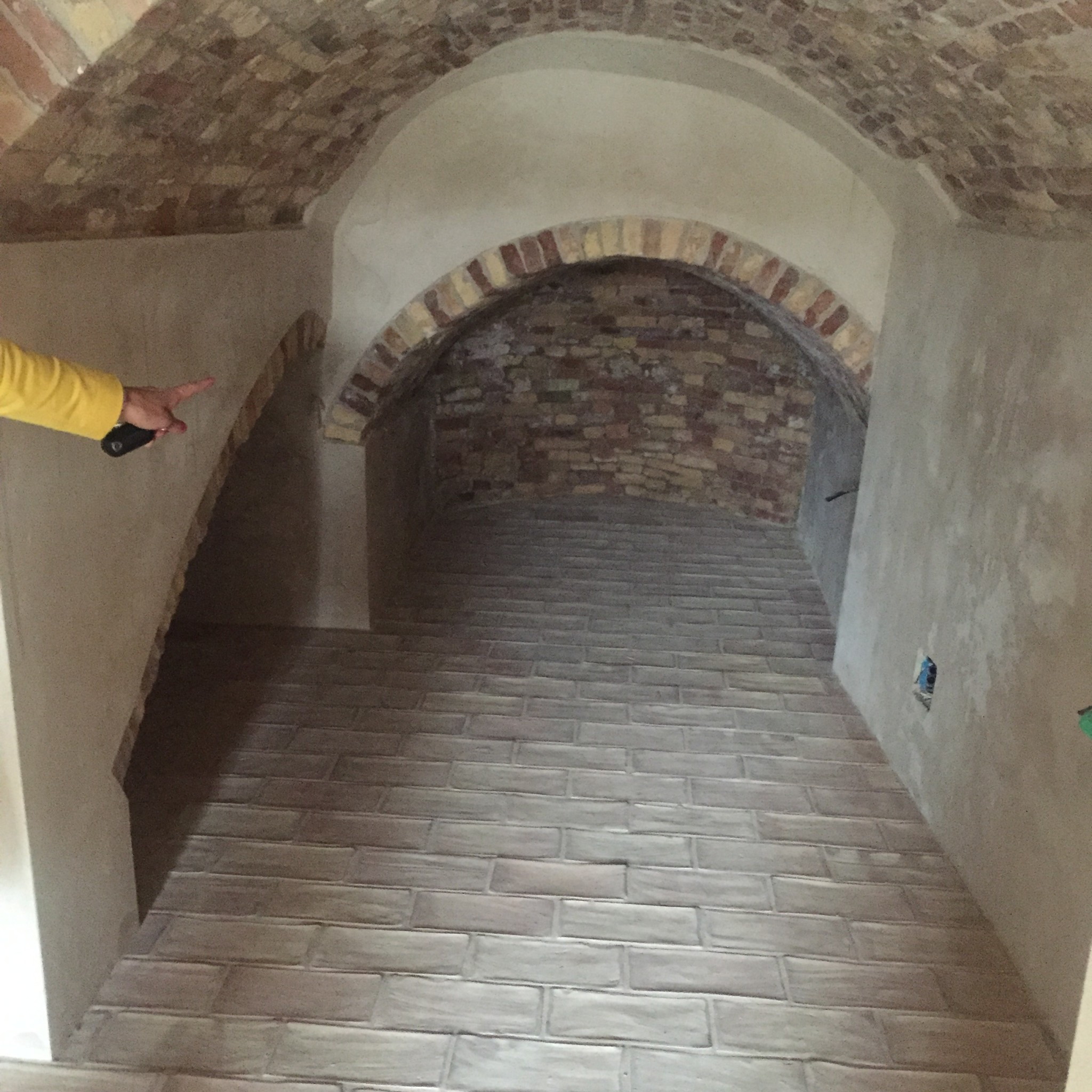
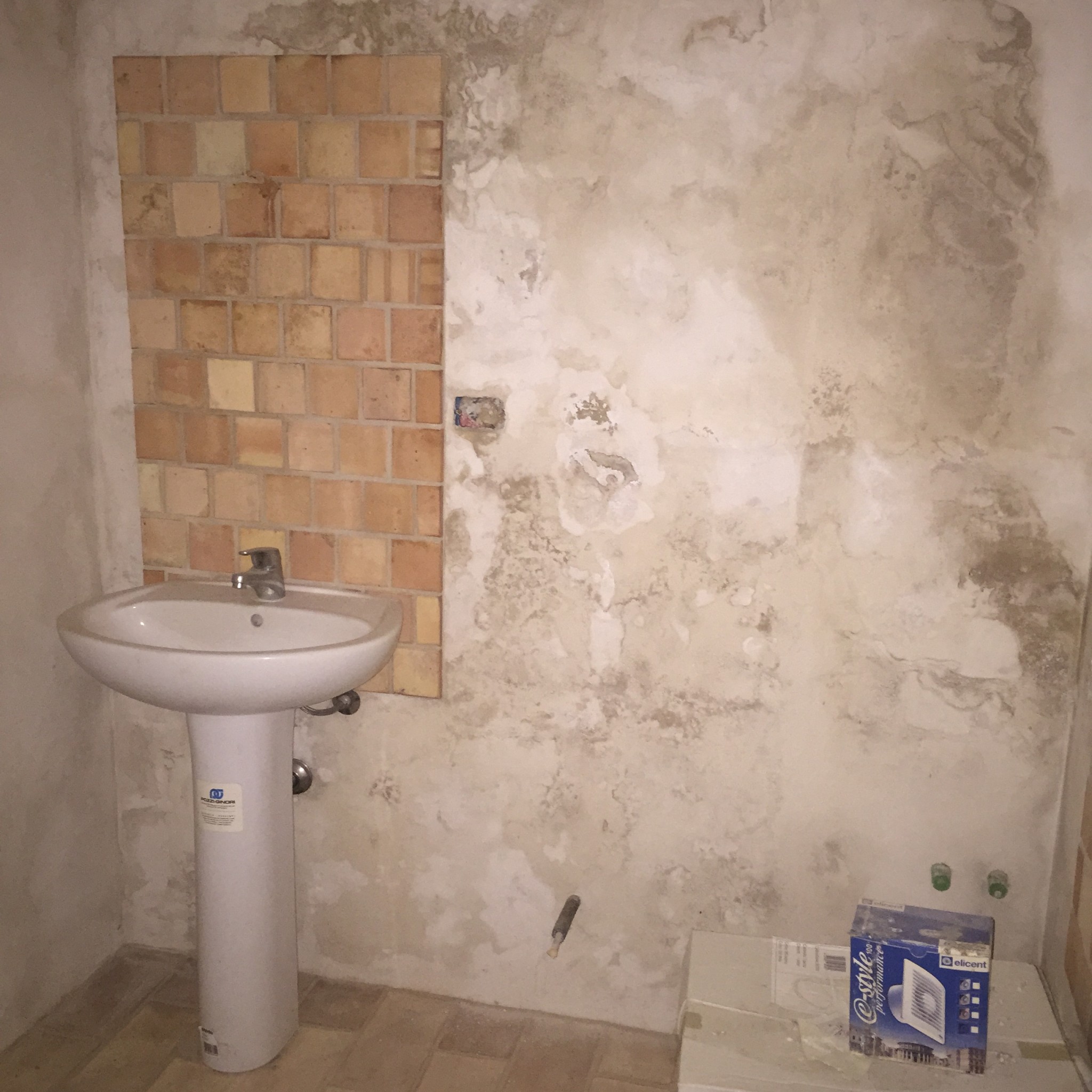
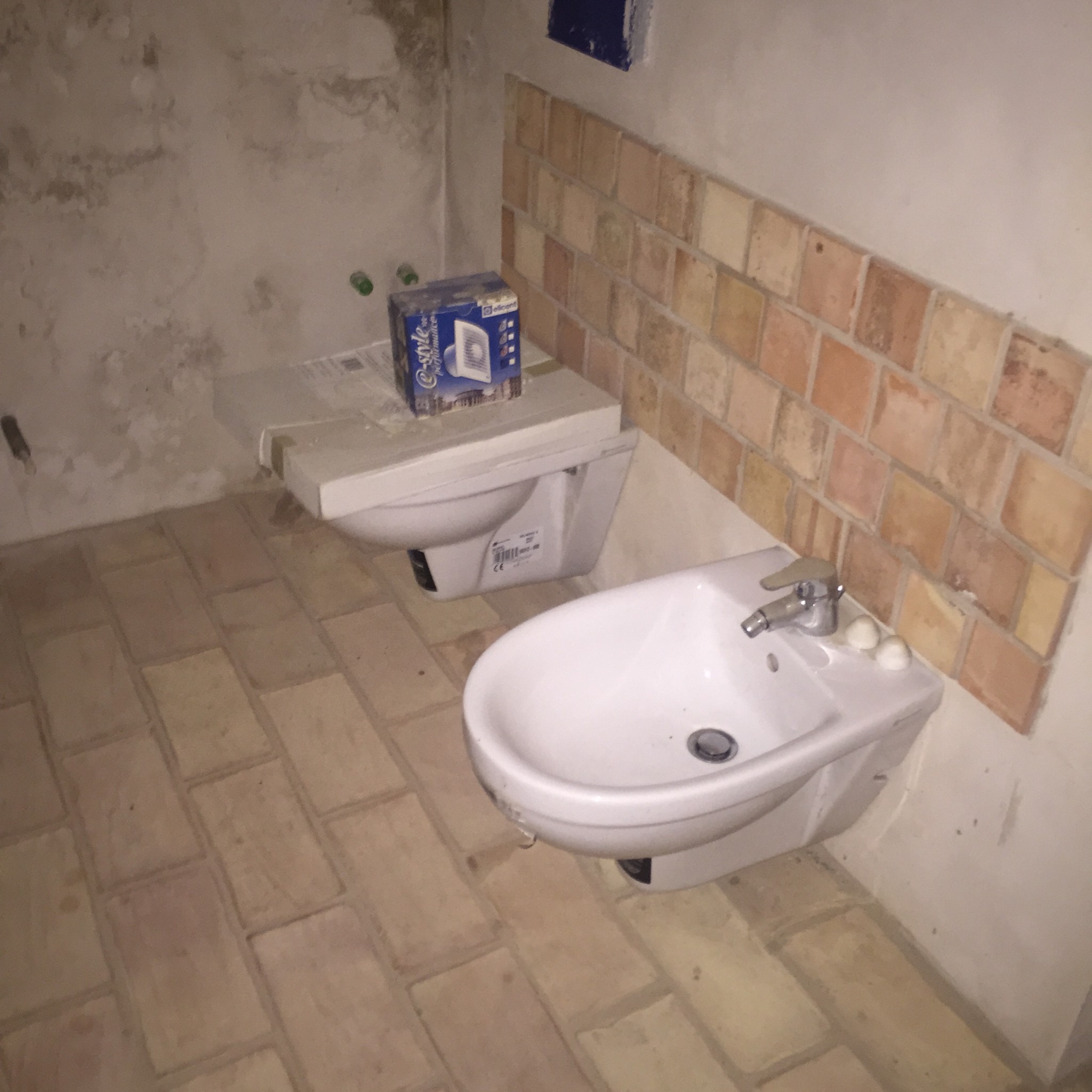
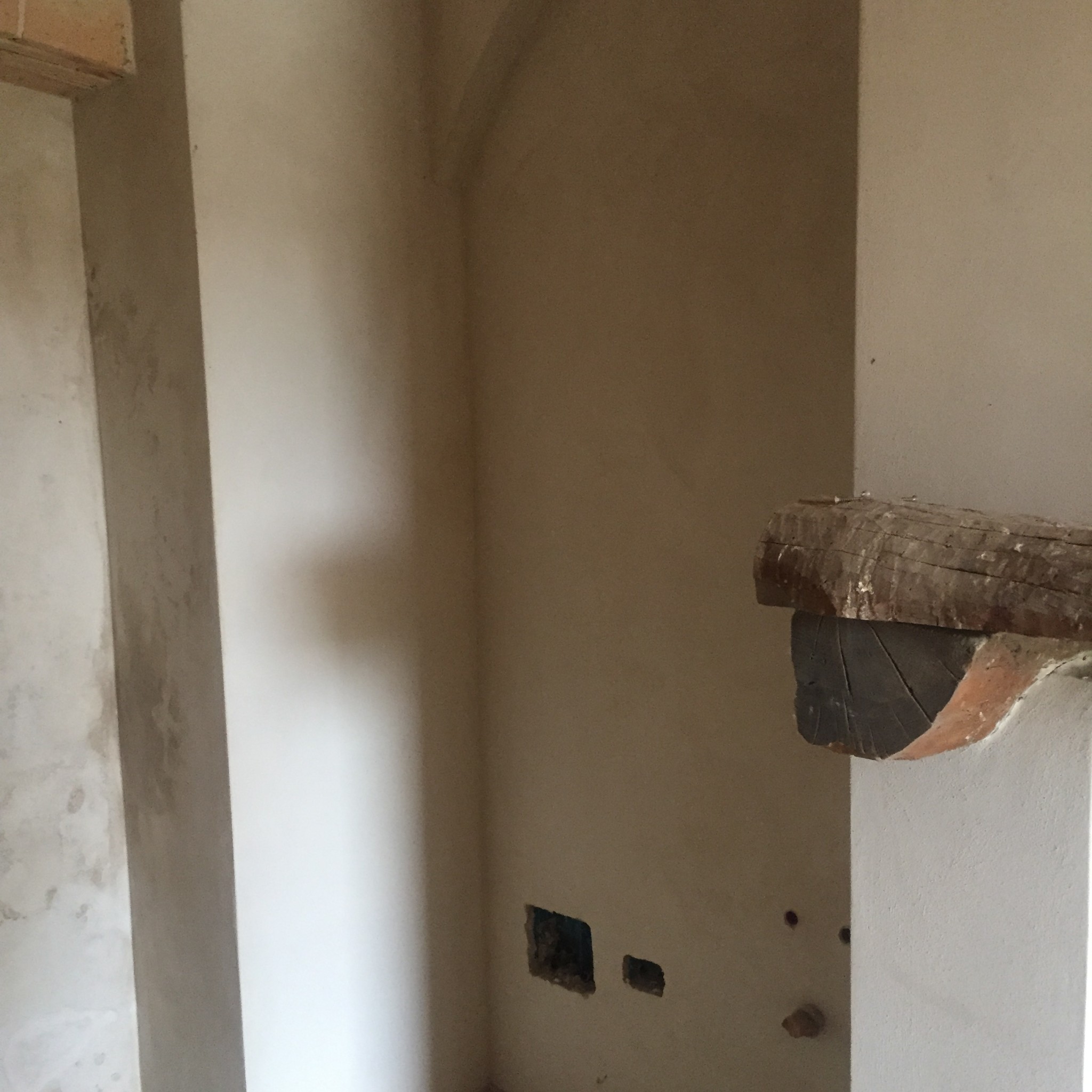
On some of the relatively newly plastered (but not yet painted) walls, there are marks that, to my eyes, indicate dampness/water saturation. The craftsman who plastered the walls claims that this is because different parts of the underlying brick absorbed moisture from the plaster at different rates and that the plaster had various degrees of water mixing when plastering different walls/layers, and that the stains come from this. I feel uncertain and do not think I've seen this phenomenon here at home in Sweden (but I don't have a lot of experience with plaster either).
The strange thing is that the stains occur both on walls directly against the neighboring property above ground (think row house), where there is no reason for dampness, as well as on walls that are underground/in the basement where some moisture migration is likely.
The house is located in the middle of the village center in an old medieval village, so drainage is not an option . Other tips on how to solve this if it's damp?
Attaching some pictures. Grateful for any feedback.

 . Other tips on how to solve this if it's damp?