
2,854 views ·
7 replies
3k views
7 replies
Crack in casting with quick-set concrete
Cast a section of Weber dry-mix 85 in a basement floor that is 15 cm thick in December. Now small cracks are appearing on the surface of the concrete. Followed all instructions, with measured mix, clean water, drying times, and watering/covering, etc. Have done some casting before, but I'm worried about how deep these cracks can go and how it affects the load-bearing capacity, as I had planned to lay tiles over it.
Is there anything that can be done?
Is there anything that can be done?
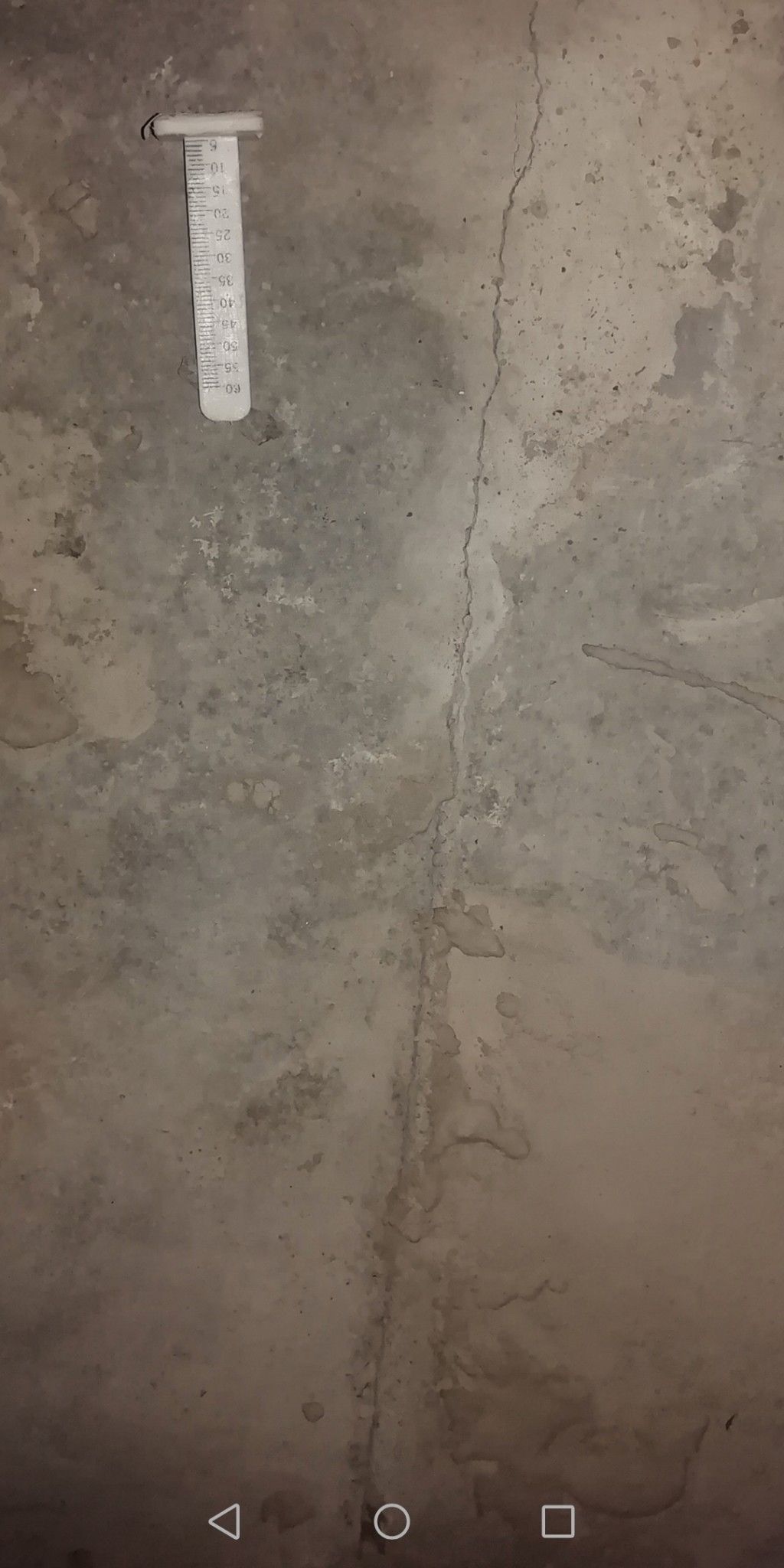

With a w/c ratio of 0.33, enormous demands are placed on the curing process. The reinforcement is also of great importance. Generally speaking, your cracks are not structurally dangerous but if watertightness is required, you may encounter problems.

I've done some casting with dry mix. Our experience is that you have to cover it with plastic. Otherwise, it cracks. You should lightly chisel the cracks and fill them. If you tap it and nothing sounds hollow, you might be able to lay tiles directly. But I wouldn't take the risk.KJD said:
Cast a section of Weber dry-mix 85 in a basement floor that is 15 cm thick in December. Now small cracks are appearing on the surface of the concrete. Followed all instructions, with measured mix, clean water, drying times and watering/covering, etc. I've done some casting before, but I'm worried about how deep these cracks might go and how it affects the load-bearing capacity, as I had planned to lay tiles over it.
Can anything be done?
Covered more plastic and watered exactly according to instructions for four to five weeks.
Will insulate and apply self-leveling compound on top before tiling.
Just need to know that I don't have to worry about the load-bearing capacity.
Will insulate and apply self-leveling compound on top before tiling.
Just need to know that I don't have to worry about the load-bearing capacity.
Building conservationist
· Malmö
· 256 posts
What do you have underneath?
If it is reinforced, it is strong even if you have a crack, but it depends a bit on why it occurred, which answers the question of whether it can get worse.
Did you vibrate the concrete properly during casting?
If it is reinforced, it is strong even if you have a crack, but it depends a bit on why it occurred, which answers the question of whether it can get worse.
Did you vibrate the concrete properly during casting?
Crushed stone 16-32 underneath. Vibrated on top with a wooden beam, maybe should have used a rod considering the thickness, but it's a repair that's about 30 cm in width, so I never thought about either that or reinforcement. The rest of the floor is completely unreinforced and the same thickness. No hollow sounds.L Lerstenstegel said:

I don't think you'll have any problems. Concrete often gets cracks without affecting it, and if you want it completely crack-free, you'll need to reinforce much more than you think.
If the rest of the floor is unreinforced, I wouldn't worry at all. The most important thing is that you've achieved adhesion with the old concrete.
If the rest of the floor is unreinforced, I wouldn't worry at all. The most important thing is that you've achieved adhesion with the old concrete.
Building conservationist
· Malmö
· 256 posts
If it's just a small repair, it's fine.
My guess is that it dried faster against the old concrete since you probably didn't brush it with a concrete slurry on the contact surfaces before casting to maximize adhesion and even drying.
The old concrete has absorbed moisture from the new one, causing it to dry unevenly, and the crack has formed exactly where the new concrete became hardest.
My guess is that it dried faster against the old concrete since you probably didn't brush it with a concrete slurry on the contact surfaces before casting to maximize adhesion and even drying.
The old concrete has absorbed moisture from the new one, causing it to dry unevenly, and the crack has formed exactly where the new concrete became hardest.
Click here to reply