
3,042 views ·
13 replies
3k views
13 replies
Concrete slab and load-bearing walls
Need your help here with what's load-bearing and what isn't….
Facts
House from '69 in split-level
Exterior walls built with 25 cm concrete hollow blocks
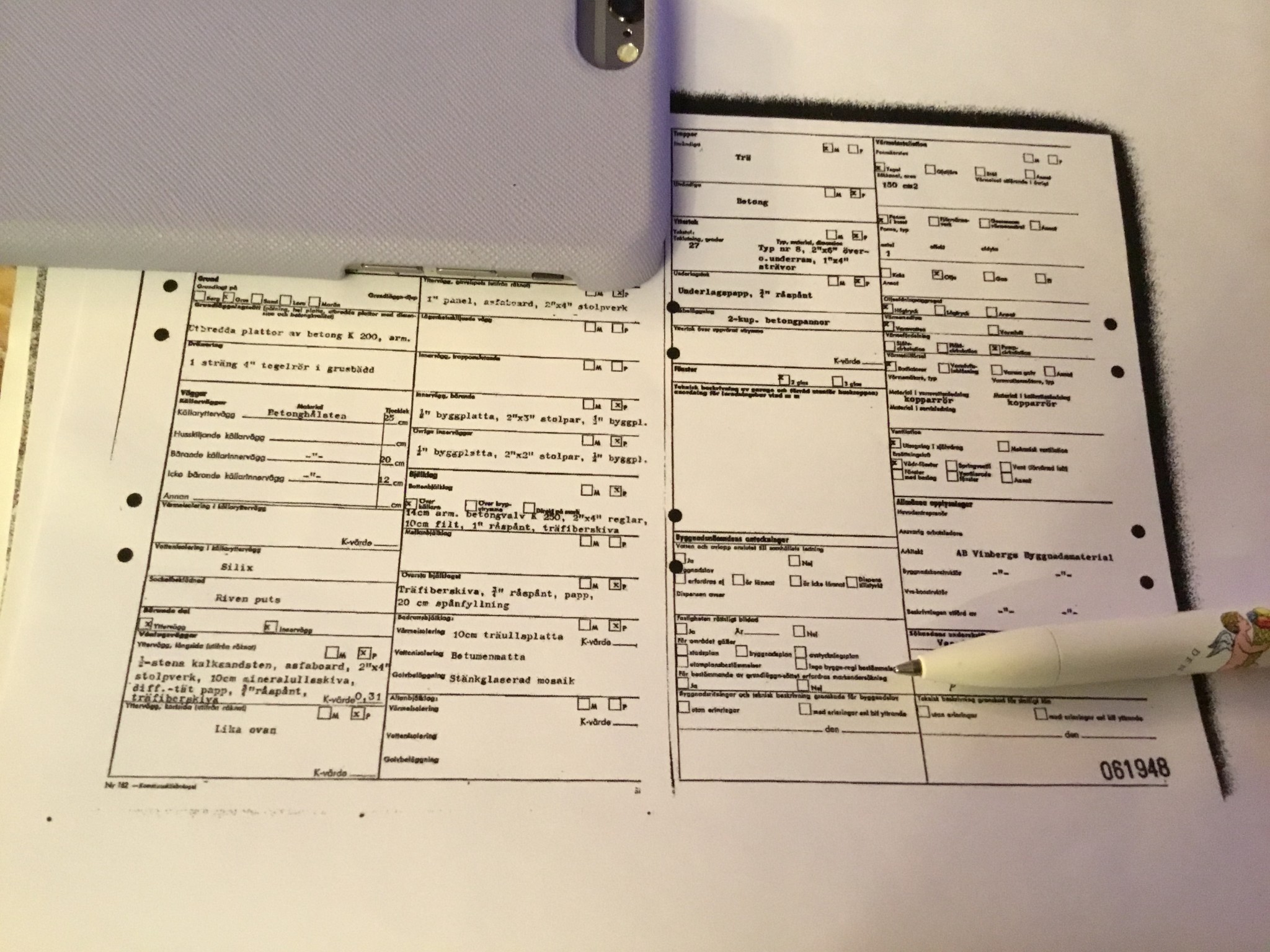
Above the basement floor is a concrete slab made according to the construction description
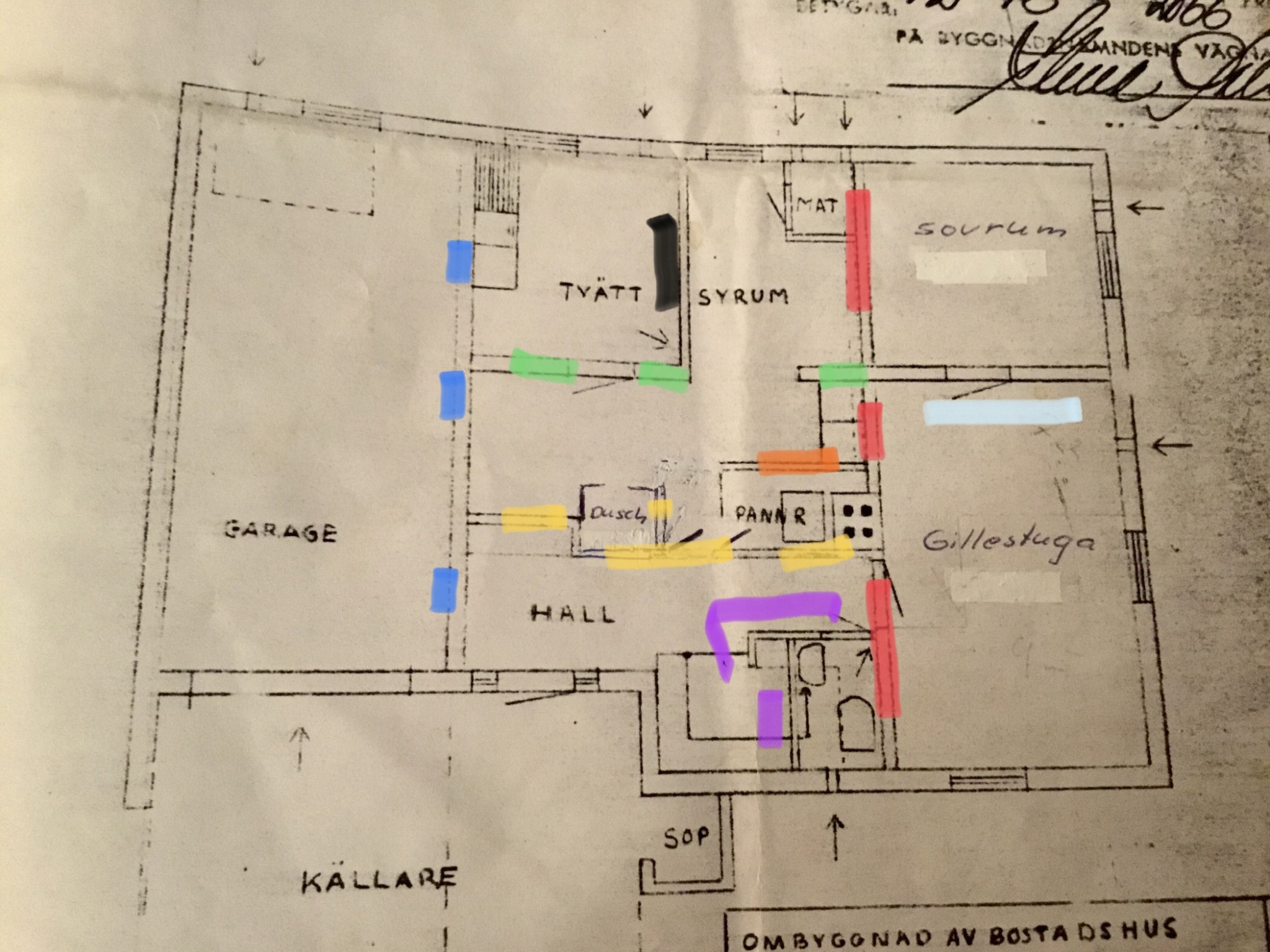
Sometime during the 70s, the stairwell was moved to the location you see on the floor plan, at that time a cut was made in the slab resulting in the reinforcement bars being cut (naturally).
The problem in my case is that during this renovation, new walls were built in wood and according to some older members here on the forum, wooden walls cannot be load-bearing with a concrete slab, is this correct? In my amateur concrete world, the span seems too long in my opinion if all the wooden walls in my basement were removed…
There is another problem, I have no reinforcement drawing and I know you want that to give an opinion, but I think there must be plenty of 70s houses built with concrete slabs that one might compare with.
so with your experience, I wonder if you can tell me a bit more about cast-in-place vs prefabricated concrete slabs
and tell which of the walls in the basement are load-bearing (or which you think based on what you've been told)
Of course, there is a bit more info like the thickness of walls, etc., but I want to hear some reasoning…..
Very grateful for all the help
measurements between exterior walls inside to inside 12.5x7.3m
Facts
House from '69 in split-level
Exterior walls built with 25 cm concrete hollow blocks
Above the basement floor is a concrete slab made according to the construction description
Sometime during the 70s, the stairwell was moved to the location you see on the floor plan, at that time a cut was made in the slab resulting in the reinforcement bars being cut (naturally).
The problem in my case is that during this renovation, new walls were built in wood and according to some older members here on the forum, wooden walls cannot be load-bearing with a concrete slab, is this correct? In my amateur concrete world, the span seems too long in my opinion if all the wooden walls in my basement were removed…
There is another problem, I have no reinforcement drawing and I know you want that to give an opinion, but I think there must be plenty of 70s houses built with concrete slabs that one might compare with.
so with your experience, I wonder if you can tell me a bit more about cast-in-place vs prefabricated concrete slabs
and tell which of the walls in the basement are load-bearing (or which you think based on what you've been told)
Of course, there is a bit more info like the thickness of walls, etc., but I want to hear some reasoning…..
Very grateful for all the help
measurements between exterior walls inside to inside 12.5x7.3m
Last edited:

Without a reinforcement drawing, it will unfortunately just be guesses. It should be in the municipal archive, not necessarily digitized. I believe that the wall separating the garage and the core wall that separates the laundry and sewing room etc. are load-bearing. Possibly also the recreation room's wall against the rest of the basement (marked in red).
I have asked the municipality twice for drawings, they say they have no more……
Justus, when you say the heart wall that separates the laundry and sewing room, do you mean the horizontal or vertical wall or both? Green or black
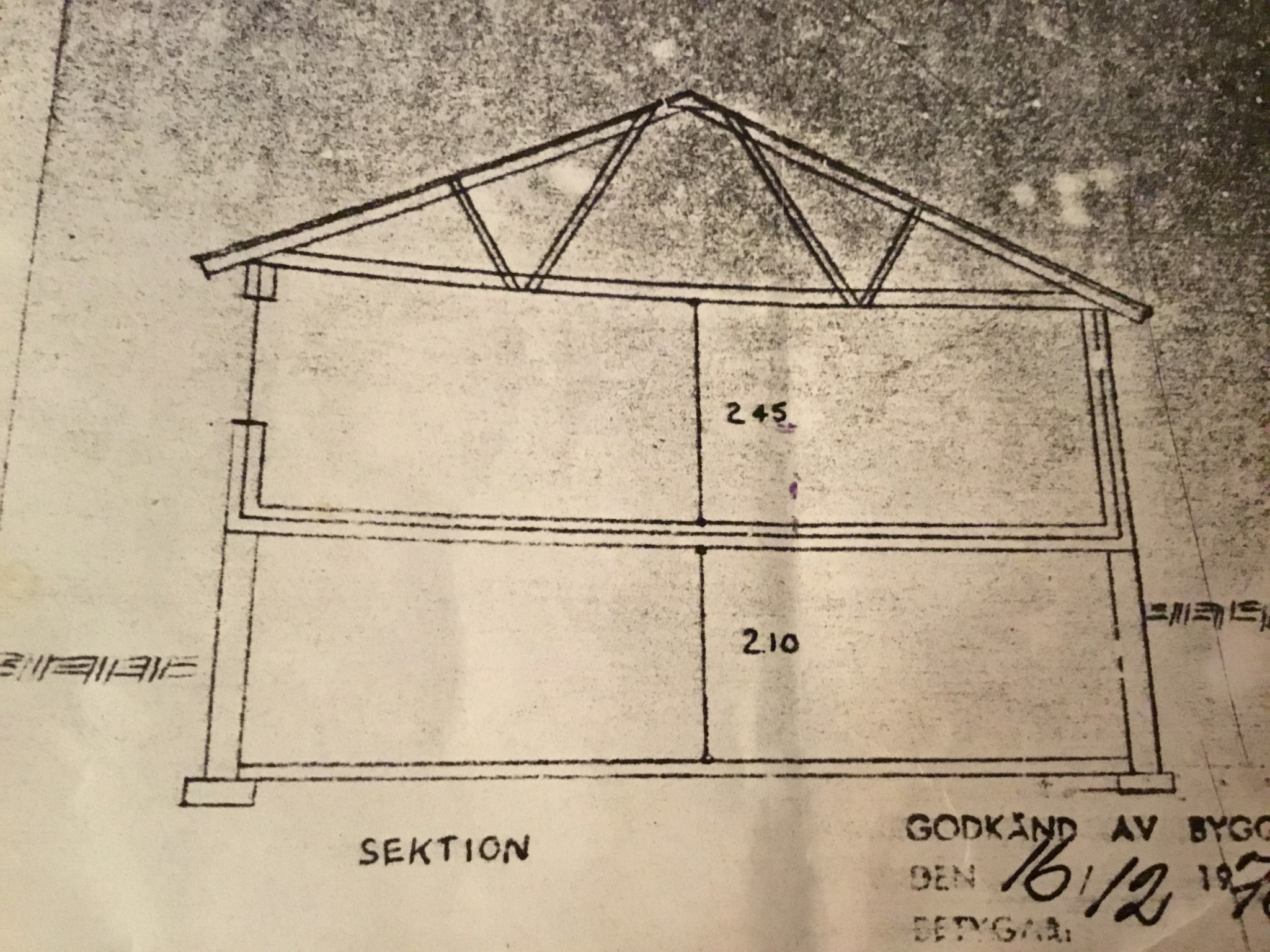
does the section drawing say anything of value, all the outer walls are built on foundations but not the wall in the middle, is it a common practice for load-bearing walls not to have foundations under them?
can you comment on the spans of a concrete slab (I know it will be guesses but it is very valuable to me)
Grateful for All help
Justus, when you say the heart wall that separates the laundry and sewing room, do you mean the horizontal or vertical wall or both? Green or black
does the section drawing say anything of value, all the outer walls are built on foundations but not the wall in the middle, is it a common practice for load-bearing walls not to have foundations under them?
can you comment on the spans of a concrete slab (I know it will be guesses but it is very valuable to me)
Grateful for All help
I mean the green wall. I don't fully understand the construction. Can't you copy the technical description so that it becomes readable, preferably with the help of a scanner? There might be answers to some questions there.
Yes, it must exist, but it may run parallel to the section. On the ground floor, there is no load-bearing wall because the house has truss rafters.
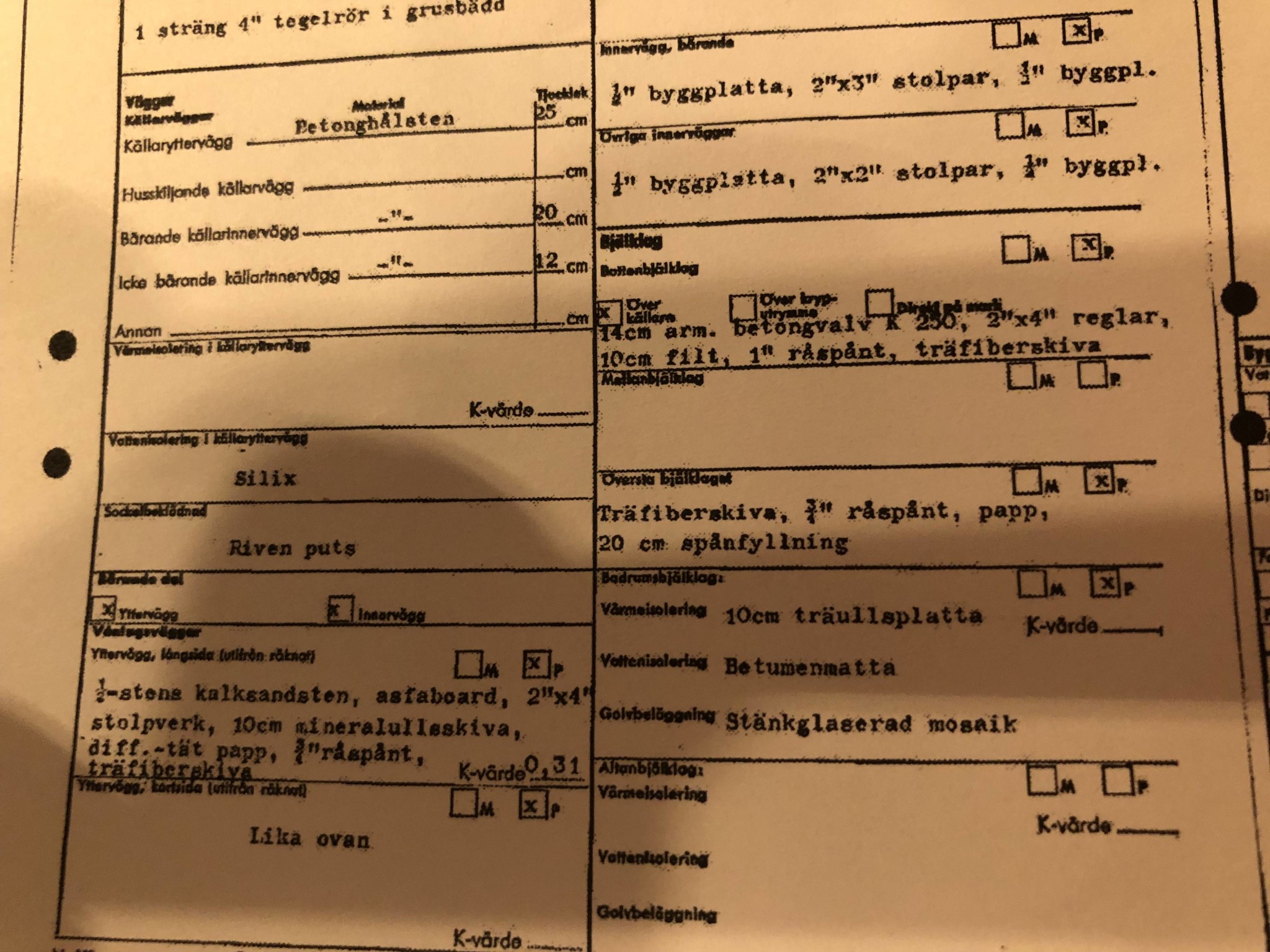
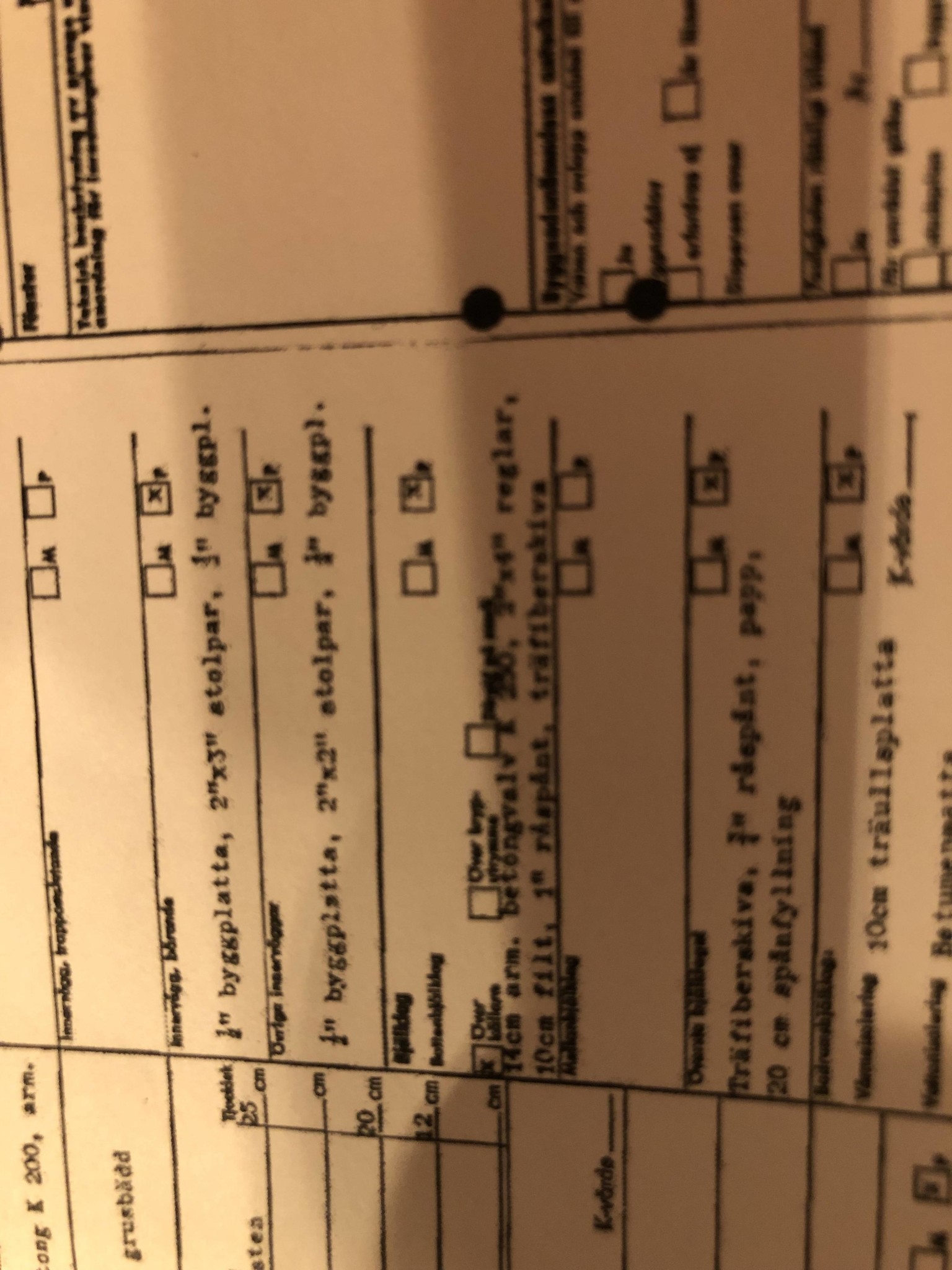
There it is clearly stated about the walls in the basement: Exterior walls 25 cm btghålsten, load-bearing interior walls 20 cm btghålsten, and non-load-bearing interior walls 12 cm btghålsten. It's just a matter of starting to measure.
Yes your assumptions are correct Justus, the walls you assumed are all 20 cm, what makes me wonder is the sawed-out staircase hole!
Wouldn't you want something to support underneath? They have put up wooden walls around the toilet there!
Wouldn't you want something to support underneath? They have put up wooden walls around the toilet there!
It is the kantarmeringen that is missing, it's not a bearing problem. I can imagine that one might stabilize the edge in some way, if it hasn't already been done in connection with the cutting. There are others who know how to do it better than I do.
One should probably not get hung up on 14 cm. The thickness of concrete structures is also affected by completely different factors such as demands for sound reduction. Your question cannot be answered without knowing what's inside the concrete. If it has lasted for 50 years, it will probably last a while longer.
I'm in the process of renovating the basement and have removed the highlighted part from the boiler room towards the garage to create a more open hallway, replaced the wooden walls with masonry but still feel some concern because of the d...n staircase opening
how is it with chimneys, do they help support the floor joists?
thanks for the help, it is appreciated
how is it with chimneys, do they help support the floor joists?
thanks for the help, it is appreciated
Click here to reply