
17,399 views ·
37 replies
17k views
37 replies
Chimney, vapor barrier, and craftsmen...
Well... trying to avoid complaining about craftsmen... but I could use some input from the forum here. The situation is as follows: Today, I had a wood-burning stove with an accompanying Schiedel chimney installed... and since I've built the entire house myself from scratch, I naturally want to make sure it's done right, so I worked from home and observed the installation. We have an open ceiling to the ridge, with 40cm of insulation in the roof and a meticulously installed vapor barrier. In the hole in the roof where the chimney is going, I had prepared everything so that only the unbroken vapor barrier remained; I installed the sub-flashing for the chimney cap at the same time I put up the metal roof and covered it with construction plastic...
When the stove guys start installing the chimney and are about to go through the vapor barrier, I see them cutting up all the plastic flush with the edge of the hole I made, and I gently ask how they plan to attach the vapor barrier to the chimney... Having read the instructional manuals, I know there's a rubber collar that's supposed to go on the chimney and then be taped to the plastic... but the craftsmen reassure me they'll install it last...
To make a long story short, I have to stop them when they're about to attach the cover plate to the ceiling, claiming it's supposed to be "sealed." I call the company's boss, who practically yells at me(!) for accusing his guys of not knowing what they're doing... and says, "We've never done it that way."
I call Schiedel support and get confirmation that I'm right, but that they don't deliver the rubber collar as standard in their packages, and it's an accessory for modern houses.
I end up agreeing with the company that they can come back tomorrow and finish the installation, with the rubber collar added afterward... which is still questioned, but I pay...
Now, I'm wondering if it's standard practice for craftsmen not to seal the vapor barrier adequately, if there's a general lack of basic construction knowledge... and if the only way to get some sleep is to remain ignorant and simply stay away when you have craftsmen on site...??
When the stove guys start installing the chimney and are about to go through the vapor barrier, I see them cutting up all the plastic flush with the edge of the hole I made, and I gently ask how they plan to attach the vapor barrier to the chimney... Having read the instructional manuals, I know there's a rubber collar that's supposed to go on the chimney and then be taped to the plastic... but the craftsmen reassure me they'll install it last...
To make a long story short, I have to stop them when they're about to attach the cover plate to the ceiling, claiming it's supposed to be "sealed." I call the company's boss, who practically yells at me(!) for accusing his guys of not knowing what they're doing... and says, "We've never done it that way."
I call Schiedel support and get confirmation that I'm right, but that they don't deliver the rubber collar as standard in their packages, and it's an accessory for modern houses.
I end up agreeing with the company that they can come back tomorrow and finish the installation, with the rubber collar added afterward... which is still questioned, but I pay...
Now, I'm wondering if it's standard practice for craftsmen not to seal the vapor barrier adequately, if there's a general lack of basic construction knowledge... and if the only way to get some sleep is to remain ignorant and simply stay away when you have craftsmen on site...??

What temperature does Schiedel expect for the outside of the chimney? I assume it is a story in double-layered stainless steel with 5 cm insulation. Is the rubber seal directly against the chimney wall, or is there a metal collar that the rubber seal is glued to?

Yes, to the actual question you’re asking I can only answer:Forbo said:
Don't know
Don't know
Don't know
But I do all that work myself, and I think I see more reasons for this than just plain stinginess.

Mikael_L said:
Yes, it was a rhetorical question really. I also do everything myself, but in this case, I felt that I didn't have the time, and it could be a good idea from an insurance perspective to have a company install the whole thing. Unfortunately, I was already expecting from the beginning that they would probably mess it up... The somewhat grumpy craftsmen called recently and informed me that they were done... and that they have left the ceiling open as I said, so I can inspect...
That they then used stainless steel farmers' screws on the black metal sheets on the roof instead of matching black ones and scratched the floorboard is something you have to expect when you hire people who don't do it for themselves...
To not be completely negative, I'm extremely satisfied with the electrician we have... he thinks for himself, comes with suggestions, and is updated on products and industry regulations. (Then the fact that he also perforated the vapor barrier with screws that were too long in one place is forgivable
)Yes, everyone can make mistakes, there's nothing to complain about. I myself have had to repair both vapor barriers and protective coverings here and there when I've messed up, like dropping a tool or a plank. Not to mention dented boards, etc.
But to intentionally make mistakes, to cover up when you've slipped up, or not being able to grasp fundamental things seems hard to overlook.
But to intentionally make mistakes, to cover up when you've slipped up, or not being able to grasp fundamental things seems hard to overlook.
When I installed a similar metal chimney for the first time, I also didn't know how to do it. But since there was an instruction included, I followed it, and it described, among other things, how to handle the vapor barrier.
So if I, as an individual, amateur, and first-time builder, can manage to build the chimney correctly, then of course an entire group of experienced professionals should be able to do it at least as well. Anything else would be unreasonable.
So if I, as an individual, amateur, and first-time builder, can manage to build the chimney correctly, then of course an entire group of experienced professionals should be able to do it at least as well. Anything else would be unreasonable.

Had similar issues when we built new, where the vapor barrier was damaged on prefabricated elements and the electricians cut the barrier without sealing it. We noticed some parts and pointed it out when they covered them with gypsum without making corrections, and from the tradespeople's reactions, they seemed fully aware that it was not OK. So, if I were to guess, it's a combination of ignorance, negligence, and deliberate fraud. Since we later experienced coldness in the outer corners, we conducted thermal imaging, which showed a rather alarming result. It was clear as day that they hadn't ensured sealing between the prefabricated elements, and it wasn't just isolated mistakes; every room had several remarks.
I agree with the original poster that it's tricky that some tradespeople apparently aren't aware that the vapor barrier needs to be sealed at seams and around penetrations or if it's simply about deliberate negligence.
I agree with the original poster that it's tricky that some tradespeople apparently aren't aware that the vapor barrier needs to be sealed at seams and around penetrations or if it's simply about deliberate negligence.
The fact of the matter is that I very carefully specified my order..."Sealing of vapor barrier"..double-checked my email here..
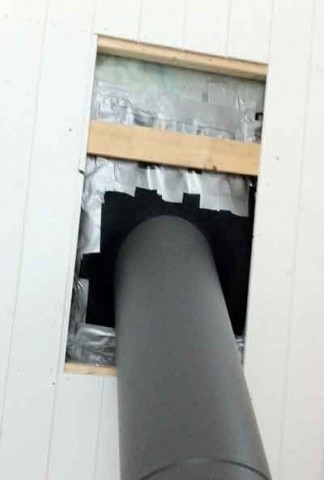
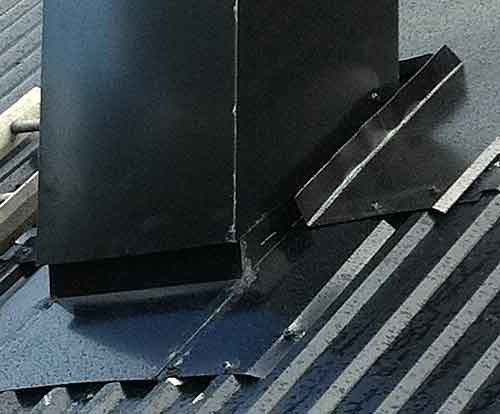
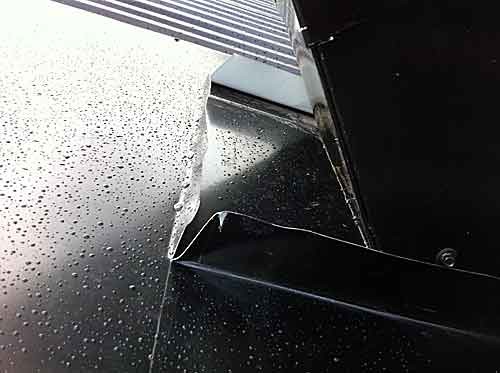
Today they've been home to fix the last bit...some nice pictures here:
The sealed vapor barrier...using duct tape, cut-up rubber gasket...and it was enough to hold my hand below to feel the draft...will have to buy fire sealant tomorrow and redo the whole thing...
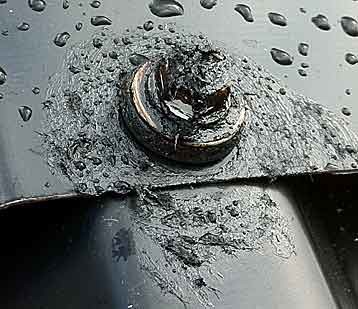
Then we have pictures of the cover plate that they obviously measured wrong...and yesterday I saw that they used stainless steel farmer screws on black...I thought I could jump up and paint them with some metal roof paint I have...but no...the clumsy ****** "painted" the screw heads with some goo...black silicone?
I will post a "warning for", but I want to give the boss of the company a chance to make it right first.
Today they've been home to fix the last bit...some nice pictures here:
The sealed vapor barrier...using duct tape, cut-up rubber gasket...and it was enough to hold my hand below to feel the draft...will have to buy fire sealant tomorrow and redo the whole thing...
Then we have pictures of the cover plate that they obviously measured wrong...and yesterday I saw that they used stainless steel farmer screws on black...I thought I could jump up and paint them with some metal roof paint I have...but no...the clumsy ****** "painted" the screw heads with some goo...black silicone?
I will post a "warning for", but I want to give the boss of the company a chance to make it right first.
Last edited: