
12,658 views ·
33 replies
13k views
33 replies
Casting entrance stairs - hollow/polystyrene/EPS for lower weight?
Thanks again!Silver78 said:
Does that mean there should be a gap with a joint at these 3 spots, i.e., door threshold, brick, and the foundation/plaster? What kind of joint should be used?
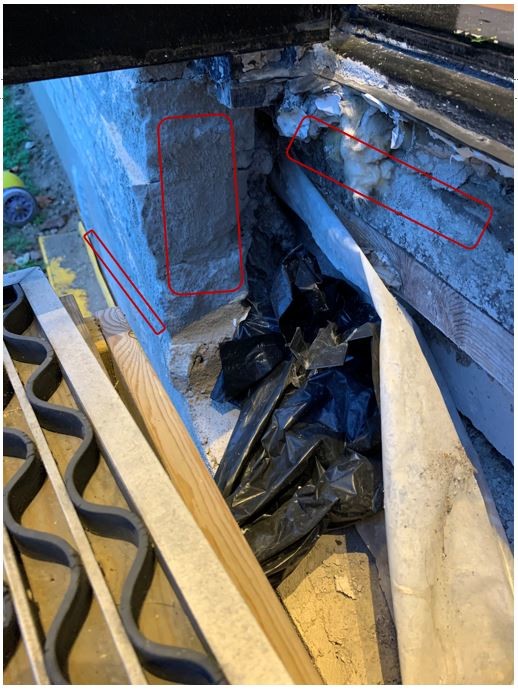
What did it look like before? It seems like you have an air gap inside the brick wall. The question is whether you should simply build up with bricks to the right height and finish with a step instead if you're going to use prefabricated steps. I think it will be easier and more aesthetically pleasing. You can also do as you suggested. It's a matter of taste.
I would have started with the slab for the stairs. Built up the stairs. Built up the brick wall so that the stairs are flush with the wall where the threshold is. Then it's just about laying the steps. Keep in mind that the stairs must be smaller than the steps if you intend to plaster. If you want slightly protruding steps, which most people do, you need to take that into account in the calculations too. Regarding caulking, regular construction caulking works. MS or SMP would do the job as well. You can also skip caulking entirely on the underside; it's cosmetic, but it's easier to get a nice edge when plastering that isn't as exposed to weather. But where you show in the picture, you must caulk to prevent the water from going the wrong way.
I would have started with the slab for the stairs. Built up the stairs. Built up the brick wall so that the stairs are flush with the wall where the threshold is. Then it's just about laying the steps. Keep in mind that the stairs must be smaller than the steps if you intend to plaster. If you want slightly protruding steps, which most people do, you need to take that into account in the calculations too. Regarding caulking, regular construction caulking works. MS or SMP would do the job as well. You can also skip caulking entirely on the underside; it's cosmetic, but it's easier to get a nice edge when plastering that isn't as exposed to weather. But where you show in the picture, you must caulk to prevent the water from going the wrong way.
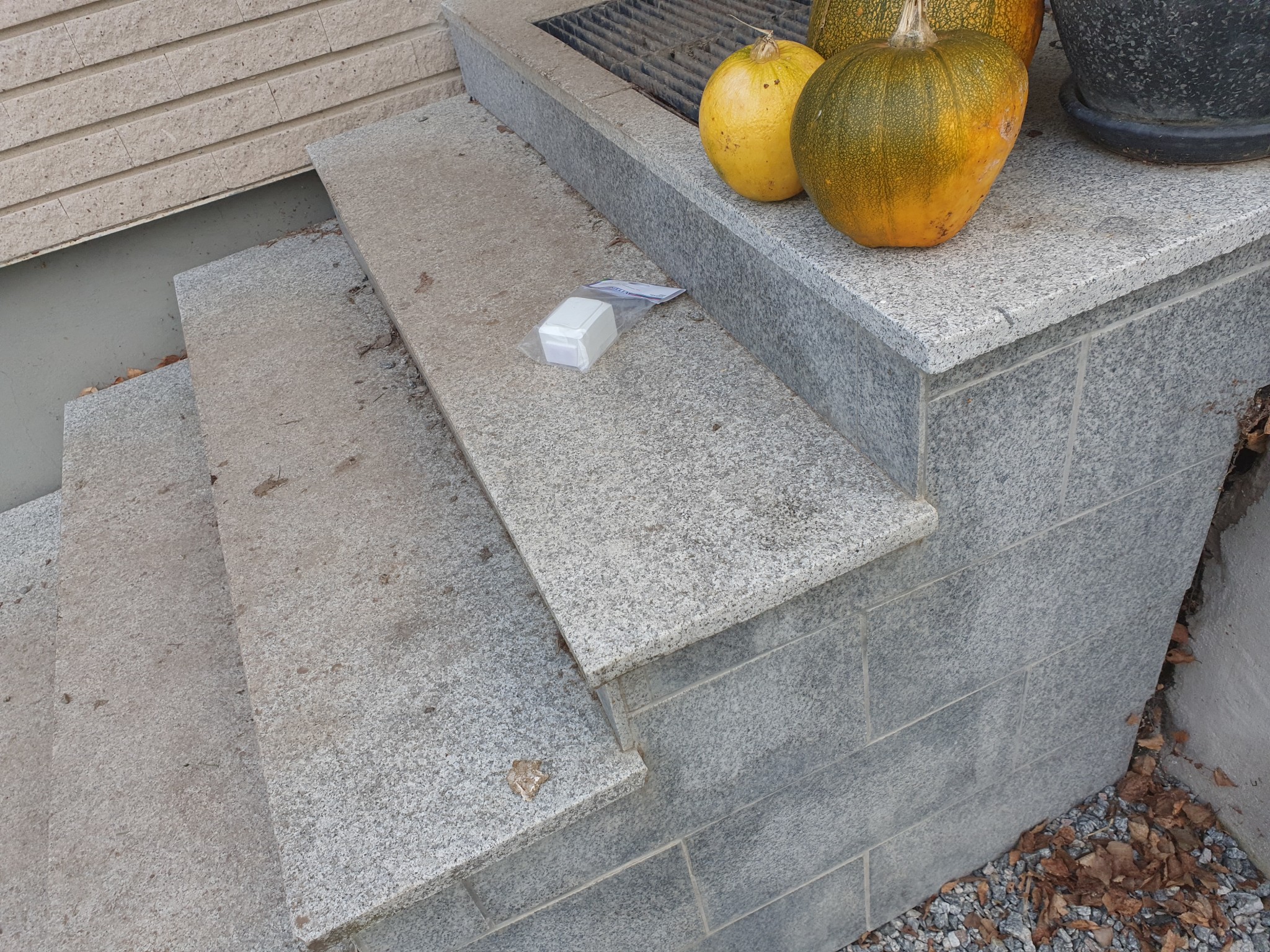
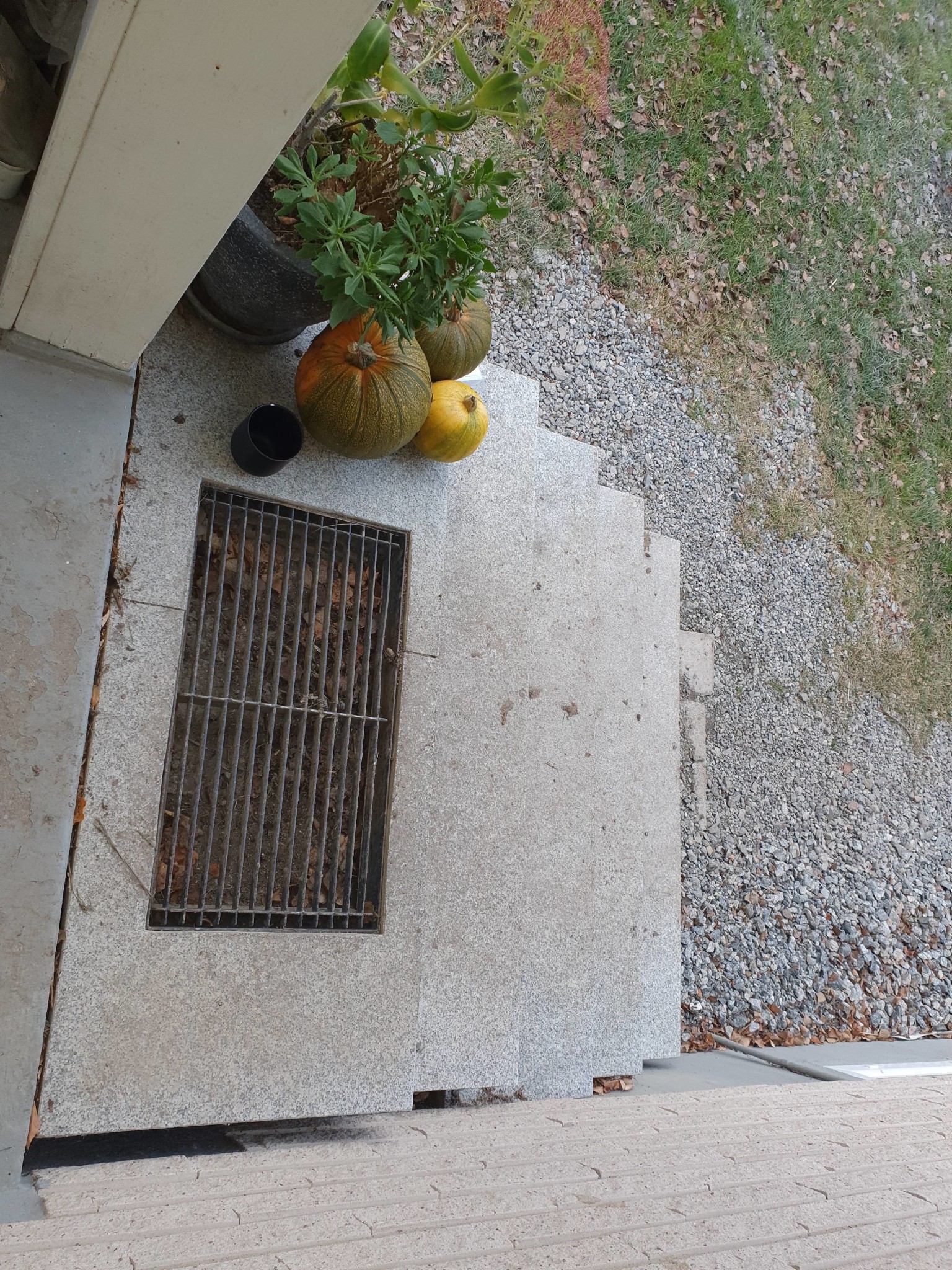
thanks again! I just thought of one more thing, did you put any adhesive/mortar between the concrete slab and the first layer of lecablocks?B BSOD said:
This is moving slowly... but on Monday I will cast the slab.
I was thinking about asking you regarding building up the stairs afterward - do you think it would be possible to build part of the innermost foundation with foam? Then brick with leca around/on top of this? Thinking of saving time, weight, money, etc.
I hope my question is somewhat clear!
I was thinking about asking you regarding building up the stairs afterward - do you think it would be possible to build part of the innermost foundation with foam? Then brick with leca around/on top of this? Thinking of saving time, weight, money, etc.
I hope my question is somewhat clear!
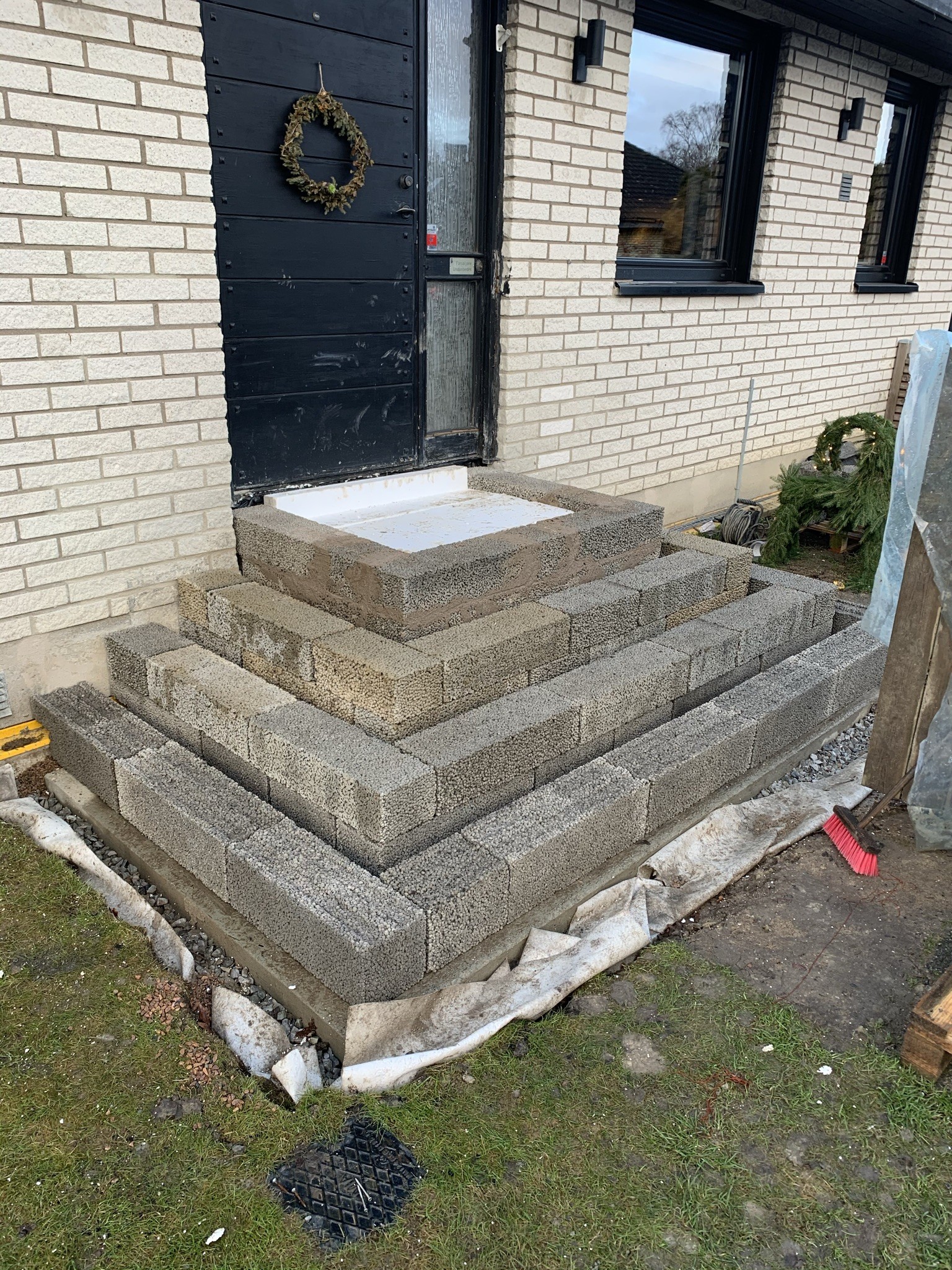
Now the slab is complete and I have started cutting the lecablocks. The lecablocks are 19cm wide, which means there is a gap between the steps (about 7-8cm).
If I'm going to plaster the stairs later, can I now fill these gaps with gravel and coarse concrete? Up to the edge of the lecablock. Then, later on, add a few cm of fine concrete on the steps? So, is it possible to cast a few cm of fine concrete on top of the coarse concrete later on?
If I'm going to plaster the stairs later, can I now fill these gaps with gravel and coarse concrete? Up to the edge of the lecablock. Then, later on, add a few cm of fine concrete on the steps? So, is it possible to cast a few cm of fine concrete on top of the coarse concrete later on?
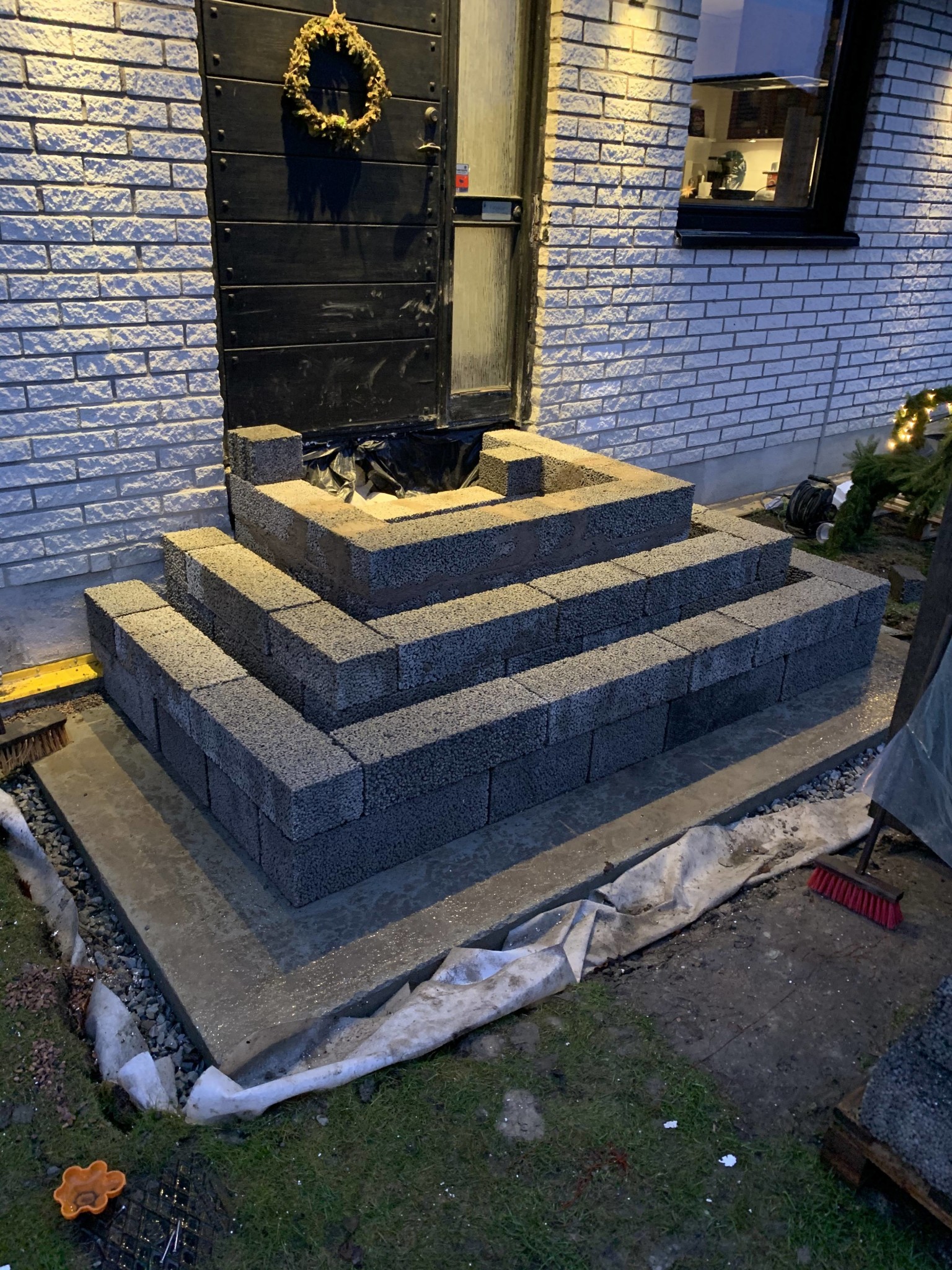
Late response... too late? But, plastering on foam just feels wrong. Leca weighs around 300kg/m3 or so, not much of a weight saving anyway.
The space between the Leca blocks I filled with gravel, 8-16 (that's what I had at home). Compacted as well as I could (packed by hand with a 100x100 post). The top 4 cm I laid coarse concrete, level with the Leca blocks plus about 0.5-1 cm. Rain should run off the steps, not stay on the step.
The first step looks high, I assume there's a bit of Leca block to go there?
Looks promising
The space between the Leca blocks I filled with gravel, 8-16 (that's what I had at home). Compacted as well as I could (packed by hand with a 100x100 post). The top 4 cm I laid coarse concrete, level with the Leca blocks plus about 0.5-1 cm. Rain should run off the steps, not stay on the step.
The first step looks high, I assume there's a bit of Leca block to go there?
Looks promising
thanks for the reply!B BSOD said:Late reply... too late? But, mortaring onto cell plastic just feels wrong. Leca weighs about 300kg/m3 or so, not much weight saving anyway.
The space between the Leca blocks I filled with gravel, 8-16 (it was what I had at home). Compacted as well as I could (packed by hand with a 100x100 post). The top 4cm I laid coarse concrete, level with the Leca blocks plus about 0.5-1 cm. Rain should run off the steps, not remain on the step.
The first step looks high, I assume there's some Leca blocks going there?
Looking promising
It will be something similar for me, I have a pile of (kind of?) 2-5 mm gravel in the yard that I plan to fill the gap with, then it will be about 5-8 cm of coarse concrete up to the Leca. After that, it will cure properly for a few weeks/a month while I decide whether to plaster it or clad it with tiles.
yes, a step was missing in the picture

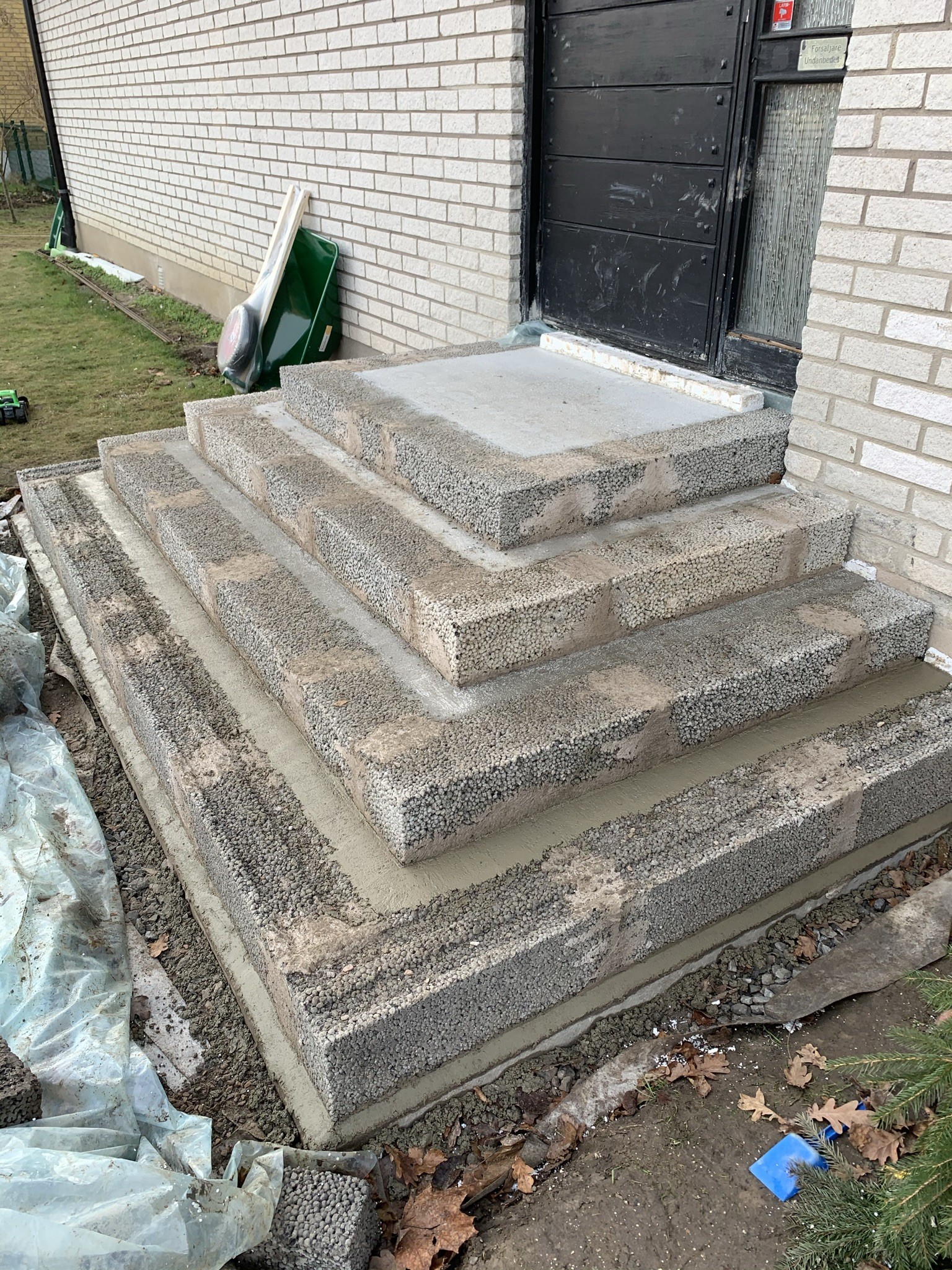
Looks good!
Planning to make a similar staircase in the spring, so this is perfect for inspiration. Please continue to update
How did the construction of the blocks towards the door turn out? Are they partially floating there like in your sketch?
Do you have rebar between the blocks?
Planning to make a similar staircase in the spring, so this is perfect for inspiration. Please continue to update
How did the construction of the blocks towards the door turn out? Are they partially floating there like in your sketch?
Do you have rebar between the blocks?