
I'm working on building a house and have a glulam beam that rests on two nail-laminated 45x95 on one end and three nail-laminated 45x95 on the other end.
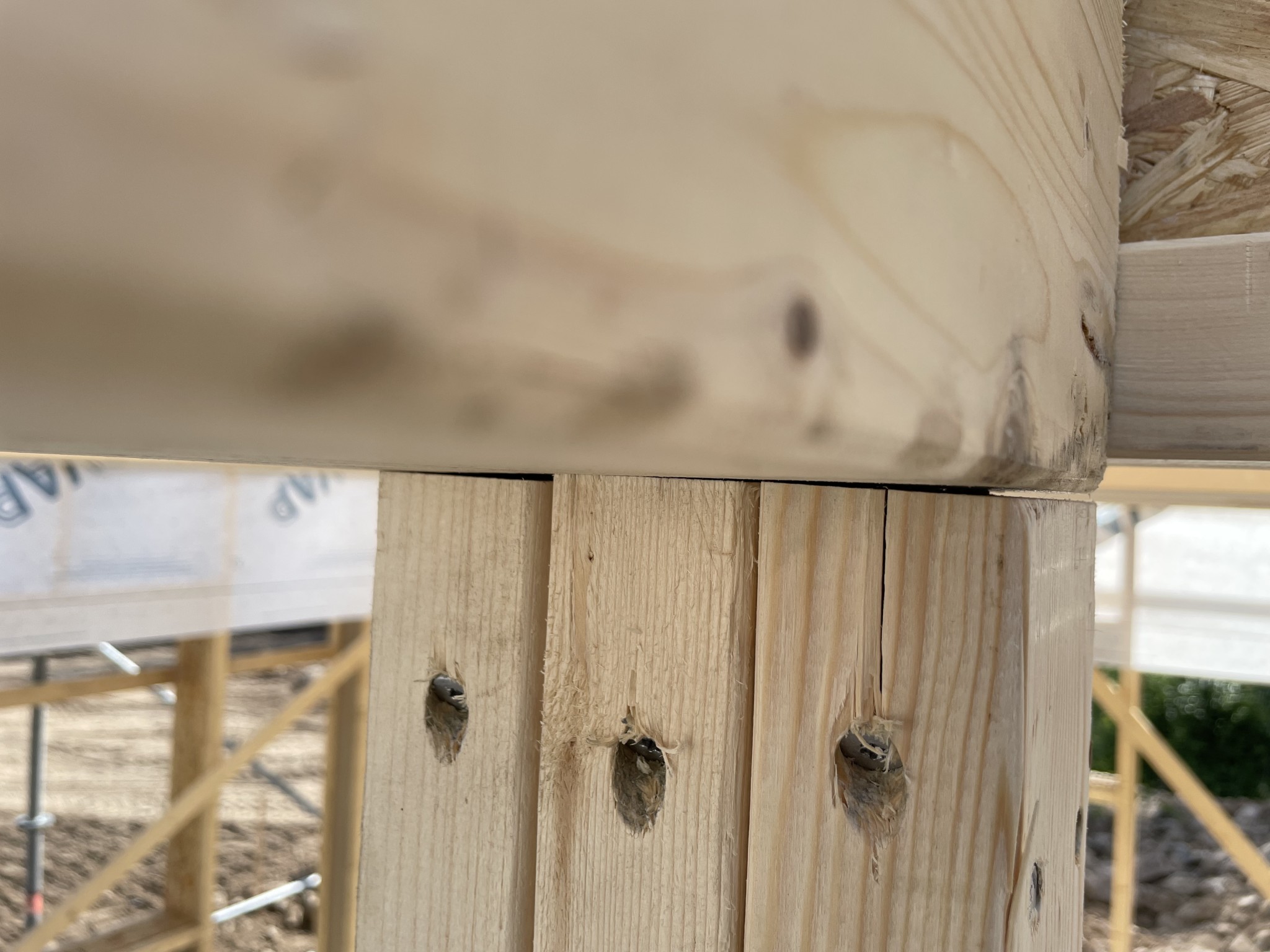
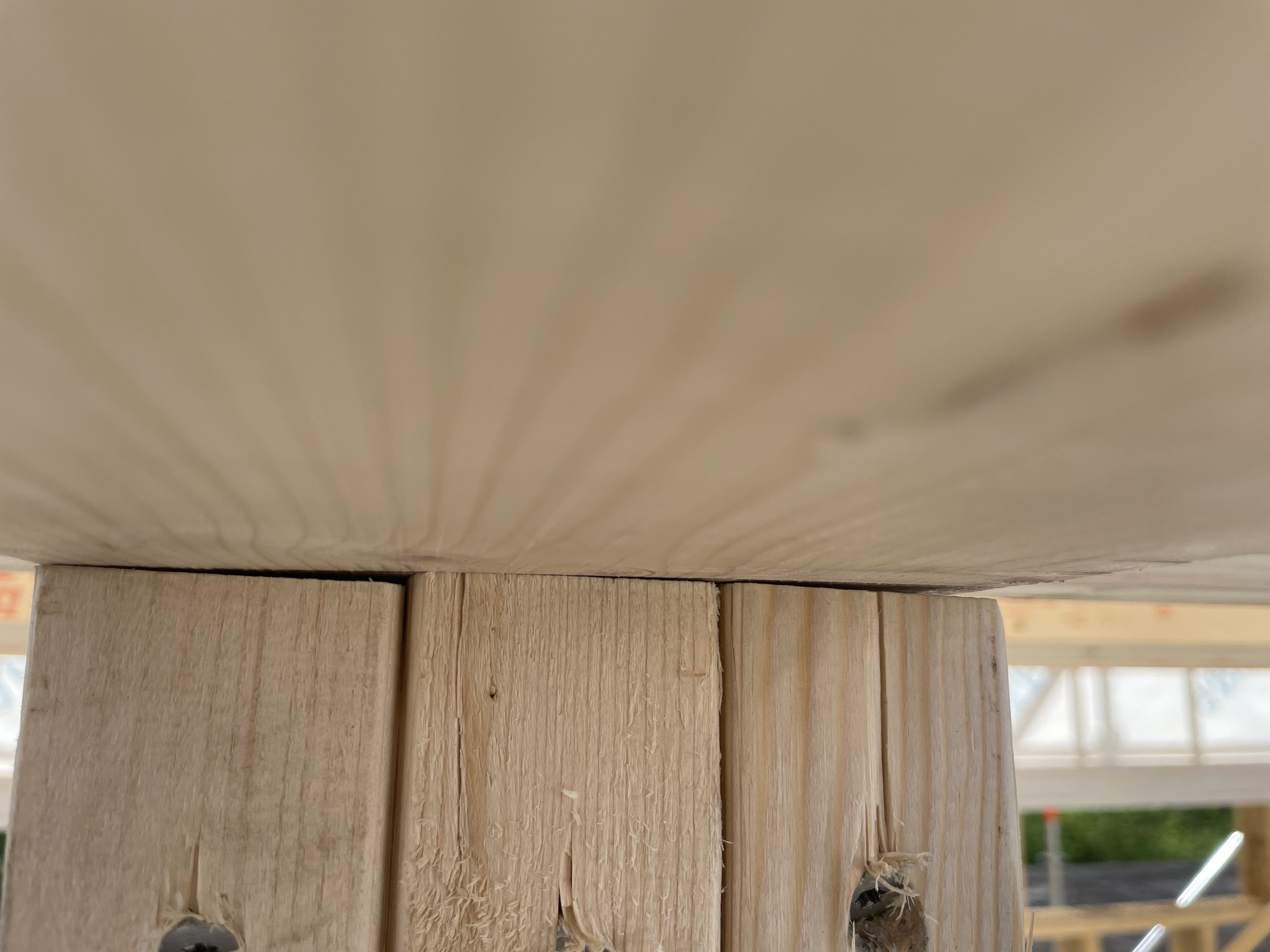
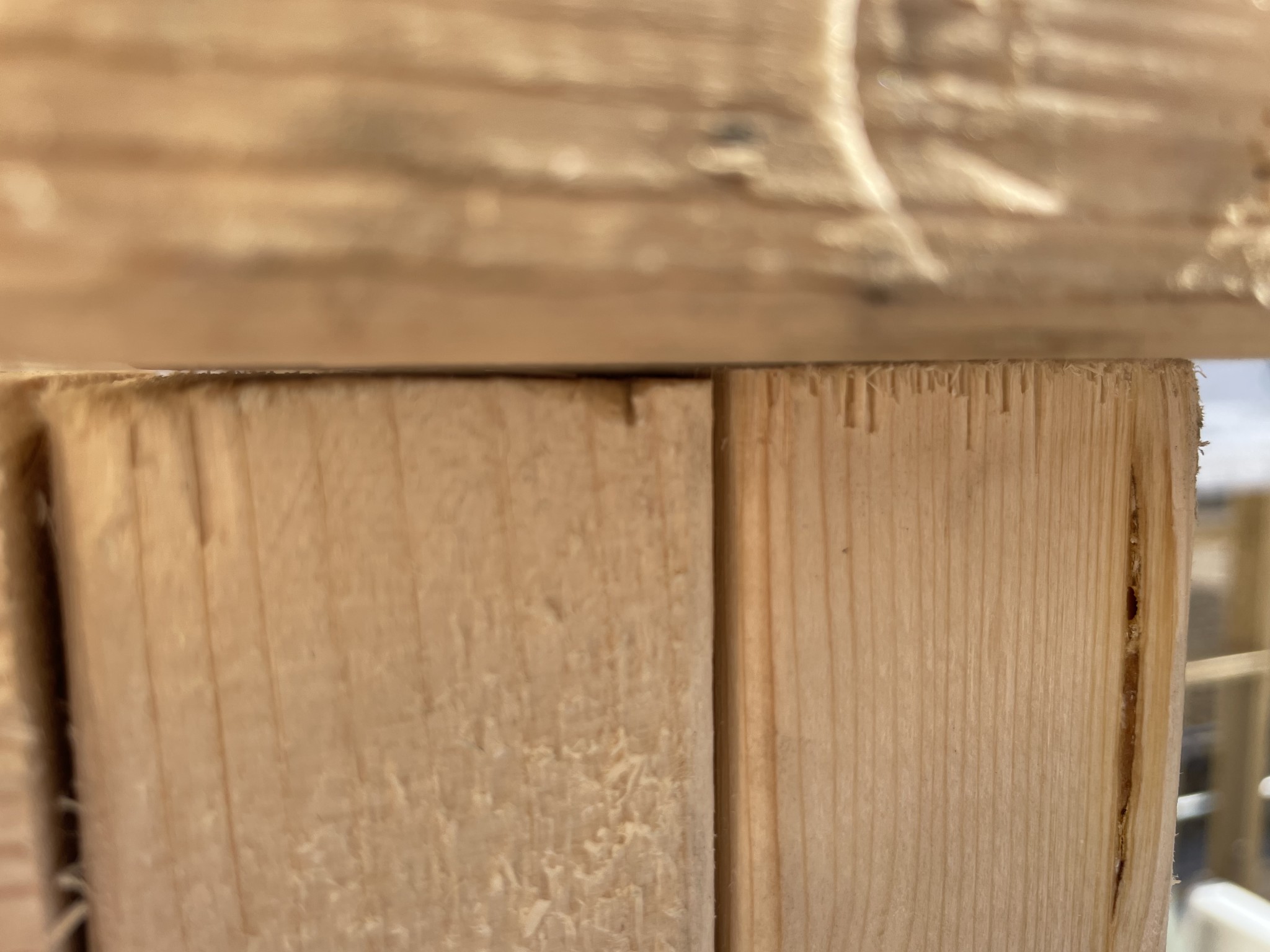
I went to check it out yesterday and noticed that the stud beams that are nail-laminated are not cut straight. This means that the studs, which become load-bearing pillars, actually only have contact surface against roughly one 45x95 at each end.
See the pictures in the post for how it looks.
Should I demand that this be redone, or am I just being overly picky?
The carpenter says that it's enough to put in a wedge so that it aligns with all the posts. Is that really enough?
He also says that "as long as you're not planning to have an excavator on the upper floor, it's fine."
What should I do?
I went to check it out yesterday and noticed that the stud beams that are nail-laminated are not cut straight. This means that the studs, which become load-bearing pillars, actually only have contact surface against roughly one 45x95 at each end.
See the pictures in the post for how it looks.
Should I demand that this be redone, or am I just being overly picky?
The carpenter says that it's enough to put in a wedge so that it aligns with all the posts. Is that really enough?
He also says that "as long as you're not planning to have an excavator on the upper floor, it's fine."
What should I do?
That's not a problem.

When pressure is applied to it, it becomes smooth.

Thank you so much for so many quick responses! Now I can feel calm! This forum is fantastic in that way ☺️
The carpenter sounds so arrogant when I've talked to him about it. It sounds like he got irritated just because I even asked.. Therefore, I became a little skeptical.
Can I also be calm about the wedges they placed under the floor joists against a load-bearing wall? The nogging in the wall has become the same height as the bottom of the glulam beam, but it should actually be 10 mm higher. Therefore, they have inserted wooden wedges that are 10 mm, it feels like they are really tight and secure. Is that also an okay way to do it?
The carpenter sounds so arrogant when I've talked to him about it. It sounds like he got irritated just because I even asked.. Therefore, I became a little skeptical.
Can I also be calm about the wedges they placed under the floor joists against a load-bearing wall? The nogging in the wall has become the same height as the bottom of the glulam beam, but it should actually be 10 mm higher. Therefore, they have inserted wooden wedges that are 10 mm, it feels like they are really tight and secure. Is that also an okay way to do it?
U
Utsliten och utdömd
Building conservationist
· 2 829 posts
Utsliten och utdömd
Building conservationist
- 2,829 posts
hard to say without a pictureHenrik_z said:Thank you so much for so many quick responses! Now I can feel at ease! This forum is fantastic in that way ☺️
The carpenter sounds so arrogant when I've talked to him about it. It sounds like he got annoyed just because I even asked... Thus, I became a bit skeptical.
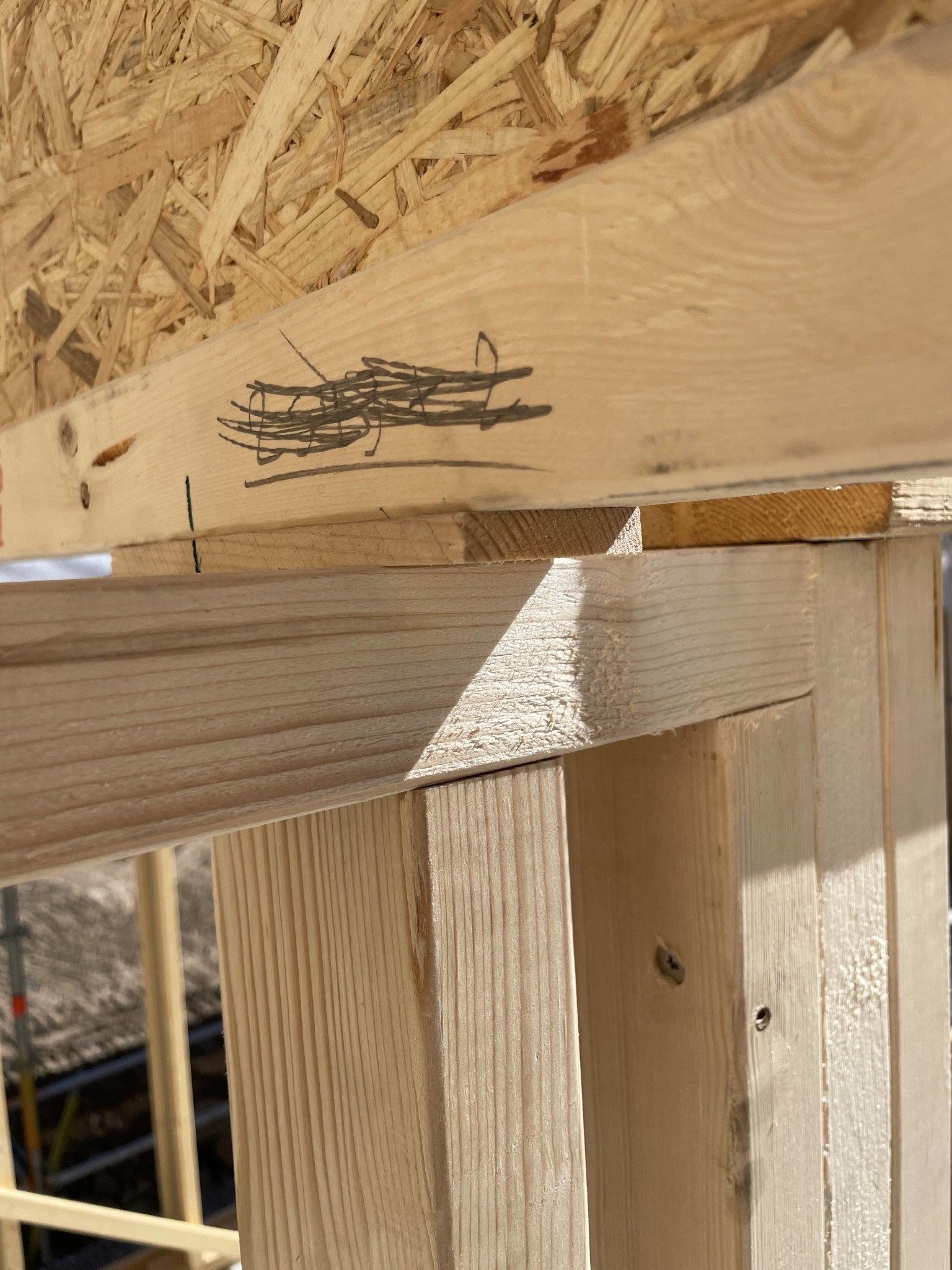
Can I also be at ease with the shims they placed under the floor joists against a load-bearing wall?
The top plate in the wall has become the same height as the underside of the glue-laminated beam, but it should actually be 10 mm higher.
That's why they've put in wooden shims that are 10 mm, it feels like it's really tight and good.
Is it also an okay way to do it?
U
Utsliten och utdömd
Building conservationist
· 2 829 posts
Utsliten och utdömd
Building conservationist
- 2,829 posts
Yes, that's not a problem either. However, I would have used plastic spacers or something similar to avoid the risk of it cracking. But I wouldn't redo that, it looks good anyway 

Click here to reply