
860 views ·
14 replies
860 views
14 replies
Can I drill broken holes in a brick wall?
I have drilled 10 mm holes in plastered solid brick for an IKEA METOD rail for my kitchen frames, but the holes ended up being too shallow and somewhat damaged by the hammer drill. I tried using 10 mm plugs and 6 mm screws, but they just spin in the holes.
Can I salvage the existing holes by drilling them up to 12 mm without hammering in the brick and using 12 mm plugs + 8 mm screws, instead of moving the holes and risking attachments being too close together?
Thank you very much!
Can I salvage the existing holes by drilling them up to 12 mm without hammering in the brick and using 12 mm plugs + 8 mm screws, instead of moving the holes and risking attachments being too close together?
Thank you very much!


Admittedly a slightly different problem. In my son's apartment, there were some form of 1940s “lightweight concrete” blocks in the walls. It was too soft, impossible to get any plug to hold. Then used chemical anchors and pieces of threaded rod. It worked well.


You should have a screw 2mm smaller than the plug and the hole at least 10 mm deeper than the plug (the screw at least 5 mm longer in the hole than the plug). In brick, you can use expansion plugs. Depending a bit on how "tight" your hole becomes with the 10 mm drill bit (if you wobble, it gets wider), the plug can be perhaps 8 or 10 mm (it should easily go in, have more depth left in the hole, and then expand slightly by a 2 mm narrower screw that goes slightly longer than the screw). Then there are chemical anchors and construction glue, etc., to complement. It's probably uncommon for the brick to crack inside the wall if you have good drilling/technique and moderate depths for the holes, but at a corner, the counterpressure might be weaker. You can fill the holes you don't intend to use and putty the surface if you don't want many holes in the wall.
e.g. info
https://www.hornbach.se/projekt/valja-plugg/
e.g. info
https://www.hornbach.se/projekt/valja-plugg/
Best answer
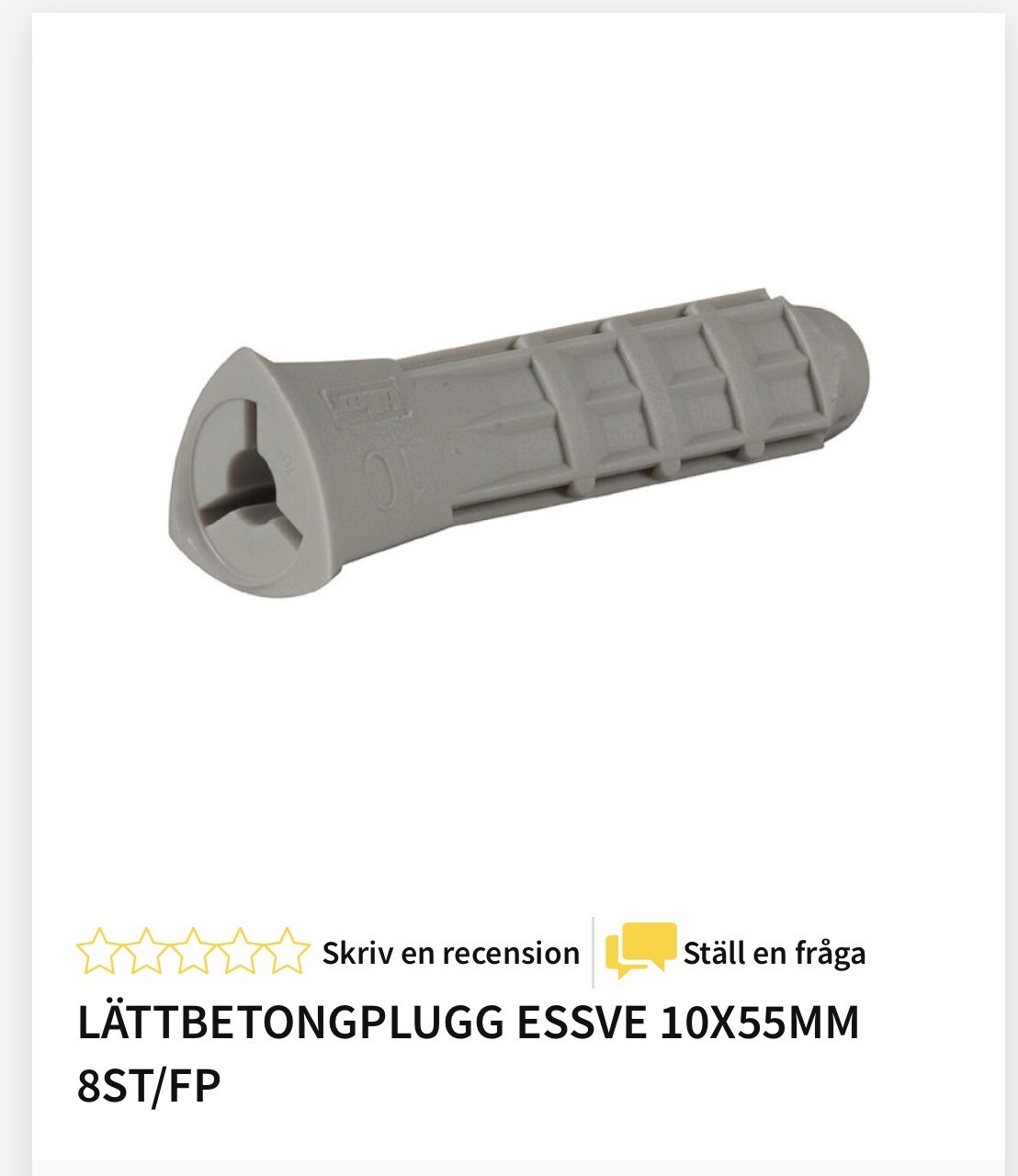
Regular plugs don't work in porous walls, these are good..Fillefire said:
I drilled 10 mm holes in plastered solid brick for IKEA METOD rail for my kitchen cabinets, but the holes were too shallow and slightly damaged by the hammer drill. I tried using 10 mm plugs and 6 mm screws, but they just spin in the holes.
Can I save the existing holes by enlarging them to 12 mm without using the hammer in the brick and use 12 mm plugs + 8 mm screws, instead of moving the holes and risking too close fastenings?
Thank you very much!
Widened and deepened the holes and used 12 mm universal plugs with 8 mm screws. Worked okay but didn't dare to tighten too hard, some screws slipped but matches solved it. Two holes have no brick, looks like mortar or plaster. Coarse-grained and extremely porous. Uploading a picture but it's hard to see.
How would you rank the options:
1. Lättbetongplugg
2. Glue + plug, let dry, screw
3. Chemical anchor
How would you rank the options:
1. Lättbetongplugg
2. Glue + plug, let dry, screw
3. Chemical anchor
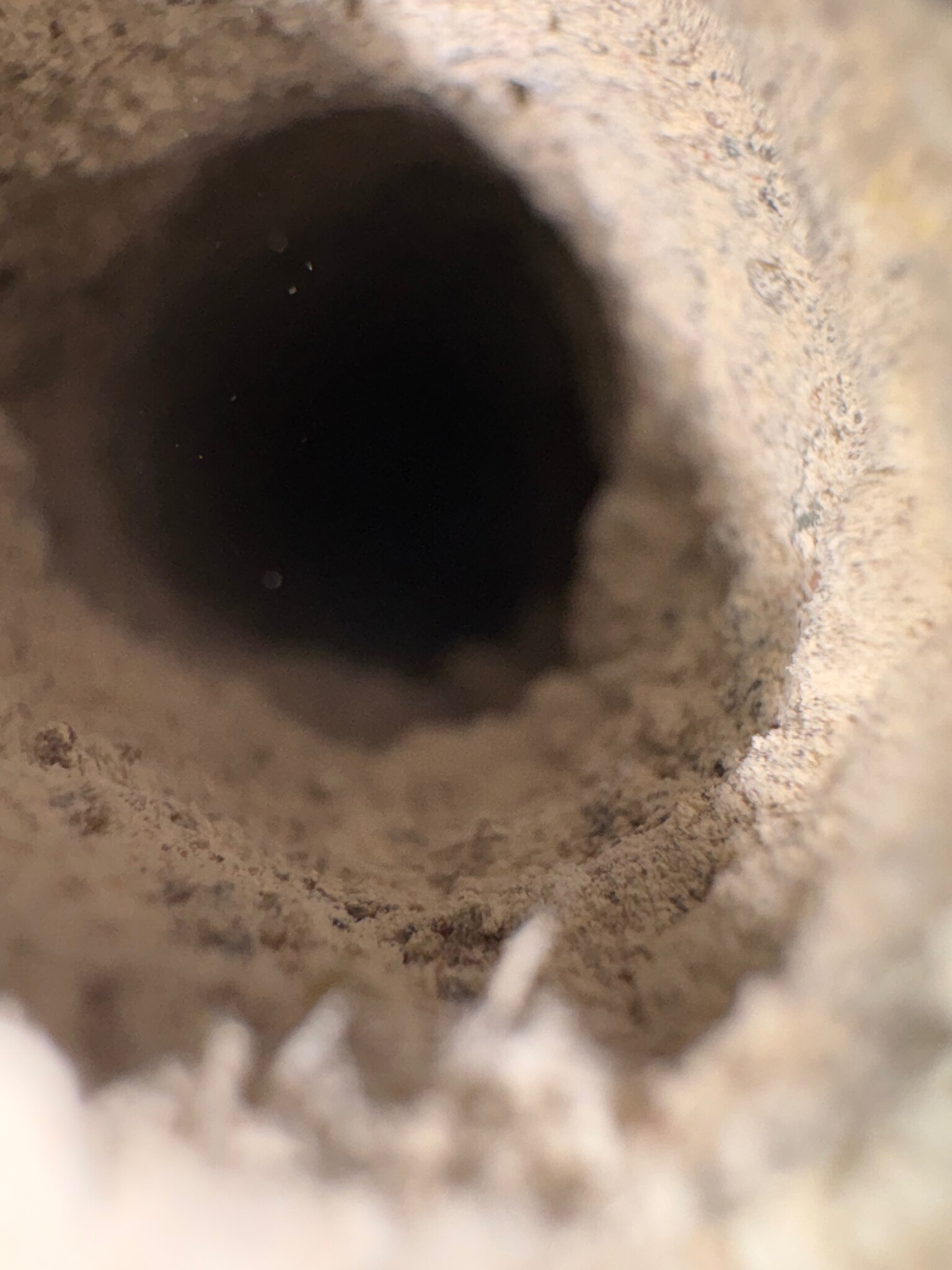
It ended up being chemical anchors! Seems to work well. I was a bit worried about how it would adhere to such porous material, so I didn't apply too much pressure when attaching it.RoTe said:
Click here to reply