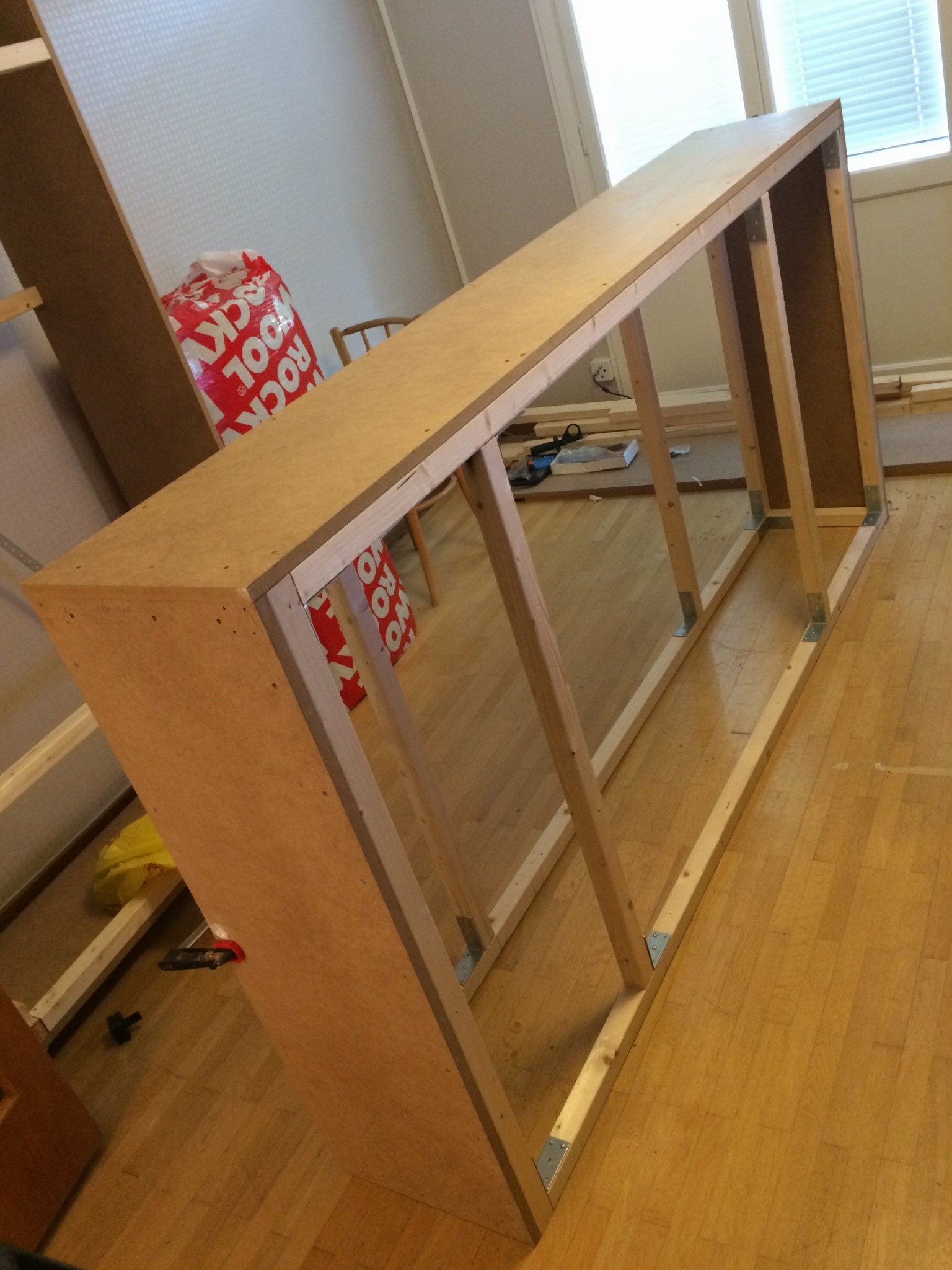
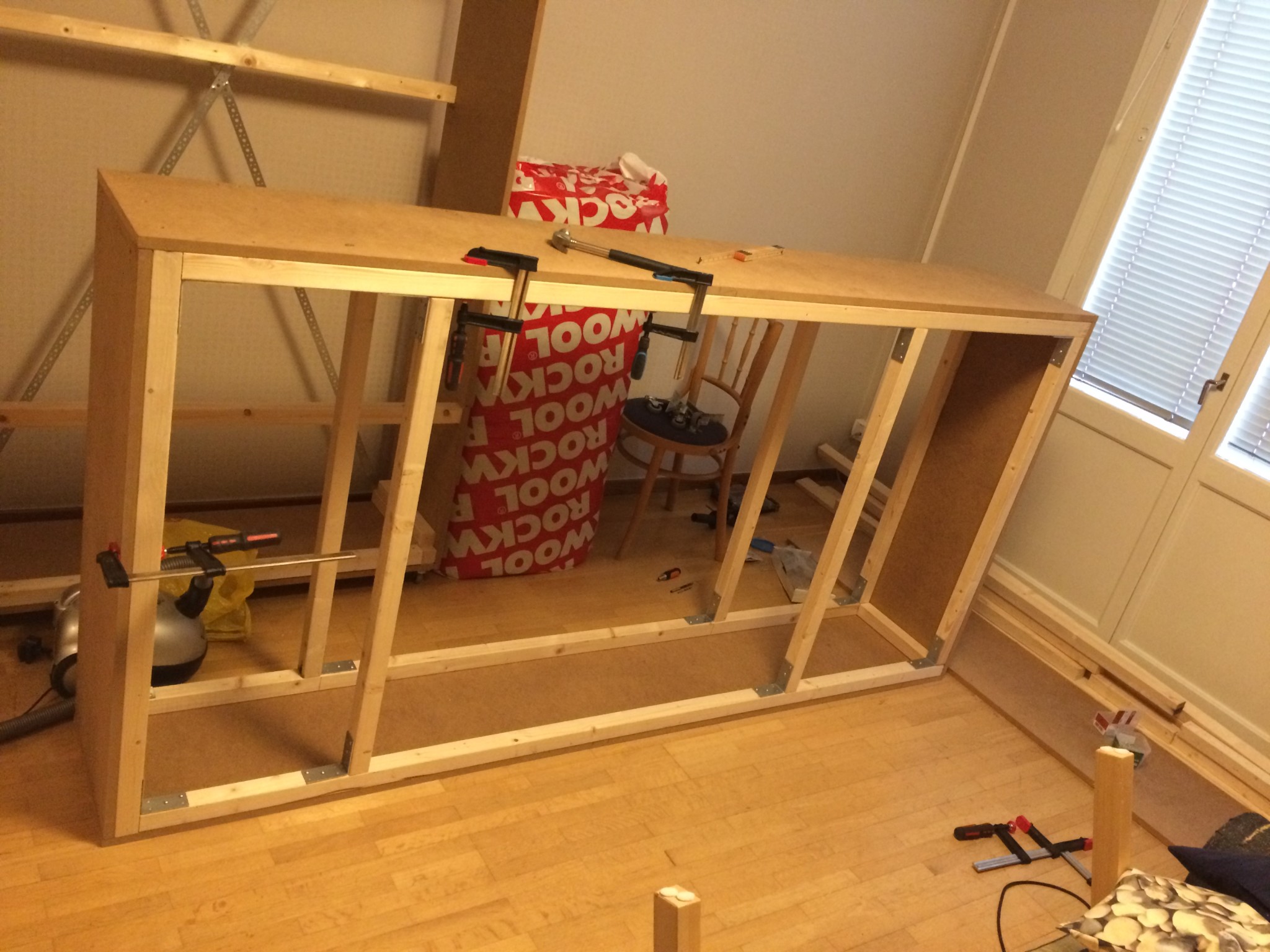
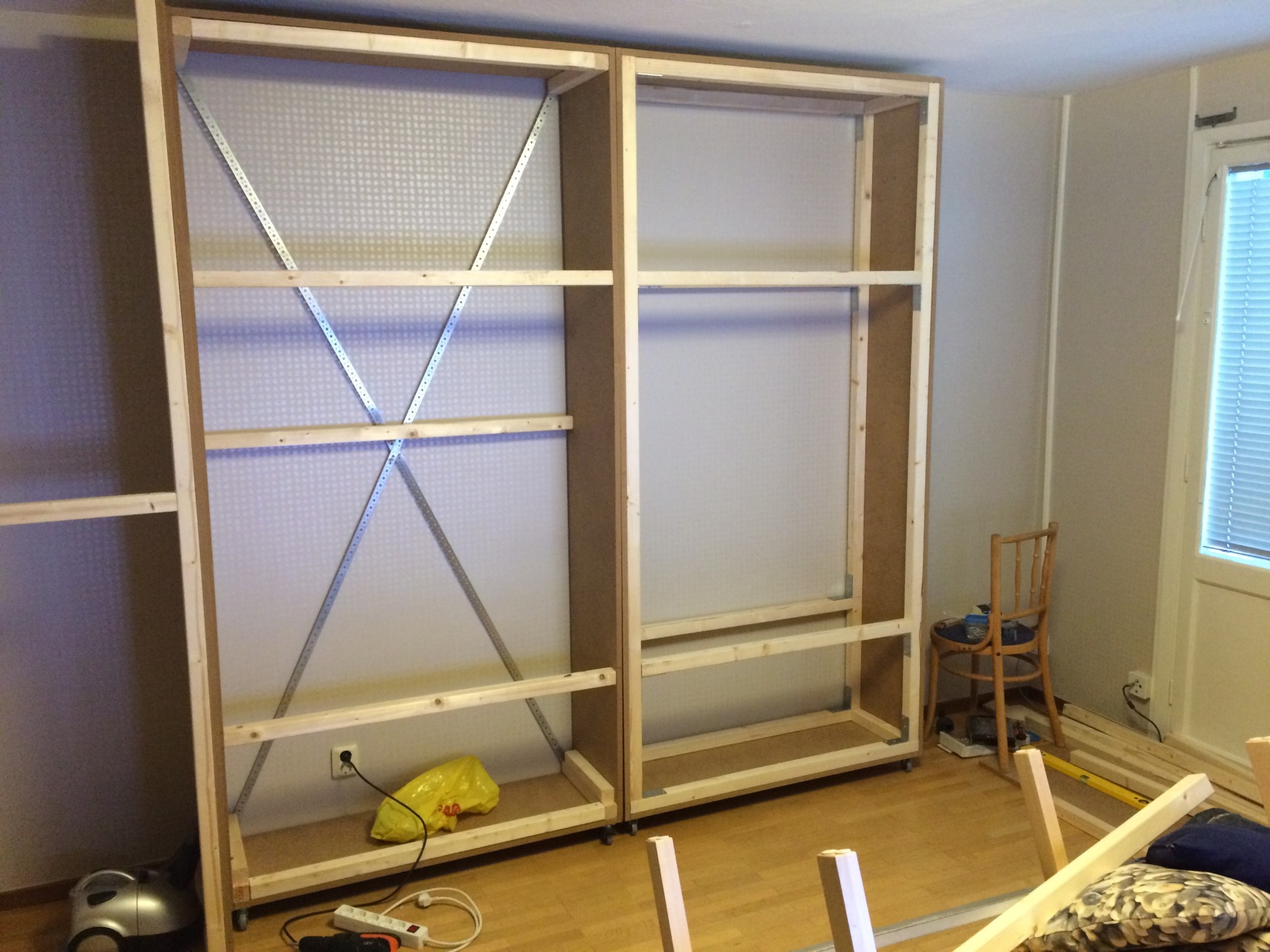
I don't quite understand how you envision the continuation of the construction. I build things like this daily and as I mentioned earlier, you should build a frame of wood. How are you going to mount the fabric?
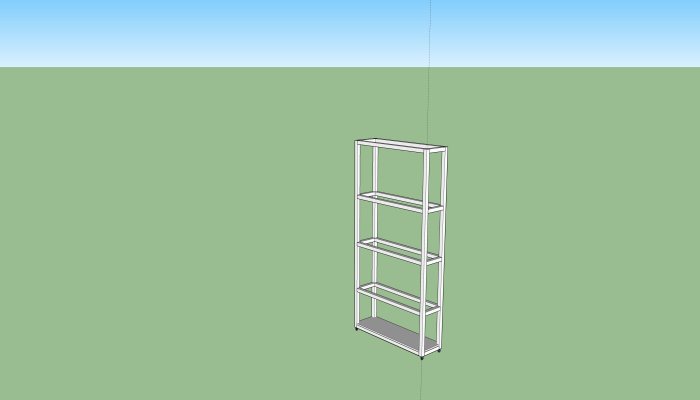
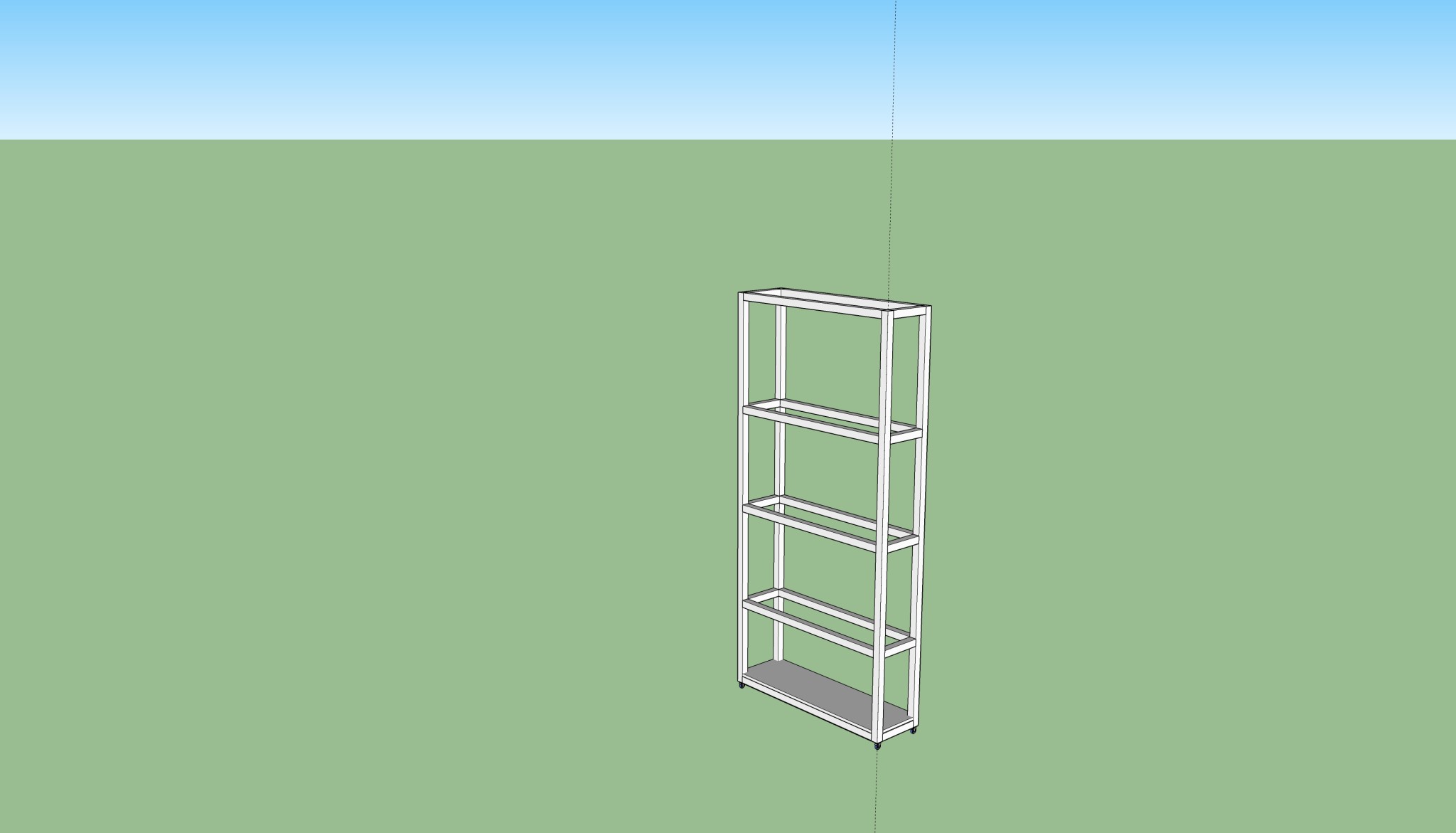
The fabric I thought I'd stack in the MDF end grain. The idea for the construction that we used was my dad's, with a little help from a carpenter at his job. But are there better ways, then? I know you mentioned that about the frame earlier in the thread. Do you mean like this then?
Plus MDF on the sides.
I have two questions. How could they tip and how did you raise them? Were they really assembled on the ground as they appear in the picture? Shouldn't the diagonal of the box be more than the ceiling height? Then I think scratches will always be possible as long as there's sand in the way. This is based on my own display cabinet with storage behind, they have about 5mm clearance before the plastic mat came. You can hear when there's something underneath
So vacuum before you move them is my tip, a couple of brushes on the front edge might work but not so nice-looking.
larry78: They are 5 cm lower than the ceiling = 2 cm clearance for the diagonal. So they were really easy to set up. Thanks for the tip about the cleaning!
Björn:
Would you mind sketching a quick design of how you envision the whole construction? Or is my picture how you're thinking?
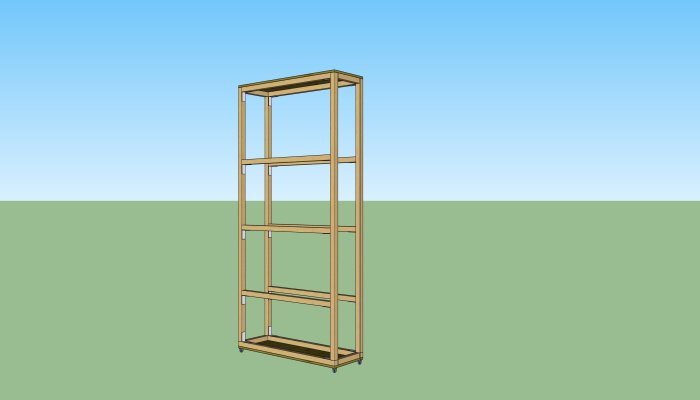
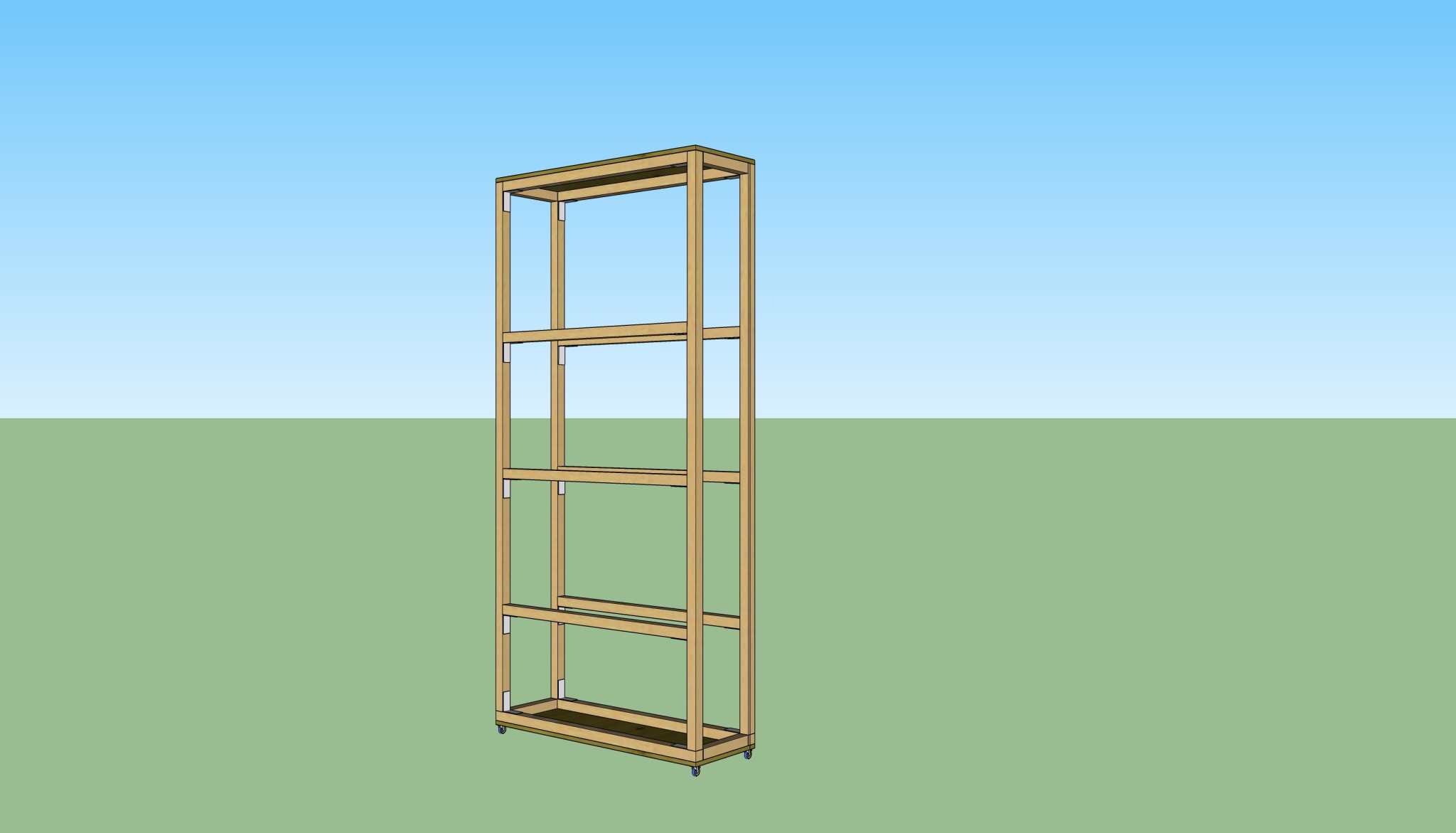
Now I have taken apart one of the gobos. I'm redoing them. I'm going to Byggmax to buy extra joists. Do you think my design works, Björn? Or how would you have done it?
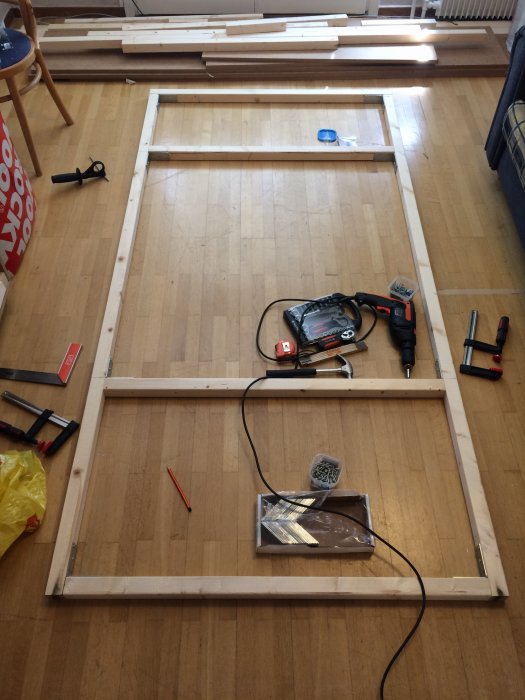
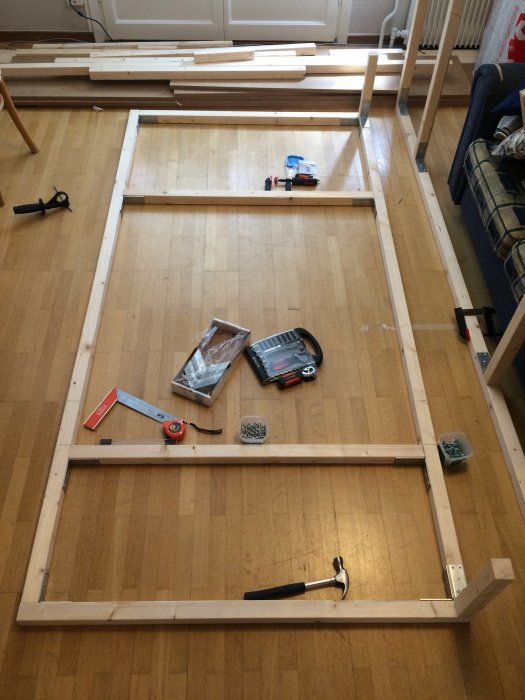
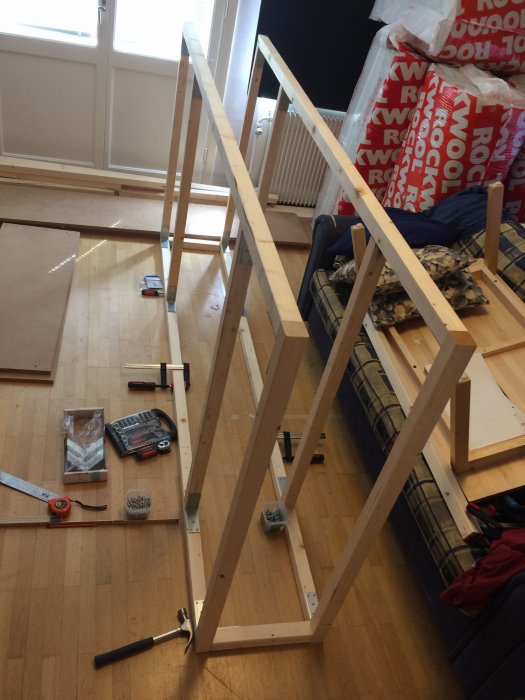
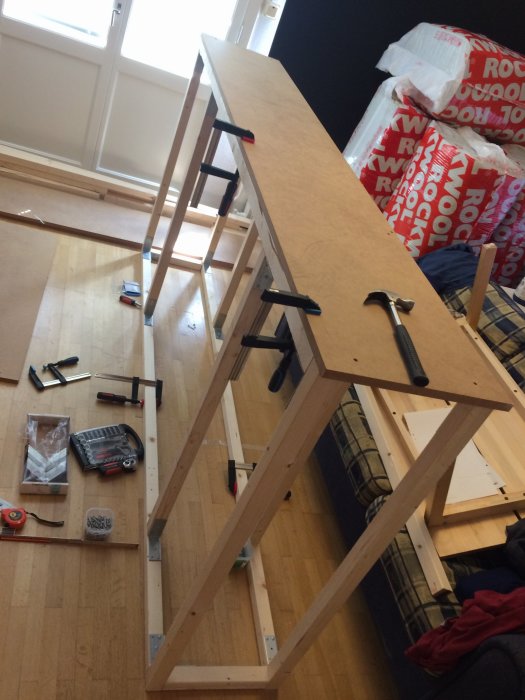
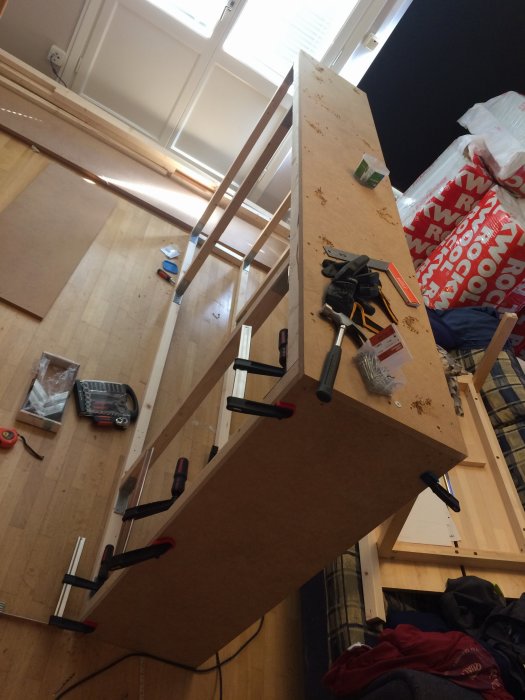
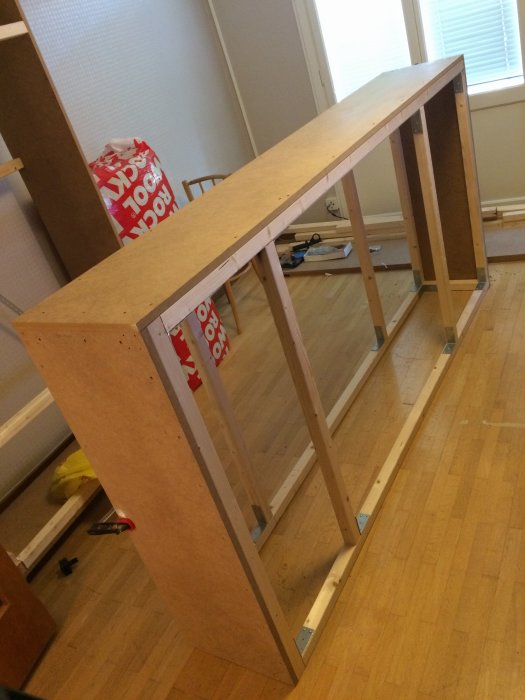
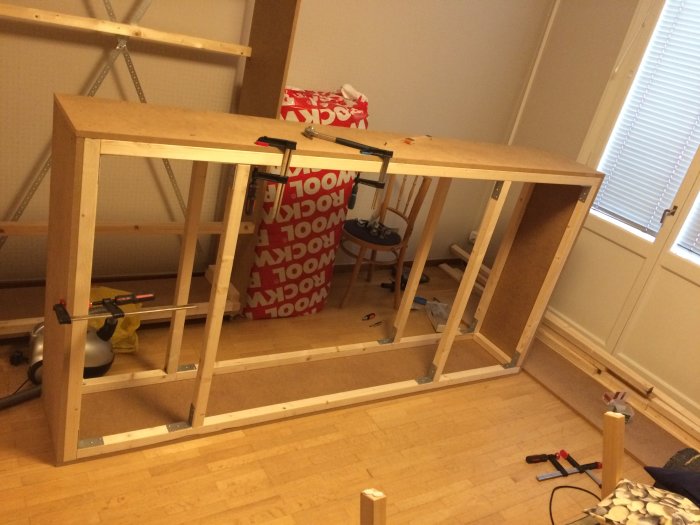
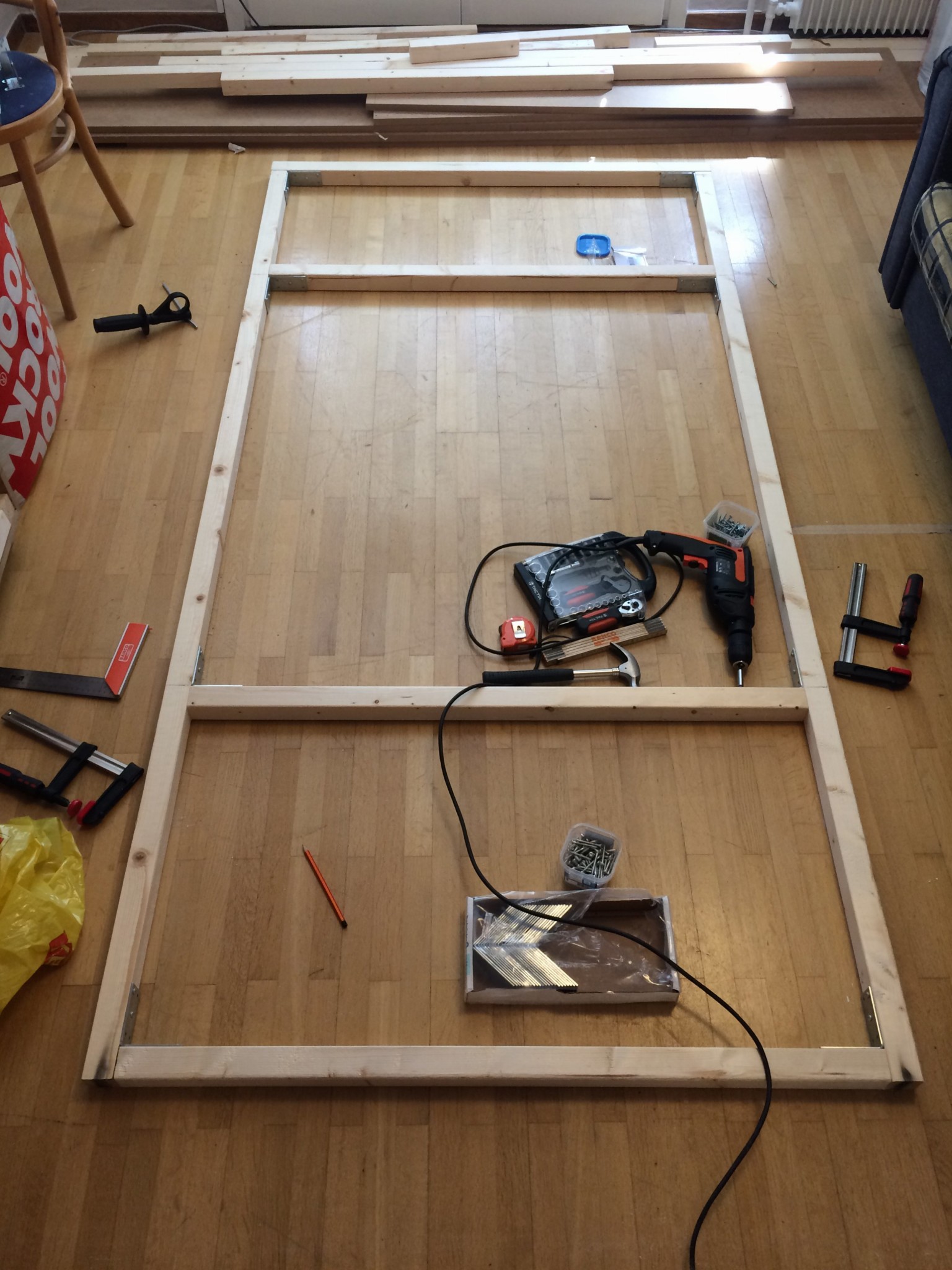
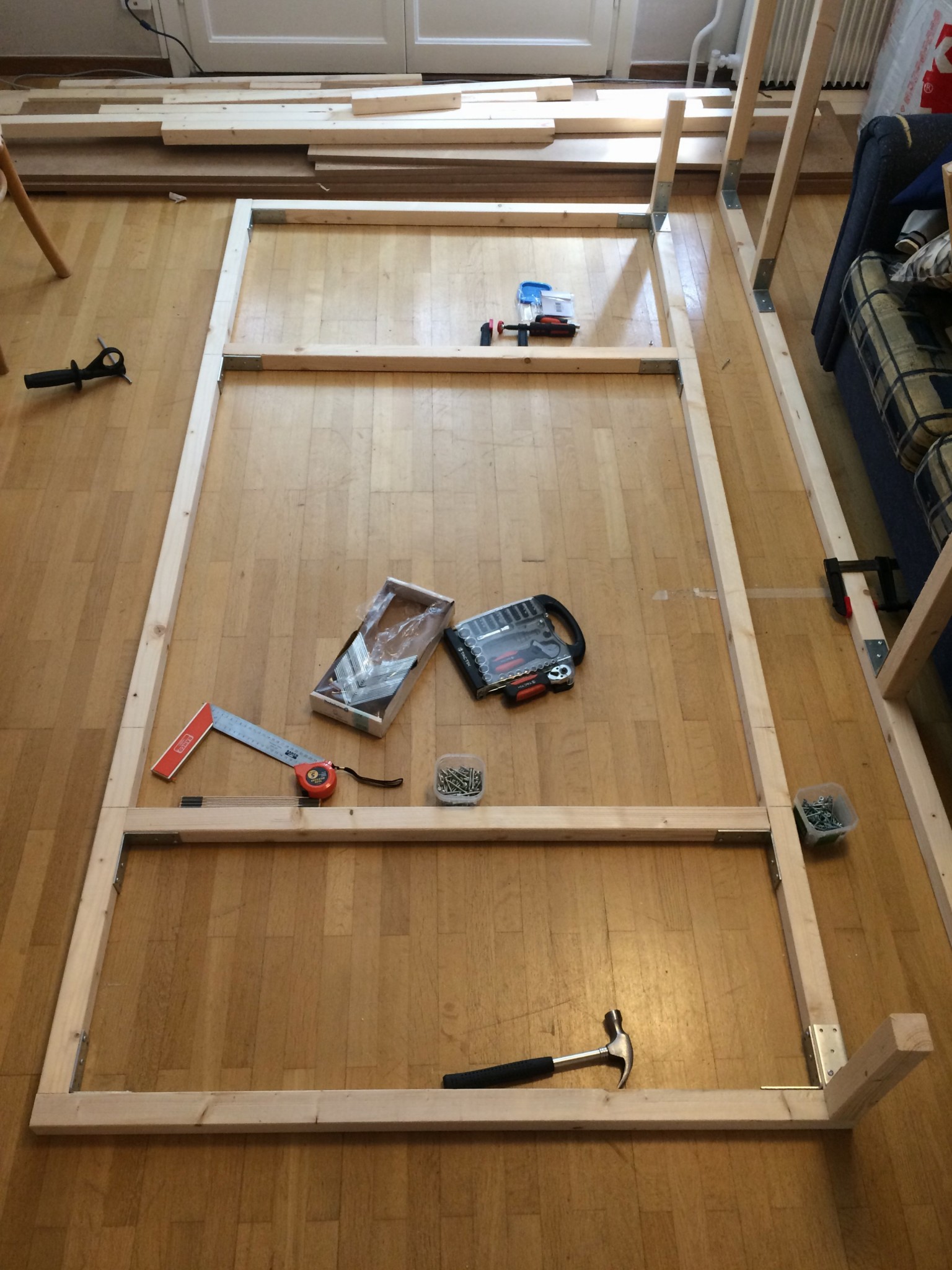
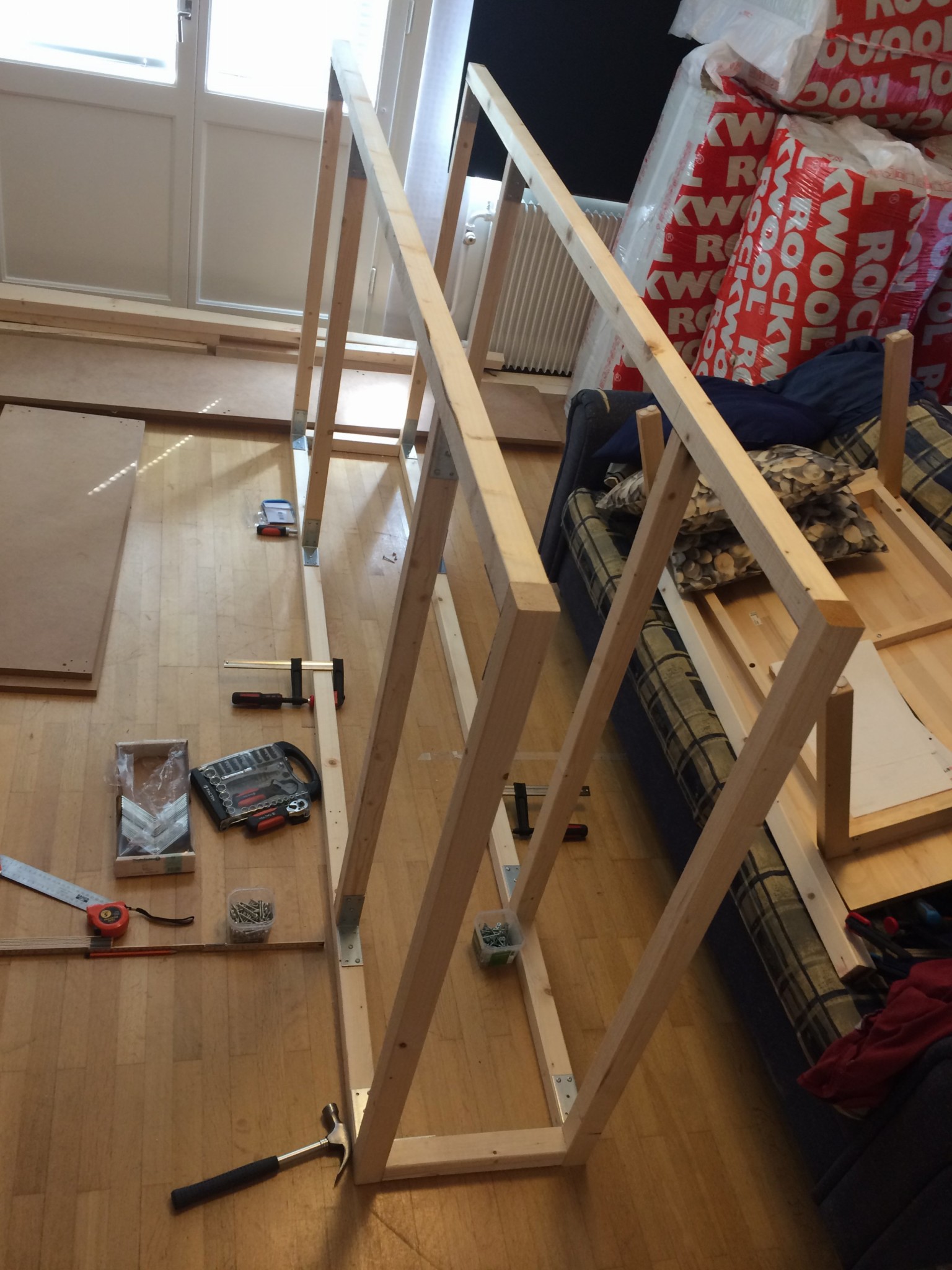
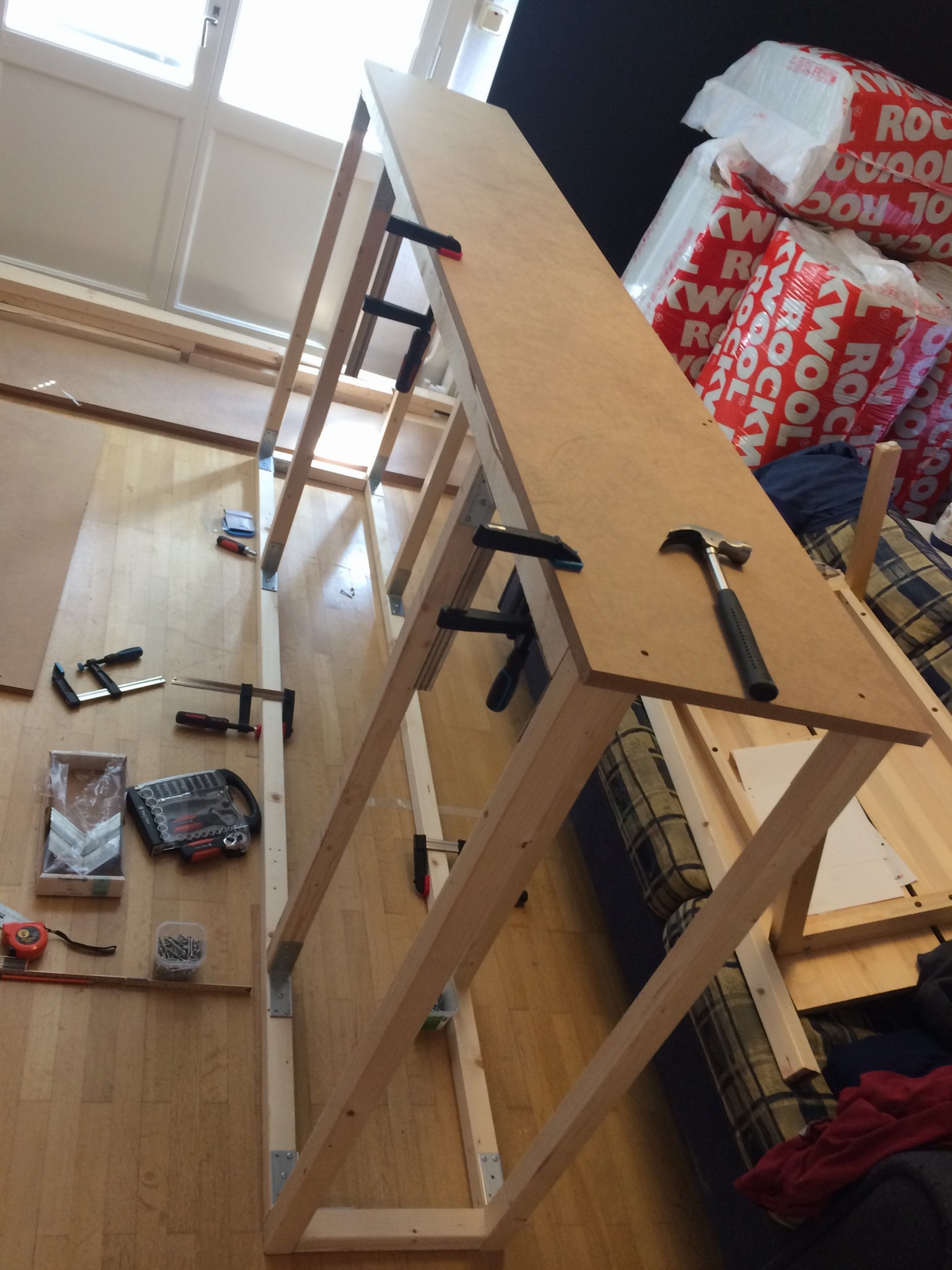
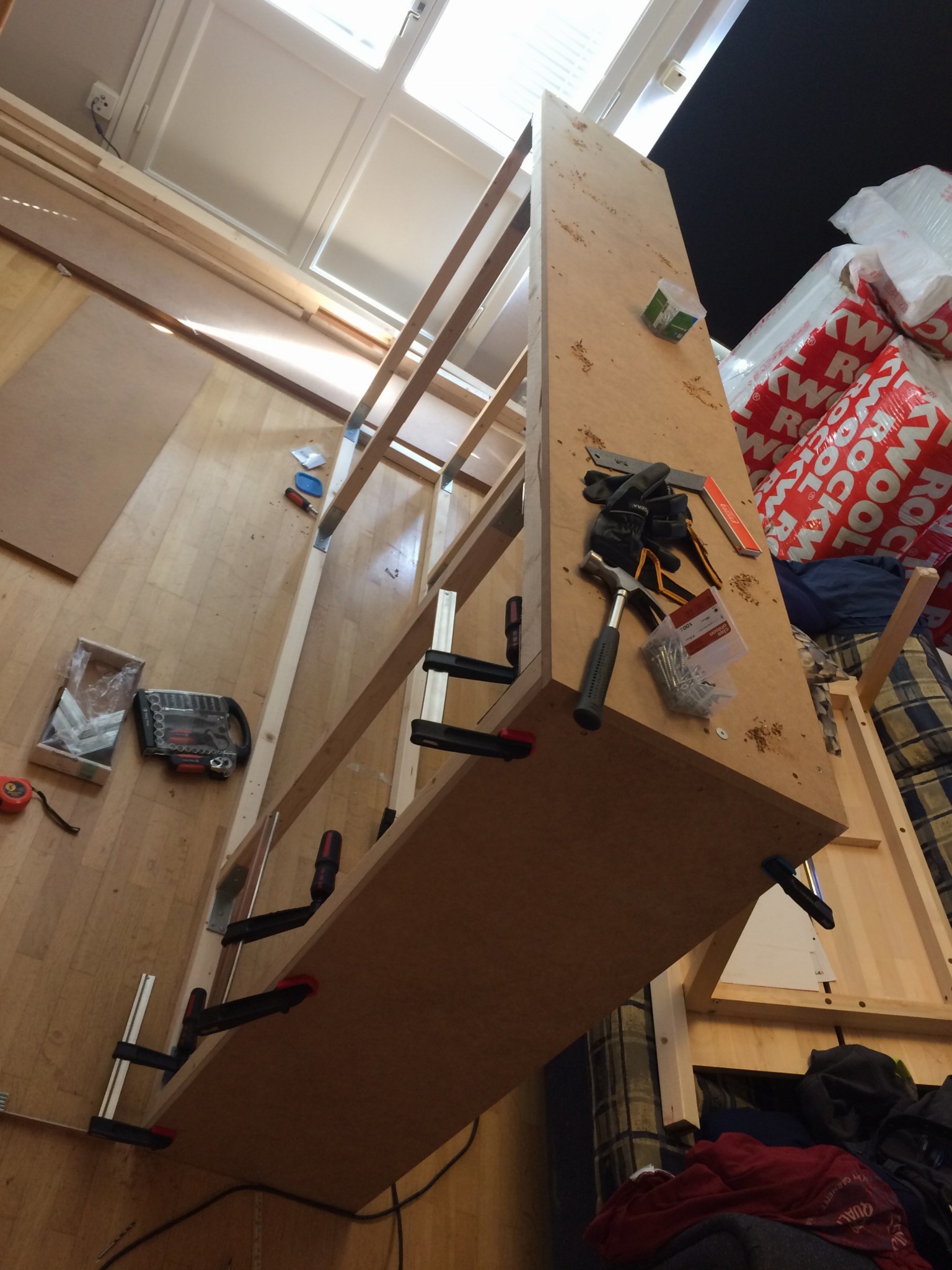
I have already started. Completed one side. It takes a long time... Measuring and cutting each piece with millimeter precision. Using a miter saw to make it perfectly straight. Then I assemble it with angle and tape measure with millimeter precision there too. Not sure if it's overkill, but now it WILL be straight and angled correctly. Cross-measured and there was a 0.3 mm difference between the corners. That must be considered acceptable. I probably won't be finished this weekend anyway. I've assembled only one side of a gobo and it took seven hours. Feels like I'm being too meticulous, but I don't want it to be crooked or have a gap anywhere. Plus, I'm working alone, so it naturally takes longer.
Anyway, I'll probably finish a gobo before the weekend is over at least.
A few pictures!
Now it should darn well be 90 degrees, straight, and no gaps!
What's left to do are the wheels and cross-measuring. I plan to finish both gobos and place them next to each other, clamp them together, and then cross them with the steel bands. That should reduce the chance of gaps even more, I think.
A question for you Björn. What fabric do you recommend? I know you should be able to blow through the fabric and it should have a bit of stretch, but I don't know where to look. What fabric do you usually use?
Absolutely right, you need to be able to blow through the fabric. If you want a cheaper option, buy from Ikea. However, that quality (nothing to do with sound) can't be compared to more expensive fabrics that are better woven and thus provide a nicer final result.
I work with this kind of stuff daily, and often I use Karat from Svensons or BlazerLite from Camira, depending on what the customer wants.