How good that I made myself understood. I think you can go up a bit in thickness.
If you are not used to painting MDF (although it is not difficult), it is a good idea to send the pieces for lacquering. Compare prices between different lacquer companies and see if any can fit your pieces in when something else is being lacquered white.
When I think of lacquer, I think that you can see the wood through it, but maybe that's not the case? I want the trellises to be covered with white paint, so to speak. Will they be with lacquer? If so, I'd be happy to do it!
One last question. Can I stack the insulation on its side on the short edge? If I make the Gobos exactly as wide as the boards?
Is there any risk of those at the bottom being compressed? The compartment closest has two studs that I attach the panels to, but the rest of the gobo has them stacked from floor to ceiling.
Okay, one more question. Dad is coming soon and then we will buy studs and stuff.
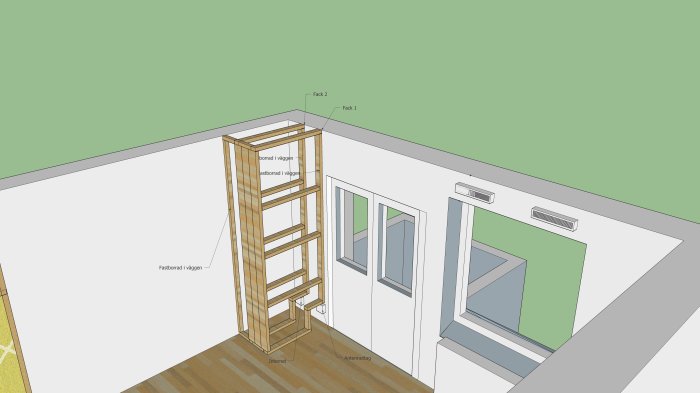
The corners in the back wall will be fixed. Do you think two compartments are needed? Or whatever it's called. One compartment closest to where I attach slats and fabric and one 36 cm back where I attach chicken wire that prevents the insulation from falling backward? Or is that overkill? Is there another way to solve it?
In the fixed sections, no additional framing is needed, so one compartment is sufficient. You don't need to worry about the insulation being compressed by its own weight.
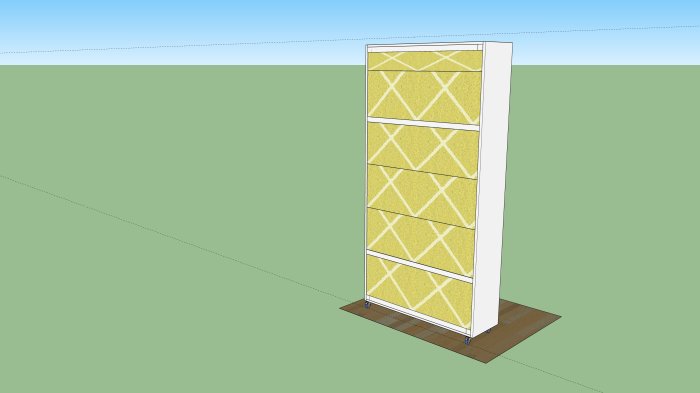
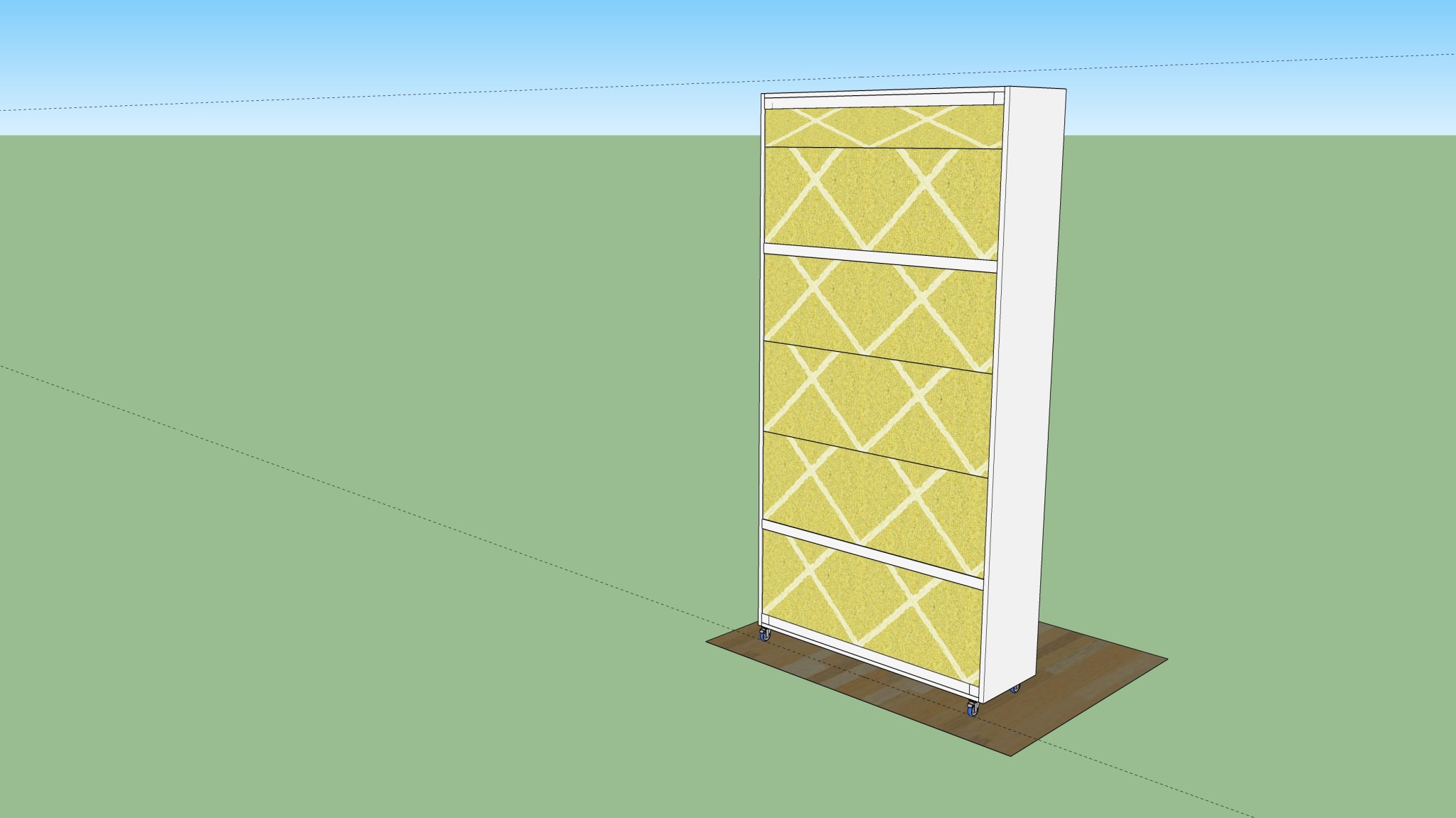
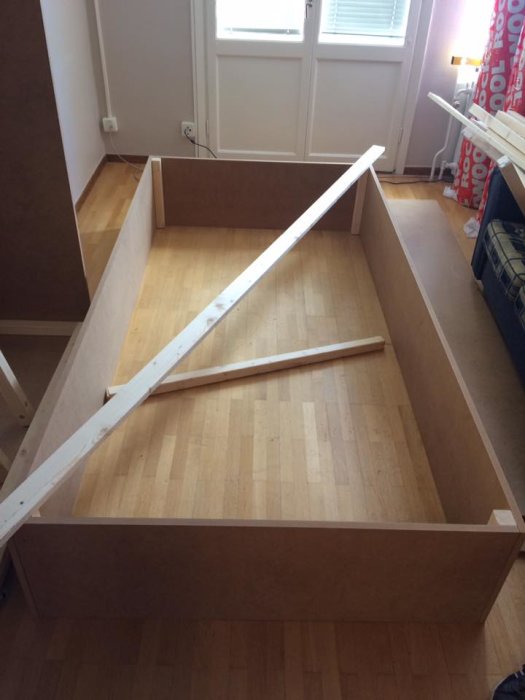
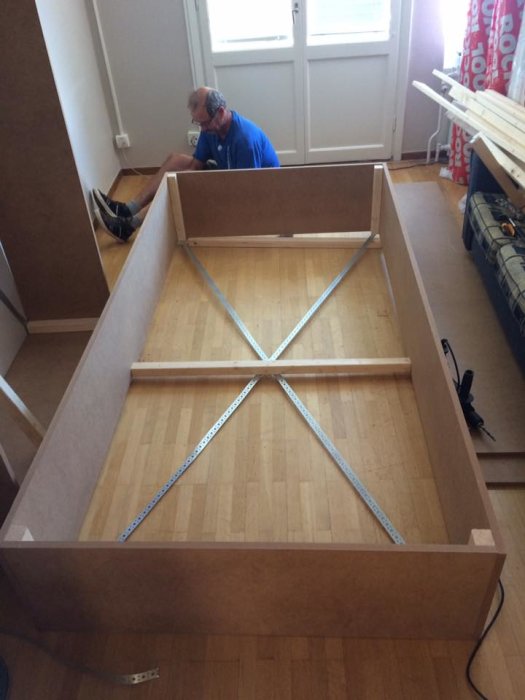
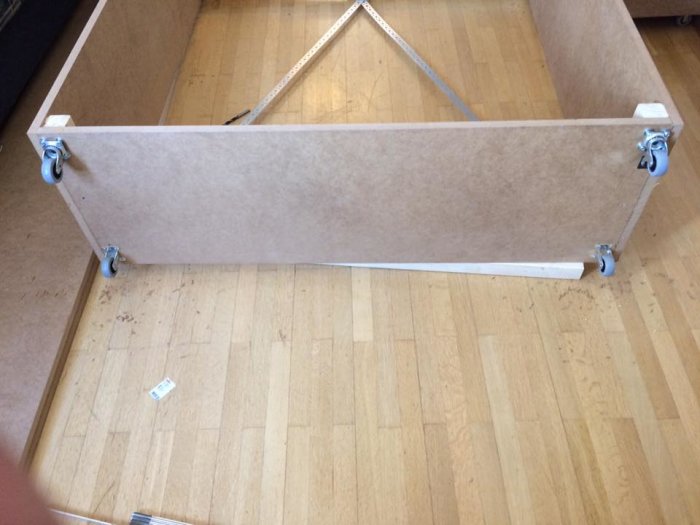
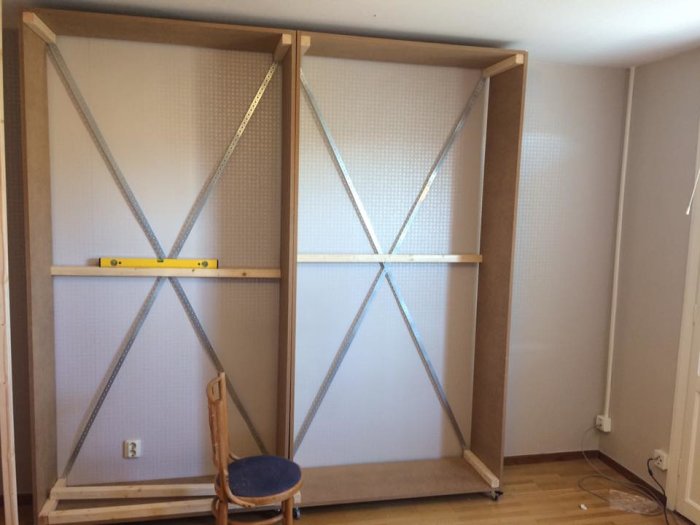
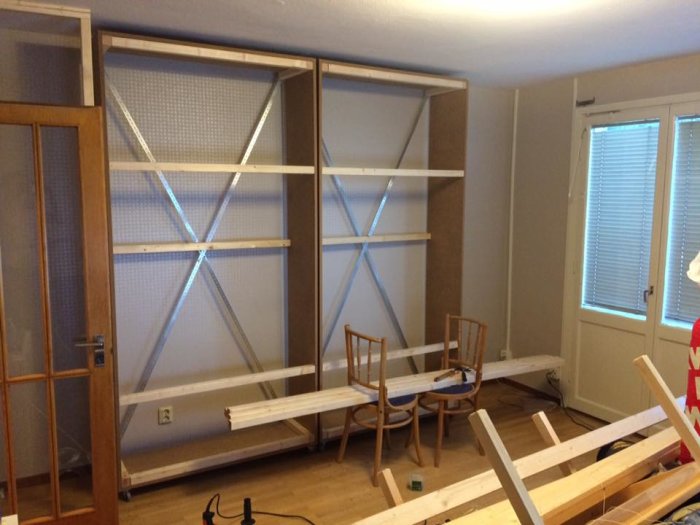
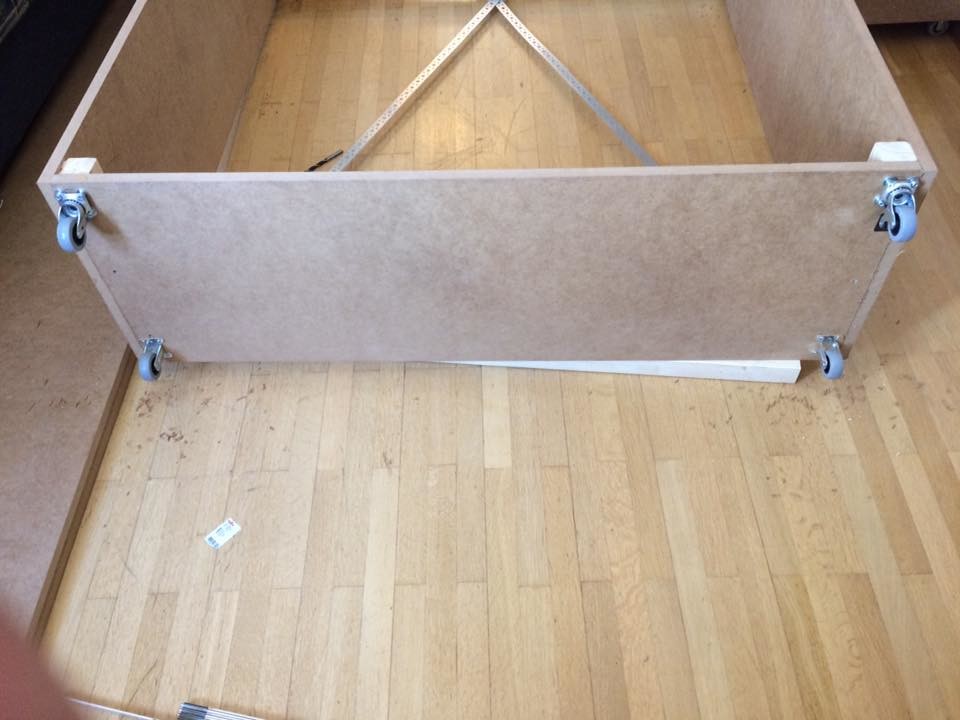
Finally started! This turned out insanely robust, not a chance they will topple over as I was afraid they would. If you bump into them, they just roll away. The wheels help with that! But they probably wouldn't topple over anyway.
If they're only going to be moved back and forth on the same track all the time, I would probably have chosen fixed wheels instead of the pivot variant, otherwise it looks very good.
Edit: if you look closely, you can see very clearly that you've used fixed wheels on one of the pairs (I blame the early hour).
But I would probably still test if it works well with 4 fixed wheels.
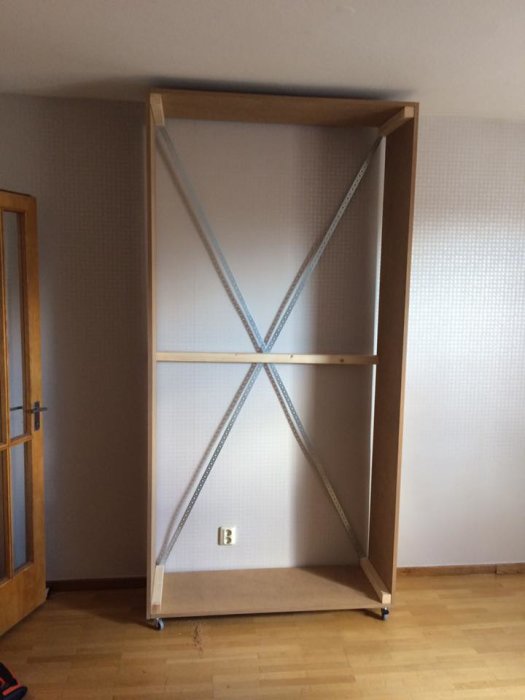
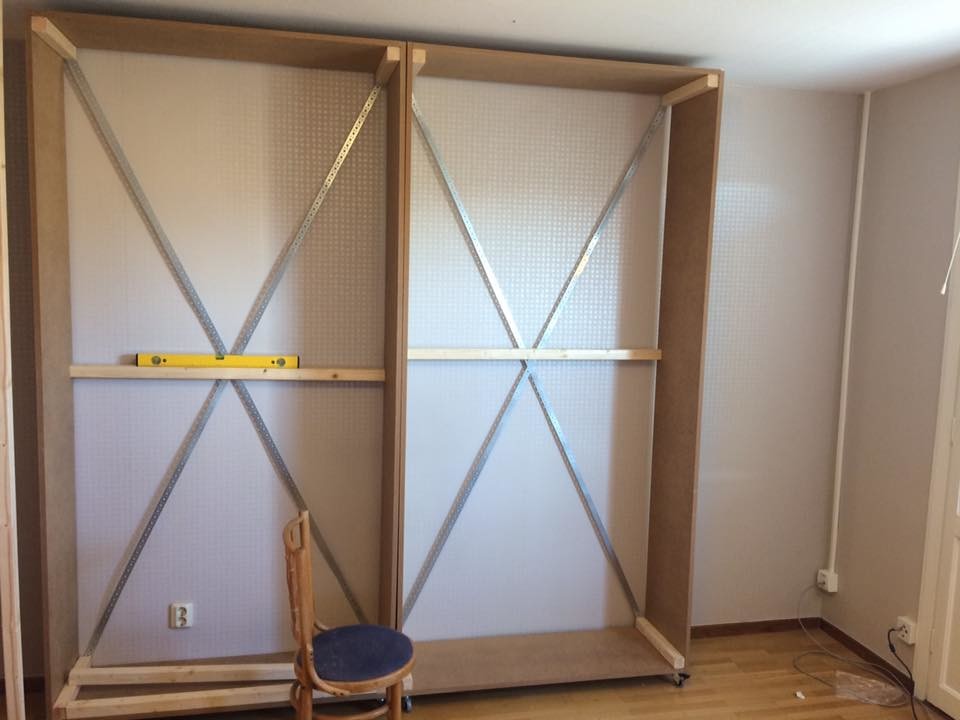
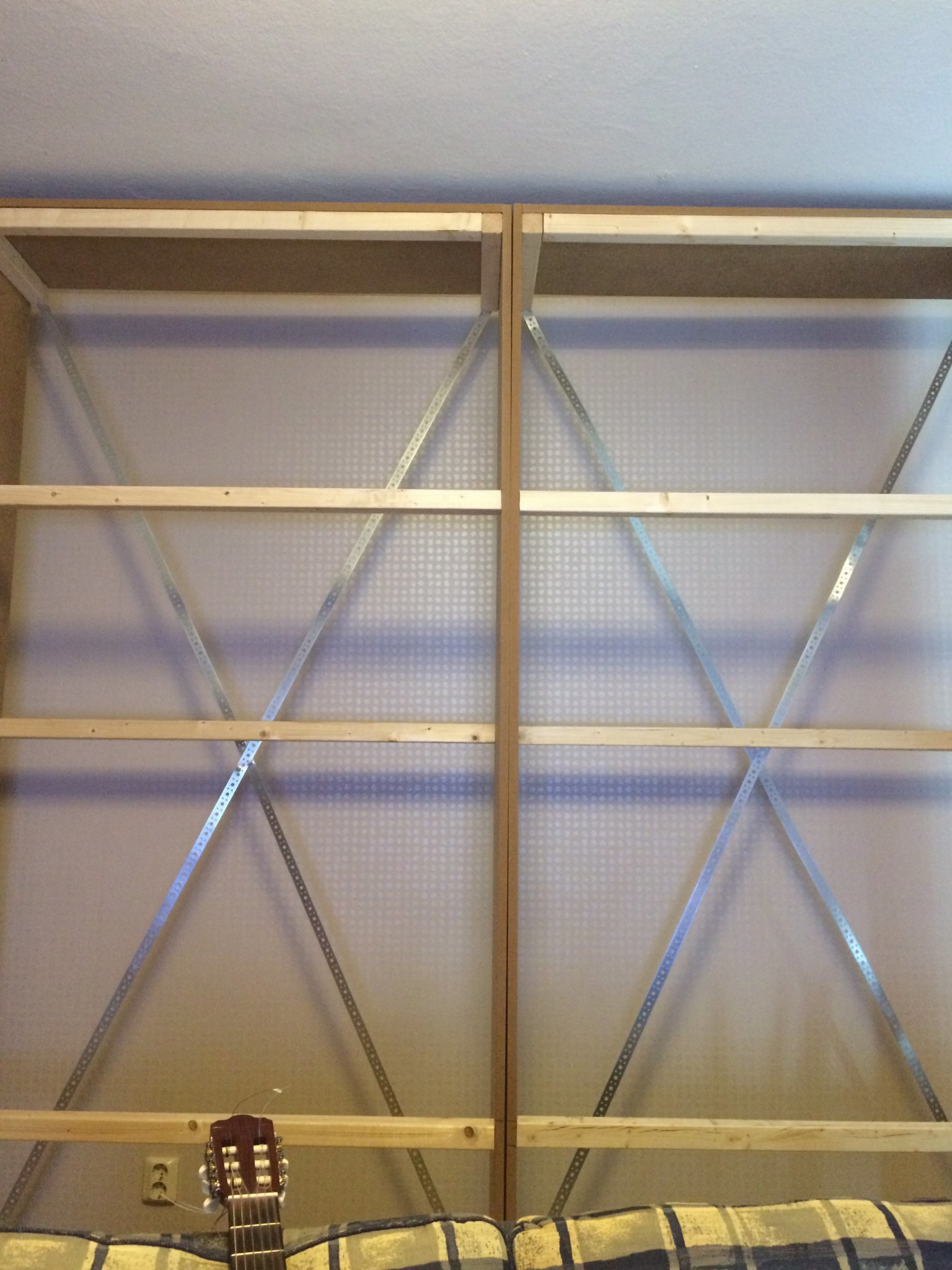
Hey! A question. Both of these boxes (gobos) are not straight. I don't know what happened, if it was like that from the beginning or if it became that way. Anyway, when I place them next to each other and press them together, they are joined in the middle but at the top and bottom, there's a gap of 4-5mm. Is that something I have to live with? I've tried to correct it but it doesn't work. I've changed the length of the crossbars to pull them together in the middle but the gap is still there. Am I being fussy now or will it be noticeable? Or do I have to live with it not being perfect?
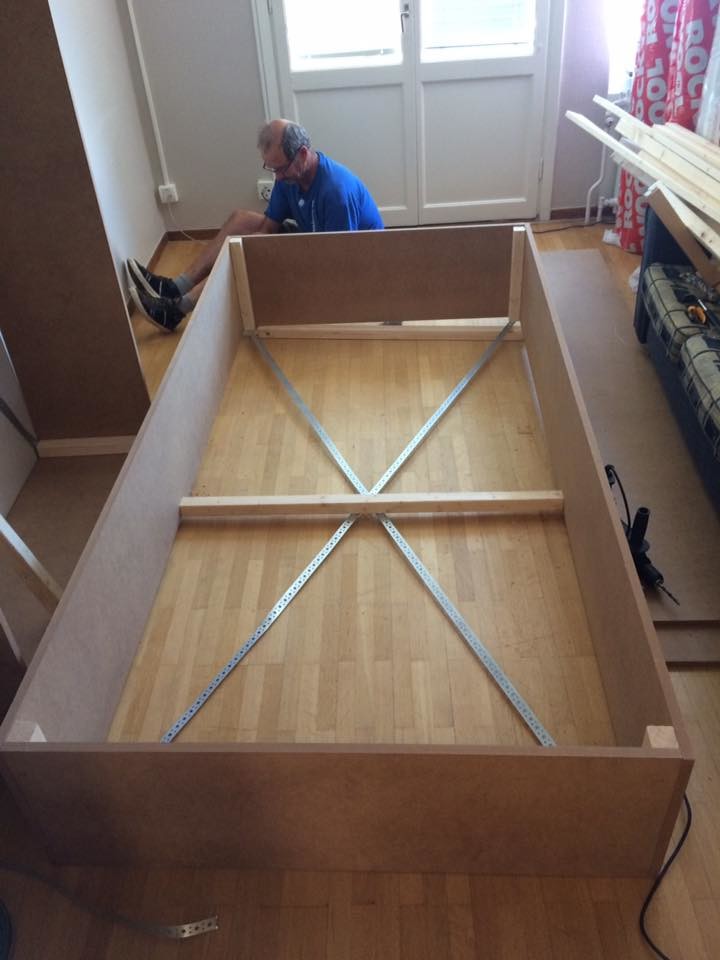
The strange thing is that all the cross beams are almost exactly the same length, +/- 3 mm. It shouldn't be like this, right? Is it possible to make a construction like this completely perfect, or should one expect the wood to move, and that 5mm is acceptable? It could also be that we've cut a bit crooked and that it has accumulated.
Yes, we cross-measured when we made them. But now they are a bit crooked. The bubble in the level just touches the line.
But I'm considering redoing them. I have a circular saw now, so I can get exact and perfectly straight cuts. Before, we used a handsaw.
If I cut all the studs so that they are exactly the same length to the millimeter, it should be straight, don't you think? Another thought I have is that they might have been straight when they were lying down, but then when we stood them up, they became skewed due to their own weight. So if I redo them, they might end up the same, i.e., they might skew a bit when they are standing. What do you think?
Do you have any tips? If I am to redo these, is there anything I should consider to get them perfectly straight with 90-degree corners?