
2,189 views ·
7 replies
2k views
7 replies
Build up exterior wall on house from 1900

Hello, we are working on an old renovation project that we bought last summer. This winter, we noticed that rain was leaking in at this window. The culprit seemed to be another window directly above that was completely rotten, so what leaked in had run down the exterior wall. Now we have ordered new windows and while waiting for them to arrive, we thought we'd tear down the wall to see if there are any moisture damages that need to be addressed before we can replace the windows.
Today, we tore down the wall and discovered a large ant nest in the wall but no visible moisture damage.
Now we come to our questions.
1. One of the studs next to where the nest was is black in one spot. We can't smell mold and when we scrape into the wood a bit with a knife, it seems healthy inside. Could the black be due to the ant nest, or should we scrape off all the black or seal it with a product in case it's fungus?
2. The wall we took down had insulation directly on the plastered stone and then masonite boards. Now that we are rebuilding, we need an air gap. How can we best create that without extending the wall's width?
3. In several places, the plaster has detached from the stone. Does it matter when it’s like this on the inside? Do we need to plaster or mortar before insulating?
There are two layers of brick in the wall, so this is not the same layer that is plastered on the outside of the house.
This is how we plan to restore the wall:
First, an air gap with some type of spacer.
Then wind barrier.
Then insulation.
Then plastic as a vapor barrier.
Then drywall on that.
Does that sound reasonable? Anything we've missed or, conversely, feels like overkill?
Grateful for any input!
Today, we tore down the wall and discovered a large ant nest in the wall but no visible moisture damage.
Now we come to our questions.
1. One of the studs next to where the nest was is black in one spot. We can't smell mold and when we scrape into the wood a bit with a knife, it seems healthy inside. Could the black be due to the ant nest, or should we scrape off all the black or seal it with a product in case it's fungus?
2. The wall we took down had insulation directly on the plastered stone and then masonite boards. Now that we are rebuilding, we need an air gap. How can we best create that without extending the wall's width?
3. In several places, the plaster has detached from the stone. Does it matter when it’s like this on the inside? Do we need to plaster or mortar before insulating?
There are two layers of brick in the wall, so this is not the same layer that is plastered on the outside of the house.
This is how we plan to restore the wall:
First, an air gap with some type of spacer.
Then wind barrier.
Then insulation.
Then plastic as a vapor barrier.
Then drywall on that.
Does that sound reasonable? Anything we've missed or, conversely, feels like overkill?
Grateful for any input!
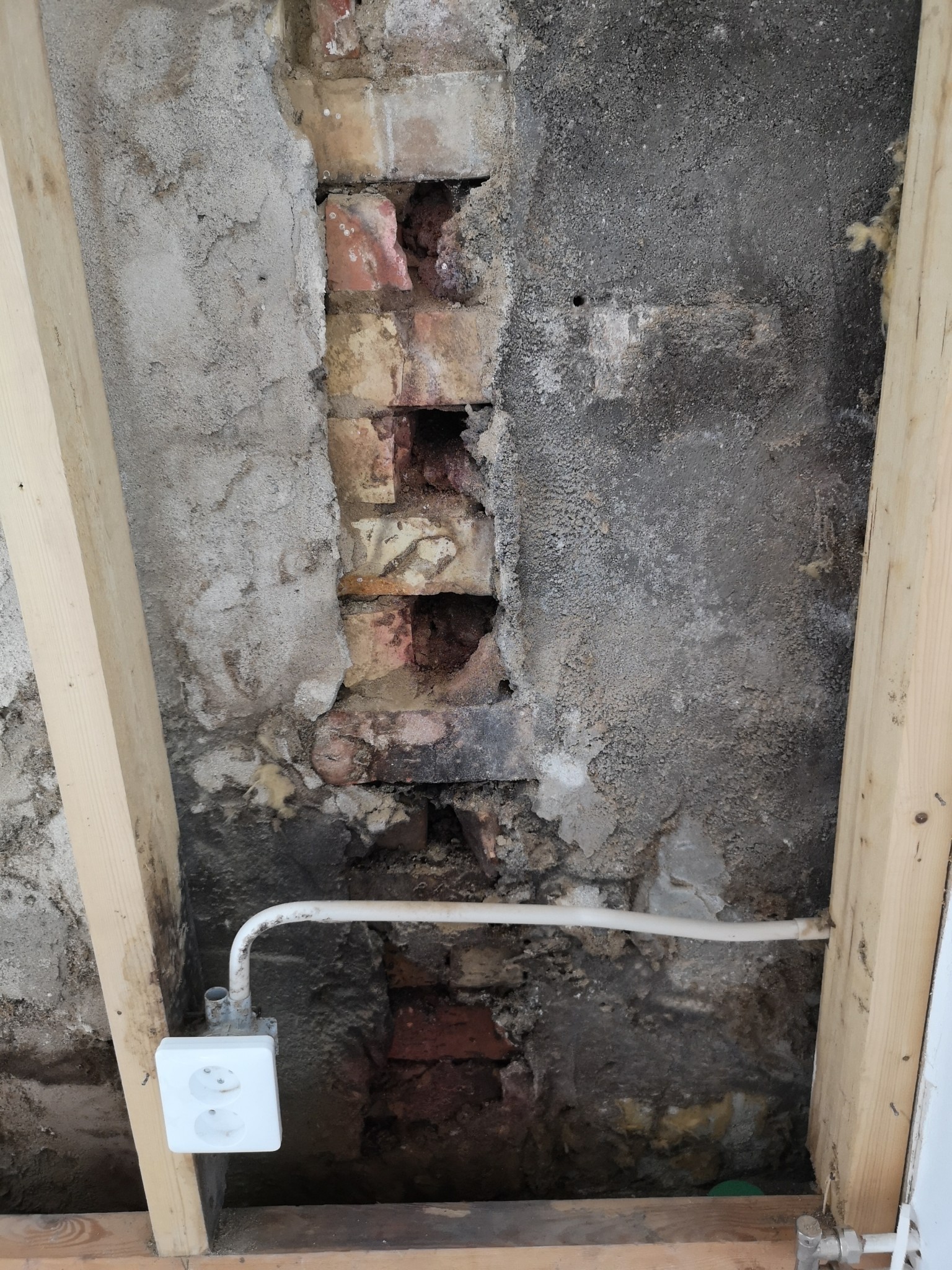
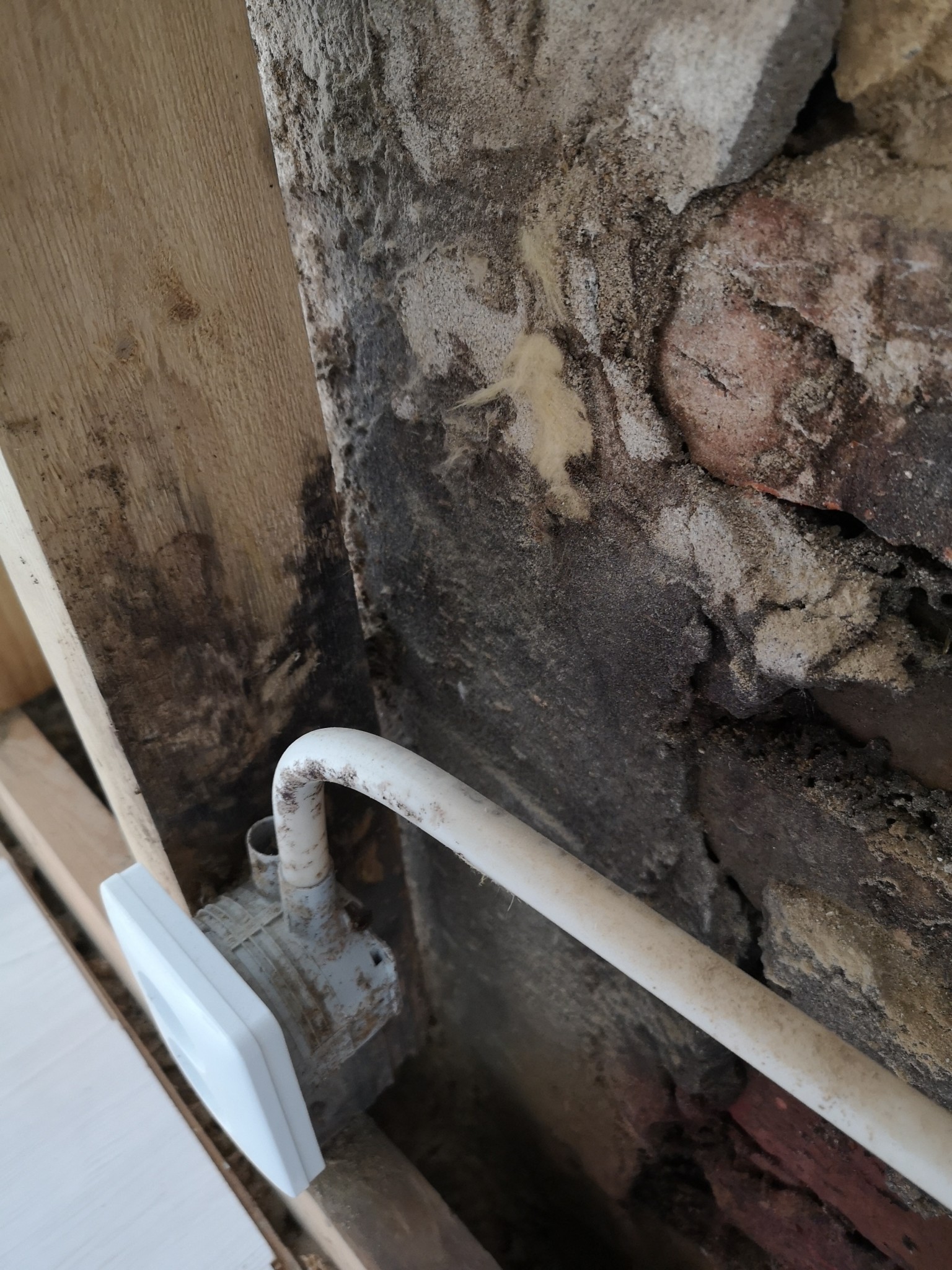
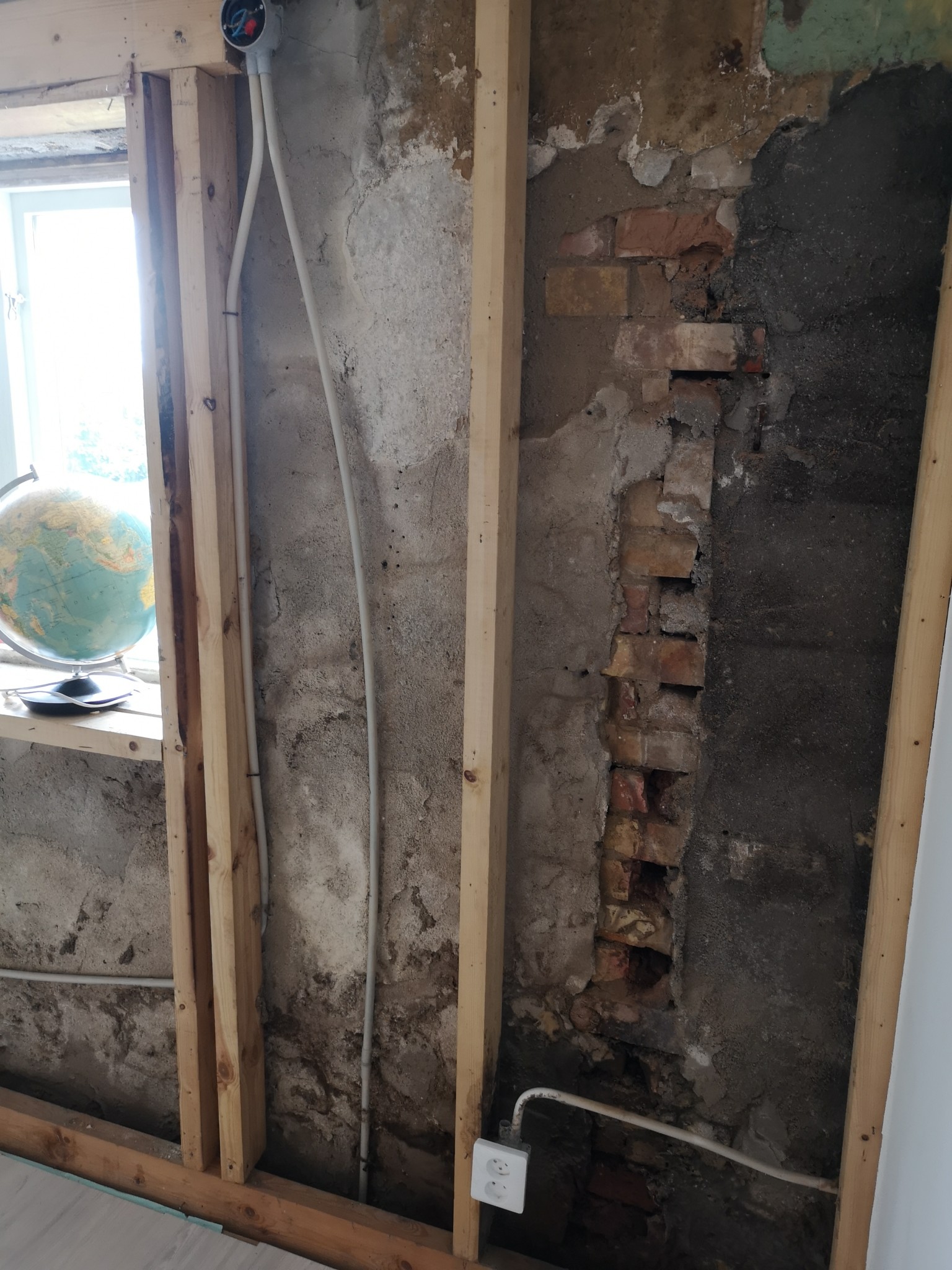
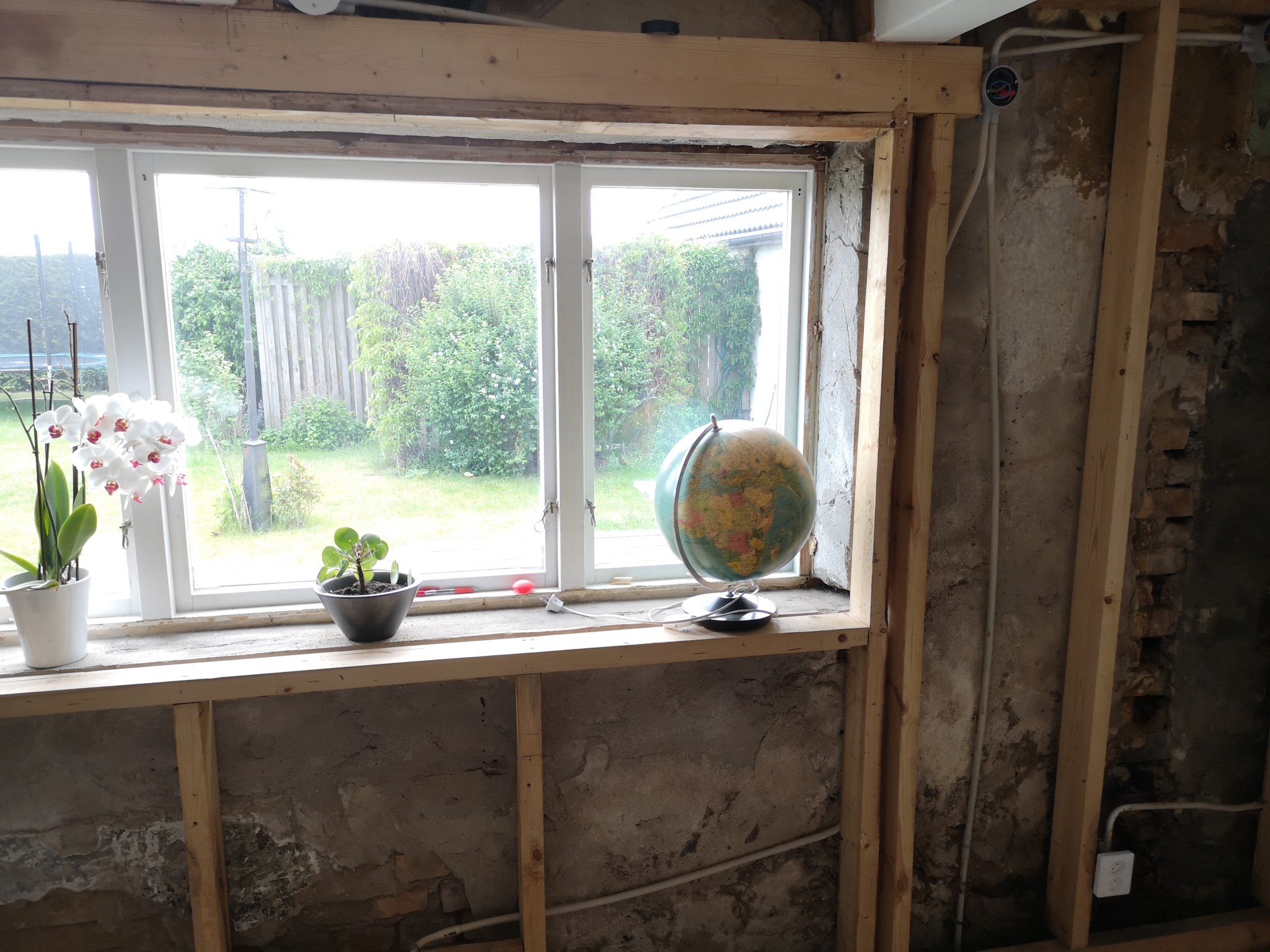
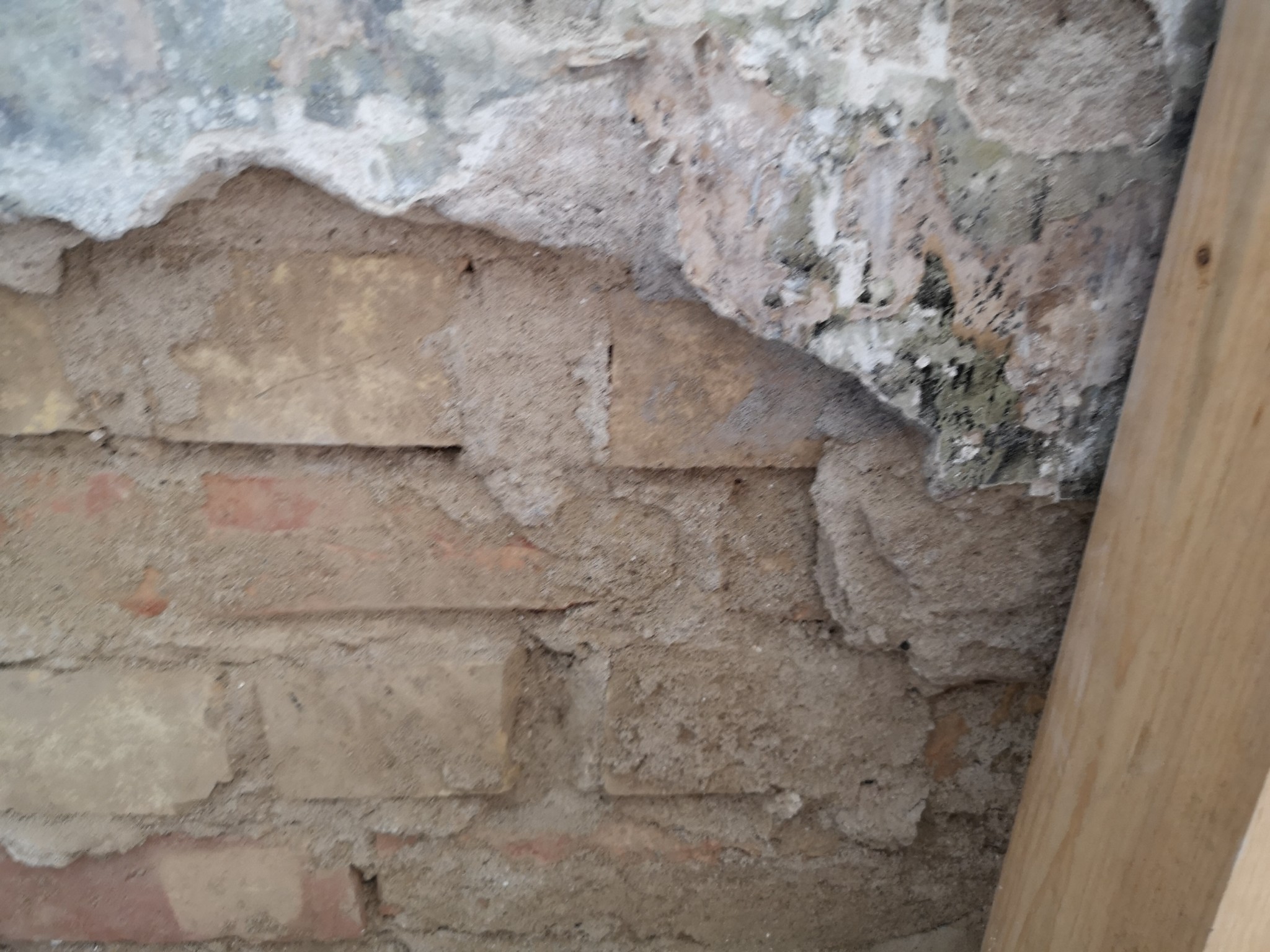

The wall is a full-brick wall with masonry brick. This means two parallel brick walls that, in several places (quite many), are held together by bricks lying crosswise. The best approach is to rebuild them in the same way. Framing on the inside against a brick wall is not particularly successful. Definitely not to equip the wall with plastic foil on the inside. The best option, if the stone's insulating ability is insufficient, is to construct with, for example, Lecablock inside the brick wall and achieve a completely inorganic construction. The plaster provides windproofing, making the need for wind barrier fabric, etc., redundant.
Oh well, that wasn't the answer we expected. The regulations in place today are not something we thought of removing. It was put there during a renovation and expansion on the upper floor - 85. We also need to build up a wall with a surface finish that can support a large radiator. But if we plaster the stone and add insulation with an air gap and then drywall, would that be sufficient, do you think?
You can see in the pictures that the interior stud frame has not exactly appreciated the environment. Organic material like wood should be avoided in combination with brick. The question is, what do you want to achieve?
A vapor barrier serves no purpose if it is only in certain places Plast in such an old house screams no.
That's one of our questions about the black on the stud. That's where the ant nest was. We're not sure if it's because of moisture in the construction or because of the ants that lived there. The wood looks healthy if we scrape off the black on the surface.J justusandersson said:
We understand that the structure outside is not a perfect situation but since we didn't build it or have oversight on what the extension looks like as a whole, we're reluctant to change too much of what's already there. So we're thinking of some distance between the wood and the stone so they're not directly against each other. The same with insulation and then plasterboard. We'll skip the plastic.
We're simply looking for a convenient shortcut to restore the wall to be at least a bit better built than it was before.
You can restore the wall with decent results if you consider the following: Repair the brick wall and plaster it. The plaster is the windproofing. Insulate the studs from the wall with spacers or sill seal or similar. Avoid glass wool as insulation. It does not work well in damp environments. Do not put up any plastic film behind the plasterboard.
Click here to reply