
In one spot in my apartment, the ceiling had bubbled quite a bit. I thought it might be moisture from the neighbor above, so I removed a little, a little more, etc. Now the question is how do I restore the whole thing? I'm not very keen on taking down the entire ceiling, but the surface layer comes down in large sheets. It would be easy to take down the whole ceiling by inserting a putty knife and twisting.
The house is from 1944, feels like the ceiling is broadly spackled and then painted many, many times.
(no signs of moisture at least)
The house is from 1944, feels like the ceiling is broadly spackled and then painted many, many times.
(no signs of moisture at least)
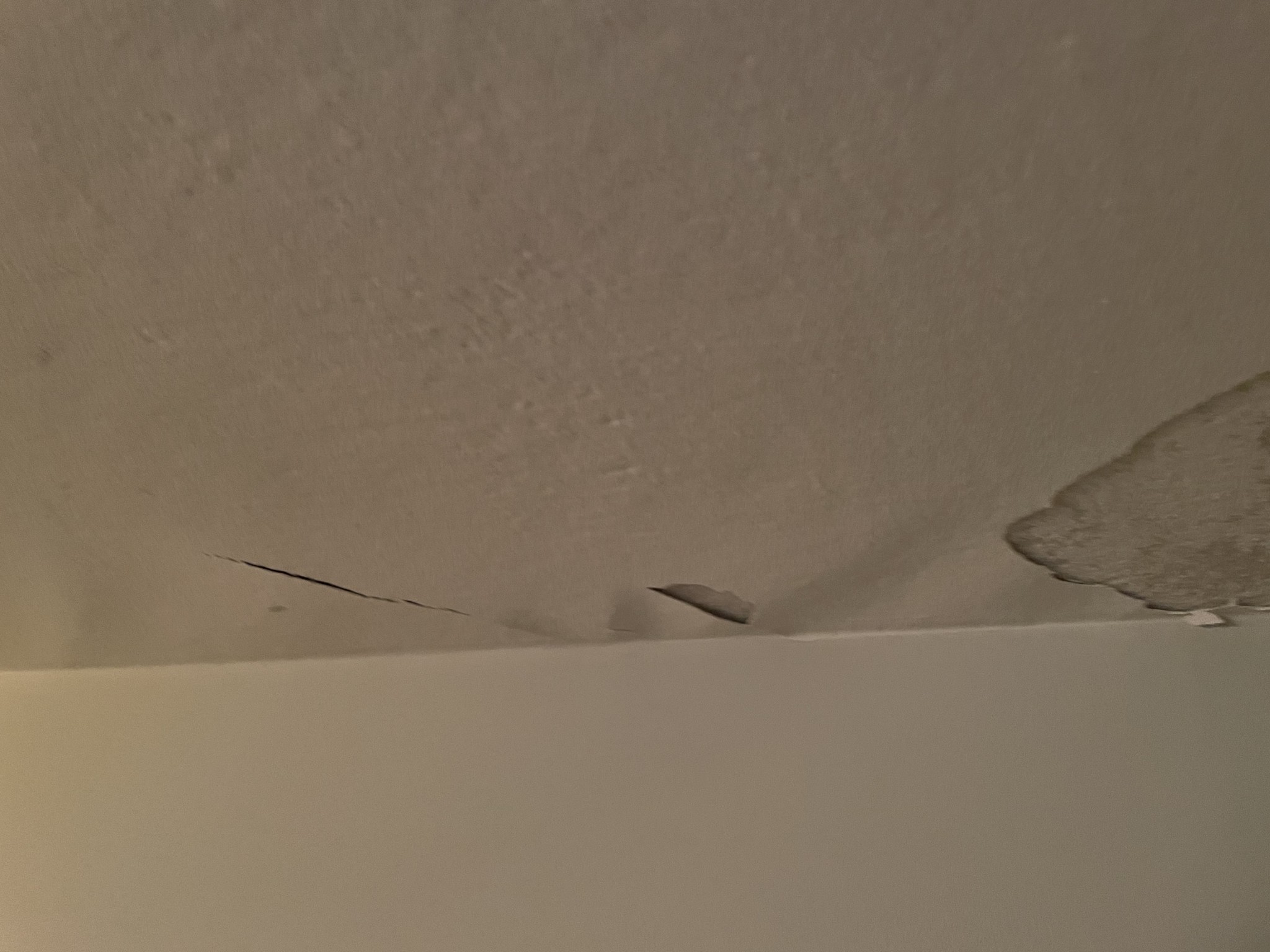
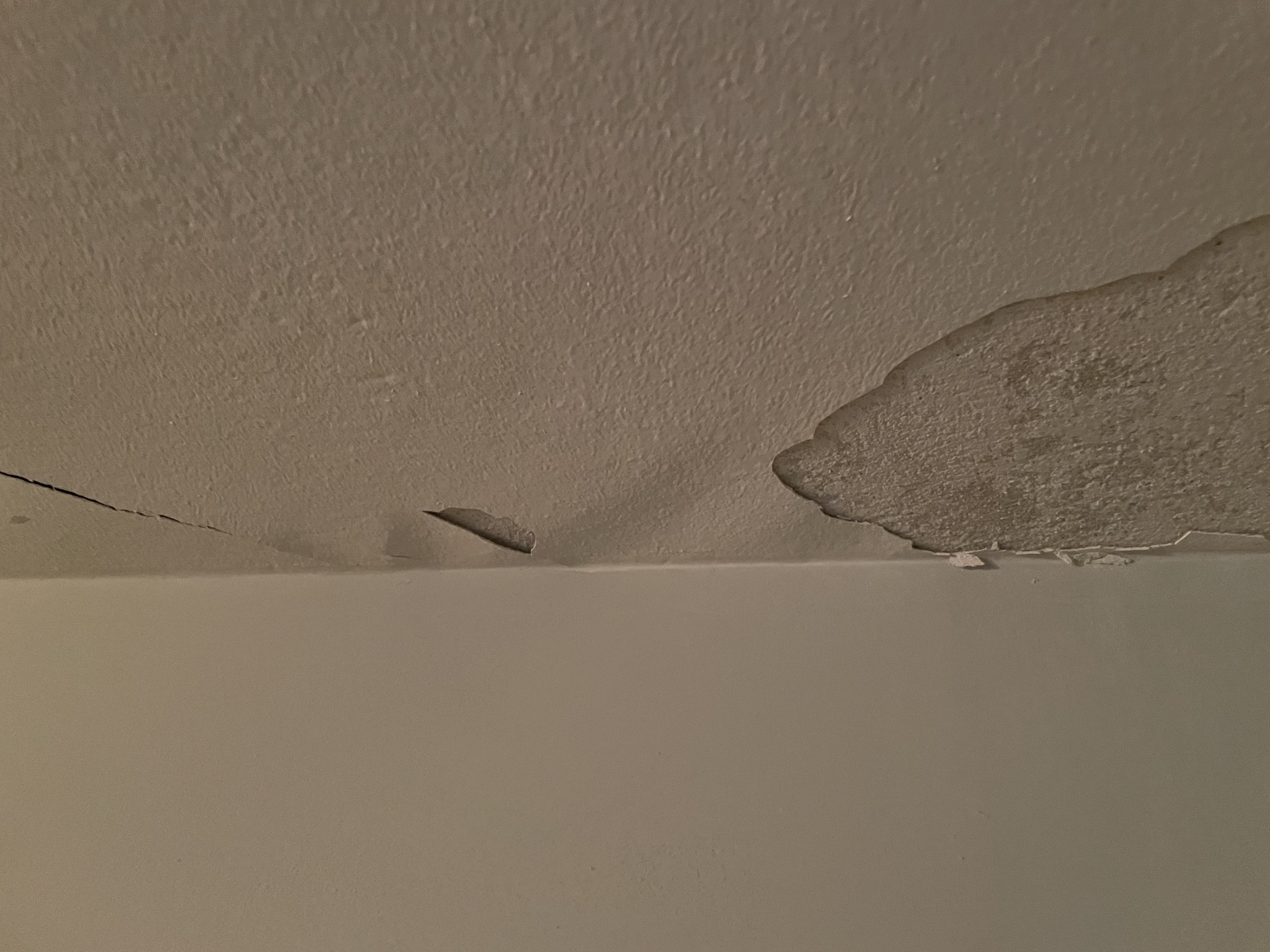
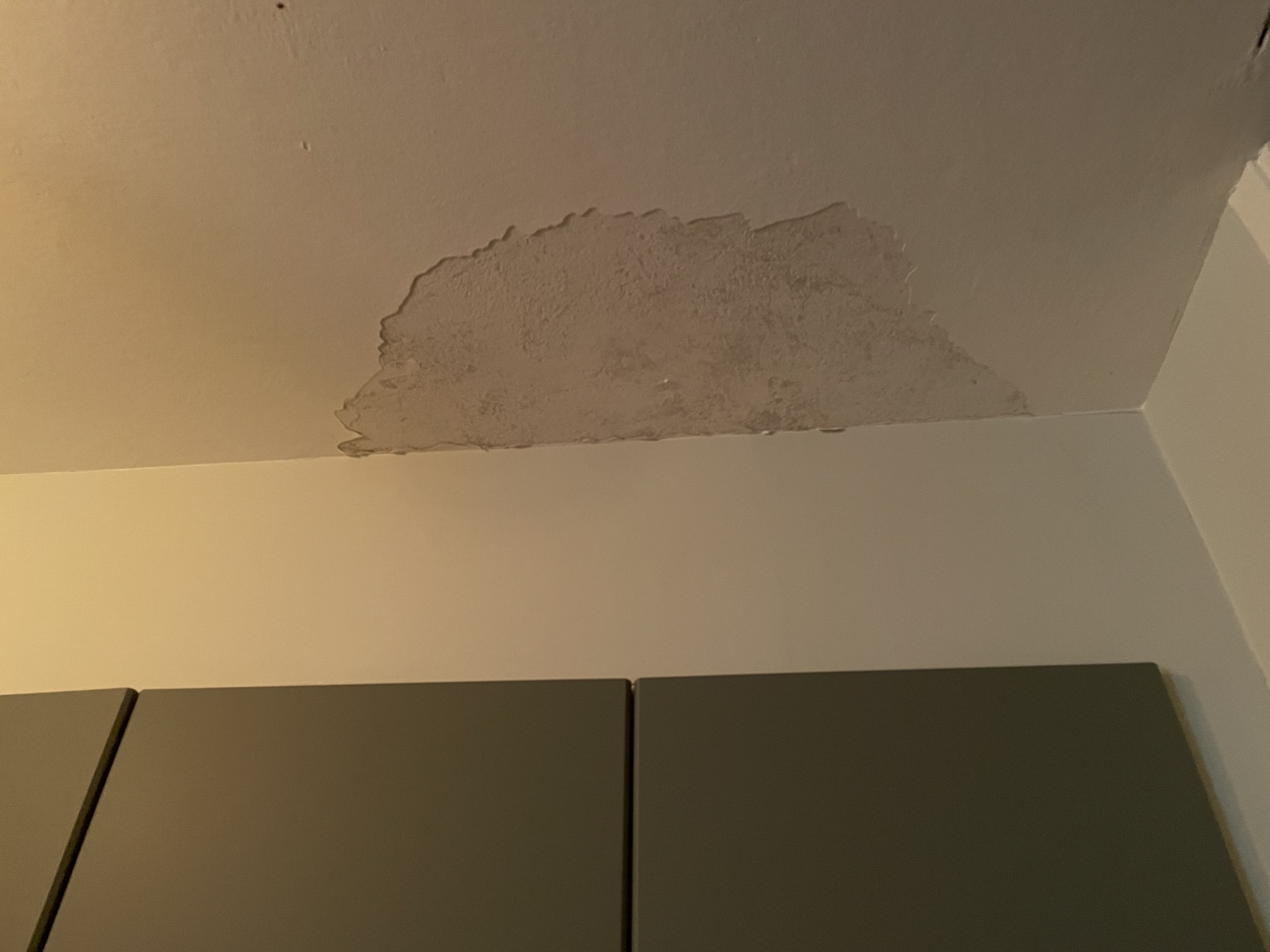
Last edited:

Düsseldorff
Building conservationist
· Bromma
· 3 124 posts
Düsseldorff
Building conservationist
- Bromma
- 3,124 posts
You must remove all loose paint, then fill, sand, and paint. It's not entirely unlikely that you'll need to paint the entire ceiling to avoid it showing because ceiling paint is so matte.

Is it casein paint (chalk paint) underneath?
Just like @Ludde Jakobsson also suspects, that looks like classic 1940s glue paint, something I've had eternal problems with in an old apartment from that time.
It's probably almost impossible to make a neat repair of that, but on the other hand, it's insanely easy to take down. Use a spatula to pull down reasonably sized chunks. Then brush off the chalk residues, wash, and prime thoroughly, and you'll have a fantastic new ceiling.
It's probably almost impossible to make a neat repair of that, but on the other hand, it's insanely easy to take down. Use a spatula to pull down reasonably sized chunks. Then brush off the chalk residues, wash, and prime thoroughly, and you'll have a fantastic new ceiling.
"There are no shortcuts to perfect sound," as someone said...D Derbyboy said:
Since the ceiling behind the paint is most likely covered with a layer of chalk dust, it will be difficult to get any adhesive to stick. If the alternative is to avoid getting ceiling pieces on your head, I suggest you use gaffer tape to patch the cracks, but my practical experience and what the painters who eventually fixed my ceilings said is relentless: once such a ceiling has started to crack/fall, it won't stop. :-/
Yes, we'll see.....Thank you
I will give it a try. Try to brush away the chalk closest to the edge and then attach the ceiling with wallpaper paste. Is wallpaper paste best for this purpose?
If it doesn't work, I'll have to take down the entire ceiling.
I will give it a try. Try to brush away the chalk closest to the edge and then attach the ceiling with wallpaper paste. Is wallpaper paste best for this purpose?
If it doesn't work, I'll have to take down the entire ceiling.
I have had several ceilings with glue paint and unfortunately, you never know the result of your treatment. Wallpaper paste may glue it or it might make the rest come off. Two years ago, I was going to wash a ceiling before painting, and both I and another painter were sure it wasn't glue paint. After washing, we just had to grab the big scraper and scrape down 40 square meters.D Derbyboy said:
Click here to reply