Started the first of Feb, so much longer than half a year We own two apartments, so there hasn't been a rush. But now we're starting to get eager The kid is almost two and the old apartment is starting to feel small
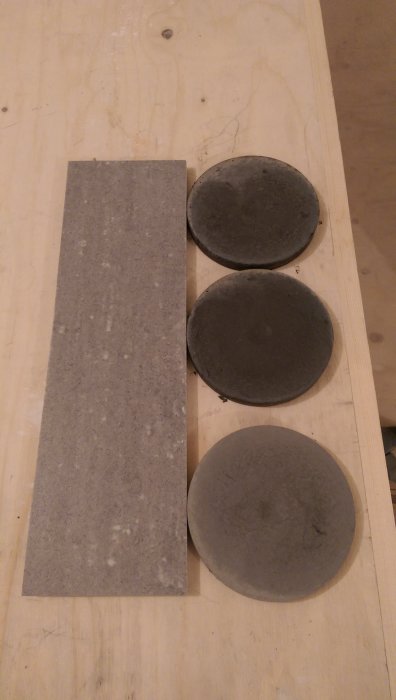
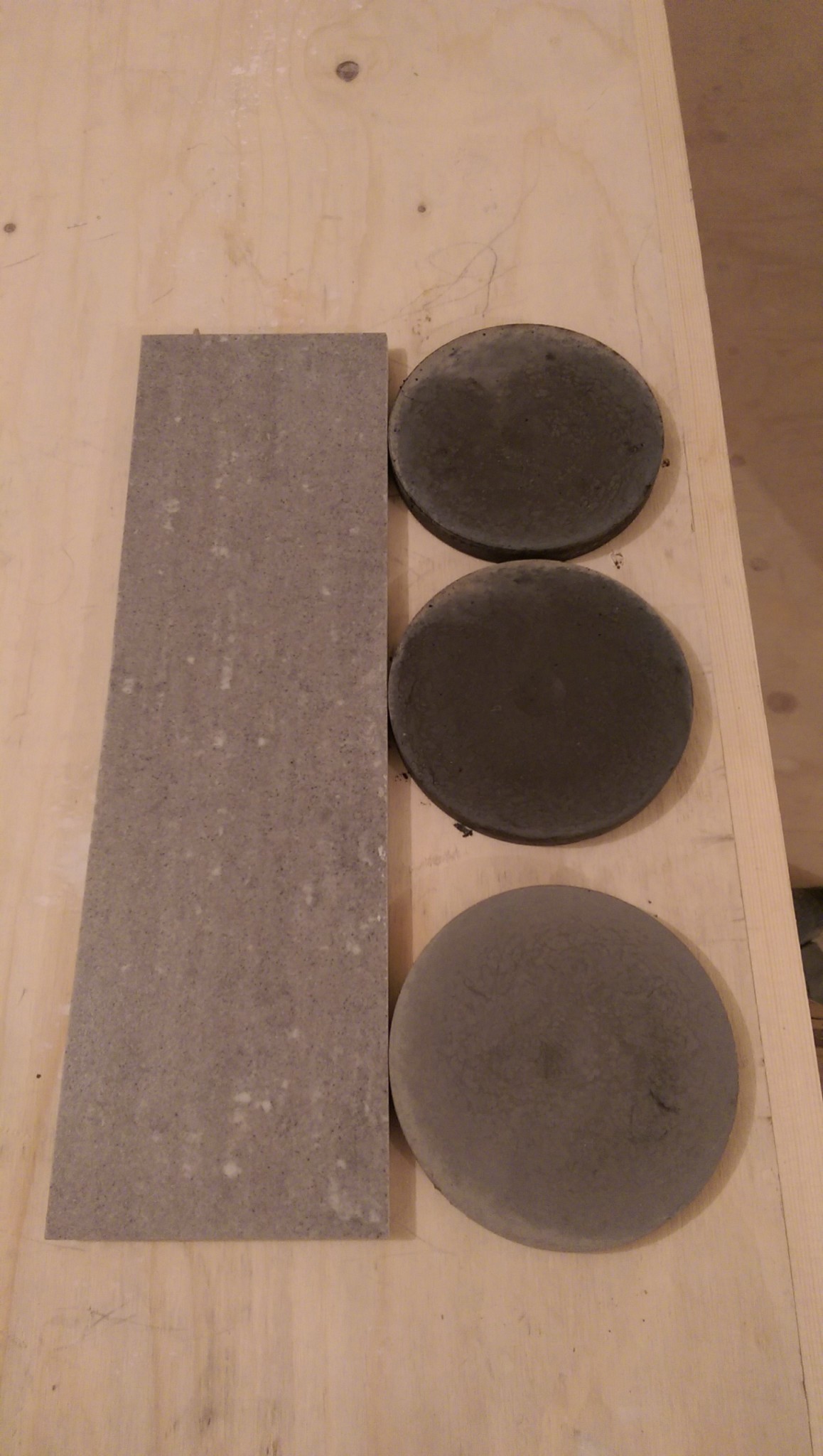
Well, concrete is really light, I tested a piece of slush concrete I had lying around, in the bathroom light you can see a big difference if you place the concrete piece on the floor.
Will treat my board with Osmo hard wax oil when it has dried.
Aha, thought you had already done it, feel free to post a picture, we haven't decided on soap or wax. I've read that wax can yellow the board a bit, but it provides better protection.
Okay, well we didn't know so we didn't want to just go ahead without testing a bit, of course, we should have tested a fourth with no pigment. But it's quick to fix.
Must then interject that I think it's wonderful to read about someone who is so interested and meticulous And some will see, while others will just experience it as an appealing whole.
Go Malmgren and partner!
A bit scary with the mottling, does it disappear with the sanding?
The shades don't exactly match reality, but you can get an idea of how close you are to the right shade. I'll do two more tests, one with 0 pigment and one with half of the lightest.
Limited experience but was involved in pouring a floor a few years ago where we had white pigment in the surface layer and it seemed inevitable to get streakiness. It was like pigment smears when we squeegeed. A lively expression to say the least. It was Finja who supplied it but unfortunately, I don't remember which type.
Unfortunately, the pictures disappeared with the old computer...
If you have the energy, you can try checking Kanal 5's show "Till Salu" from around 2006/2007; in one of the last episodes, you can probably see the result best. (the house is located in Trollbäcken).
Personally, I think there should be a little life in the concrete slabs. The concrete slabs that professional manufacturers sell are completely homogeneous in color, almost as if they look like composite or painted.
Lifting this thread a bit.
I'm going to cast a countertop for the outdoor kitchen, but since it needs to be 3 meters long and have a cutout for a sink, I'm worried it might crack during handling or if the deck settles a bit.
What do you think? Is it an unfounded concern, or is it better to divide it into two 150 cm pieces? However, having a seam on the countertop is not fun
We haven't done the test casting of our countertop yet, only the small piece that will go over the toilet cistern. It's only 20mm thick. It almost snapped in half by itself, even with reinforcement mesh and rebar steel on the sides. For the next version, we'll use multiple pieces of rebar steel placed next to each other.
So, if you have a thin slab, it seems very fragile at least. If you're going for a kitchen counter standard of 38mm, it should hold. Maybe you can use real rebar then? However, there's a risk that a thick bar might show through.
Can it really settle so much that it would become a problem?
edit: Almost a year since this thread was written, haha, nowhere near done casting
It is important to remember that concrete is not tensile, ONE rebar will not help because under load, the concrete above the rebar will be subjected to tensile forces.
I think a better option is mesh or something similar about 5 mm from each surface (i.e., at the outer edges of the concrete).
It is somewhat the same principle as plasterboards (where it is the paper on the outside of the boards that prevents them from breaking).
Vi vill skicka notiser för ämnen du bevakar och händelser som berör dig.



 We own two apartments, so there hasn't been a rush. But now we're starting to get eager