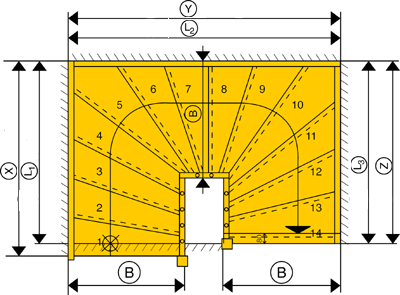
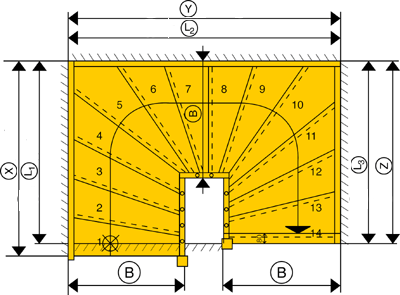
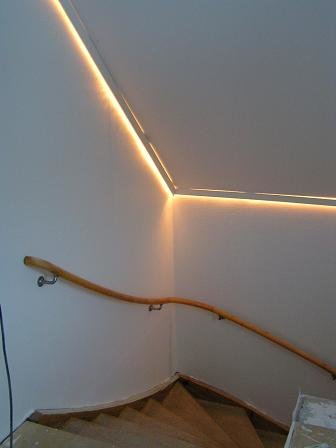
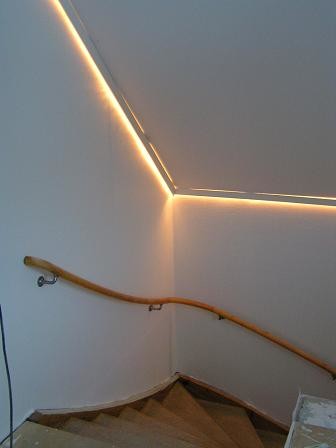
I was thinking of mounting that handrail on the stairs this weekend. The staircase is a U-shaped staircase from the 1940s (like in the picture). Since the staircase turns, the stringers are curved.
The material for the handrail is 3 pieces of (straight) walnut rods, diameter 40 mm. To this, I have 2 pieces of 90-degree bends, also in 40 mm walnut. I had thought it would work okay with straight rods, but it turned out to be a bit difficult to put together.
I wonder if there is a good method to bend the rods to follow the shape of the stringers?
Is it even doable?
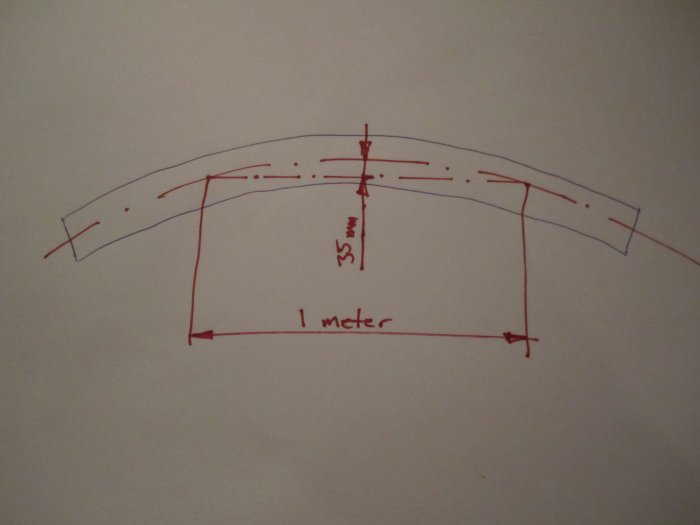
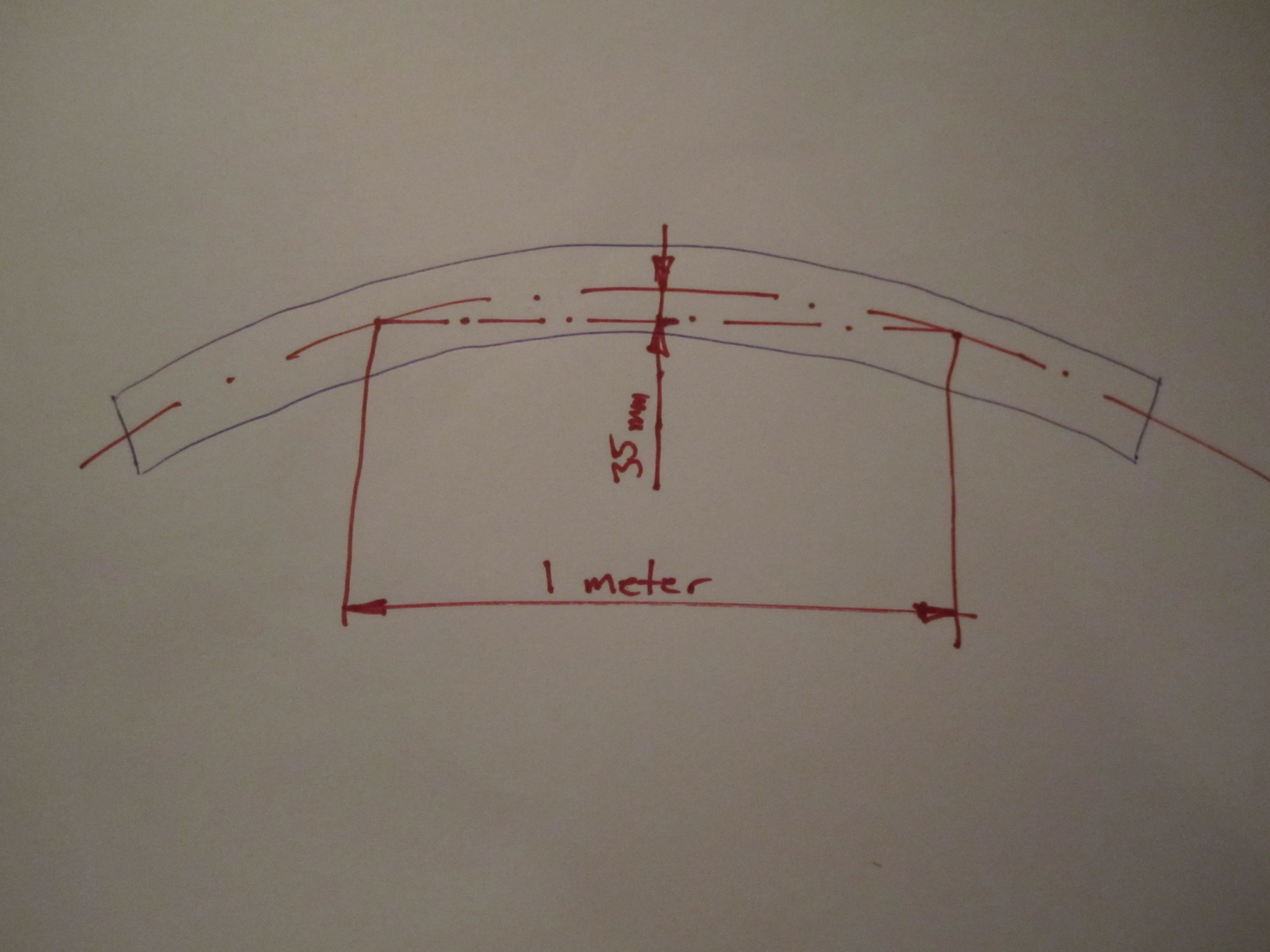
I think I could cut a form with the profile of the stringers from something like regular lumber. Dampen the wood in the rods and put it under tension. Does that seem possible? The bend is at most about 35 mm per meter.
I bought the material quite a while ago, so unfortunately I probably can't return it, so I'd prefer to be able to use it. An alternative is not to use the 90-degree bends and let the rods intersect their center axes at different heights, but I'd rather not do that.
"Fukta" was mostly meant as a description of my train of thought.
35 mm per meter is the "straightness" to speak in drafting terms. I drew a little sketch that I hope is understandable.
So we're not talking about tight bends but long bends with several meters of radius.
So is this something I can do myself? Like put them in the steam sauna then press them?
Or leave them in hot water for a while? I have no idea.
How are the walls in the stairwell?
They are probably straight and not curved/arched. At least that's how your sketch looks.
It might be an idea to place the handrails parallel to the walls.
I feel like I've failed a bit to explain what I mean.
The handrails should of course be parallel to the walls. I mean that it is bent in a vertical plane.
See this image that I snatched from the internet. The rods are not straight but slightly curved to follow the staircase's geometry. So a bit banana-shaped, or whatever you want to call it.
For the corners, I have pre-made bends.
Check out Q-railing, one of the world's largest suppliers of railing accessories. They have solid 42mm handrails that maintain their shape after being tensioned. Called Q-bendywood and can be ordered through glaziers.
Best regards, fremax
Last edited:
Click here to reply
Vi vill skicka notiser för ämnen du bevakar och händelser som berör dig.