
Hello
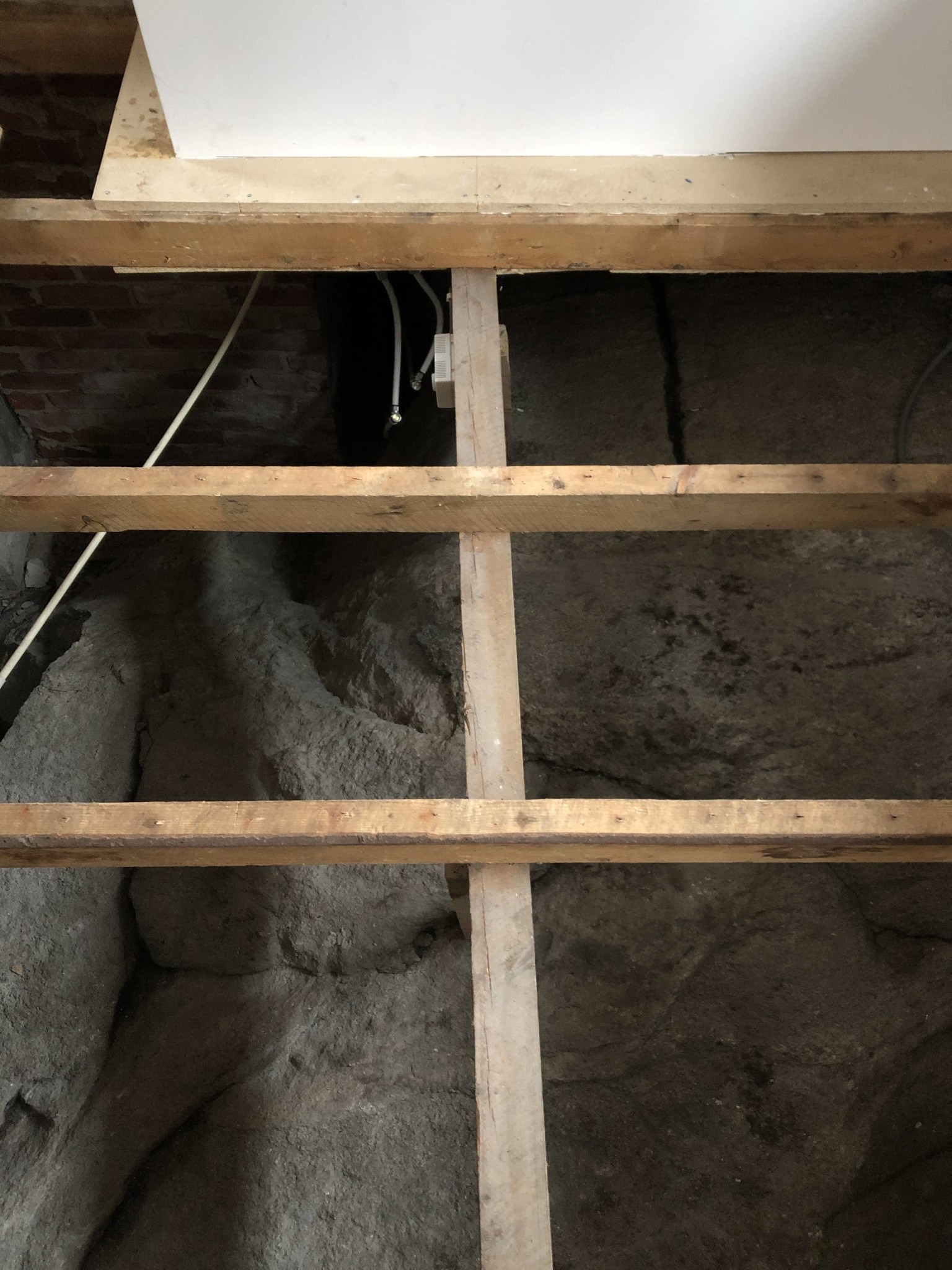
I am in the process of insulating the floor structure between the ground floor and the crawl space. Today, 95-beams are in place, with tongue and groove boards between the beams and a thin layer of moss, etc., as insulation. On top of this, various surfaces have been patched with tongue and groove boards, masonite, vinyl, chipboard, and lastly, parquet, which has now been removed.
The crawl space is dry and in good condition today (the house is built on rock) and we have a dehumidifier installed just in case. But if we insulate and seal, I'm worried that conditions might worsen.
As we are now replacing the floors, we plan to install new insulation but have a few questions. I've seen several threads about this, but they sometimes contradict each other.
1. Which is better - Fiber cement or foam board as the bottom plate (nailed under the joists)? I want inorganic material.
2. Is a vapor barrier needed?
3. Is underfloor heating a bad idea?
Thanks in advance for the input.
I am in the process of insulating the floor structure between the ground floor and the crawl space. Today, 95-beams are in place, with tongue and groove boards between the beams and a thin layer of moss, etc., as insulation. On top of this, various surfaces have been patched with tongue and groove boards, masonite, vinyl, chipboard, and lastly, parquet, which has now been removed.
The crawl space is dry and in good condition today (the house is built on rock) and we have a dehumidifier installed just in case. But if we insulate and seal, I'm worried that conditions might worsen.
As we are now replacing the floors, we plan to install new insulation but have a few questions. I've seen several threads about this, but they sometimes contradict each other.
1. Which is better - Fiber cement or foam board as the bottom plate (nailed under the joists)? I want inorganic material.
2. Is a vapor barrier needed?
3. Is underfloor heating a bad idea?
Thanks in advance for the input.
Last edited:
I would have used a subfloor panel/cement particle board. Cellplast is a risk construction if you cannot ensure that you do not have moisture problems in the foundation. Then insulation and vapor barrier against the warm side. Don't forget to edge seal the cement particle board.
Thanks for the response. It sounds reasonable.Silver78 said:

Just did this myself, but had slightly different conditions and therefore a different approach. For instance, I'm using a fully diffusion-open construction ( = no plastic, anywhere). In my case, the floor joists were wooden logs flattened on the top and bottom. To add more insulation and deal with the uneven edges, I attached 45 x 45 battens under each beam, then a 28 x 120 board on each batten (I reused boards from the old floor for this). On that board, I laid a rough tongue and groove perpendicular to the direction of the joists. I insulate with cellulose, loose fill.
However, you already have several conditions I didn't have, including even spacing and flat surfaces, so some form of board probably works. If you want thicker insulation, you can just add battens underneath, 95mm for a floor sounds a little thin.
I'm using no vapor barrier on the warm side, for several reasons. 1) Those who sell the insulation said the moisture pressure from above is very small, so they thought it was overkill. 2) IF a little moisture creeps up into the subfloor and insulation from the crawl space air, it's not a bad idea to allow that moisture the opportunity to diffuse upwards to the warm side.
PS Regarding underfloor heating, as Silver mentions above, more insulation is needed underneath in such cases. It also depends on the type of floor you will have. If you're using today’s standard with floor chipboard and some flooring like laminate or carpet, it should work, just more insulation underneath. If you're using solid wood floors, it’s not worth it, because the wood floors themselves are so thick that you won't benefit much from the underfloor heating. (By the way, I can recommend solid wood floors as a supporting floor; easy to install, attractive, extremely long-lasting, and actually about the same price or even cheaper than the standard chipboard solution, and if you tire of it, you can just lay another floor on top).
However, you already have several conditions I didn't have, including even spacing and flat surfaces, so some form of board probably works. If you want thicker insulation, you can just add battens underneath, 95mm for a floor sounds a little thin.
I'm using no vapor barrier on the warm side, for several reasons. 1) Those who sell the insulation said the moisture pressure from above is very small, so they thought it was overkill. 2) IF a little moisture creeps up into the subfloor and insulation from the crawl space air, it's not a bad idea to allow that moisture the opportunity to diffuse upwards to the warm side.
PS Regarding underfloor heating, as Silver mentions above, more insulation is needed underneath in such cases. It also depends on the type of floor you will have. If you're using today’s standard with floor chipboard and some flooring like laminate or carpet, it should work, just more insulation underneath. If you're using solid wood floors, it’s not worth it, because the wood floors themselves are so thick that you won't benefit much from the underfloor heating. (By the way, I can recommend solid wood floors as a supporting floor; easy to install, attractive, extremely long-lasting, and actually about the same price or even cheaper than the standard chipboard solution, and if you tire of it, you can just lay another floor on top).
Last edited:
Thank you for the feedback with the description of your process. I have now acquired fiber cement boards and will screw them directly onto the floor joists and tape the seams.
I’m thinking the same as you regarding the vapor barrier. Probably won't bother with it.
Regarding the underfloor heating, we will very rarely/almost never have it on in these particular rooms since they are bedrooms, but I think it’s good to have. The other rooms are walk-out basement and social areas, and we want to have the same standard throughout the house.
I’m thinking the same as you regarding the vapor barrier. Probably won't bother with it.
Regarding the underfloor heating, we will very rarely/almost never have it on in these particular rooms since they are bedrooms, but I think it’s good to have. The other rooms are walk-out basement and social areas, and we want to have the same standard throughout the house.
Click here to reply