
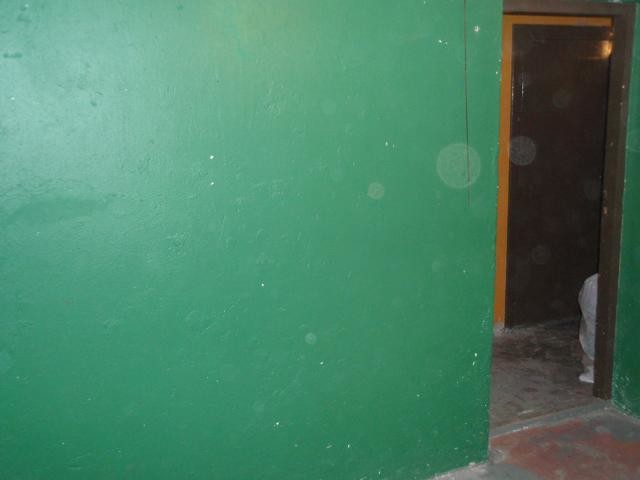
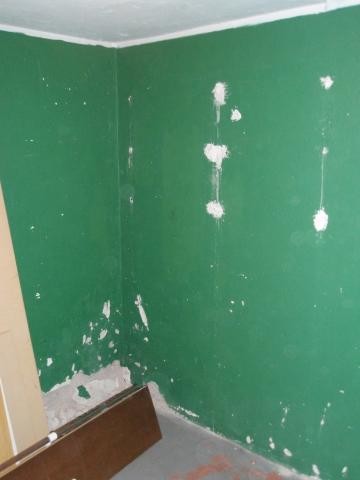
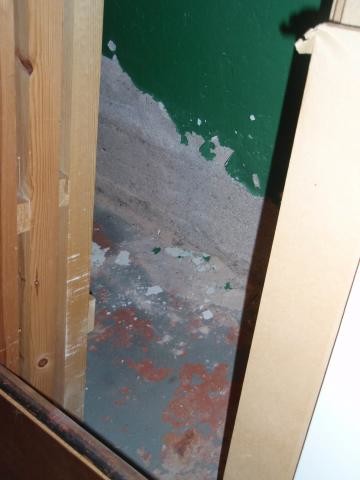
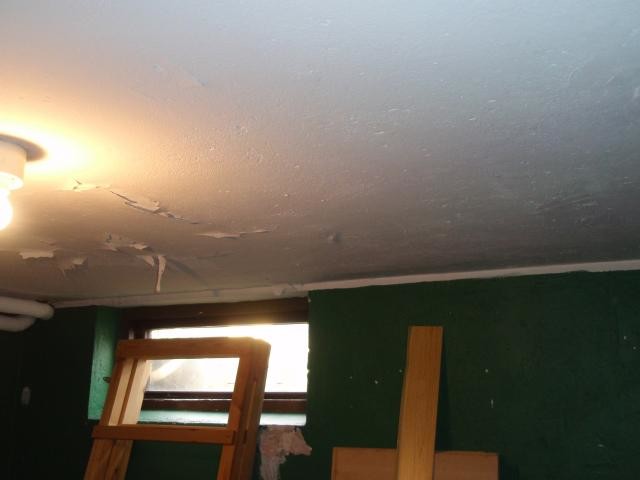
Hey, this is my second post about the wonderful plastered basement walls in our house. Apparently painted with some type of plastic paint back in the day and later drained over the years. The plaster is peeling almost everywhere (in a few places even on the ceiling).
So, what on earth should I do with this? I'm considering lowering the ceiling and adding drywall, that part doesn't seem too complicated. But what on earth should I do with the walls? Re-plastering them looks nice but feels hysterically tedious. Is there another way I can do it? Framing and putting up new interior walls would be easiest but definitely not the best solution considering it's a basement. I suspect I’ll have to paint the floor....
So, what on earth should I do with this? I'm considering lowering the ceiling and adding drywall, that part doesn't seem too complicated. But what on earth should I do with the walls? Re-plastering them looks nice but feels hysterically tedious. Is there another way I can do it? Framing and putting up new interior walls would be easiest but definitely not the best solution considering it's a basement. I suspect I’ll have to paint the floor....
Warning! 
The ceiling can be more troublesome to hang drywall on if you have plaster on a reed mat or similar soft plaster holder. Soft and difficult to screw/nail into, it becomes inconveniently low to the ceiling.
Scrape off what is loose, patch small holes with lime plaster, and paint is my tip.
You haven't moisture-proofed the floor from underneath with gravel, leka, plastic, or the like? Then it's not a sustainable solution to paint on the concrete. Ground moisture will lift the paint sooner or later. There is always minimal moisture migration through concrete in old houses, which is first noticed when you cover the floor with a dense material. Your floor has managed well because it was not painted. Lay tiles with wide grout that lasts for ages... is my tip.
Walls: remove everything that is loose and sandy and re-plaster with lime plaster (1 part lime + 3 parts sand + water), after 1-2 months when the plaster has hardened/carbonated you can paint with a silicate paint that allows moisture to pass through.
You can first test if the silicate paint adheres to the original paint—some silicate paints are mixed with plastic components and can adhere to some other wall paints. It's worth trying as it saves you a lot of dusty work. If the paint sticks, you won't have to remove old paint from areas where the paint is firmly adhered.
It's only at the bottom by the floor where moisture migration will occur and damage the wall, but by then you've applied new plaster and painted with non-dense paint on the sensitive areas and it should last as long as the house. Otherwise, there is no other solution than to remove old paint, plaster, and paint.
You are not dealing with wooden walls, so you have to use different renovation methods than studs and drywall! You might get suggestions to glue drywall over the mess, but it's only a temporary fix that lasts a few years, then the drywall swells at the bottom and the paper molds on the inside. How many years it lasts I do not know, but you usually discover damages when the house is to be sold and the buyer is looking for faults with a moisture meter at the ready.
Now I've said what is most sustainable in your about 40s? basement but the choice is yours
gaia
The ceiling can be more troublesome to hang drywall on if you have plaster on a reed mat or similar soft plaster holder. Soft and difficult to screw/nail into, it becomes inconveniently low to the ceiling.
Scrape off what is loose, patch small holes with lime plaster, and paint is my tip.
You haven't moisture-proofed the floor from underneath with gravel, leka, plastic, or the like? Then it's not a sustainable solution to paint on the concrete. Ground moisture will lift the paint sooner or later. There is always minimal moisture migration through concrete in old houses, which is first noticed when you cover the floor with a dense material. Your floor has managed well because it was not painted. Lay tiles with wide grout that lasts for ages... is my tip.
Walls: remove everything that is loose and sandy and re-plaster with lime plaster (1 part lime + 3 parts sand + water), after 1-2 months when the plaster has hardened/carbonated you can paint with a silicate paint that allows moisture to pass through.
You can first test if the silicate paint adheres to the original paint—some silicate paints are mixed with plastic components and can adhere to some other wall paints. It's worth trying as it saves you a lot of dusty work. If the paint sticks, you won't have to remove old paint from areas where the paint is firmly adhered
.It's only at the bottom by the floor where moisture migration will occur and damage the wall, but by then you've applied new plaster and painted with non-dense paint on the sensitive areas and it should last as long as the house
. Otherwise, there is no other solution than to remove old paint, plaster, and paint.You are not dealing with wooden walls, so you have to use different renovation methods than studs and drywall! You might get suggestions to glue drywall over the mess, but it's only a temporary fix that lasts a few years, then the drywall swells at the bottom and the paper molds on the inside. How many years it lasts I do not know, but you usually discover damages when the house is to be sold and the buyer is looking for faults with a moisture meter at the ready.
Now I've said what is most sustainable in your about 40s? basement but the choice is yours
gaia
Last edited by a moderator:
Hi, thank you for your detailed post.gaia said:Warning!
The ceiling may be more difficult to hang gypsum boards on if you have plaster on a reed mat or similar soft plaster holder. Soft and hard to screw/nail into, it'll become uncomfortably low to the ceiling.
Scrape what is loose, fill small holes with lime plaster and paint is my tip.
For the floor, you haven't moisture-proofed from underneath with gravel, leka, plastic, or similar? Then it’s not a sustainable solution to paint on the concrete. Ground moisture will lift the paint sooner or later. There is always minimal moisture migration through concrete in old houses, which becomes visible only when you cover the floor with a dense material. Your floor has fared well because it wasn't painted. Lay tiles with wide joints that last forever...that is my tip.
Walls: remove everything that is loose and sandy and replaster with lime plaster (1 part lime + 3 parts sand + water). After 1-2 months when the plaster has hardened/carbonated, you can paint with a silicate paint that allows moisture to pass through.
You can first test if the silicate paint adheres to the original paint—some silicate paints are mixed with plastic components and can stick to some other wall paints. Worth trying as it saves you a lot of dusty work. If the paint adheres, you won't have to remove old paint from areas where it sticks well
These are not wooden walls you are dealing with, so you must use other renovation methods than studs and gypsum! You might get suggestions to glue drywall over the mess, but that's just a temporary solution that lasts a few years, and then the drywall swells at the bottom, and the paper molds on the inside. How many years it lasts, I don’t know, but damages are usually discovered when the house is sold, and the buyer looks for faults with a moisture meter in hand.
Now I've said what is most durable for your circa 1940's basement, but the choice is yours
gaia
The ceiling is a cast vault, so there should be decent support for anchors or similar. If I also frame down by 45, the ceiling won’t lower that significantly. However, at the same time, 45+13 millimeters is quite a bit. The ceiling seems solvable one way or another.
The floor is leaning towards being tiled actually, the question is: do I need to do anything else to the floor before? Scrape off the old paint to allow moisture to migrate upwards through the tile joints?
The walls, oh man... I’ve never plastered before so it’ll probably be a challenge. I see myself as a decent DIYer, so it will probably work out. But how do you do it? Lay a masonite board on the floor and then start throwing up plaster? Or do you spread it and then go over with a plastering trowel and lime brush to get the texture?
As an amateur, you can manage by just using the plastering floatKnecke said:Well, thanks for your detailed post.
The walls, oh my... I've never plastered before, so it will probably be a challenge. I see myself as a decent DIYer, so it should be fine. But how do you do it? Lay a masonite board on the floor and then start throwing the plaster on? Or do you spread it out and then work with a plastering float and a lime brush to get the texture?
. I plastered half a basement without even trying to throw the plaster on, and it actually looked nice anyway. The most important thing is to dampen the surface so that the plaster doesn't fall off.I used the Skånskan - a steel sheet plastering float - you get a very nice smooth surface
. It's like working with regular putty, so it's not impossible to handle. Read about how to do it on the page "www.dinbyggare". It's not so stressful working with lime plaster because it doesn't set like stone in half an hour, you have time to work on the surface until you're satisfied.If the floor is already painted, I would try to scrape as much as possible in the places where there are already damages because that's where you have the most moisture migration. It's best to allow the concrete to breathe at those exposed spots.
I'm also just an amateur, hope you get more answers from the pros
gaia
Click here to reply