
1,775 views ·
12 replies
2k views
12 replies
Attacked roof decking, newly built attefall house
What do you think when you see these pictures?
Råspont protruding under the roof ridge, or whatever it's called. One picture from each gable.
As you can see, some of the råspont boards are affected by black mold. Others are not. Additionally, you can see that some of the boards in the middle of the darkest parts have completely white squares that are not affected. Very mysterious.
Additionally, you can see that deepest in towards the facade wall, where the black affected boards meet the wall, it's not always black all the way in, but white. I'm worried that the råspont is affected even further in, but since it's white where the råspont meets the wall, I think it might not be the case. I hope not...
What could this be caused by? Is the roof built incorrectly in some way, allowing moisture to penetrate from above? But why only on certain boards then? The roof is sloped, highest at the front and then slopes downwards. It's a metal roof on a newly built attefallshus. Under the metal, there is råspont with roofing felt on top, then metal.
Could it be as simple as some of the boards are made of a type of wood with a certain quality that makes them more susceptible to mold? I know it's normal to have black mold on the outside of houses, but this looks so strange... What to do?
Thanks in advance!
Råspont protruding under the roof ridge, or whatever it's called. One picture from each gable.
As you can see, some of the råspont boards are affected by black mold. Others are not. Additionally, you can see that some of the boards in the middle of the darkest parts have completely white squares that are not affected. Very mysterious.
Additionally, you can see that deepest in towards the facade wall, where the black affected boards meet the wall, it's not always black all the way in, but white. I'm worried that the råspont is affected even further in, but since it's white where the råspont meets the wall, I think it might not be the case. I hope not...
What could this be caused by? Is the roof built incorrectly in some way, allowing moisture to penetrate from above? But why only on certain boards then? The roof is sloped, highest at the front and then slopes downwards. It's a metal roof on a newly built attefallshus. Under the metal, there is råspont with roofing felt on top, then metal.
Could it be as simple as some of the boards are made of a type of wood with a certain quality that makes them more susceptible to mold? I know it's normal to have black mold on the outside of houses, but this looks so strange... What to do?
Thanks in advance!
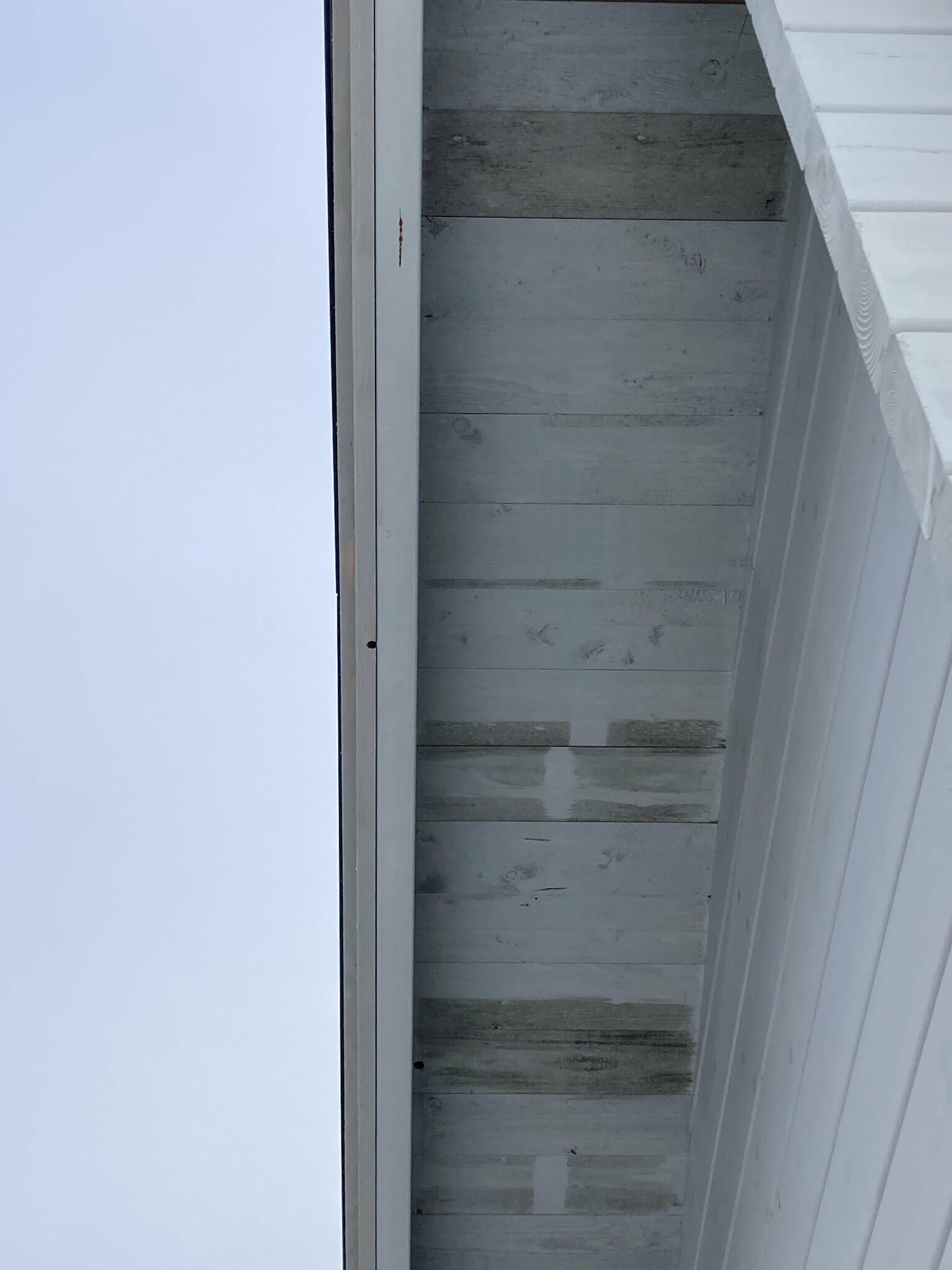
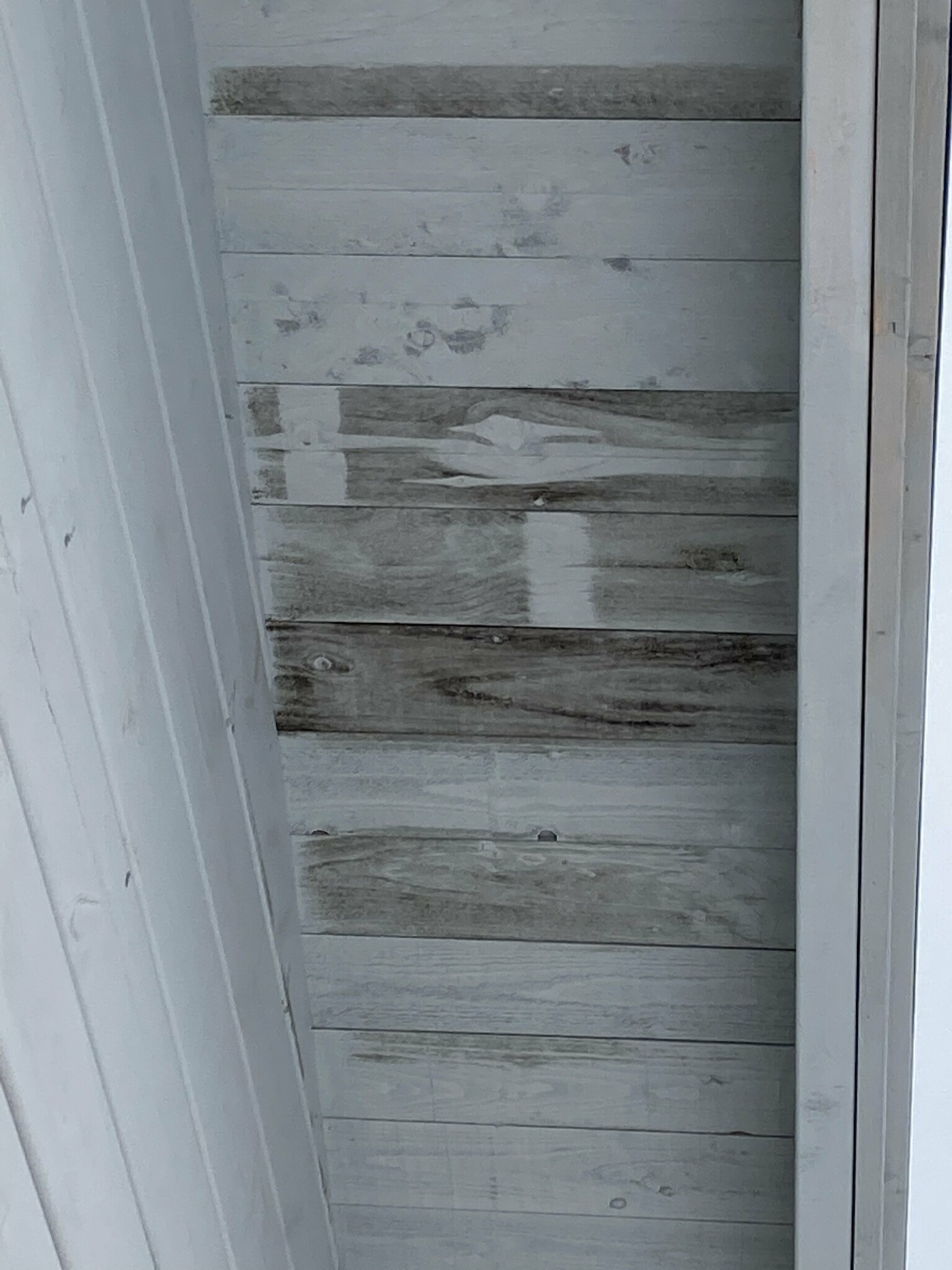
The fact that some boards look different may be due to them being of lower quality from the start, or having been on the outer/top of a not-so-protected stack. It's all likely fir anyway.
All paint molds to some extent during the damp season. It should be covered painted in the summer, and I recommend mold washing beforehand. As far as I know, this doesn't necessarily indicate a construction error.
All paint molds to some extent during the damp season. It should be covered painted in the summer, and I recommend mold washing beforehand. As far as I know, this doesn't necessarily indicate a construction error.
But why these "white squares" on certain planks, in the middle of all the black? It almost looks like rectangular squares. Shouldn't it be black there too, regardless of construction errors or different quality of the wood?Karrock said:
The fact that some boards look different may be because they were of lower quality to begin with, or have been on the outer/topmost part of a poorly protected pile. It should all still be spruce.
All paint molds to some extent during the wet season. It should be covered with paint this summer, and I recommend mold washing beforehand. As far as I know, this doesn't have to be a sign of construction error.
The 'white squares' are probably marks from the spacers/strips that were placed between the timber as it dried.S Slottsfrun said:
Could the squares be where straw has been in the lumber package?


It is common for it to happen like that, and there's no danger at all, but it's maybe not so fun. I think it depends on some boards having more moisture or nutrients and being exposed to mold spores (impossible to avoid) during storage, but I don't really know.
If everything is built correctly, the raw edge will dry out during the spring/summer, and then the problem will be gone.
If everything is built correctly, the raw edge will dry out during the spring/summer, and then the problem will be gone.
No, I don't think you should worry about that.S Slottsfrun said:
The raw board that gets visible black mold is probably summer-harvested and kiln-dried; to minimize mold risk, you need to have winter-harvested mature timber sawn by March and preferably air-dried in the traditional way. There is likely no industrial manufacturer of raw board that offers this.

Indoors had been worrying, outdoors=it can be like that... Wash off in the summer and paint. If you live in an exposed area, it can grow back. I myself have a house by a large bay and the moisture takes its toll, have to wash after a couple of years if you want it spotless.
Click here to reply