Firstly, is there any specific term for hollow core concrete slabs?
I'm planning to frame up for a new ceiling and wondering what the safest way to attach the battens is. The house was built in the '70s and it has a hollow core concrete slab.
I've previously screwed up lighter objects, and when I've drilled, in some places there was only about 30mm solid concrete before hitting a cavity.
Are nail plugs the most practical option, and are they secure enough?
Does it matter if I attach the battens along the "cavities" or should I place them across?
New ceiling!? You're thinking of metal studs and drywall? In that case, this should be anchored to the walls with L profiles or wall tracks followed by furring channels (Secondary rule) and over that, depending on the room size, so-called Primary rule that is best tensioned slightly against the ceiling with hanger strap.
So, not much drilling into the ceiling is needed if done correctly!
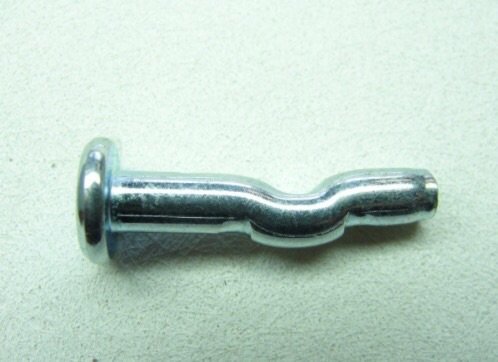
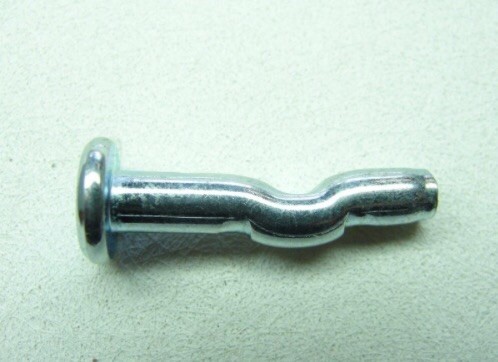
To attach the profiles to the wall, I usually use Nail anchors that have a larger head than nail plugs and really hold like a rock; adjust the length according to the material. The head ensures it doesn't go through the metal stud. The downside is that they're not so easy to remove if you happen to make a mistake.
There is something called HDF floors, which are prefabricated floors with channels in them. Between the channels at the bottom, there is tension reinforcement in the form of cables. As long as you do not cut the cables, you are safe, as that is where the load-bearing capacity lies. IF that is what we are talking about
New ceiling!? Are you thinking metal studs and gypsum? In that case, this should be anchored to the walls with L profiles or Wall track followed by furring channels (Secondary rule) and above it, depending on the room size, the Primary rule which is preferably slightly tensioned towards the ceiling with hanger straps. So there won't be much drilling into the ceiling if done correctly!
To attach the profiles to the wall, I usually use Nail anchors that have a larger head than expansion plugs and really hold firm, adjust the length according to the material. The head prevents it from going through the metal stud. The downside is that they're not so easy to remove if a mistake is made.
More info here:
[link]
Thanks for the input but you probably misunderstood me. I'm going to lower 45mm and install short planks.
Not a ceiling like the one used in offices or similar.
Thanks for the input but you probably misunderstood me. I will frame down 45mm and set short planks.
Not a drop ceiling like the ones in offices or similar.
I don't think he misunderstood you, rather the opposite
What he describes is a good way to make a ceiling, with, for example, drywall.
What do you mean by short planks?
What slacker describes is a suspended ceiling that you lower down if I'm not completely off track?
I will secure down 45mm from the existing concrete ceiling and install short planks of gypsum.
Short planks are chamfered panels measuring 13x45x1200mm.
The uncertainty is how to best attach the battens to the concrete hollow slabs.
What slacker describes is a suspended ceiling if I'm not completely off track?
I'm going to lower 45mm from the existing concrete ceiling and set short planks of gypsum.
Short planks are beveled boards at 13x45x1200mm.
The uncertainty is how I best attach the joists to the concrete hollow deck.
[link]
The principle with metal studs is the same as with wooden studs, but you don't need to fasten them to the ceiling, only to the walls.
Plus, you get a gap between the metal studs and the existing ceiling, which facilitates if you need to pull electric wires or similar.
And it doesn't build more than 45mm either.