8,431 views ·
38 replies
8k views
38 replies
Drywall on existing wall, how to attach studs to ceiling etc?
Hello,
I recently moved to an apartment with concrete walls, and the problem is that it's very noisy with my neighbor. Therefore, I am going to build a new wall on the existing concrete wall that borders the neighbor. After researching on another forum (faktiskt.io) on how to best build a soundproof wall, it has come down to a double drywall wall with 95mm steel studs. I have never previously renovated/built walls or anything similar, so I have a few questions.
1. I have herringbone parquet in the room in question. I have just learned the concept of "floating floor" and that I should not attach the studs to the wooden floor, but I should cut away the floor where the studs are to be placed and attach them to the concrete. If the stud is 95mm, how wide should I cut in the floor? Should the drywall be against the concrete or the parquet floor? Do I need to cut out 95mm + the width of the drywall panels + a little extra space (to allow it to "float") or just 95mm + how much space is needed for the floor to "float"?
2. I read on this forum that some people glue the studs to the floor against the concrete. Is that preferable or should they be screwed down? If gluing is the way to go, what kind of glue should be used?
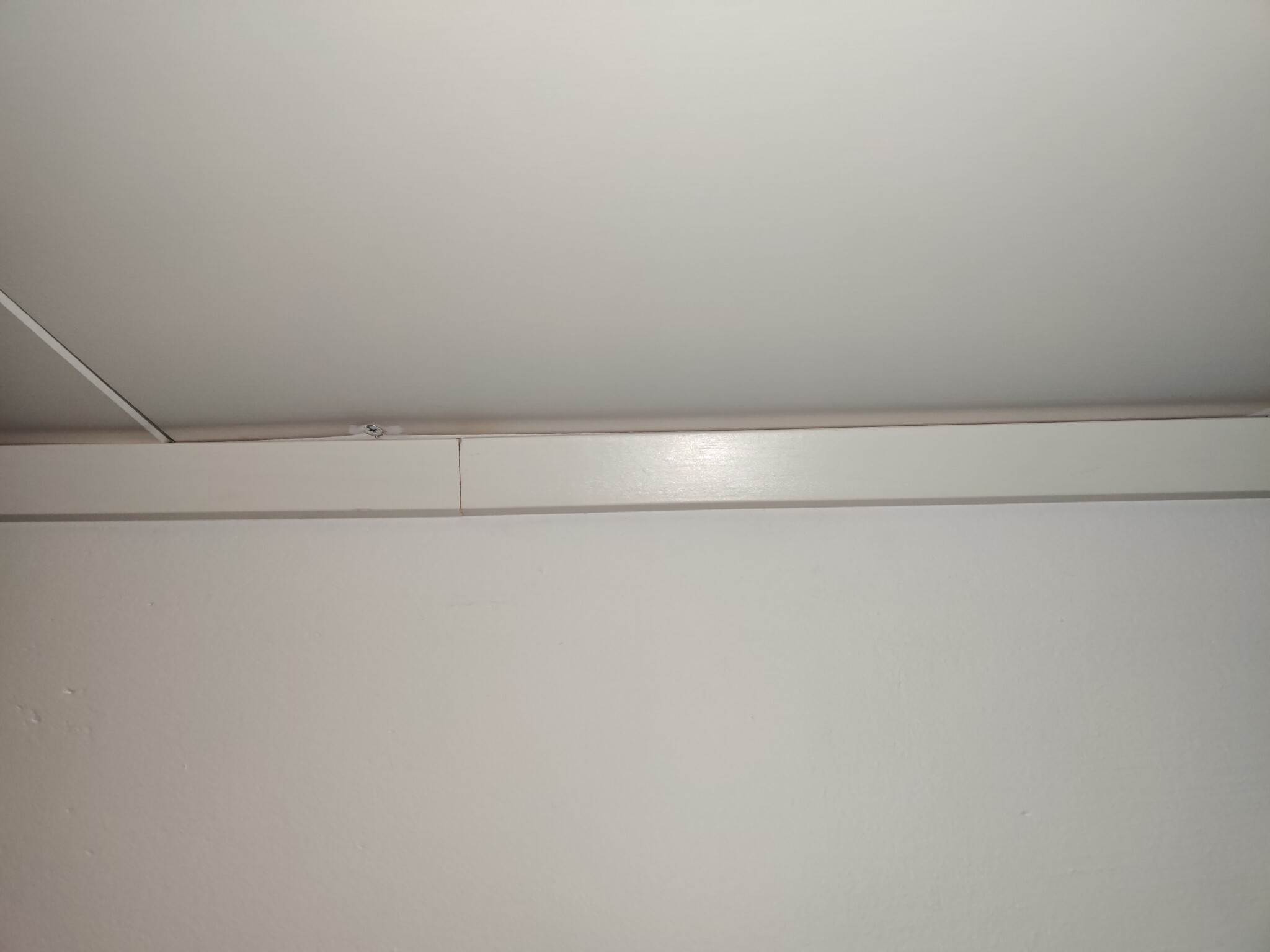
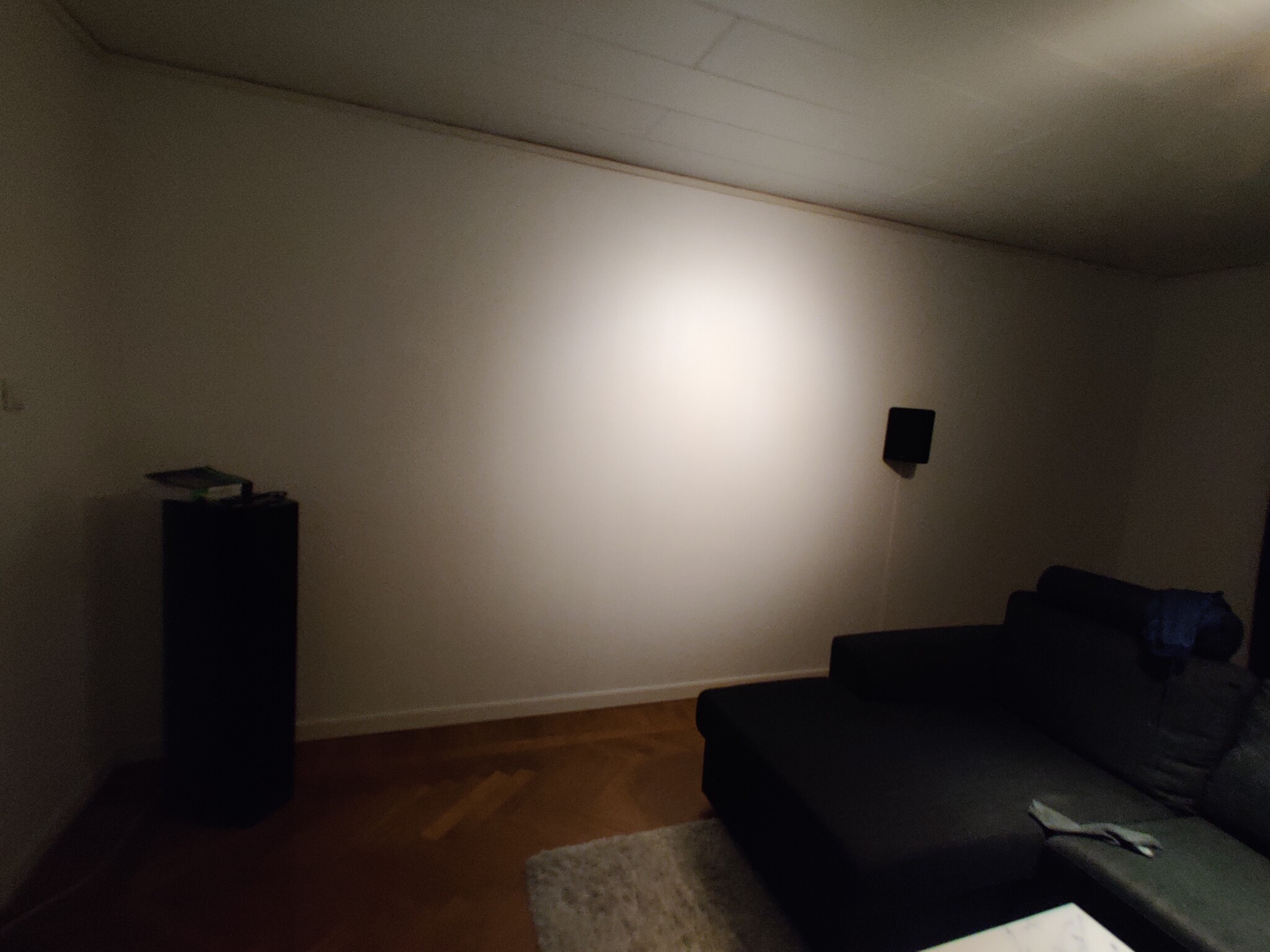
3. The room in question is entirely made of concrete, but there seems to be some kind of plate in the ceiling that appears to be screwed into the concrete. How should I attach the studs to the ceiling? I'm attaching a picture of the ceiling if anyone has any thoughts on what kind of ceiling it is.
4. Generally, when attaching steel studs to concrete, what length screws are typically used?
A lot of silly questions here, but I'm not keen on making mistakes.
Thank you very much in advance!
I recently moved to an apartment with concrete walls, and the problem is that it's very noisy with my neighbor. Therefore, I am going to build a new wall on the existing concrete wall that borders the neighbor. After researching on another forum (faktiskt.io) on how to best build a soundproof wall, it has come down to a double drywall wall with 95mm steel studs. I have never previously renovated/built walls or anything similar, so I have a few questions.
1. I have herringbone parquet in the room in question. I have just learned the concept of "floating floor" and that I should not attach the studs to the wooden floor, but I should cut away the floor where the studs are to be placed and attach them to the concrete. If the stud is 95mm, how wide should I cut in the floor? Should the drywall be against the concrete or the parquet floor? Do I need to cut out 95mm + the width of the drywall panels + a little extra space (to allow it to "float") or just 95mm + how much space is needed for the floor to "float"?
2. I read on this forum that some people glue the studs to the floor against the concrete. Is that preferable or should they be screwed down? If gluing is the way to go, what kind of glue should be used?
3. The room in question is entirely made of concrete, but there seems to be some kind of plate in the ceiling that appears to be screwed into the concrete. How should I attach the studs to the ceiling? I'm attaching a picture of the ceiling if anyone has any thoughts on what kind of ceiling it is.
4. Generally, when attaching steel studs to concrete, what length screws are typically used?
A lot of silly questions here, but I'm not keen on making mistakes.
Thank you very much in advance!
A true herringbone parquet floor doesn't float in the same way as a modern floor where the entire floor effectively constitutes a single sheet.
What does that mean? That you can screw directly into the parquet? I talked to a friend who talked to his dad who knows about this, he said that if you want to do it "in a professional manner" you should attach it to the concrete and that it also becomes easier if you get a water leak or similar.F fiskbuggaren said:
Do the rest of you here think differently?
Edit: As for whether the floor is "real" or not, I can't answer that, but I think it's original from somewhere around the 50s-60s.
Is it a rental? If you're unlucky, they might require you to restore the apartment to its original condition upon moving out, even if your action is an improvement!
That said, keep it simple!
Don't touch the floor, it's not necessary for the purpose and it saves you from a potential restoration requirement.
Here's what I would do:
Use steel studs as you already mentioned, but let the floor track sit flush on the floor and attach it only to the wall. The studs against the ceiling should also be attached to the wall. The standing steel studs are sufficiently rigid to only attach along the ceiling and floor if attachment affects sound transmission, so you only screw at the top and bottom.
Don't drill in the ceiling or floor, all attachment happens in the wall. The steel studs will stand stable enough to then screw on double plasterboards.
Voila! A solid soundproofing wall with minimal impact on the apartment.
That said, keep it simple!
Don't touch the floor, it's not necessary for the purpose and it saves you from a potential restoration requirement.
Here's what I would do:
Use steel studs as you already mentioned, but let the floor track sit flush on the floor and attach it only to the wall. The studs against the ceiling should also be attached to the wall. The standing steel studs are sufficiently rigid to only attach along the ceiling and floor if attachment affects sound transmission, so you only screw at the top and bottom.
Don't drill in the ceiling or floor, all attachment happens in the wall. The steel studs will stand stable enough to then screw on double plasterboards.
Voila! A solid soundproofing wall with minimal impact on the apartment.
Thanks for the response!Luc Reiner said:
Is it a rental apartment? You might be unlucky and they might require you to restore the apartment to its original condition when moving out, even if your modification is an improvement!
That being said, keep it simple!
Don't touch the floor; it's neither necessary for the purpose and it saves you in case of a restoration demand.
Here's how I would do it:
Use steel studs as you already mentioned, but let the floor track lay flush on the floor and attach it only to the wall. The tracks at the ceiling, attach to the wall there too. The vertical steel studs are strong enough to only attach along the ceiling and floor if the attachment affects sound transmission, so you only screw at the very top and bottom.
Do not drill into either the ceiling or the floor; all attachment is done on the wall. The steel studs will stand firm for then attaching double plasterboards.
Voila! A substantial soundproof wall with minimal impact on the apartment.
It is a condominium, so the plan is to build a permanent wall. There are also two electrical outlets that will be moved to the new wall, so it's not easily reversible, but I also can't see any scenario where I would want to restore the wall.
As you say, it certainly sounds simpler, but I also don't want to make a shoddy solution, though it might not be noticeable, hmm this is difficult.
How would the rest of you approach this?
What type of screws should be used to attach the studs to the wall?
Agree with you. Perhaps the floor track can be attached with double-sided tape as an extra measure.Is it a rented apartment? If you're unlucky, they might require you to restore the apartment to its original state when moving out, even if your modification is an improvement!
With that said, keep it simple!
Don't touch the floor, it's neither necessary for the purpose nor will it save you in the event of a restoration demand.
I would do it like this:
Use steel studs as you already mentioned but let the floor track rest directly on the floor and attach it only to the wall. The tracks against the ceiling, attach to the wall there as well. The standing steel studs are sufficiently stiff to only attach along the ceiling and floor if attachment affects sound transmission, so you only screw at the top and bottom.
Do not drill into the ceiling or floor, all attachment is done to the wall. The steel studs will stand stable for then attaching double plasterboards.
Voila! Solid sound-proofing wall and minimal impact on the apartment.
It's a condominium, so the only reason the wall would ever need to be removed is if there were a water leak or something similar. But maybe it's still unnecessary to screw into the floor?Henkan Sundberg said:

The easiest and best way is if you buy these kinds of rails:
https://www.byggmax.se/ljudskena-zink-p20894
You just need to attach them to the floor, ceiling, and sides, so you can get an air gap between the old wall and the new wall, preventing the sound's vibration from getting through.
You easily attach them with redplugg and drywall screws, they become really stable! Then you can use real wooden studs to make the wall much stiffer. It's also not as critical to have the exact measurement of the stud from floor to ceiling since you have a bit of leeway to attach the stud to the rail. Same when attaching the stud to the steel rail, only drywall screws needed there too!
I did this at home and it was my first time trying it, I was really surprised at how easy and good it turned out to be to build walls.
https://www.byggmax.se/ljudskena-zink-p20894
You just need to attach them to the floor, ceiling, and sides, so you can get an air gap between the old wall and the new wall, preventing the sound's vibration from getting through.
You easily attach them with redplugg and drywall screws, they become really stable! Then you can use real wooden studs to make the wall much stiffer. It's also not as critical to have the exact measurement of the stud from floor to ceiling since you have a bit of leeway to attach the stud to the rail. Same when attaching the stud to the steel rail, only drywall screws needed there too!
I did this at home and it was my first time trying it, I was really surprised at how easy and good it turned out to be to build walls.
I wanted to mention the restoration requirement because not everyone knows it exists in rental apartments, so when you wrote apartment, I assumed Schrödinger's cat principle, an apartment can be both rental or condominium until more facts are known.doglas2009 said:
Thanks for the response!
It's a condominium so the idea is to build a permanent wall. There are also 2 electrical sockets that will be moved to the new wall, so it's not easily reversible, but I can't see any scenario where I would want to restore the wall.
As you say, it certainly sounds much easier, but I don't want to make a cut-corner solution either, though perhaps it won't be noticeable, hmm this is tricky.
How would you others have reasoned?
What screws should be used to attach
In your case with a condominium, the previous advice with sound beams and fastening to the floor, ceiling, and side walls is a good option to minimize sound vibrations maximally.
What you need is:
Hammer drill with a 6 mm concrete drill bit.
Place a tape 6 cm in on the drill, so you can easily see how deep the drill goes when you're drilling.
Plug for 6 mm holes. 5-6 cm long.
Screws as long as the plug, perhaps 6 cm long.
Multidetector if you can't see/figure out where the plumbing/electrical lines go.
Personally, I would leave the parquet flooring under the new wall and just tape for simplicity's sake. Every drill hole poses a risk of hitting something sensitive. It will be fine that way too.
I can only agree with Lechuza above about using a sound rail against walls, ceilings, and floors, and then attaching sheet metal profiles to it. Insert compact insulation boards between the profiles and then double plasterboard with staggered seams. It might be worth applying a bead of damping adhesive (there are special products) on the profile before the plasterboard, or an EPDM rubber strip.
There will be a big difference. Position the entire wall with a few centimeters gap from the old wall.
Regarding electrical outlets, keep in mind that they will make holes in your soundproofing wall... It might be worth installing surface-mounted outlets if they have to be on that wall or move them to adjacent walls if soundproofing is important.
A steel profile is just as stiff, if not stiffer, than a wooden profile when the wall is finished, so there's no reason to use a wooden profile.
If you really want to decouple your wall from the neighbor and also your floor to get away from structure-borne noise, it's good to cut up the floor and keep some distance, BUT it's not unlikely that your floor is constructed with a floating particle board on sand and then the parquet on it, so it might be impossible to do so...
I would recommend a test drilling next to the existing wall before using the saw on the floor to ensure you don't have sand under the floor.
There will be a big difference. Position the entire wall with a few centimeters gap from the old wall.
Regarding electrical outlets, keep in mind that they will make holes in your soundproofing wall... It might be worth installing surface-mounted outlets if they have to be on that wall or move them to adjacent walls if soundproofing is important.
A steel profile is just as stiff, if not stiffer, than a wooden profile when the wall is finished, so there's no reason to use a wooden profile.
If you really want to decouple your wall from the neighbor and also your floor to get away from structure-borne noise, it's good to cut up the floor and keep some distance, BUT it's not unlikely that your floor is constructed with a floating particle board on sand and then the parquet on it, so it might be impossible to do so...
I would recommend a test drilling next to the existing wall before using the saw on the floor to ensure you don't have sand under the floor.
Thank you very much for getting involved!
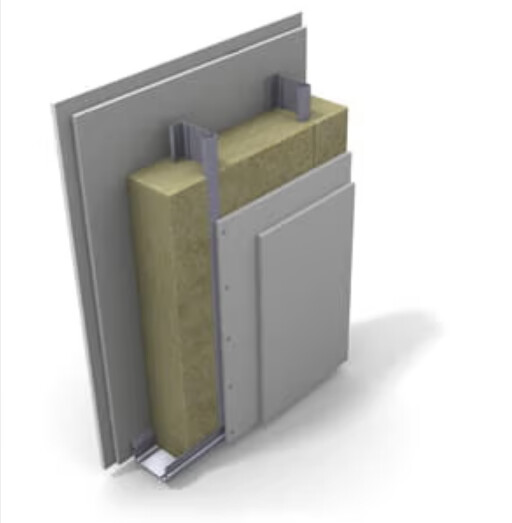
After reading the responses in my thread on the other forum, I understand that as long as my current wall is sealed, it won't matter if there is a gap or wall outlet or the like, it won't affect how soundproof the wall is. I also understand that the reason one might want to build with an air gap between the new and the old wall is if building with wood studs, but you basically get the same effect with steel studs and double gypsum attached directly to the wall. It seems a bit more convenient to attach directly to the wall, so that's what I'm leaning towards.
https://www.faktiskt.io/phpBB3/viewtopic.php?f=31&t=74406&p=2293541#p2293541 for anyone interested.
I also saw those sound rails, but they were only available in 70mm, I think there were wider ones at Beijers, I was thinking, as mentioned, 95mm with double gypsum.
How many screws would you say are needed per stud attached to the wall?
Leaning towards taping the rails to the floor. If you think about sustainability, does it have any significant impact whether you screw or tape the rails to the floor? Will I realistically notice any difference? Without knowing anything at all about this, it feels like the only downside is that the angry carpenter might come and shout "shoddy workmanship!" if he were to tear down the wall and check, but that feels unlikely.
After reading the responses in my thread on the other forum, I understand that as long as my current wall is sealed, it won't matter if there is a gap or wall outlet or the like, it won't affect how soundproof the wall is. I also understand that the reason one might want to build with an air gap between the new and the old wall is if building with wood studs, but you basically get the same effect with steel studs and double gypsum attached directly to the wall. It seems a bit more convenient to attach directly to the wall, so that's what I'm leaning towards.
https://www.faktiskt.io/phpBB3/viewtopic.php?f=31&t=74406&p=2293541#p2293541 for anyone interested.
I also saw those sound rails, but they were only available in 70mm, I think there were wider ones at Beijers, I was thinking, as mentioned, 95mm with double gypsum.
How many screws would you say are needed per stud attached to the wall?
Leaning towards taping the rails to the floor. If you think about sustainability, does it have any significant impact whether you screw or tape the rails to the floor? Will I realistically notice any difference? Without knowing anything at all about this, it feels like the only downside is that the angry carpenter might come and shout "shoddy workmanship!" if he were to tear down the wall and check, but that feels unlikely.
Now, I might be misunderstanding your intended construction, but you should not attach your new studs to the old wall. Possibly with an acoustic profile, but if you plan to have a wall depth of 95mm, there's really no reason (and it becomes worse if you do so).
I have read what was written in the other thread and I understand what they are writing (I think...) and then the power outlet does not matter, just make sure there is insulation behind it. If it is to be attached to the wall, it must be an acoustic frame (with soft material against the wall and plaster, it is not the same as a "regular" metal frame). There was also more information about the frequency that interferes, so it becomes less important to decouple the wall, and sealing around it will not make such a big difference. Good luck with the wall!
I might have misunderstood it, I got this picture from the other forum, the left part is in my case the concrete wall. I thought you attached the studs to the wall as well, but do you mean you only attach them to the tracks on the floor/ceiling?F fiskbuggaren said: