
I have a house from the 1920s with old pipes in the basement. When we bought the house last year, we didn't consider that there might be asbestos in the pipe insulation. About 15 years ago, measures were taken in the basement including the installation of geothermal heating. There are holes in the insulation on the basement pipes, partly in the bends and partly on straight sections. Since we use the space as a laundry room and hang our laundry there, I am concerned about the potential asbestos dust from the "open" insulation. I'm considering submitting a sample for analysis to be on the safe side, but I actually want to cover the pipes/repair the insulation so that it is not "open." My question is: which insulation material should be used to seal so tightly that any asbestos won’t escape into the space?
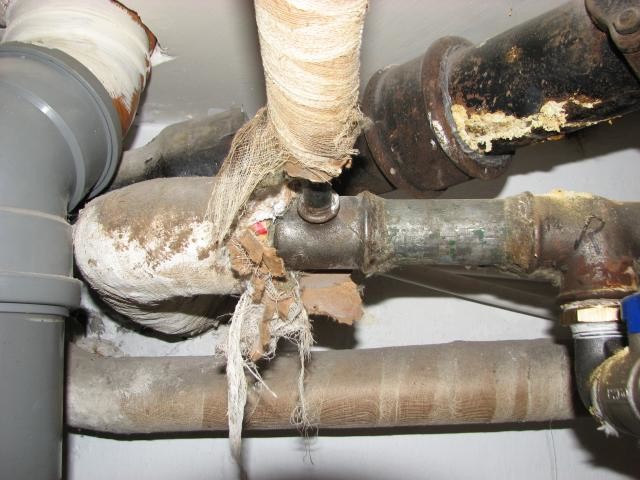
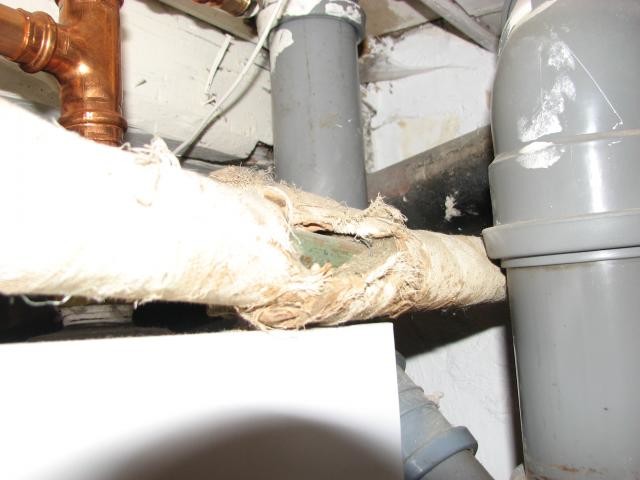
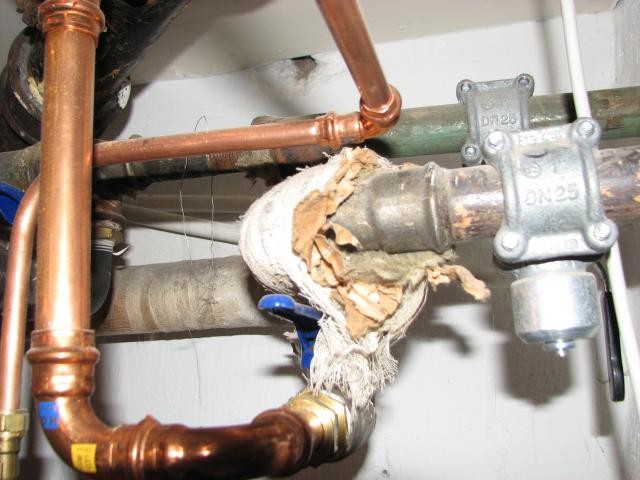
I have a similar problem in our house, old pipe insulation, partially exposed in the basement that we use as a laundry room. Unknown if there is asbestos in the insulation or not, but the house was built in 1950 so the risk is definitely there.
How did you proceed? Is it safe to tape the pipes together, or does that just risk releasing any possible asbestos do you think?
How did you proceed? Is it safe to tape the pipes together, or does that just risk releasing any possible asbestos do you think?
I can't determine if it is asbestos or not.
But even if it is asbestos, it is completely harmless as it appears. If you want to tape over defects and seams, that is also harmless.
It's a bit like being worried about the neighbor in the house next door smoking because sometimes you can distinguish a smell of smoke, and everyone knows that passive smoking is dangerous...
But even if it is asbestos, it is completely harmless as it appears. If you want to tape over defects and seams, that is also harmless.
It's a bit like being worried about the neighbor in the house next door smoking because sometimes you can distinguish a smell of smoke, and everyone knows that passive smoking is dangerous...
The company that installed my heat pump said that the asbestos is usually located in the bends. And it is released when you tear it down, not otherwise. I don't know if that's true. But we have the same setup in our laundry room as in the TS pictures, so it makes you a bit pensive...



In my case, we have several different types of pipes and wrappings (seem to be from different time periods), so you should test all types to be sure.
Since it also seems that asbestos is often in the bends (from what I have read here), you should cut open the bends and take a representative piece of 3x3 to 5x5 cm. I would prefer to avoid cutting into the insulation at all.
As I see it, my options are:
1) Take asbestos samples from all types of pipes.
2) Carefully tape and try to seal all pipes (or at least the bends).
3) Bring in a professional asbestos remover to remove all insulation and clean up afterward.
4) Cut the pipes outside the insulation, dismantle them, and replace them with new pipes.
Option 4 sounds a bit drastic, but it might not be much more expensive than removal, what do I know?
Since it also seems that asbestos is often in the bends (from what I have read here), you should cut open the bends and take a representative piece of 3x3 to 5x5 cm. I would prefer to avoid cutting into the insulation at all.
As I see it, my options are:
1) Take asbestos samples from all types of pipes.
2) Carefully tape and try to seal all pipes (or at least the bends).
3) Bring in a professional asbestos remover to remove all insulation and clean up afterward.
4) Cut the pipes outside the insulation, dismantle them, and replace them with new pipes.
Option 4 sounds a bit drastic, but it might not be much more expensive than removal, what do I know?

Member
· Korpilombolo
· 3 724 posts
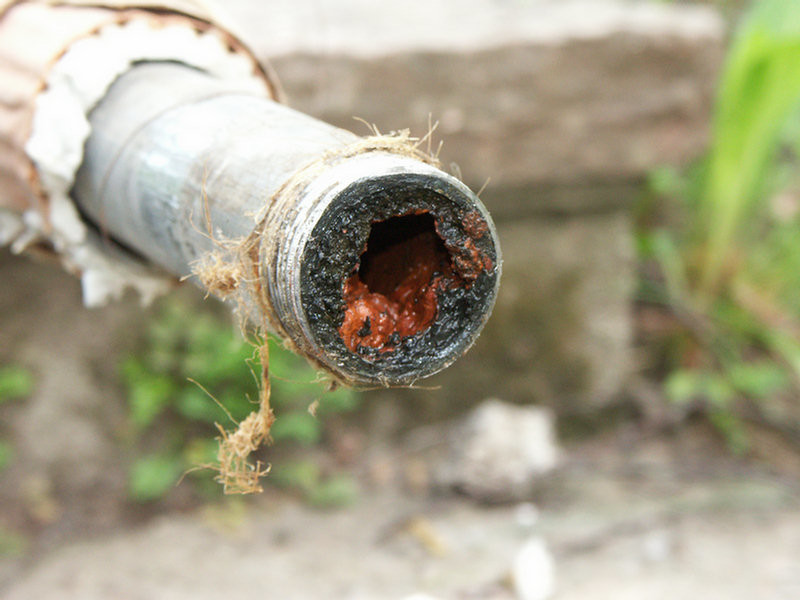
Not much happens as long as you don't start damaging the insulation. On the other hand, dusty gauze doesn't look very fresh. There are gray plastic covers you can encase the insulation with. It looks fresher and is wipeable. I can't see what it looks like otherwise, but if everything else is in perfect condition, it might be better to wait until it's time to make interventions in the heating system and then consider replacing the pipes? They are old iron pipes which (even if they last a long time) will eventually be worn out.


It's a bit different in various municipalities, so check with your municipality's waste management. For example, here in Huddinge, you used to be able to submit smaller amounts at any recycling center, but now all asbestos must be submitted to a specific facility.Twisty_canard said:
Click here to reply