Unsure if I'm in the right part of the forum or not, I apologize if this thread should have been posted elsewhere.
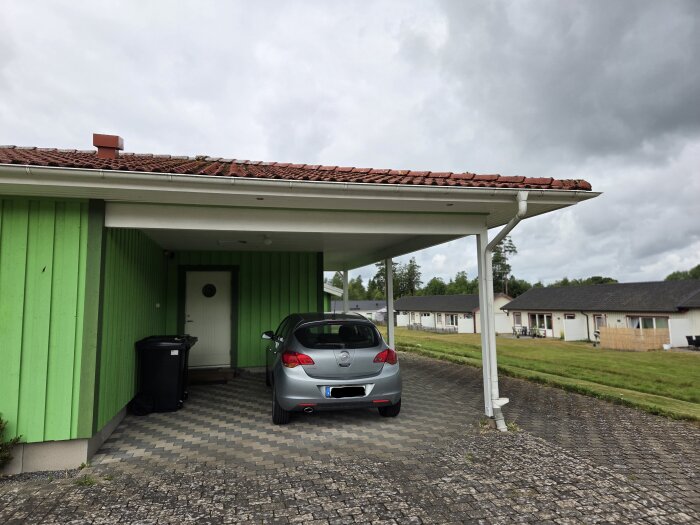
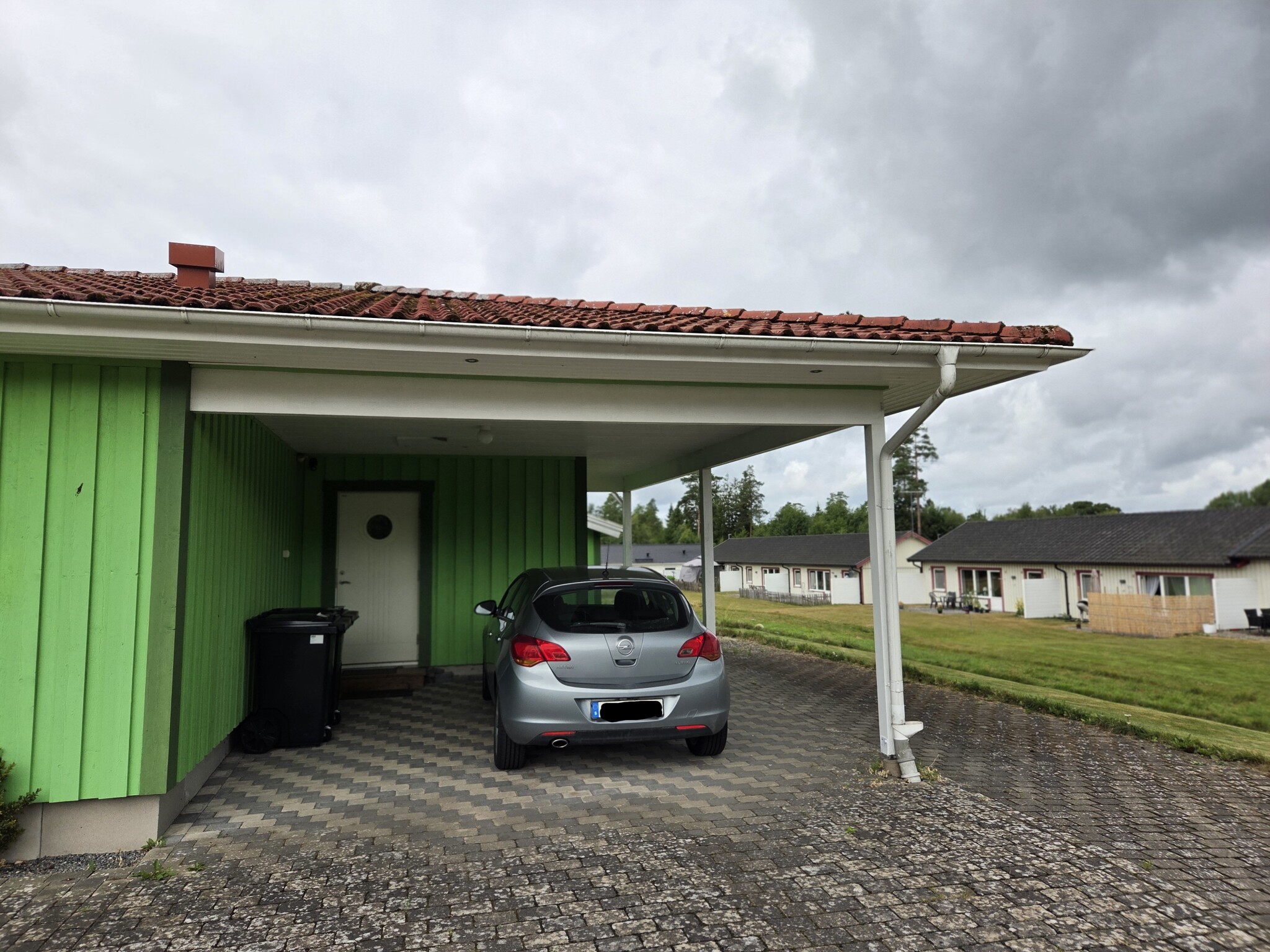
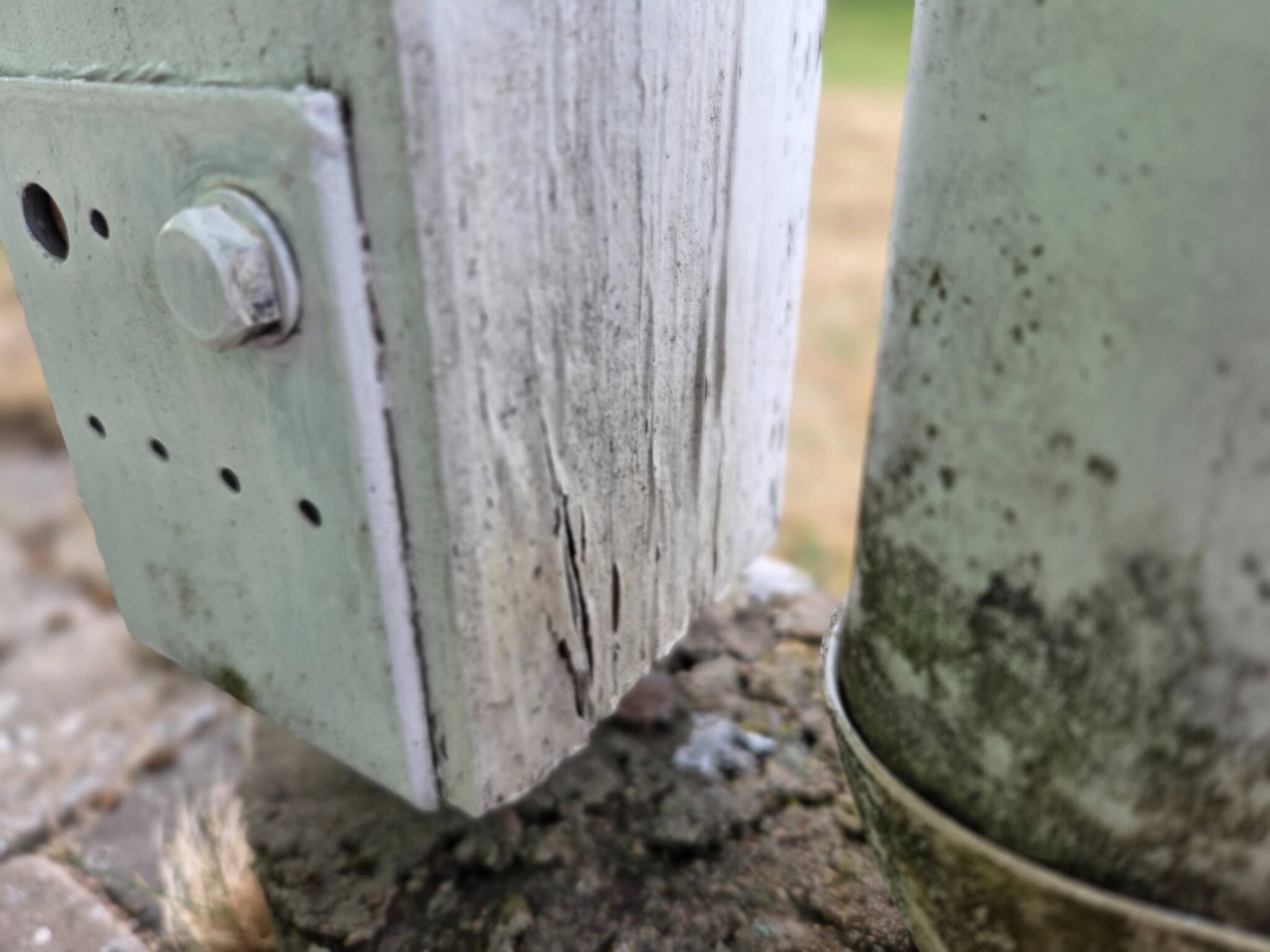
I have pillars that support the roof around the house, the probably most loaded and unfortunately one of the affected ones is the one closest in this picture:
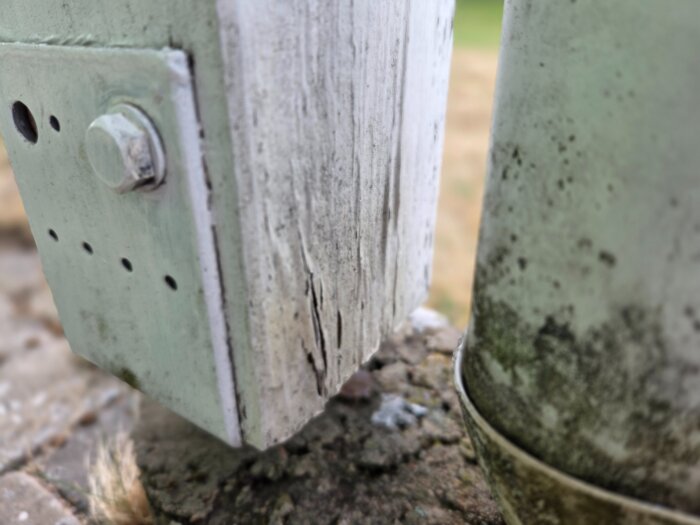
Some of them, like the one closest in the picture above, have started to rot at the bottom:
As a complete beginner in owning a house and handling such things, what can/should I do about it? Just sand away the rot and apply new primer and paint, or is there something else I should do, some "rot-killing" substance to apply? Or is there a need to contact a carpenter (or whoever you contact for this type of work) and get them replaced?
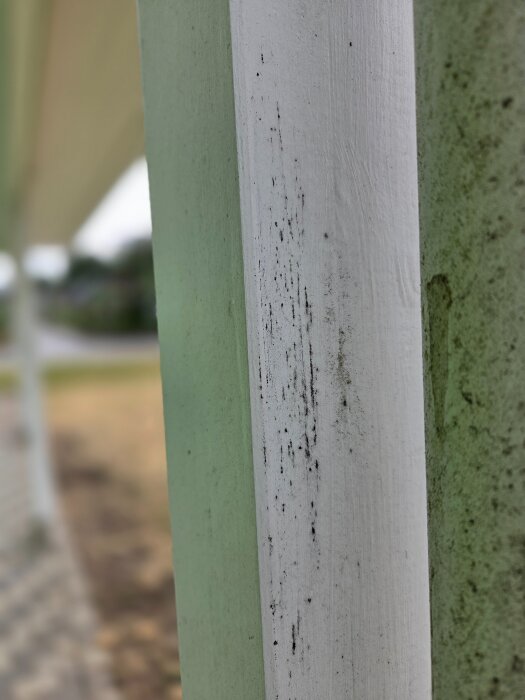
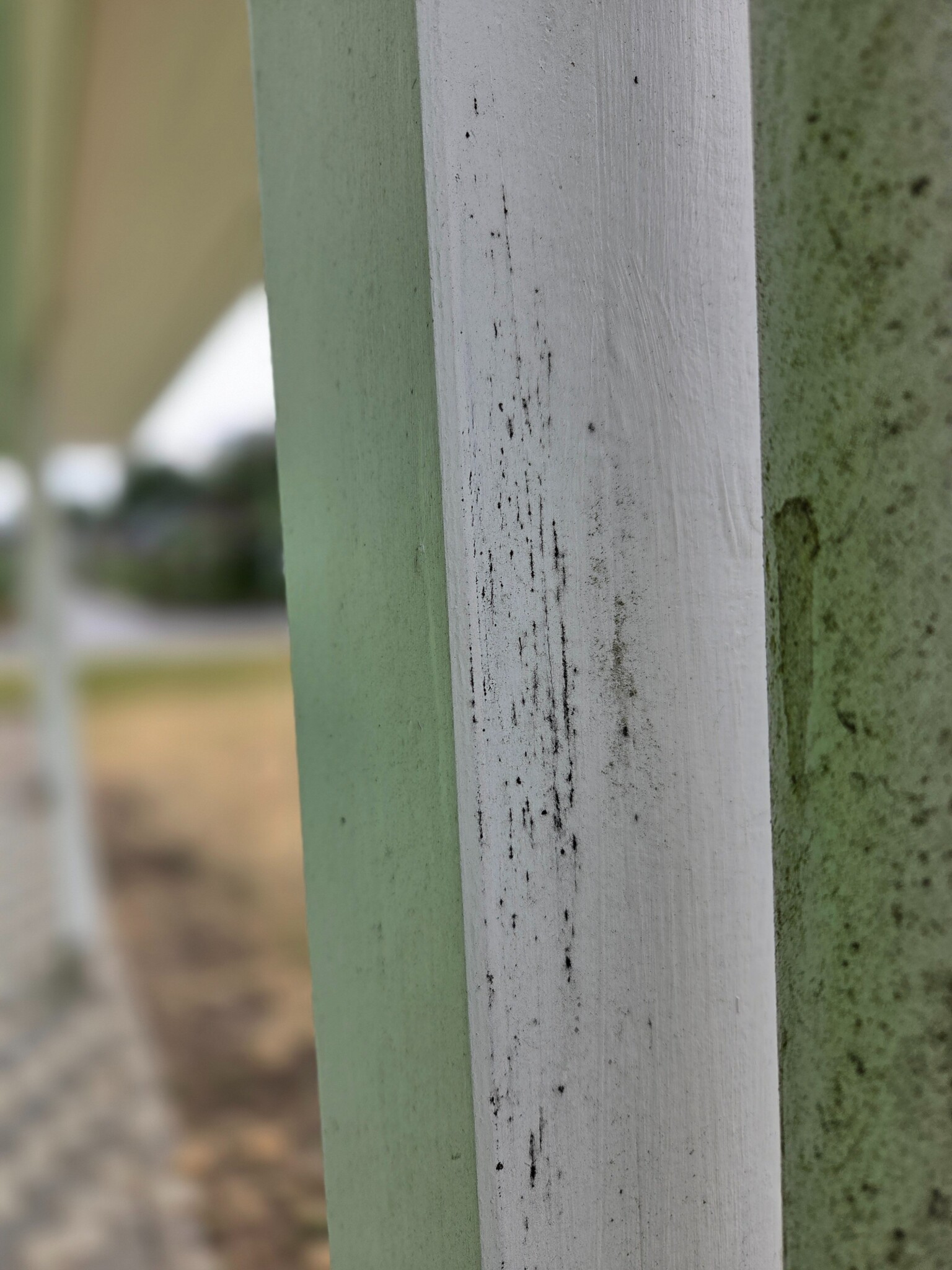
Somewhat of a side question, or maybe relevant to the topic? I've noticed several black "spots" on the pillars, at first I just thought it was dirt collected in the unevenness, but is it something coming through the paint that I should also keep in mind when checking the pillars? Or just clean and paint over for the pillars that are still okay?
When the lower part of the post is so rotten that it can't be repainted, you need to buy a new post and replace it. You then temporarily support the roof with another post, or perhaps more professionally, a stämp. You can lift the roof a few tens of mm with a regular jack to remove and install the new post.
Prick with a knife tip to check how bad it really is, but it looks quite okay.
#1 Always address any cause for the rotting. Problems with roof drainage, poor runoff causing puddling and splashes, snow, bad paint trapping moisture in the wood, incorrect construction, etc.
Scrape, thoroughly oil the end grain with linseed oil as long as it absorbs, and repaint with a good outdoor paint.
In this case, the wood is probably rotting because water is splashing out from the leaf trap. It should probably be addressed by moving this away from the post in some way.
In this case, the wood is likely rotting because water splashes out from the leaf guard. This should probably be addressed by moving it away from the post in some way.
+1 on that. Additionally, wood is designed to absorb water vertically. If moisture remains in the post shoe for too long — yes, most will run off to the sides, but not all — the post will quickly soak it up unless it's properly "sealed" with a good amount of paint at the bottom.
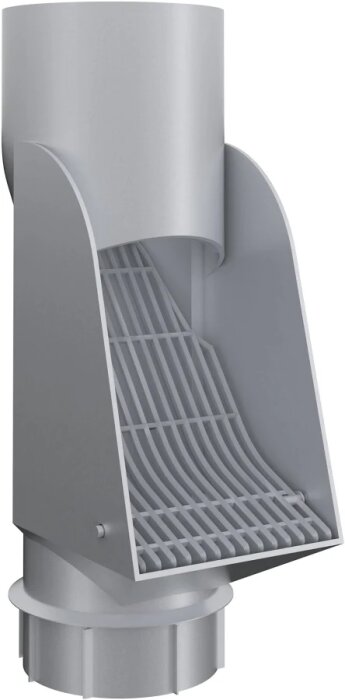
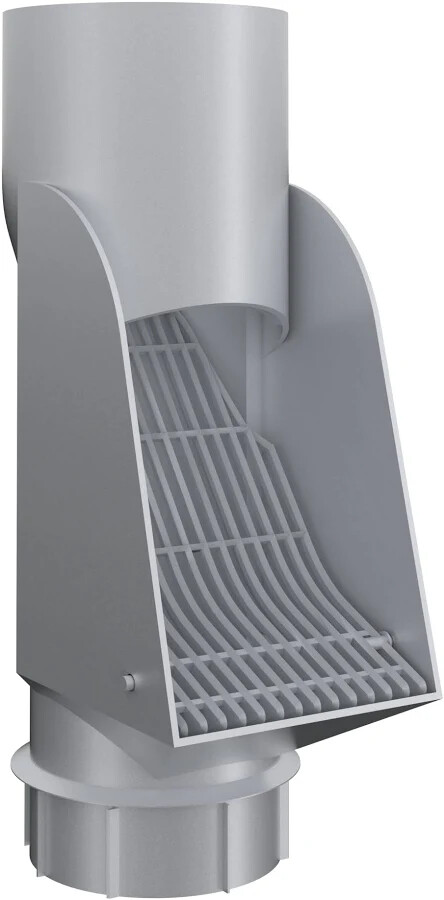
When it comes to the leaf sieve, I have been considering getting something like this instead, which should presumably prevent it from splashing in the wrong direction?
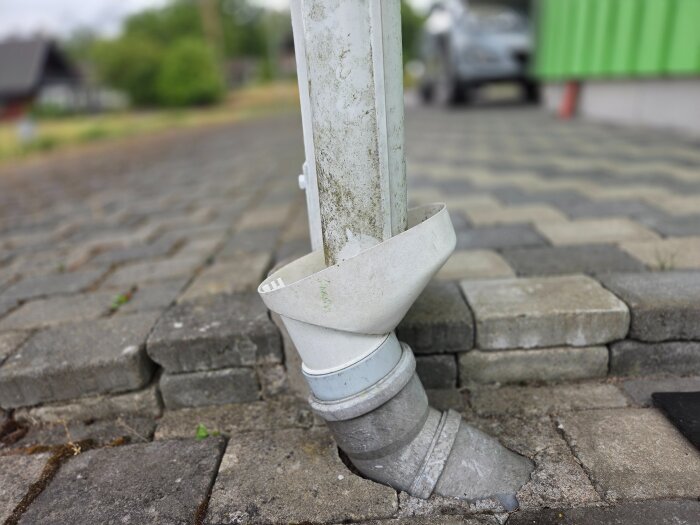
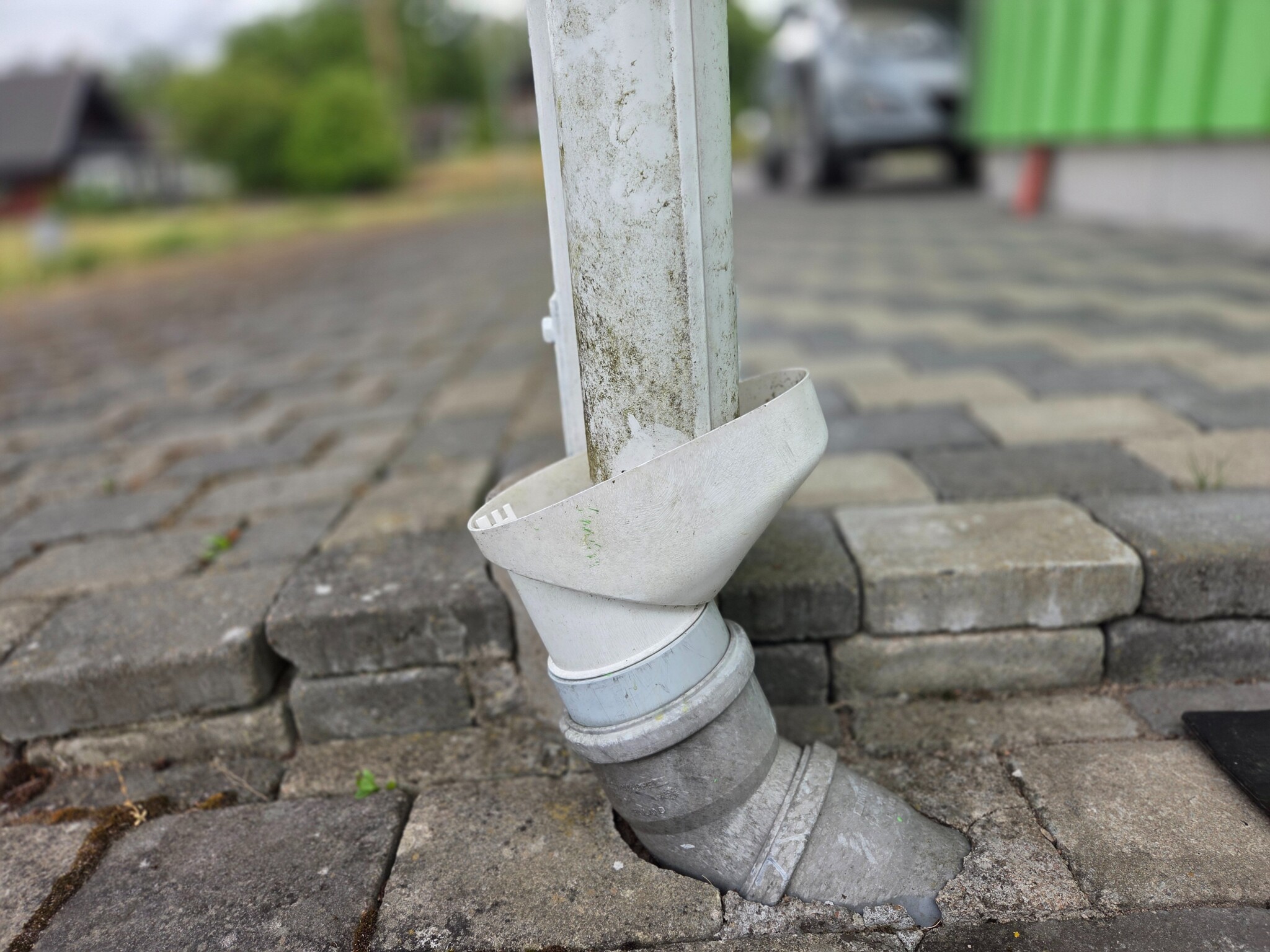
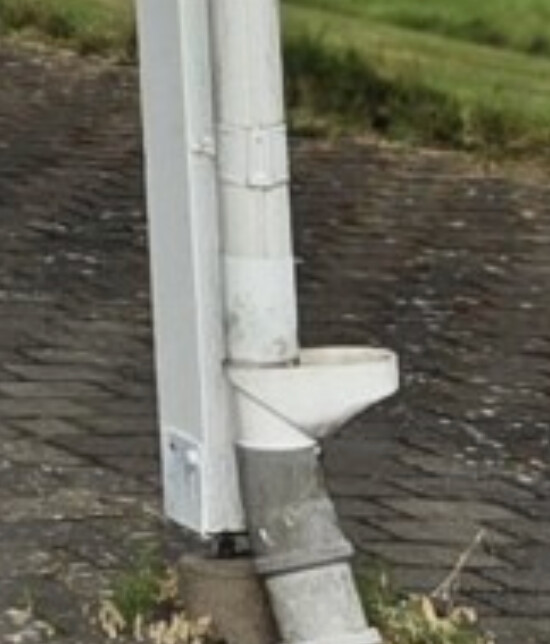
Then there's a bit of a problem with one of the pipes coming up very "crooked" from the ground and doesn't match the pipe going down, so I'm unsure how to fix it neatly if I switch to the gutter above:
But it's worth mentioning that there are also emerging problems on posts without a gutter, I suspect that it's simply blowing in enough rain when it rains hard for it to be enough to wet the posts which are still quite far out under the roof.
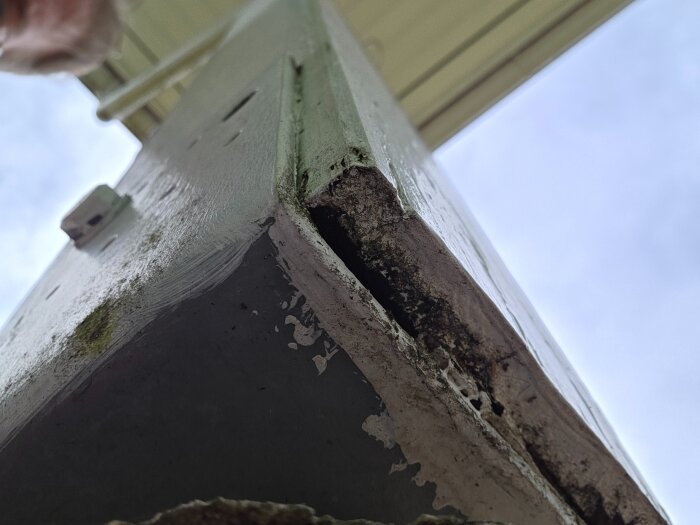
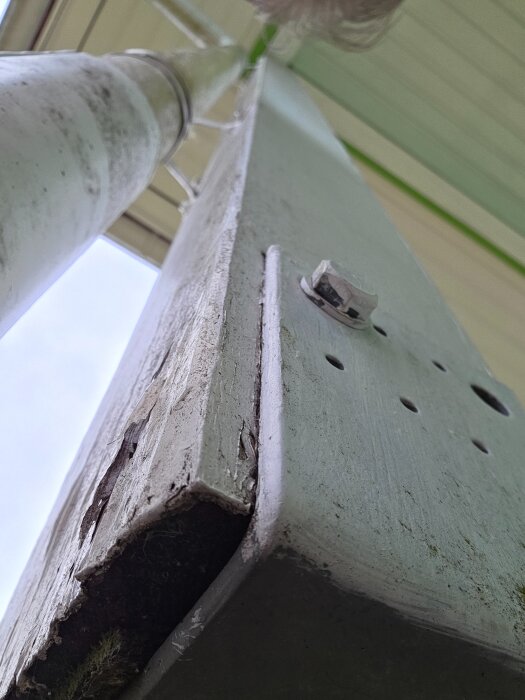
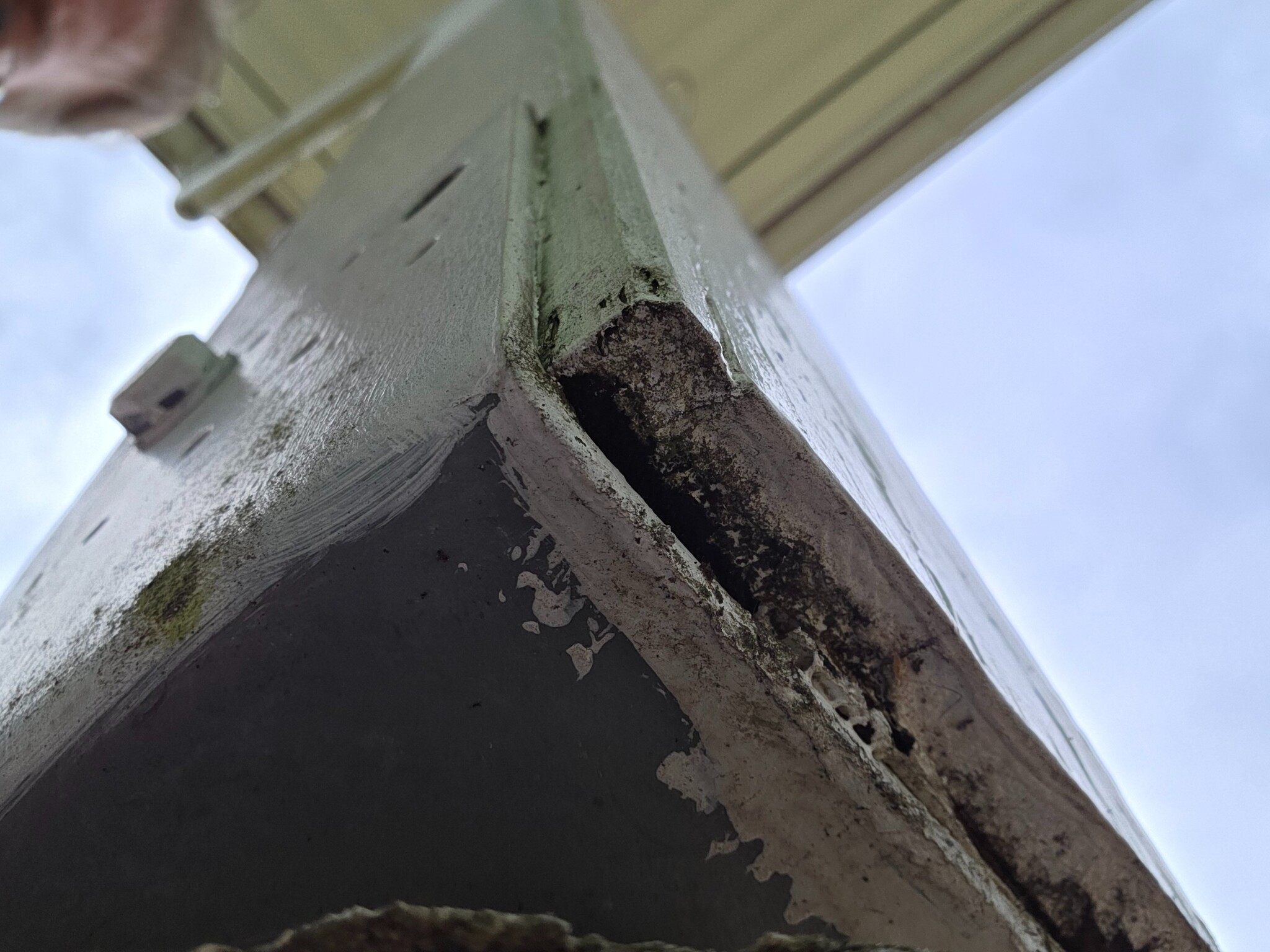
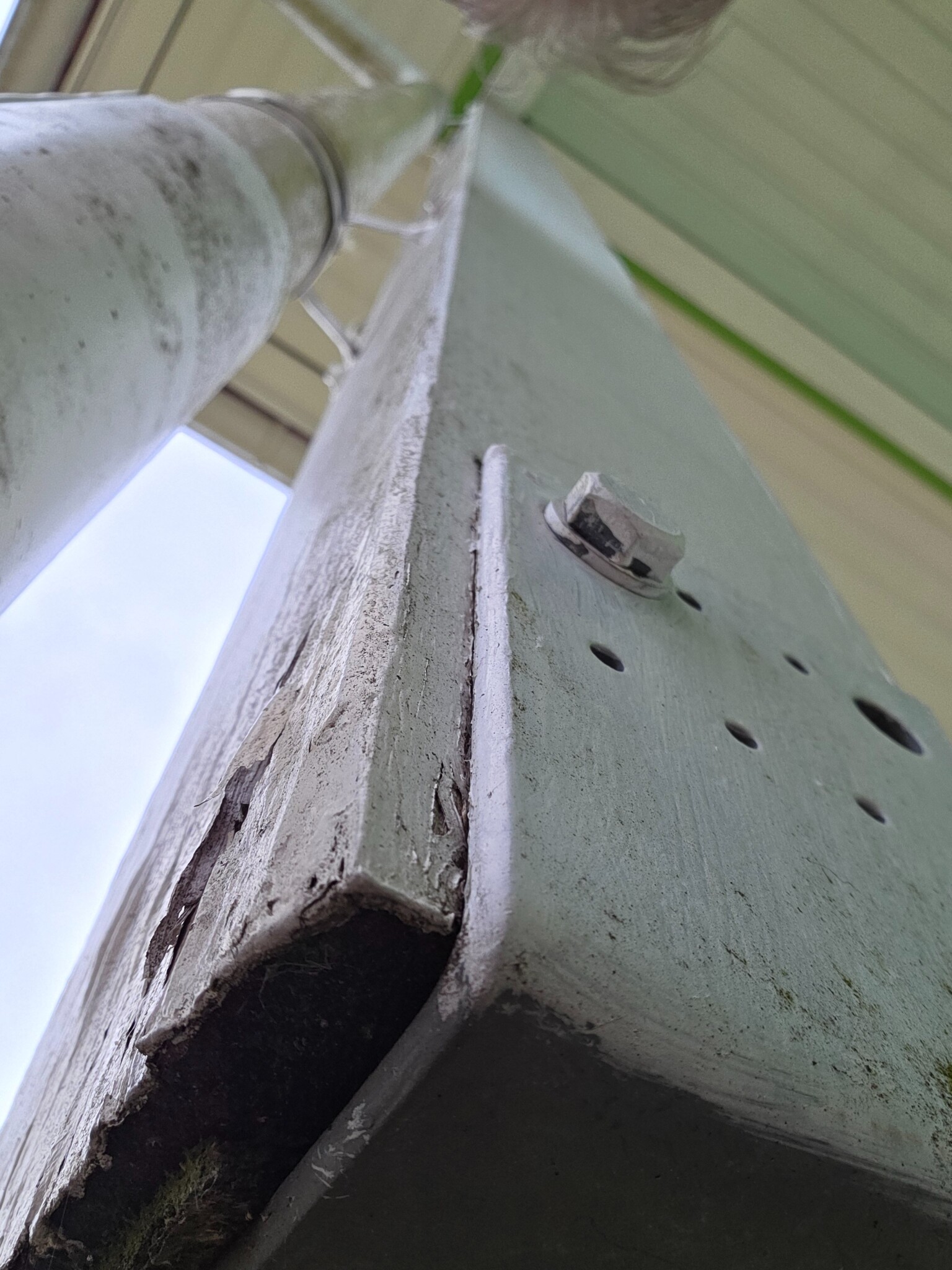
I tried to take some pictures from underneath on the post where it's worst to try to get an idea of what it looks like but it's quite cramped and there's poor visibility. But from what I can see, it's painted underneath "a bit" on one side of the most affected post but not on the other side, where the rot has begun:
However, it feels like the placement of the rot in this case has more to do with the orientation of the post than the difference in the amount of paint underneath, as it's the "outside" that's worst affected.
I felt the dark part underneath and it felt damp now, so I assume the recent rains have gotten into the wood there.
Everyone seems to agree that a first step is to scrape off the current paint and see what it looks like underneath.
With the weather forecast promising rain as far as the forecasts cover, should I wait for drier weather while letting the remaining paint provide some protection, or should I rather get up a tarp or something similar around the worst-affected posts as soon as possible and start dealing with it? (for some interesting reason, the worst ones are diagonally opposite each other, i.e., the one shown in the picture above has some issues but the worst is across the house on the other side).
What should I consider when it comes to paint? I have no idea what the previous homeowners used when they painted, so should I chase them for that information or can a paint store determine what type of paint was previously used if I bring some paint chips?
I assume that if it looks "salvageable" after scraping off the existing paint (and I assume the rot should also be scraped away?), then I should probably get something new on as soon as possible, so I assume it's good to make sure I have paint ready in any case?
When it comes to the leaf filter, I've been considering getting something like this instead
Yes, they are better. Most importantly, they don't overflow if you don't have time to clean them.
Regarding the pipe, you should get a better bend or rather a combination of bends. They come in 15, 30, and 45 degrees, just piece them together so the outlet becomes vertical. Advanced work is to lift a few tiles and dig out the end of the pipe so you can place the bend underground. It looks more professional if it comes up straight, and advanced work #2 is to finish with a black pipe above ground that stays fresher over time (withstands sunlight better).
It doesn't matter if you scrape off the paint now, wood can stand exposed. But do take the opportunity to apply some coats of linseed oil that can soak in.
I have similar problems (see my history) with load-bearing posts that are rotting. In my case, they are about 50 years old, I believe (the garage they stand at is from 1973) and severely cracked. Back then, one should have sealed with sealant and paint, but now moisture has been retained, and at least one is clearly beyond saving. I will lift up with a support and jack and replace it with a new one made of pine, positioning it with some distance at the base and/or with sill paper.
Click here to reply
Vi vill skicka notiser för ämnen du bevakar och händelser som berör dig.





Claes Sörmland said: