
1,735 views ·
12 replies
2k views
12 replies
What is at the bottom of the floor?
Hi!
I've inherited an old cottage and in one of the rooms the floor has settled, so I thought I'd level it, and I've removed the old floorboards to see how it looks.
It seems like the floor is completely separate from the rest of the construction, is it common that they built like this at that time?
As expected, there's sawdust used as insulation, but in some areas there's a bottom layer with some clay gravel dust-like material, what is that? (see image)
I've inherited an old cottage and in one of the rooms the floor has settled, so I thought I'd level it, and I've removed the old floorboards to see how it looks.
It seems like the floor is completely separate from the rest of the construction, is it common that they built like this at that time?
As expected, there's sawdust used as insulation, but in some areas there's a bottom layer with some clay gravel dust-like material, what is that? (see image)

can't see any pictureB Berglund4 said:Hello!
I have inherited an old cottage and in one of the rooms, the floor has sagged, so I thought I'd level it, and I've removed the old floorboards to see what it looks like.
It seems like the floor is entirely separate from the rest of the construction, is it common that they built like that back then?
Then, as expected, there's sawdust as insulation, but in some places, there's a bottom with some clay gravel flour-like material, what is that? (see picture)
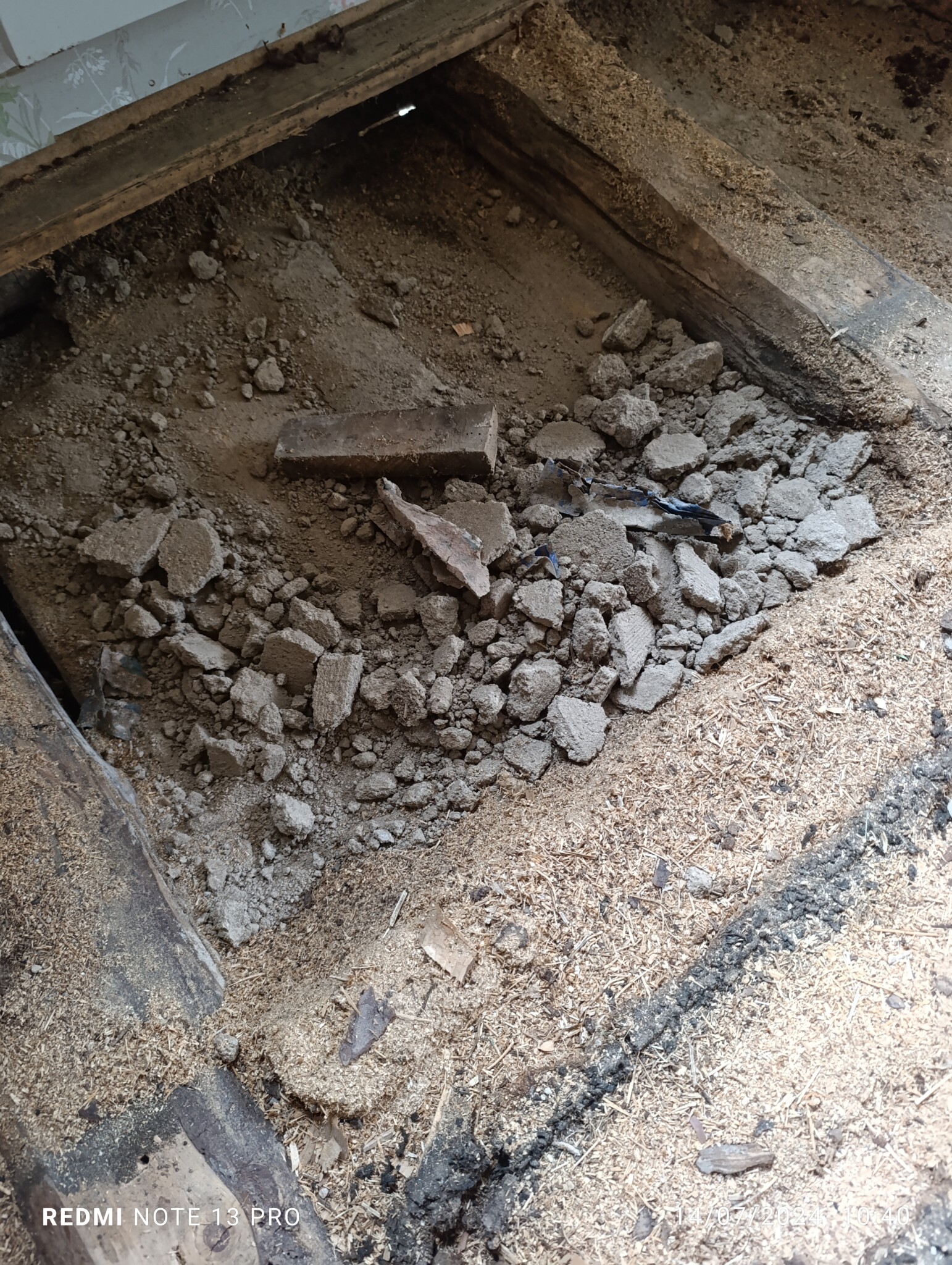
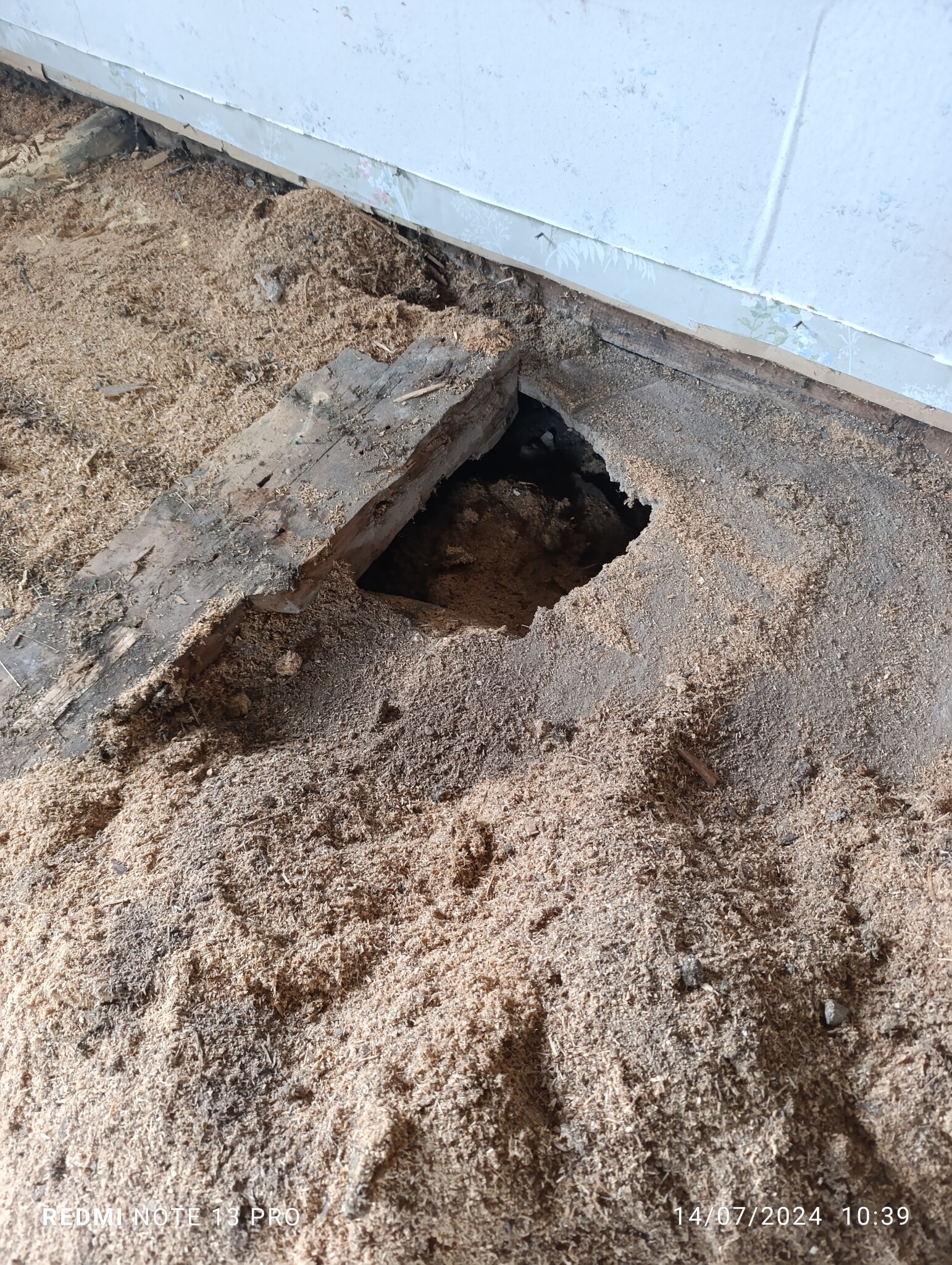





Best answer

Yes.B Berglund4 said:
A layer of clay plaster served both as a windproofing against floor drafts and as rodent protection.
Clay plaster is suitable as it is the most pliable/flexible mortar that can withstand some movement from wood without cracking. It can also be reinforced to further reduce the risk of cracking. Additionally, it's incredibly convenient that the boards of the flooring, beams, as well as the sill can be as uneven, crooked, and twisted as possible. Compare this to building with paper, fabric, or boards. Everything must maintain the exact right distance and be even and straight, (which never happens in old houses).
It was used in the past because it was available (for free) as well as often sand and bran. History has shown that it is also the best sealing material available for floorings. It is a quick and easy way to windproof and rodent-proof a flooring, it is cheap, it is long-lasting, it is natural and contains no harmful or environmentally damaging substances, and it is 100% recyclable. Just add water to the old crumbs and it becomes new pliable clay to use.
Edit: Cement or lime mortar can also be used, but clay plaster is the best.
Click here to reply