
10,201 views ·
4 replies
10k views
4 replies
Repair interior wall, plaster that has come loose
Hello!
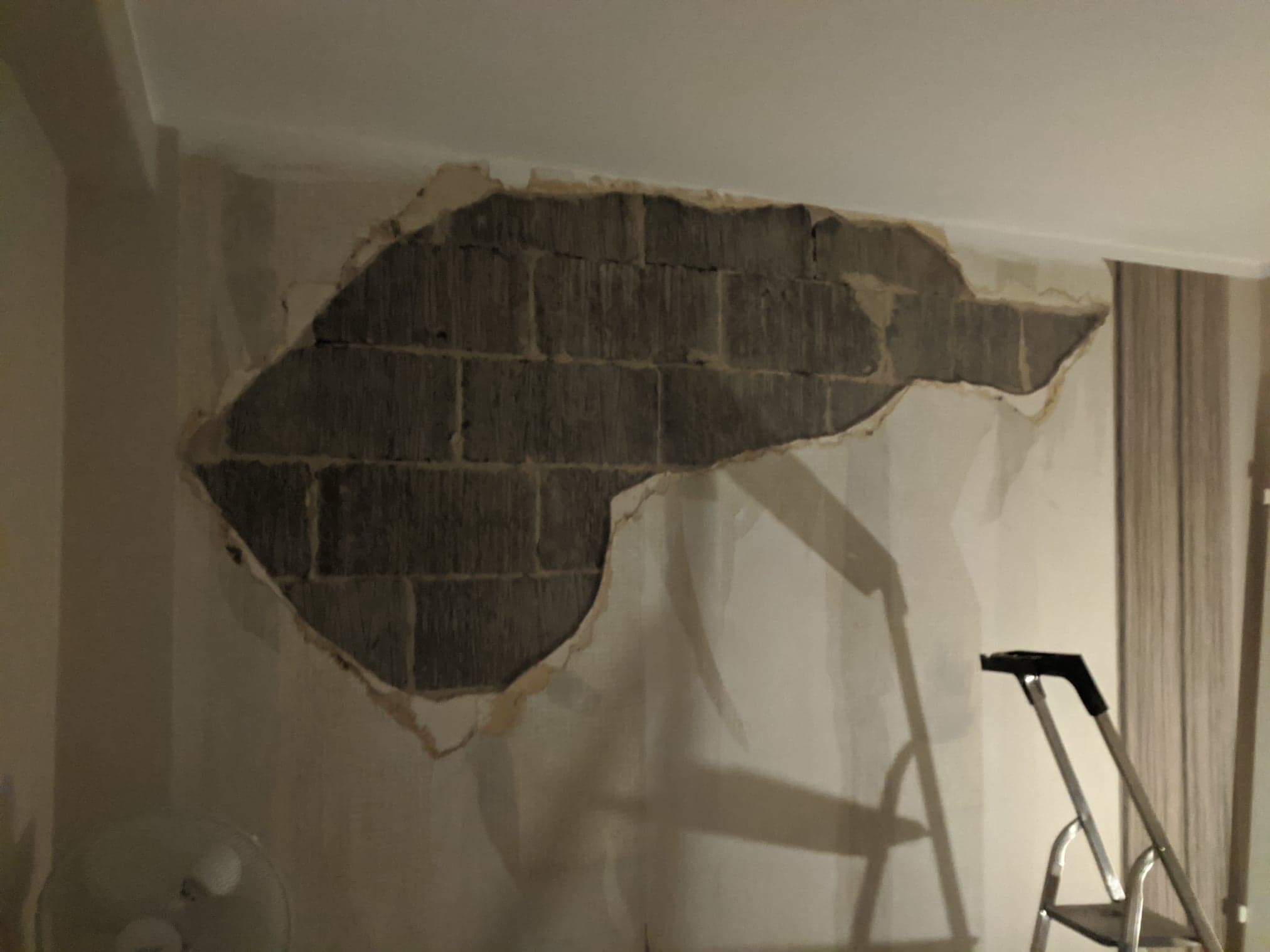
I have a wall that was bulging out a lot, and I had no idea why. It turned out that the plaster had come loose over a larger area. The underlying wall is lightweight concrete (I think). I've been advised to just fill the hole with some timber and screw up drywall to cover the damaged area and possibly hold the remaining plaster in place if it decides to come loose as well. The plaster that's left seems to be holding okay(?) but I'm not very knowledgeable.
I've now removed all the loose plaster and have some questions about how to fix the wall in the simplest way possible. I want to point out that I'm a complete beginner when it comes to renovations in general, so I hope I can get some ideas and tips here.
I have a wall that was bulging out a lot, and I had no idea why. It turned out that the plaster had come loose over a larger area. The underlying wall is lightweight concrete (I think). I've been advised to just fill the hole with some timber and screw up drywall to cover the damaged area and possibly hold the remaining plaster in place if it decides to come loose as well. The plaster that's left seems to be holding okay(?) but I'm not very knowledgeable.
I've now removed all the loose plaster and have some questions about how to fix the wall in the simplest way possible. I want to point out that I'm a complete beginner when it comes to renovations in general, so I hope I can get some ideas and tips here.
It depends a bit on your requirements. If it needs to be smooth and nice, it's probably easier with plasterboard if you're inexperienced. If you don't want to build up too much, there is renovation plasterboard that is 6mm.
On the other hand, if you're good at plastering, this can be done quickly.
Personally, I would have put up plasterboard unless it was in a basement, garage, or somewhere else where you don't spend much time anyway.
On the other hand, if you're good at plastering, this can be done quickly.
Personally, I would have put up plasterboard unless it was in a basement, garage, or somewhere else where you don't spend much time anyway.
Do you mean just to cover the hole as it is with renovation drywall? I'm thinking I need some material in between where I attach the screws so the drywall will be somewhat straight at least?Tswl said:
It depends a bit on what requirements you have. If it must be smooth and nice, it's probably easier with drywall if you're not experienced. If you don’t want to add much thickness, there is renovation drywall that is 6mm.
On the other hand, if you're skilled at plastering, this can be done quickly.
Personally, I would add drywall unless it's in a basement, garage, or somewhere else where you don't spend much time anyway.
Renovation drywall is so thin, it will probably flex and easily break if you lean against it, for example, so you should try to place something behind it. If it's a completely dry interior wall, you can use almost anything that has roughly the same thickness as the remaining plaster, such as a piece (or a few pieces) of drywall, OSB, or masonite (if you've been renovating old houses for a while, you usually start saving a bit of this for just these occasions  ). It doesn't need to perfectly cover the hole, but should provide support in a reasonably large part of the hole. Preferably along the ceiling as well, so that it's stable there for putty or paint caulk.
Speaking of completely dry... it's not a basement wall, is it? If so, you shouldn't have anything organic on it, like the paper on the drywall. In that case, plastering is what's needed, after all.
). It doesn't need to perfectly cover the hole, but should provide support in a reasonably large part of the hole. Preferably along the ceiling as well, so that it's stable there for putty or paint caulk.Speaking of completely dry... it's not a basement wall, is it? If so, you shouldn't have anything organic on it, like the paper on the drywall. In that case, plastering is what's needed, after all.
Best answer


Polishing repairs does not have to be as difficult as it may sometimes sound. Buy a bag of putty c and try it out, it's fun to learn new things sometimes too. Most likely, you'll benefit from the experience in the future as well. If you apply a thin layer at a time and build up, you'll get the feel and knack for it quite quickly.
Bucket, trowel, float, spray bottle, and a whisk are what you need. Cheap and will probably turn out just fine.
Bucket, trowel, float, spray bottle, and a whisk are what you need. Cheap and will probably turn out just fine.
Click here to reply