
4,140 views ·
9 replies
4k views
9 replies
Ground pressure of parking near house wall
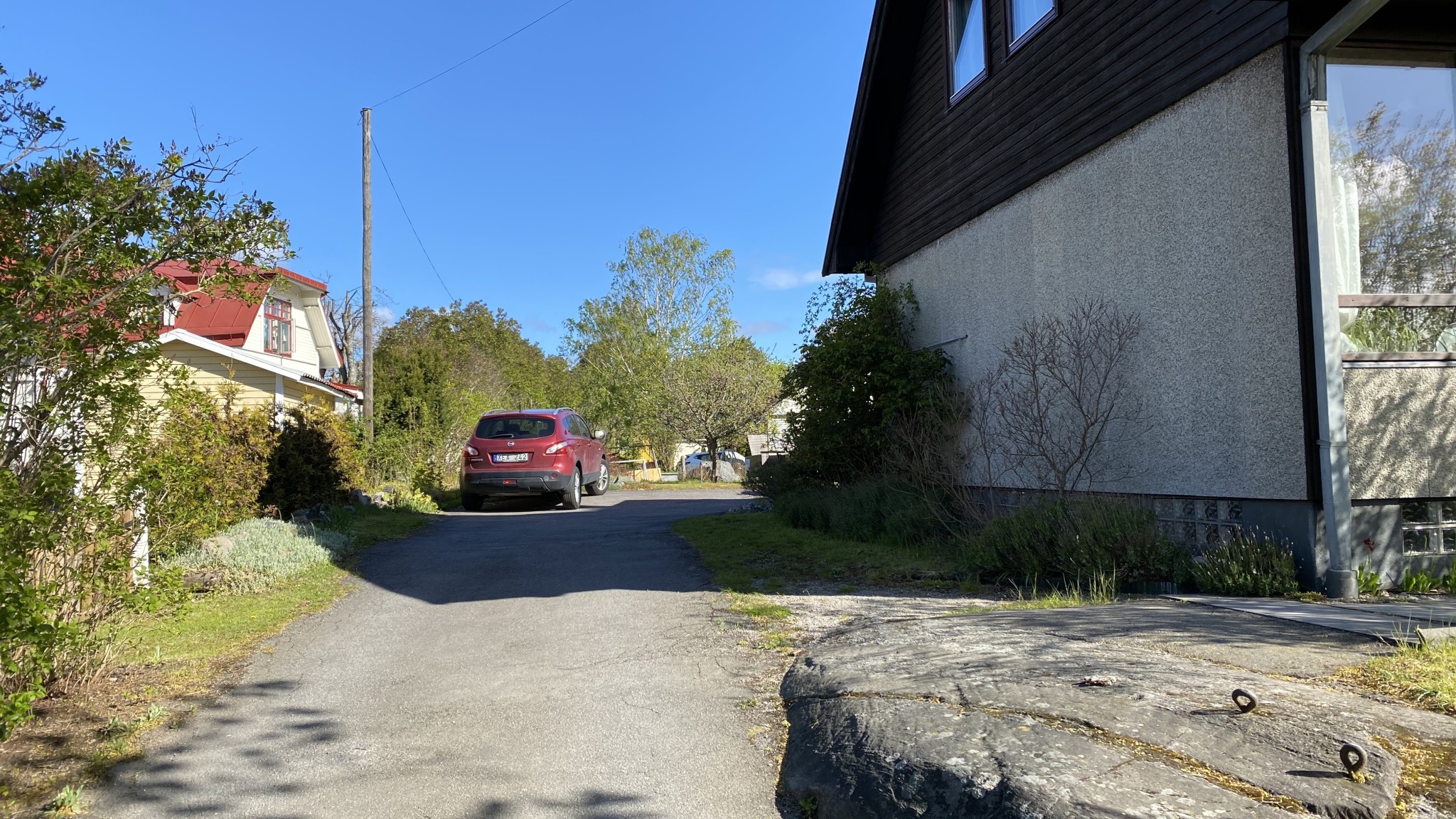
I'm considering building a pool and will have to sacrifice a garage (the pool needs to be on the driveway). The cars will then need to be parked at the short side of the house. How much pressure will there be against the basement wall if parked close to the house wall, 40-50 cm away? We have a fairly deep basement, about 2.60 m, with a light concrete structure and the short side of the house is about 8 m. On the inside of the basement wall, there are two "pillars" which I assume are to support the basement wall against "collapsing inward". The same type of pillars are around all the basement walls of the house along with two metal braces on the long sides. How do you determine if and how far from the house you must park? I assume the pool won’t press against the house in the same way since it will have casting around it?
Doubtful. I "think" the house is a house model 1.5 stories that they've based it on and built with a basement instead of a slab from some house manufacturer, built in 1969. I will check if there is anything on the drawings but I recall that there are no specific calculations.W witten said:
Good info. What does 250 kg/m2 mean? Is it the ground pressure against the foundation wall/basement wall? I remember from construction lessons that ground pressure increases linearly with depth, but I don't know how vertical point loads at the ground surface nearby affect it. In the picture, the area in question is visible. The pool is intended to be where the red car is, and two cars are intended to be parked side by side in line with the short side of the house "this side" of the red car in the picture.
It is the ground pressure from the tires to the surface of the ground and the figure is from the building code for vehicles up to 3 tons. To extract the horizontal load against the wall, you recalculate it with models for earth pressure.
You remember correctly, the earth pressure from the earth's weight increases linearly with depth, but the traffic load is constant over the height of the wall and is calculated as load*earth pressure coefficient*wall height.
You remember correctly, the earth pressure from the earth's weight increases linearly with depth, but the traffic load is constant over the height of the wall and is calculated as load*earth pressure coefficient*wall height.
Wow, do I understand correctly that if the wall is designed for 250 kg/m2 it's okay with earth pressure + load from car(s) next to the wall with the given dimensions?
Can I take the opportunity to ask, since new drainage and foundation insulation are planned, if it's possible to make some measure for a new parking space depending on whether I get information about the wall/retaining wall's design or not and what it shows?
Can I take the opportunity to ask, since new drainage and foundation insulation are planned, if it's possible to make some measure for a new parking space depending on whether I get information about the wall/retaining wall's design or not and what it shows?
Perhaps getting ahead of things, but what do you do if there is missing information or the dimensioning is for a lower load than 250 kg/m2? Avoid parking, but is there another measure you can take?W witten said:
Click here to reply