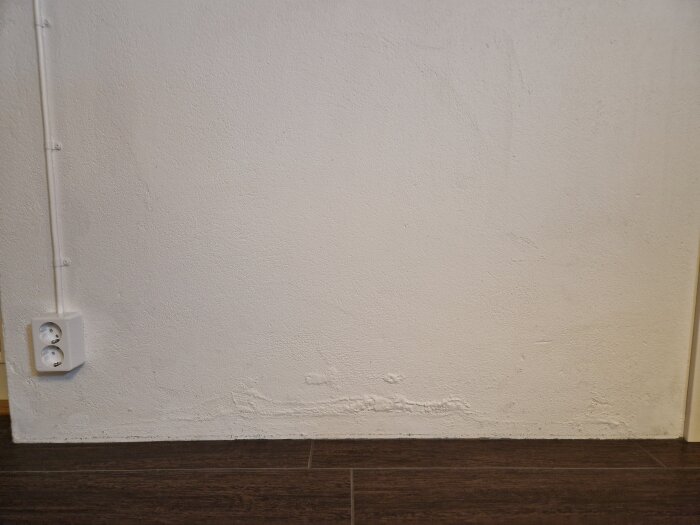
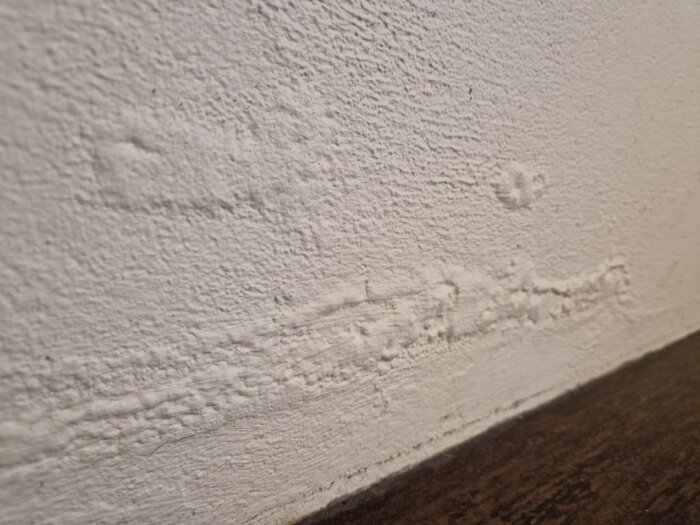
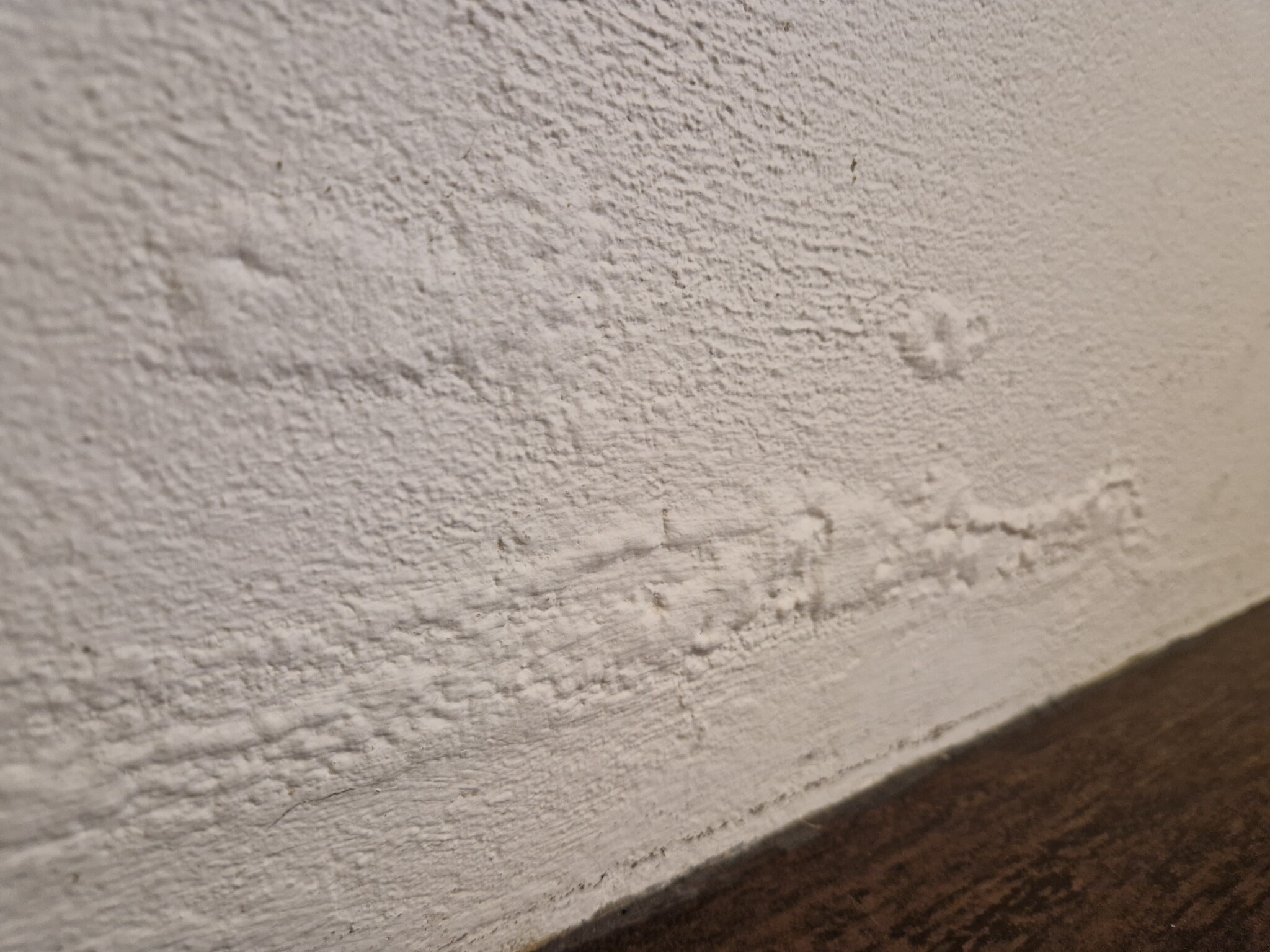
We live in a single-story house from the 70s with a finished basement (full height). The basement is made of lightweight concrete. According to the seller, it is not blue concrete, but we have still found blue concrete in quite a few walls (the rest is lekablock). Some walls are painted with silicate paint, while most are painted with some form of plastic paint. Regardless of the painting material, bubbles appear on some walls, mainly along the floor, on both exterior and interior walls.
The heating is radiators, and we always have at least 19 degrees. We also use a dehumidifier in the basement occasionally because of laundry.
When you press on the bubbles, they are hollow and crumble. So far, there are only three spots, but they are quite spread out.
The first thought is of course moisture, but this also occurs on two interior walls. Moreover, the house is built on a small hill, so we have no other problems with moisture even though the drainage is from when the house was built.
The obvious solution is of course to remove loose material and apply new plaster, but is that the right solution? Or do we need to do something more here?
It is most likely moisture being absorbed through an uninsulated slab. I guess the walls are painted with some form of dense paint, which causes this phenomenon as the moisture has nowhere to go.
From your description of the house's location, it is not certain that drainage will help (although it might help somewhat). Otherwise, it involves sanding off the paint from the walls and painting with silicate paint instead. Alternatively, you could excavate and insulate the floor, but of course, that's quite a bit of work.
Even back then, there was quite a bit of carelessness in the construction industry. It could be that the house is standing more or less on clay, and then you get this phenomenon. Capillary action draws moisture up into the walls. People used to know about this and would place a barrier layer between the slab and the walls. But in the modern, carefree seventies, they ignored this outdated method and at best spread some gravel before casting. Therefore, simply draining anew might not help much; instead, as mentioned above, dig down and address the issue.
I was considering fixing this, which plaster should one buy so that the repair is less noticeable? Previously, some repairs have been done on the walls with plaster with finer grains, making it very visible that repairs have been made.
Click here to reply
Vi vill skicka notiser för ämnen du bevakar och händelser som berör dig.