Hello!
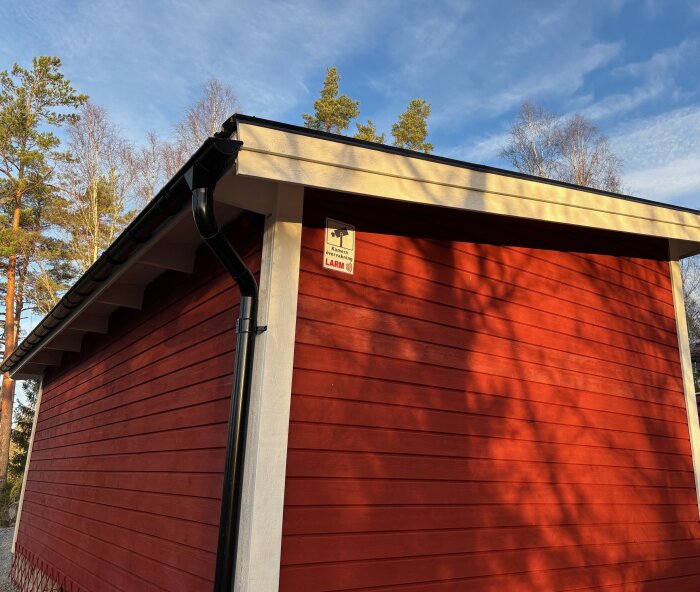
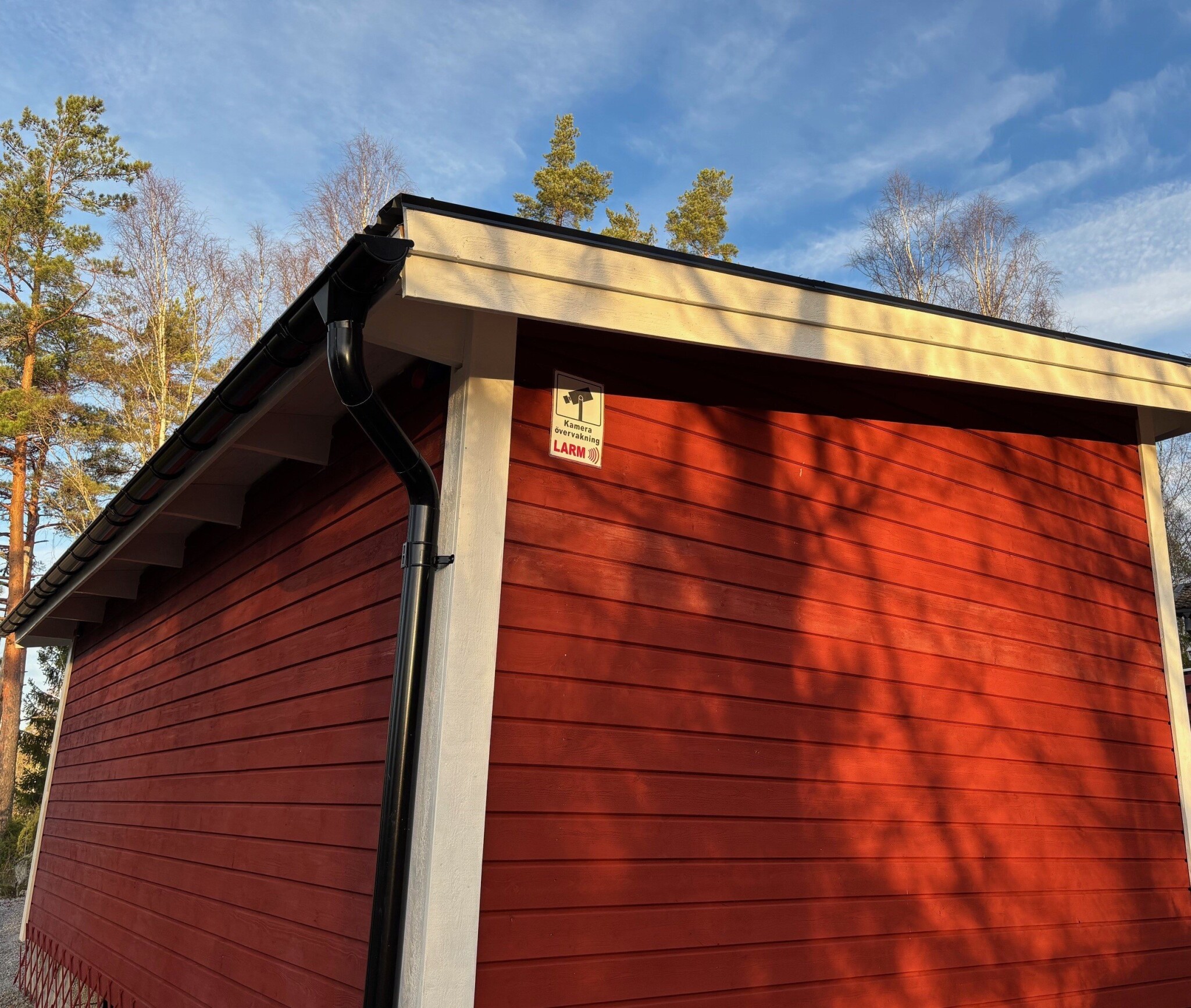
I am currently building an Attefall house on the plot, 30 sqm with a frame from ByggMax. Shed roof.
It is built as follows:
Floor = Subfloor boards with sealing insulation 3x50 mm, floor chipboard
Walls = Panel-air space-wind barrier-insulation 2 x 50 mm-plastic-installation layer 50 mm-plasterboard.
The plastic is not punctured, the electrical installation is inside the plastic.
Roof = Sheet metal roof-batten-counter battens-roof decking-air gap boards-insulation 170 mm-plastic.
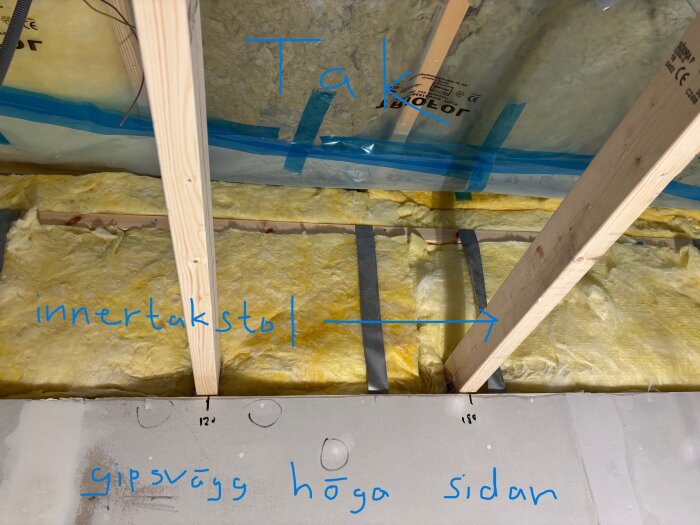
I am nearing the end now as I am going to make simpler "roof trusses" to be able to screw the ceiling, which consists of plasterboards.
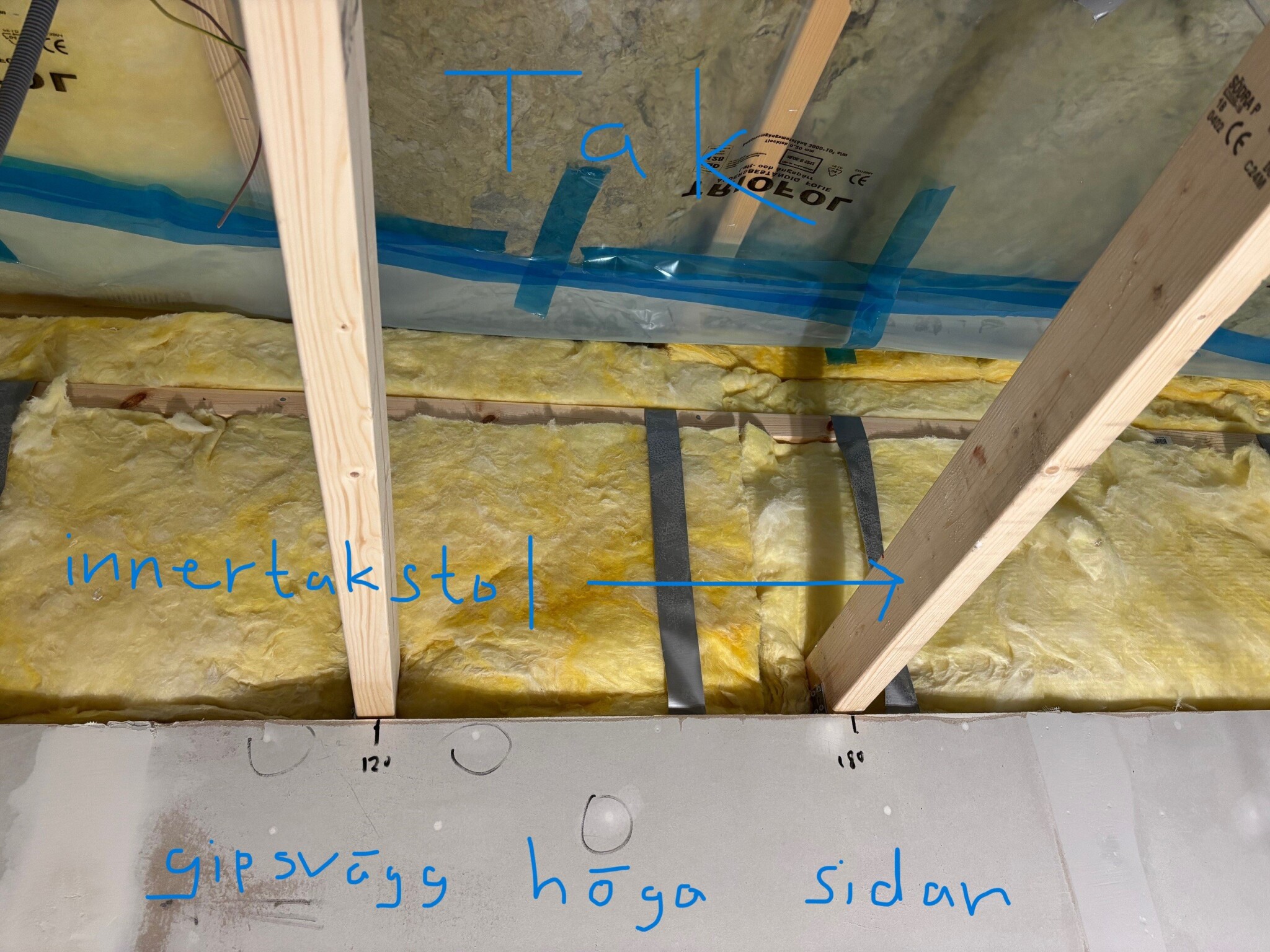
The inner roof trusses will rest on the wall plate. I don't want them so long that they puncture the plastic.
I have not plastered all the way up to the ceiling on the high side because this ends up above the inner ceiling and will not be visible.
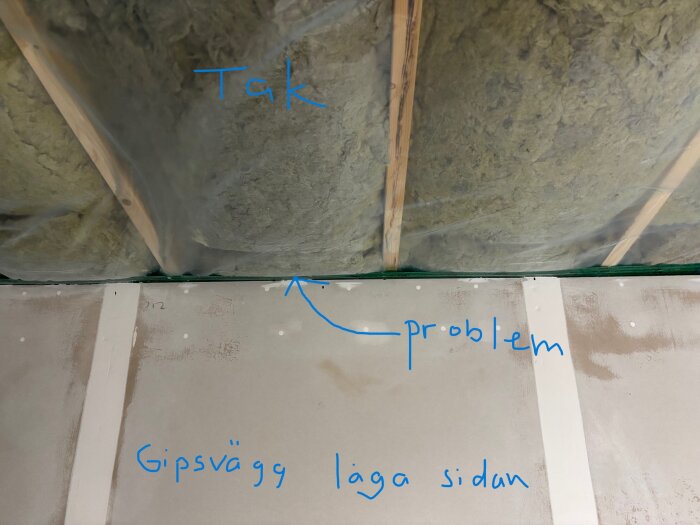
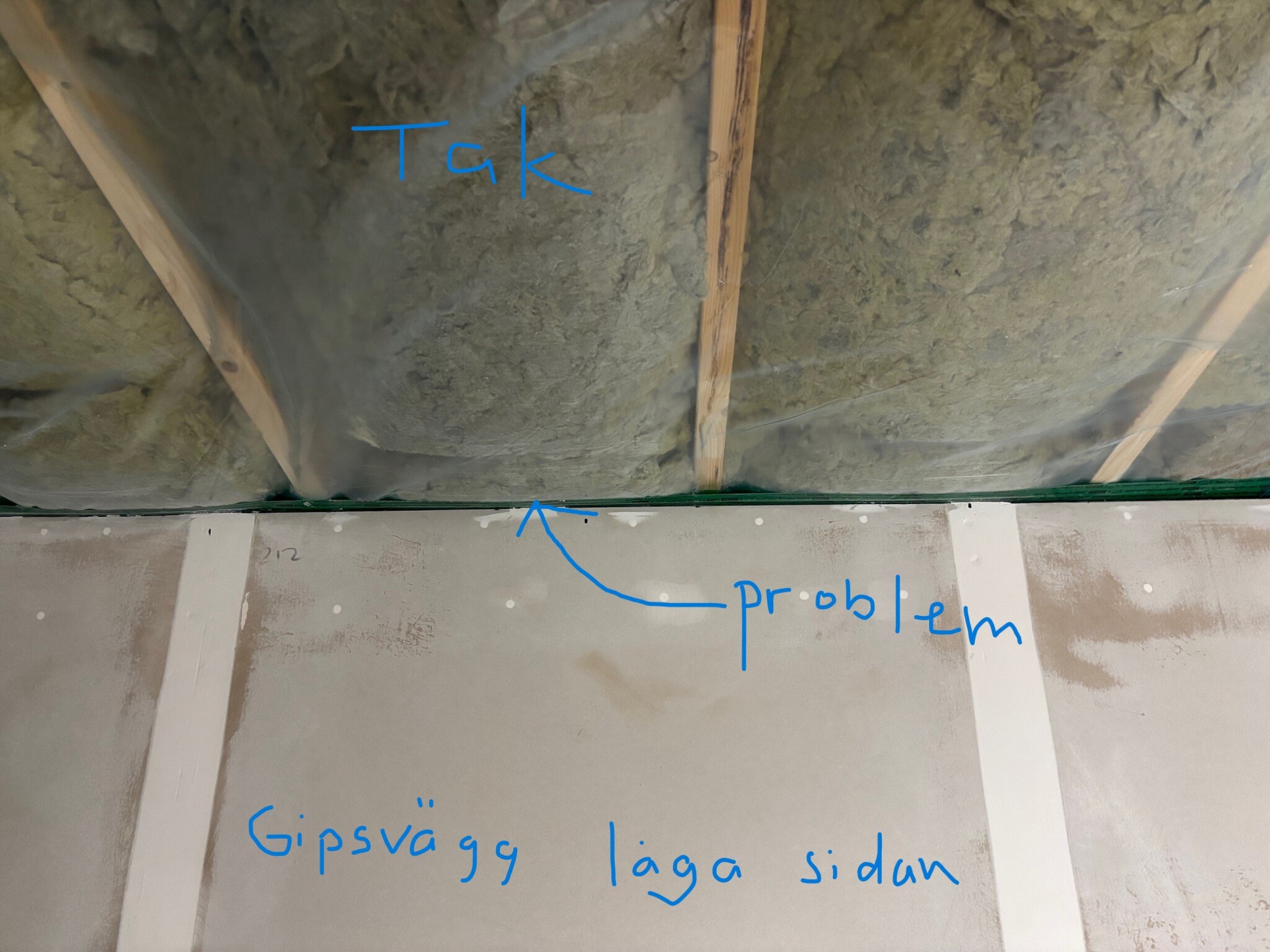
I have now noted condensation in two or three places on the short wall side, right where the wall transitions to the roof.
I suspect it has to do with cold air coming in between the roof trusses and reaching the plastic where condensation forms on the inside. I want to address this before I finish the inner ceiling, of course.
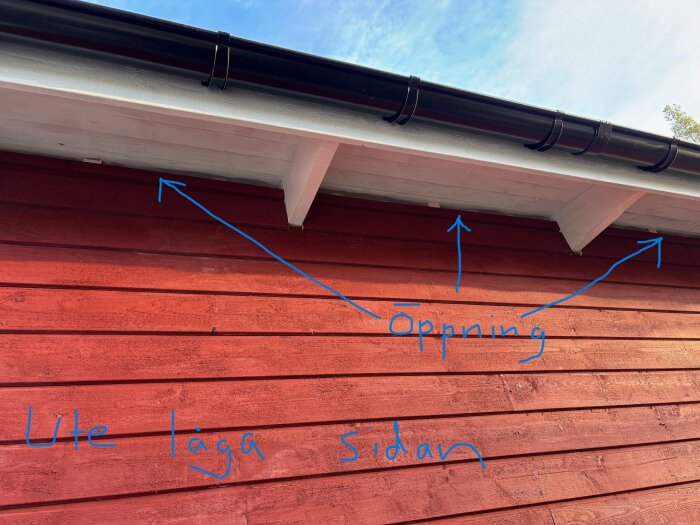
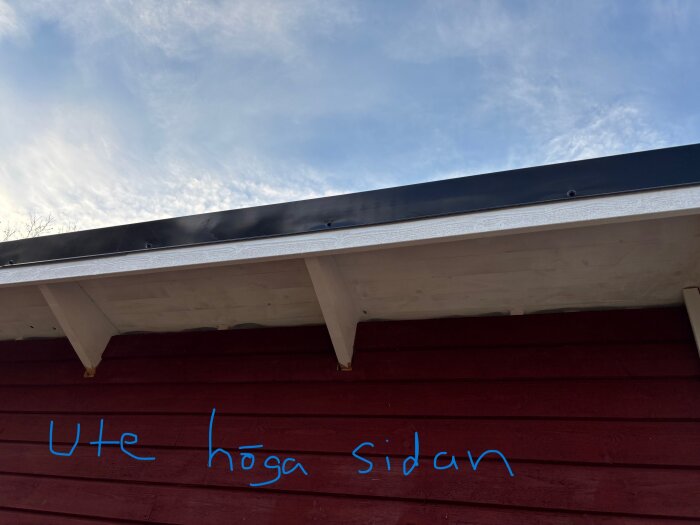
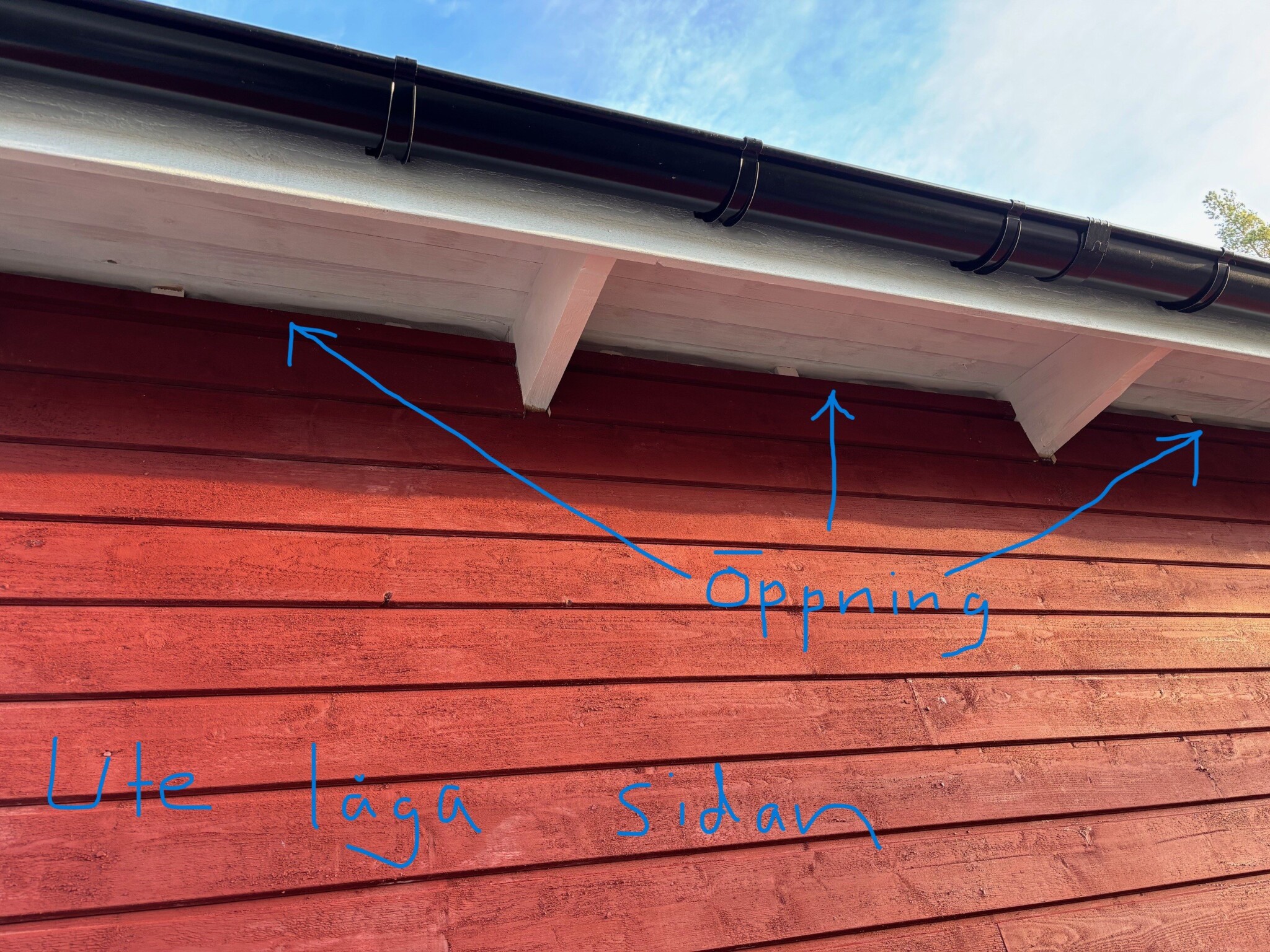
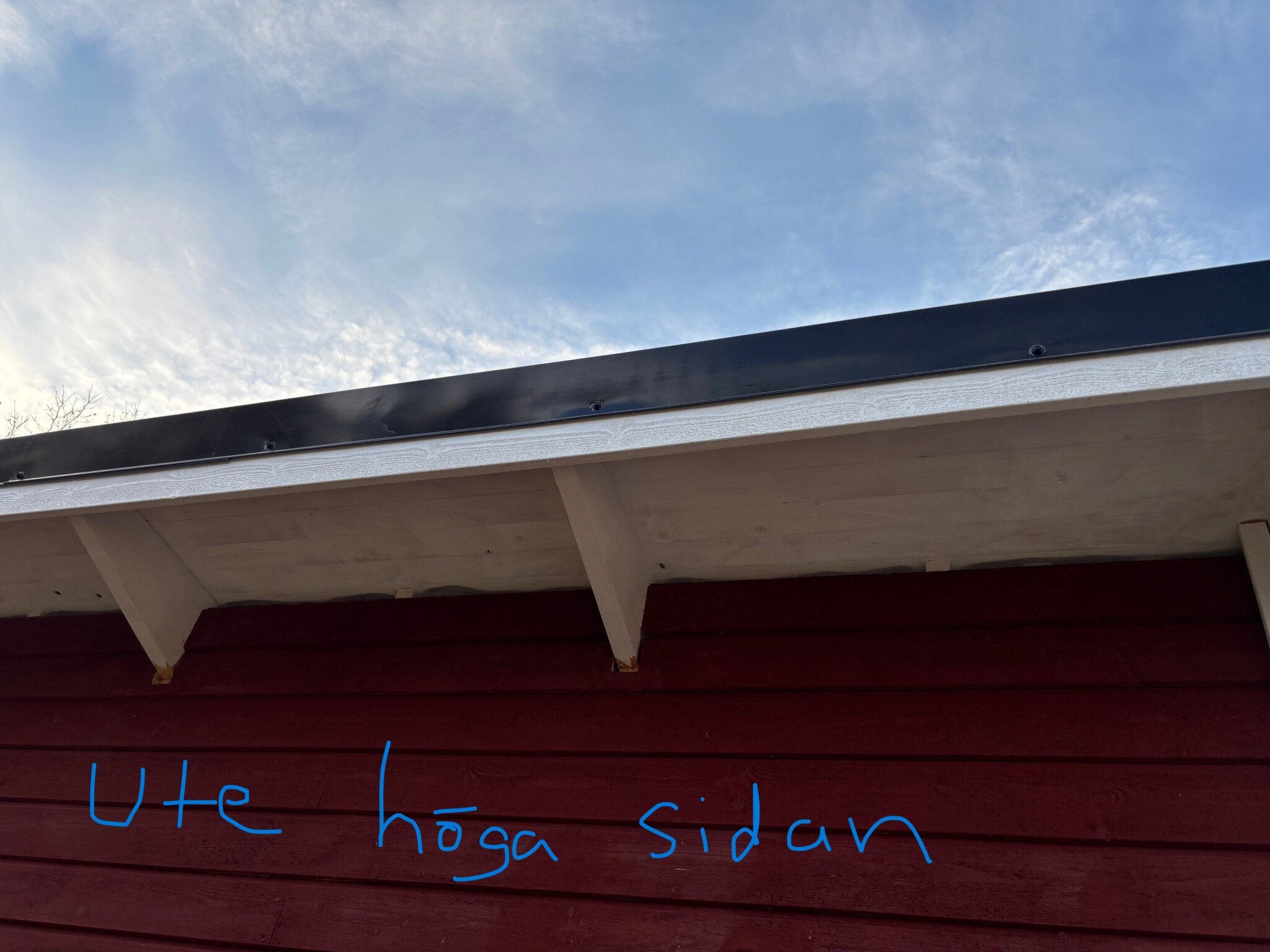
On the outside, between the roof trusses, I have a gap towards the roof of about 60 mm. The air gap boards are about 35 mm, so some air passes under the air gap board. I thought this should not be a problem, perhaps I was wrong.
Similarly, the wind barrier goes up to the wall plate but not above it - therefore not "between the roof trusses". Is this also a problem?
As I'm thinking spontaneously, maybe I should remove the panel between the roof trusses - install a wind barrier behind them - see if it's possible to add more insulation - reattach but only have an opening towards the roof of 1 cm? Is that enough? Is there something else causing issues?
I can add that I have symbolic heating inside now (two small heaters and I have yet to install a fresh air vent and exhaust fan).
Grateful for all tips! If I have expressed myself unclearly, I am happy to explain, just shout in such cases.
The wind barrier needs to go up and be connected to the ventilation in the roof. It should therefore be windproof for all insulation. Then I suspect that you have a horizontal supporting beam that acts as a thermal bridge there as well.
The wind barrier needs to go up and connect to the ventilation in the roof. It should be windproof for all insulation. Then I suspect you have a horizontal beam acting as a thermal bridge there as well.
Thanks for the reply! Okay - I should tear off the panel just below the roof and staple the wind barrier behind these panel boards. (So this new wind barrier overlaps the existing one at the bottom and connects to the ventilation boards.)
Yep. You should not have air movements in the insulation
Okay - I understand, thank you. The gap above the panel that lets air into the air gap - can it be smaller than what I have today? 1 cm? 2 cm? (Air gap board from Bauhaus / BEWI that is corrugated and 30 mm high)
Just wondering why you want an attic space? Personally, I would have chosen to have higher ceiling height and place the inner ceiling construction against the building plastic.
Just wondering why you want an attic space? Personally, I would have chosen to have higher ceiling height and place the inner ceiling construction against the building plastic.
Won't be using attic space. Got the frame at a decent price. Need to have a "symmetric" inner ceiling and not a "sloping" inner ceiling because of several ceiling speakers and to achieve a correct sound image. 😀 (Also want a bit of space above to enclose the speakers and spotlights.)
I had the same problem with an attefallshus where I often stay. Haven't really understood why. Condensation on windows when it's cold outside, (okay, reasonable). But also condensation on the front door, door lock. Also in 2 of the corner rooms, on the floor. The explanation was that heat is generated in the house through the heat pump and radiators, but the heat stayed, and thus it generates moisture. I had air vents in every room, but only one was automatic, in the bathroom. The solution was to install an automatic fan in the living room, the same as the one in the bathroom. Solved almost immediately. Turned out very well. Highly recommend the same solution. Good luck
I had the same problem with an attefallshus where I stay often. Didn't quite understand why. Condensation on windows when it's cold outside, (ok, reasonable). But also condensation on the front door, door lock. Even in 2 of the corners of the rooms, on the floor. The explanation was that heat is created in the house through the air heat pump and radiators, but the heat remained, and thereby generated moisture. I had air exhaust in every room, but only one automatic, in the bathroom. The solution was to install an automatic fan in the living room, the same as in the bathroom. It almost solved it immediately. Turned out very well. I really recommend the same solution. Good luck
Hello!
I am currently building an Attefall house on the plot, 30 sqm with a frame from ByggMax. Shed roof.
It is constructed as follows:
Floor= Subfloor boards with sealing-insulation 3x50 mm, floor chipboard
Walls= Panel-air lath-wind barrier-insulation 2 x 50 mm-plastic-installation layer 50 mm-plaster.
The plastic is not punctured, and the electrical installation is inside the plastic.
Roof= Metal roof-support battens-purlins-board panels-air gap boards-insulation 170 mm-plastic.
I am approaching the end now as I am about to make simpler "roof trusses" to be able to attach an interior ceiling consisting of plasterboards.
The interior roof trusses will be placed on the wall plate. I don't want them so long that they puncture the plastic.
I haven't plastered all the way up to the roof on the high side because this ends up above the interior ceiling and will not be visible.
I have now noted condensation in two or three places on the short wall side, precisely where the wall transitions to the roof.
I suspect it is related to cold air coming in between the roof trusses and reaching the plastic, where condensation forms on the inside. I want to address this before I make the interior ceiling, of course.
On the outside, between the roof trusses, I have a gap up to the roof of about 60 mm. The air gap boards are about 35 mm, so a little air passes under the air gap board. I thought this wouldn't be a problem, maybe I was wrong.
Similarly, the wind barrier goes up to the wall plate, but not above it - not "between the roof trusses." Will this also be a problem?
As I think spontaneously, maybe I should remove the paneling between the roof trusses - install wind barrier behind them - see if it is possible to add more insulation - reinstall but only have an opening to the roof of 1 cm? Is that enough? Is there something else causing trouble?
I can add that I have symbolic heat inside now (two small heaters, and I haven't yet installed a fresh air vent and an exhaust fan.
Grateful for all tips! If I have expressed myself unclearly, I'm happy to explain, just shout in that case.[image][image][image][image][image]
You haven't sealed the plastic carefully enough. All staples should be taped. Additionally, you have used the wrong tape. Read the construction description for the plastic and start over.

Matti_75 said: