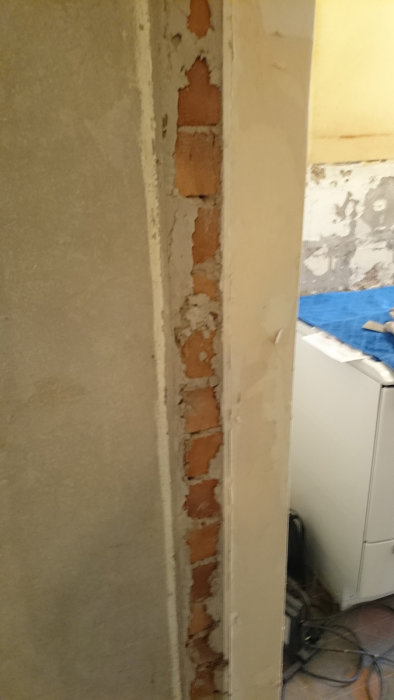
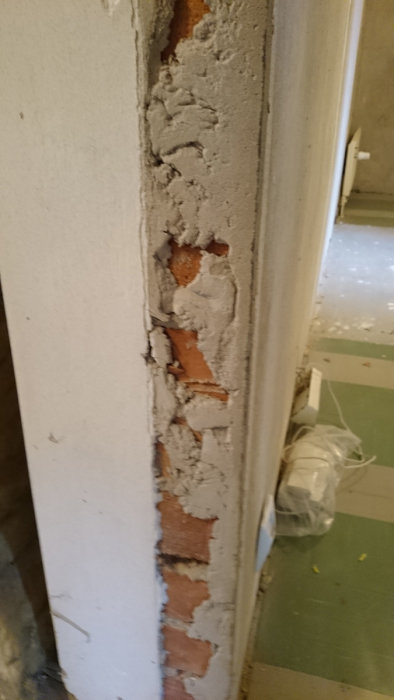
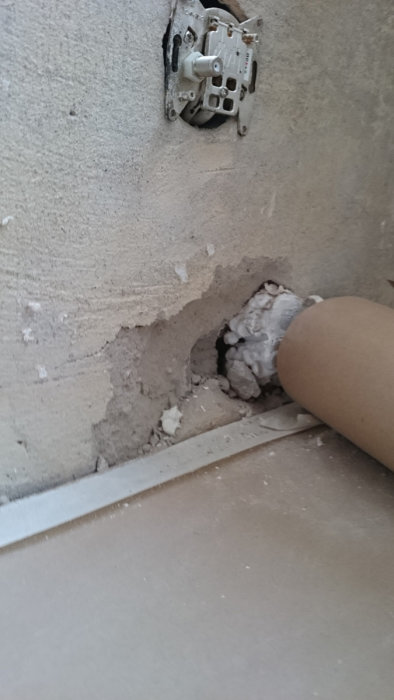
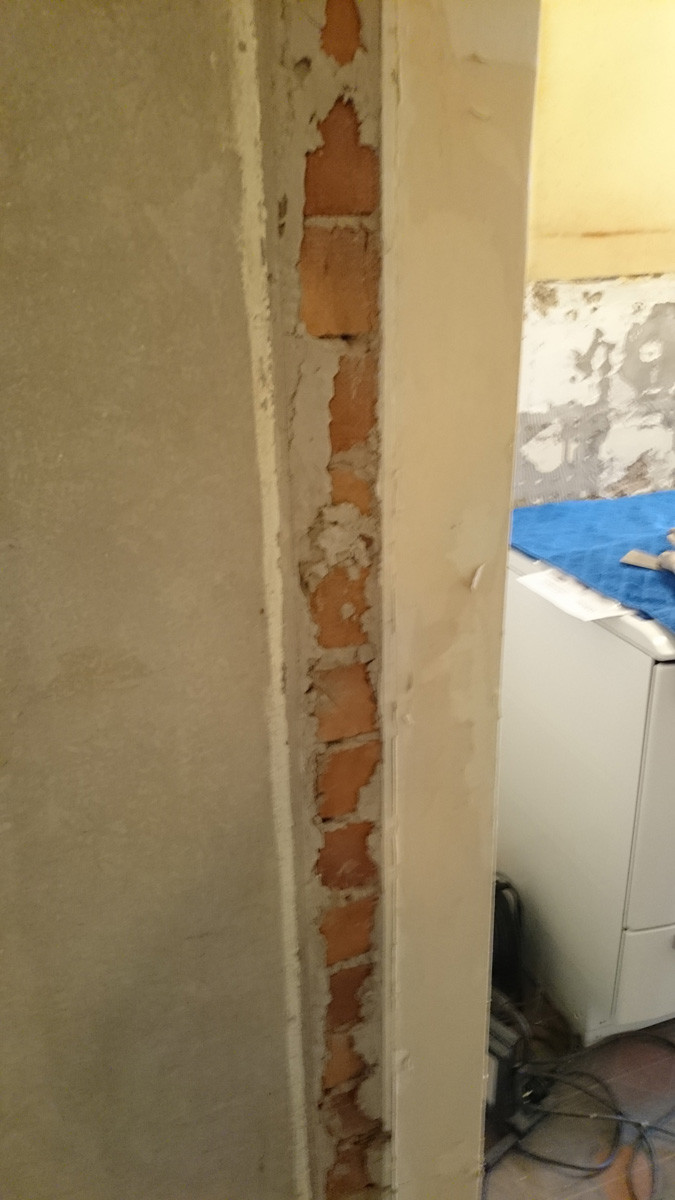
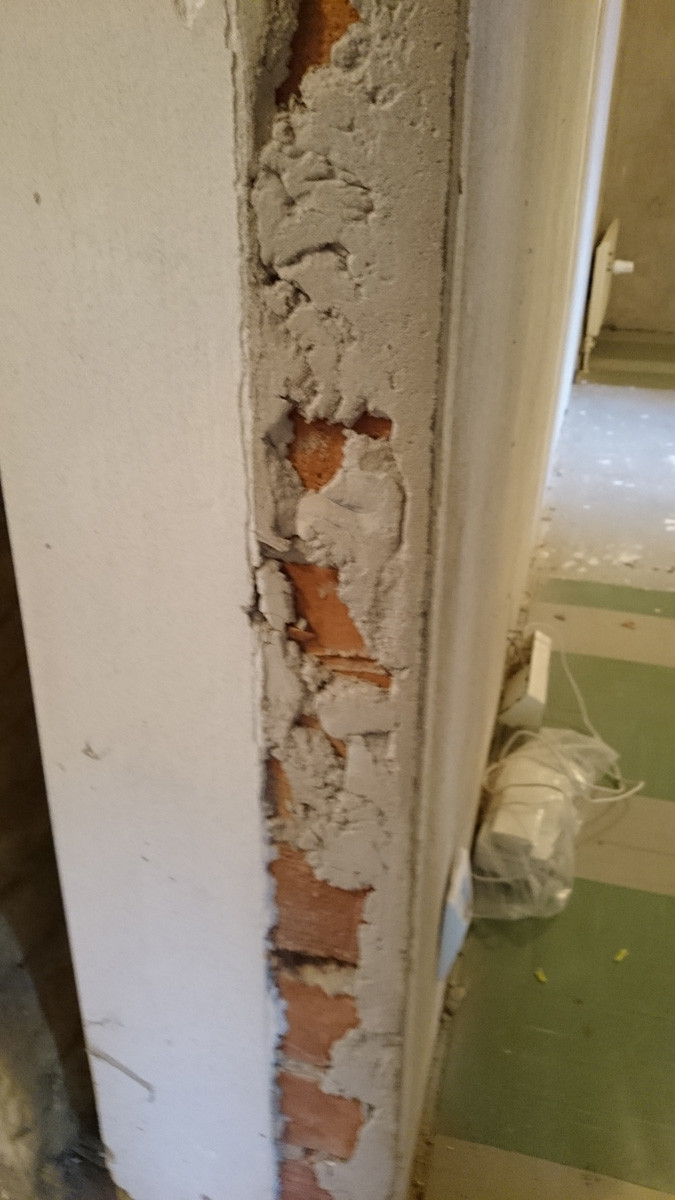
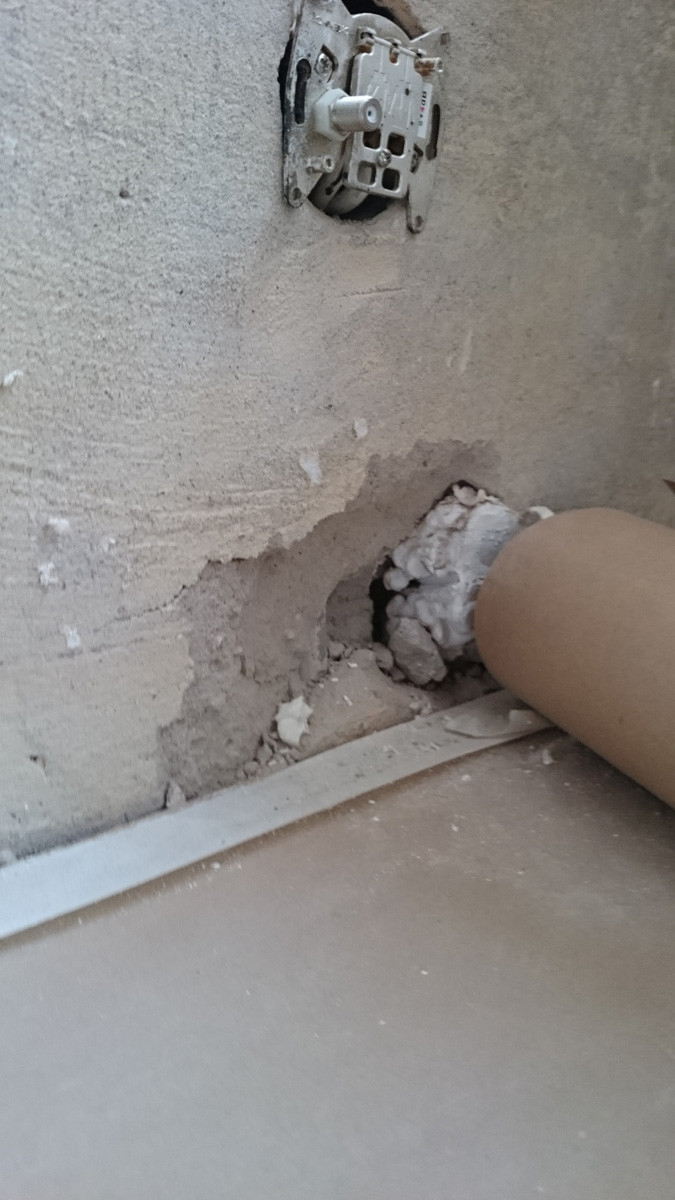
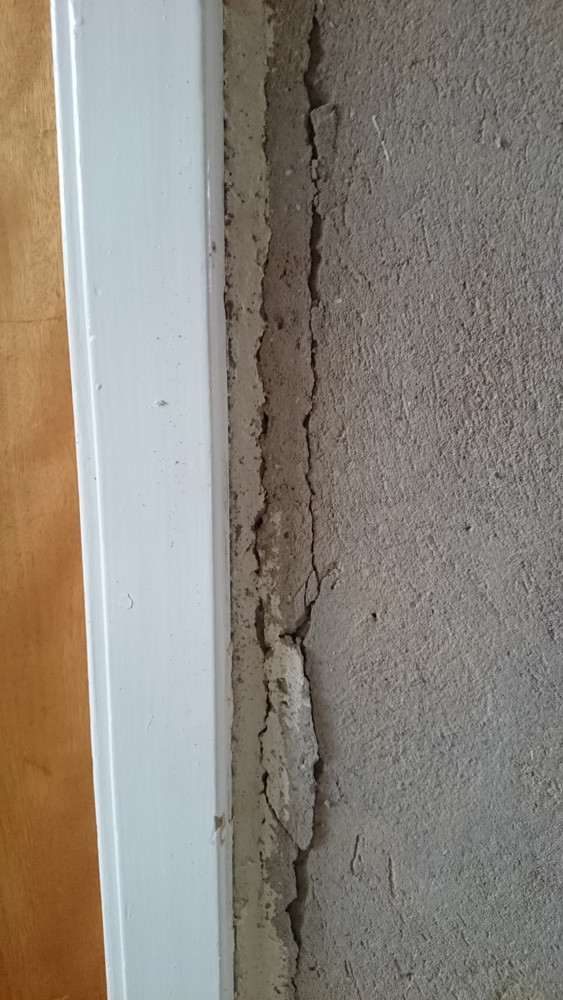
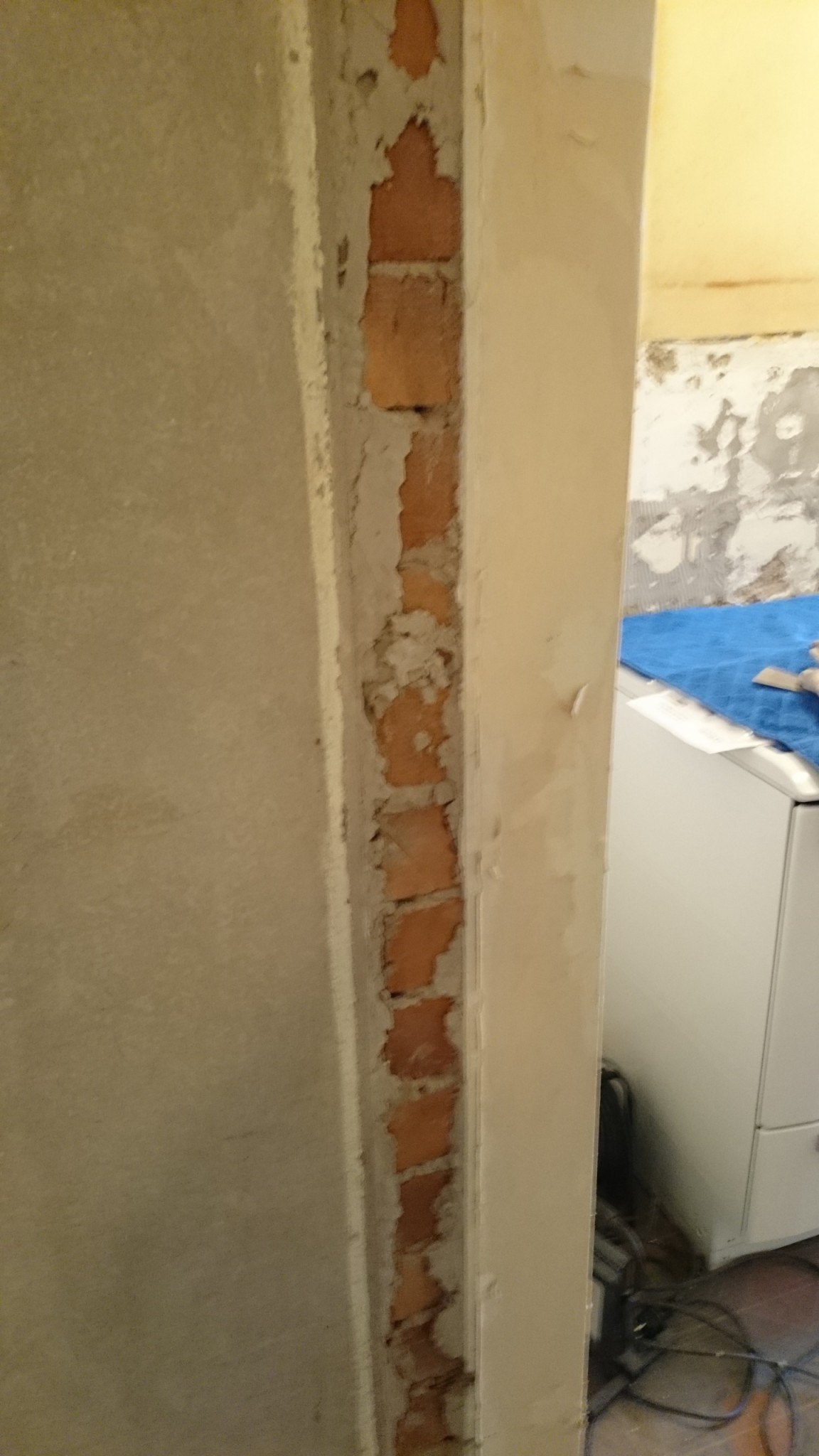
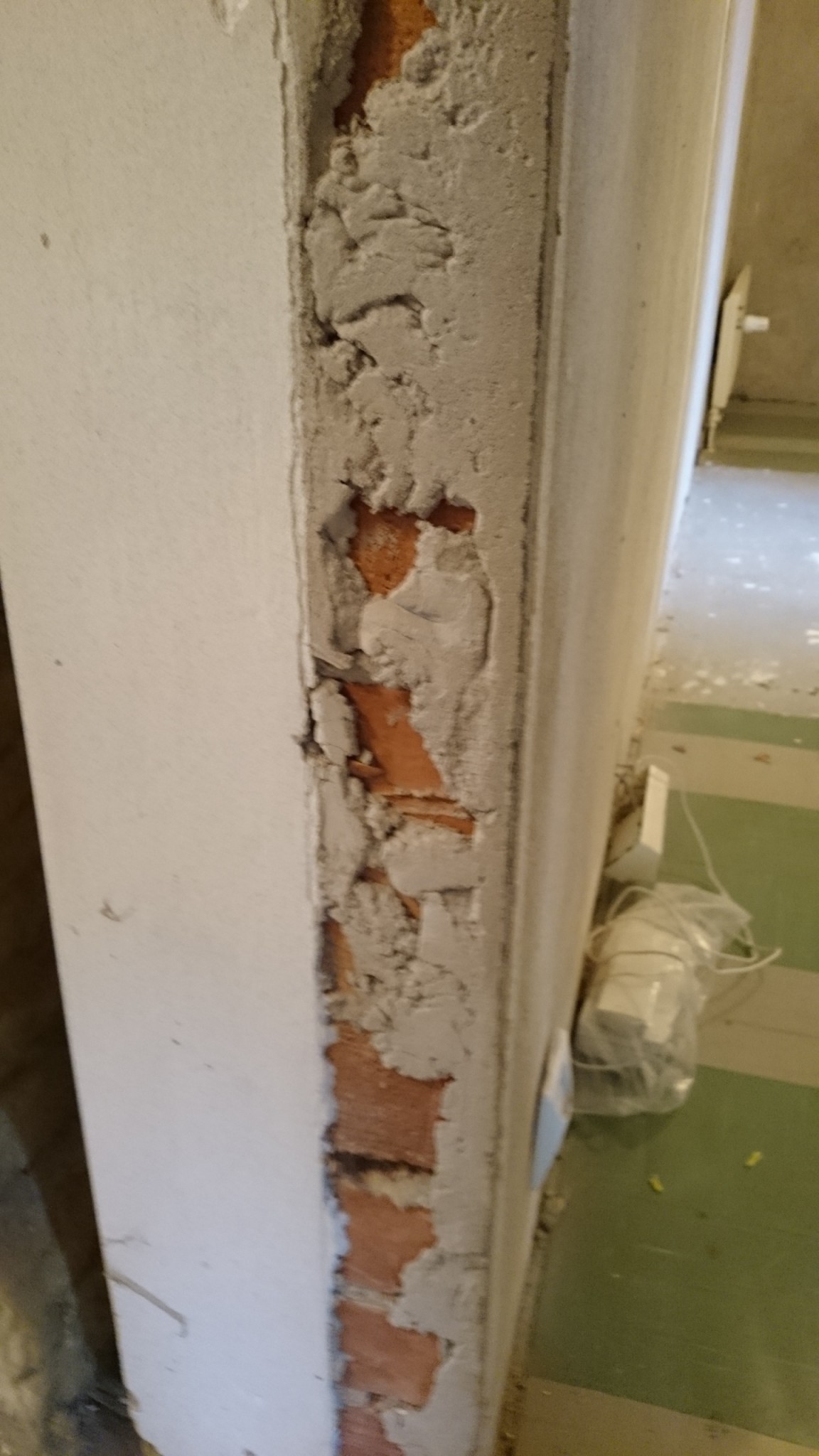
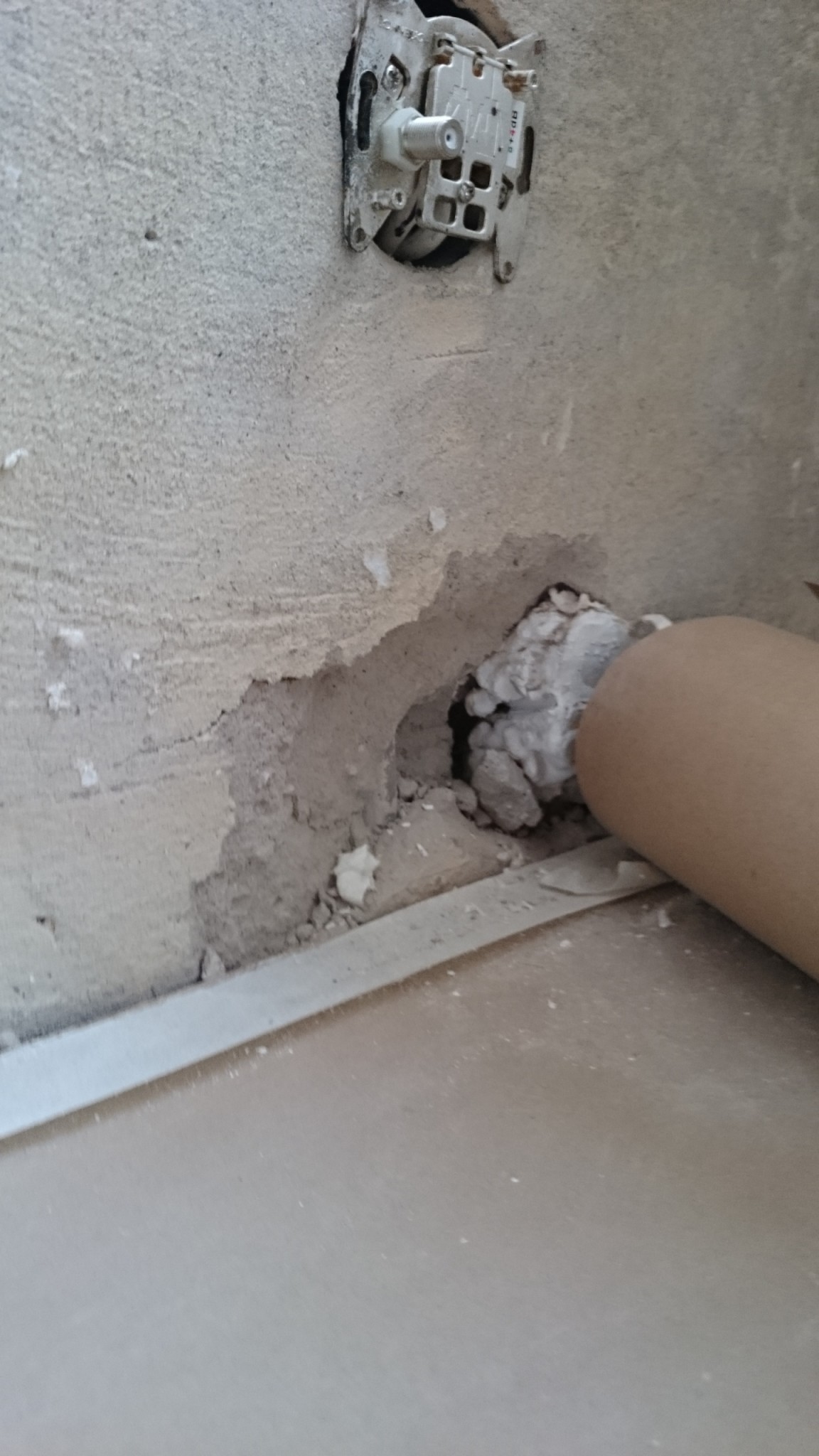
In this case, it is an apartment in a building from 1962. Most walls are concrete, with some wooden studs and a bit of brick in some walls as well.
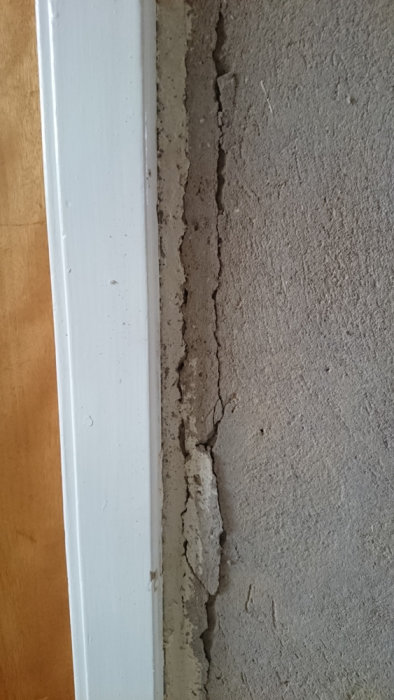
What should it ideally be repaired with? Husfix is not excluded for small fixes, but some parts are more than small fixes, as there are larger holes after removing a frame, some areas need to be chipped away to repair cracks, etc.
Is it some type of masonry? Gypsum plaster? Something else? What is best that would adhere well to brick, possibly wooden studs, etc.?
buy what fits your budget and "curing time requirements"
Since it's indoors and there's no added moisture, I believe gypsum suits you perfectly or cement mortar A.
Loose old plaster should be knocked down. The more, the better.
Mix the consistency so it feels like thicker fluffy pudding, then you fill up the cavities and let it harden a bit, when it feels slightly semi-cured then you scrape and shape what you've applied. Don't be tempted to apply too thinly or not allow it to set before working on it. If you wait just right, it's like slicing/shaving a block of butter that's been in the fridge. It doesn't smear and you have full control.
Repair plaster doesn't work like regular putty where you let it dry and then sand. Instead, you let it semi-harden, then scrape/shape/brush it to the desired effect.
You must prime. The easiest way to do this is by mixing the primer in a spray bottle and then spraying it on. This avoids the mess of using a brush and it running down your arm and into your elbow. Full control, in other words.
Now I haven't followed any of the links above, but make sure to remove some of the old plaster, especially on cracked areas like the door frame, to create more bonding surfaces and increase adhesion of the new mortar. Also prime before plastering.
I consider Gypsum plaster too soft, especially in the doorway/frame - it can easily get chipped and worn over time. A mortar is unnecessarily hard, yes. I would have used C mortar, or alternatively patching mortar.
Thank you. It's been 10 years since I've done any touch-ups, so I'm a bit rusty.
While I'm here, I thought I'd ask about one more thing. The frame we removed, where it's clearly visible in the pictures, also had a threshold, which when removed leaves a hole in the floor between these spaces. The cavity is 10 cm wide, 80 cm long, and 5-8 cm deep. What should it ideally be filled with? Finbetong?
I would have filled up the cavity with whatever I had at home; B or C mix, leaving the last cm and applying a finer mixture, like self-leveling compound or a fine-grained cement mix/paste.
I assume you're planning to put flooring over it. If you're laying tiles on top, you can fill it up completely with the coarse mixture because the tile adhesive will even it out and adhere well to the rough surface.
Thanks. Will try it. Don't have bruk at home, but it will be purchased. We're going to have parquet over it all, so basically the underlying surface doesn't matter much whether it's fine or a bit rougher.
Just because it's called gypsym doesn't mean it's "plaster soft". Once gypsum has set, it is hard. Gypsum is an extremely good all-around repair filler that fills well, doesn't crack, and is easy to handle during the curing process. We/I/other masons often use it, precisely because it is so easy to work with and is also a repair mortar.
The reason I recommended A mortar is because it is cheap and works just fine. B and C are just as good, too. The thread starter isn't doing any major intervention, so they can basically use anything that doesn't crack. And no, you don't need to water a patch even if it's cement mortar. Watering is done to cool a thick concrete slab so it doesn't cure and set too quickly. You don't need to do that with a patch.
You can fill the cavity with anything and fill it all the way up. As I said earlier, you can easily scrape off the excess when it has set enough. Don't make it more complicated than it is and listen to other sources. You have received excellent tips from me, and if you follow the suggestions, you will be more than satisfied.
As I said, I would recommend gypsum, but what you choose and how you want to approach the task is entirely up to you. In the end, you will be satisfied regardless; there are just different ways to go about it.
Thanks for all the tips. Used repair putty from Bauhaus, a bit of filling with husfix afterward, as I didn't want to apply too much repair putty and have to sand it down the hard way. After that (in outer corners) corner strips, skim coating, and it looks like fantastic walls!
Click here to reply
Vi vill skicka notiser för ämnen du bevakar och händelser som berör dig.