
2,348 views ·
11 replies
2k views
11 replies
What kind of slab basement floor 60s house
Hello,
I have noticed some moisture penetration in the basement wall and decided to try addressing the problem. I found that some kind of board has been placed against the wall. I cut out a square to inspect it. Unfortunately, I don't know if it was placed by the previous owner, but it was probably installed when the house was built. It doesn't feel like regular particle board, but likely some form of non-organic board material. The house was built in '64, so I'm a bit worried it might contain some form of asbestos :/. If anyone can identify what kind of board this is, I would appreciate it. How would you go about addressing the whole issue?
I have noticed some moisture penetration in the basement wall and decided to try addressing the problem. I found that some kind of board has been placed against the wall. I cut out a square to inspect it. Unfortunately, I don't know if it was placed by the previous owner, but it was probably installed when the house was built. It doesn't feel like regular particle board, but likely some form of non-organic board material. The house was built in '64, so I'm a bit worried it might contain some form of asbestos :/. If anyone can identify what kind of board this is, I would appreciate it. How would you go about addressing the whole issue?
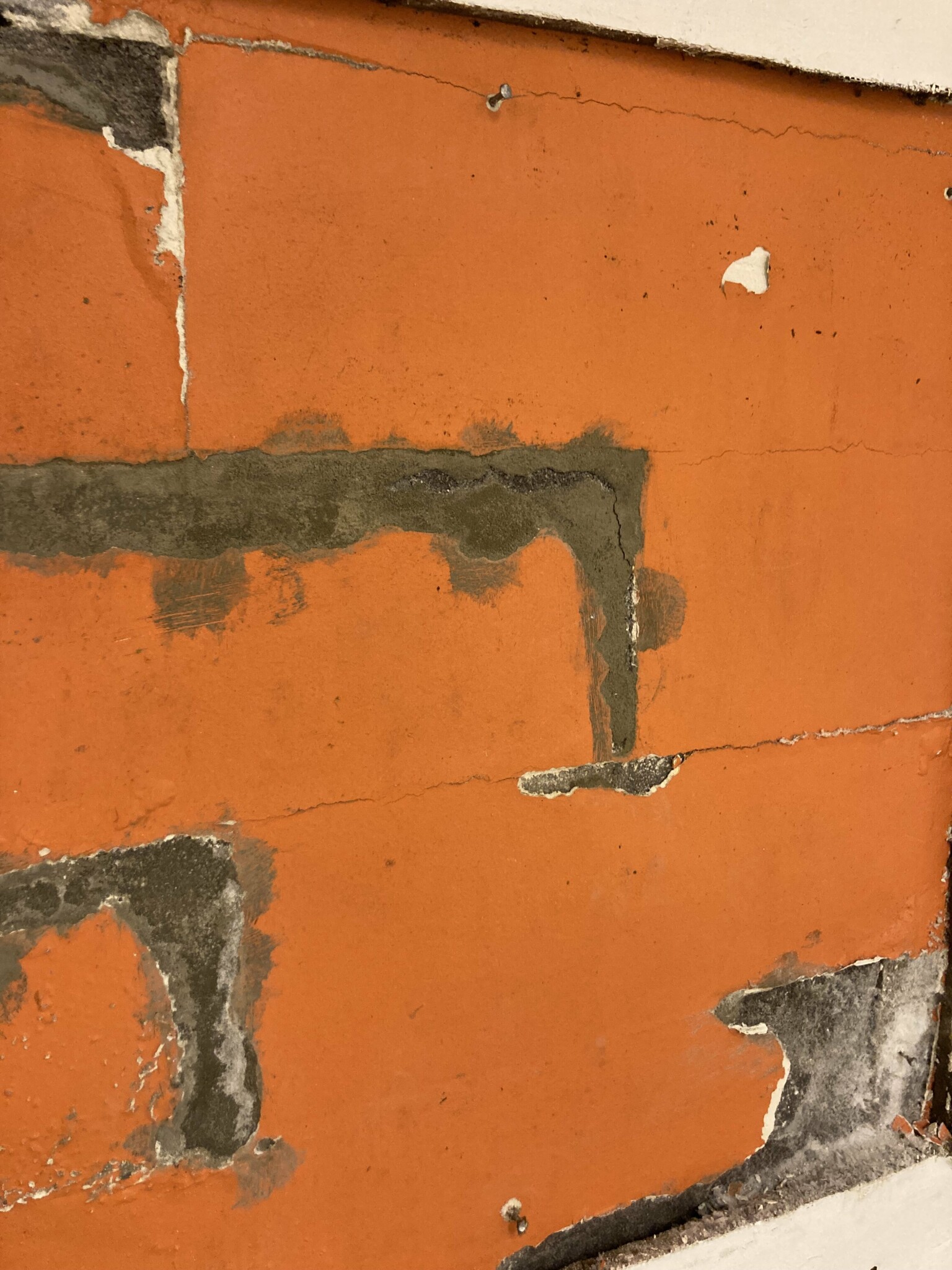
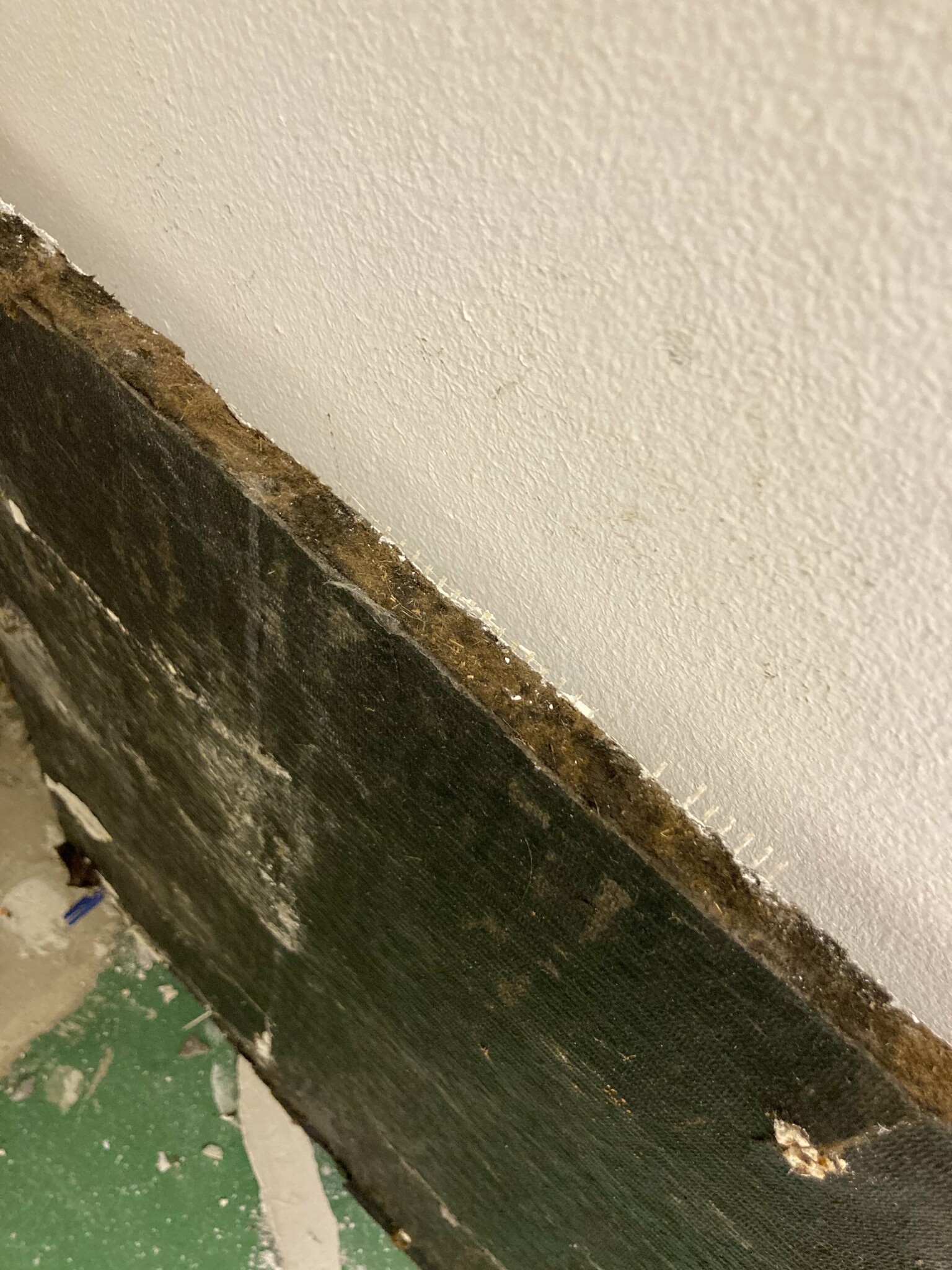


What is its thickness? If it's about 12 mm, it might be an asfaboard.
As a remedy, I recommend re-drainage (and preferably external insulation of the foundation wall), as well as removing the asfaboard(?) and replastering the wall, and painting the inside with silicate paint.
As a remedy, I recommend re-drainage (and preferably external insulation of the foundation wall), as well as removing the asfaboard(?) and replastering the wall, and painting the inside with silicate paint.

Self-builder
· Stockholm
· 8 749 posts
I haven't heard of asbestos in drainage boards, but it's not impossible.H Harryman said:Hello,
I have discovered some moisture penetration in the basement wall and decided to try to address the problem. I noticed that some type of board has been placed against the wall. Therefore, I cut out a square to inspect. Unfortunately, I don't know if this was installed by previous owners, but it was probably mounted when the house was built. It doesn't feel like regular chipboard but likely some form of non-organic board material. The house was built in '64, so I'm a bit worried that it may contain some form of asbestos :/. If anyone can identify what kind of board it is, I would be grateful. How would you address the whole situation otherwise?
Normally, the advice is to leave it alone if you can, as asbestos is not dangerous in bound form; it's the dust you want to avoid.
If you must remove them, you can do it yourself with a respirator and minimal intervention. Limited exposure with reasonable precautions likely poses less risk (this is outdoors, right? Or inside the basement where you can reasonably remove any textiles where dust can settle), or you can hire a cleanup company (which can be quite expensive). Then you must place the boards, as whole as possible, in marked bags and take them to a recycling center that accepts this.
https://www.av.se/produktion-industri-och-logistik/asbest/privatpersoners-hantering-av-asbest/
Thanks for the response, it is about 12 mm thick. Unfortunately, it's difficult to get a digger in, and I would need to dig about 3m by hand, so I'm hesitant to drain. Is there anything one should consider when sending in a piece for asbestos testing?B b8q said:
Thanks for the detailed answer! I would have preferred to avoid any action, but since moisture marks have appeared, I felt compelled to investigate. The wall is the inside of a basement wall!I have not heard of asbestos in drainage boards, but it is not impossible. Normally, the advice is to leave it alone if possible, as asbestos is not dangerous in bound form, it's the dust you want to avoid.
If you have to remove them, you can do it yourself with a respirator and as little interference as possible, occasional limited exposure with reasonable precautions probably means less risk (this is outdoors anyway? Or inside the basement where you can reasonably remove any textiles, etc. where dust can stick) or you can hire a remediation company (which can be quite expensive). Then you should put the boards, as whole as possible, in bags that are labeled and take them to a recycling center that accepts this.
[link]
Thank you for the answer. Draining will involve a lot of work since I can't get an excavator in due to the house plot, location. 😬B b8q said:
You can also live with a damp and poorly drained basement wall as long as you remove the asfaboard and chip away loose plaster, replaster, and paint with some moisture-permeable paint, like silicate paint or lime paint. And then avoid furnishing the basement with any biological materials that can mold or rot. No wood, no fabric, etc.
Let the basement be a basement and not living space.
By the way, there is no asbestos in asfaboard, so you can be at ease in that regard.
Let the basement be a basement and not living space.
By the way, there is no asbestos in asfaboard, so you can be at ease in that regard.
There are companies that also dig by hand if needed. However, it costs quite a bit. In the past, it was also common for sports clubs to help out with digging to earn a substantial amount for their organization. If there are many people with shovels and wheelbarrows, it goes fairly quickly.H Harryman said:
C cpalm said:3m is not at all unreasonable to hand dig. The hardest part is getting down to the depth, then you can switch to scraping the soil into buckets to hoist up.
I think that option is the most likely. I probably just need to check that it's really asfabord so I don't rush into it.B b8q said:You can also live with a damp and poorly drained basement wall, as long as you remove the asfaboard and knock off the loose plaster, re-plaster and paint with some moisture-permeable paint, like silicate paint or lime paint. And then refrain from furnishing the basement with any biological materials that can mold or rot. No wood, no fabric, etc.
Let the basement be a basement and not a living area, in other words.
By the way, there is no asbestos in asfaboard, so you can be at ease in that regard.
Click here to reply