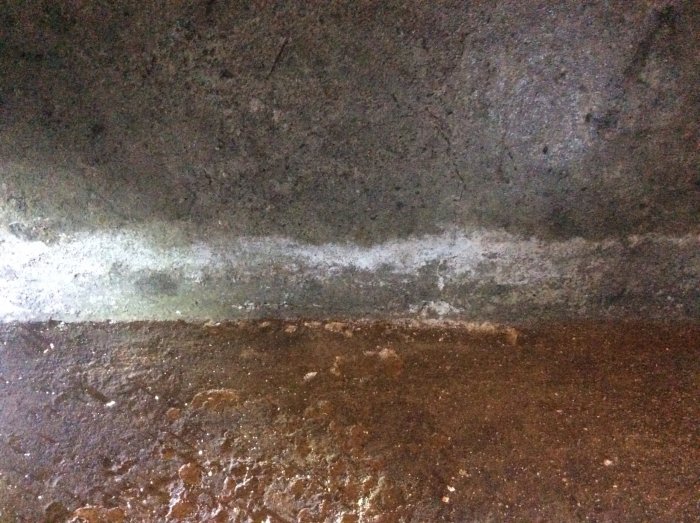
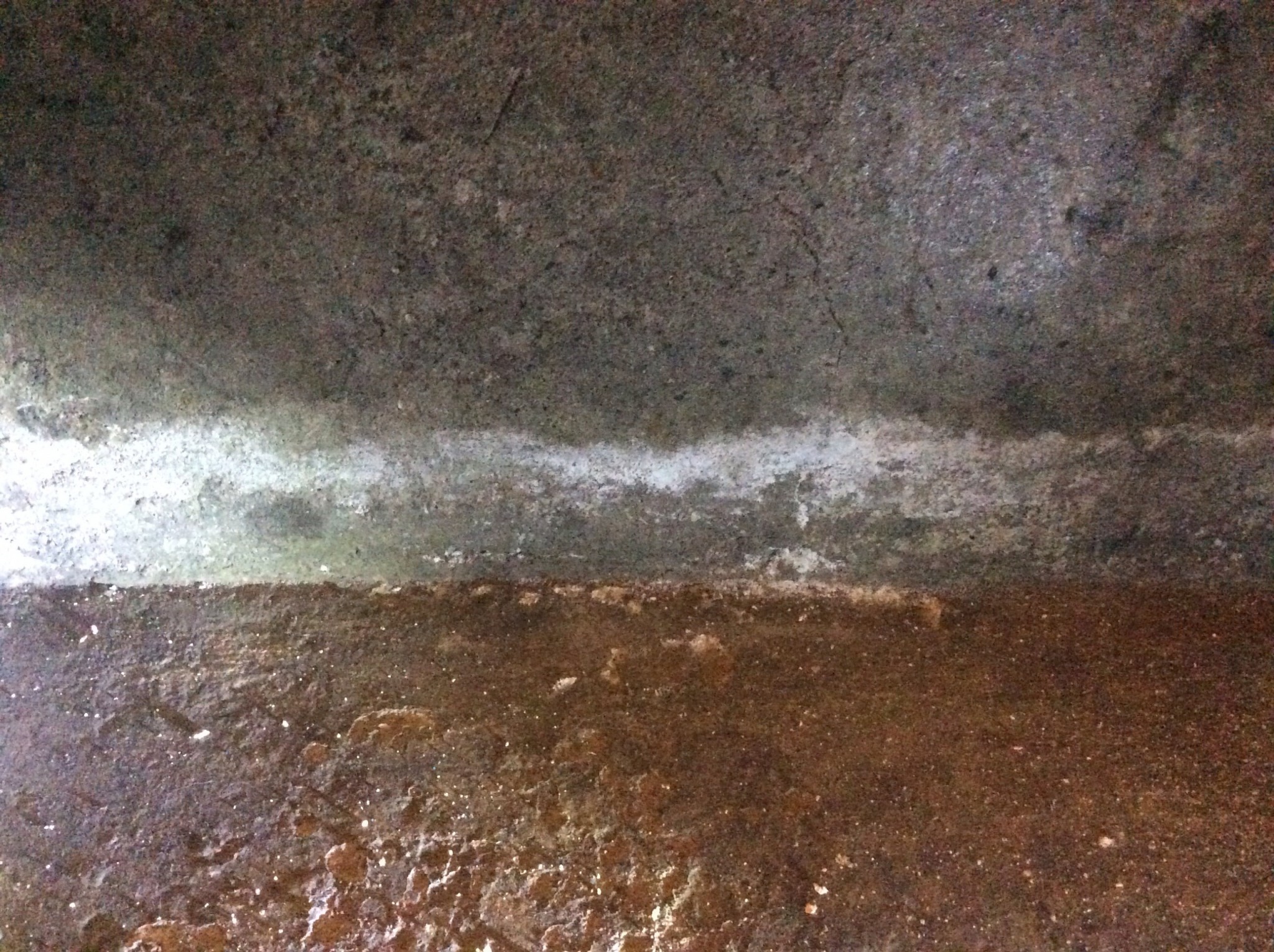
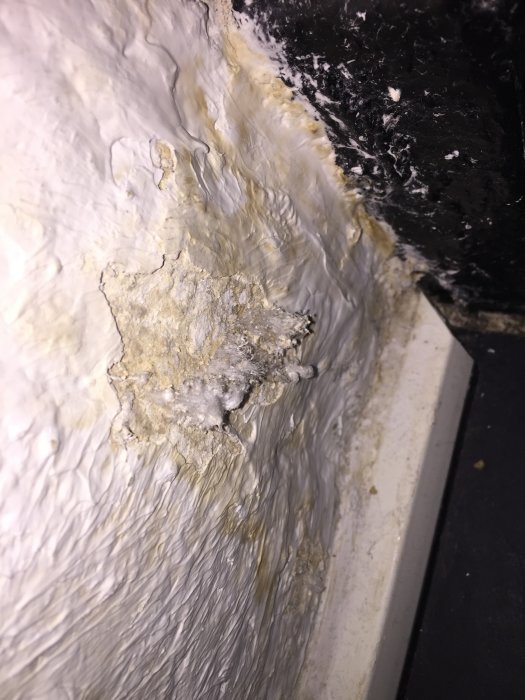
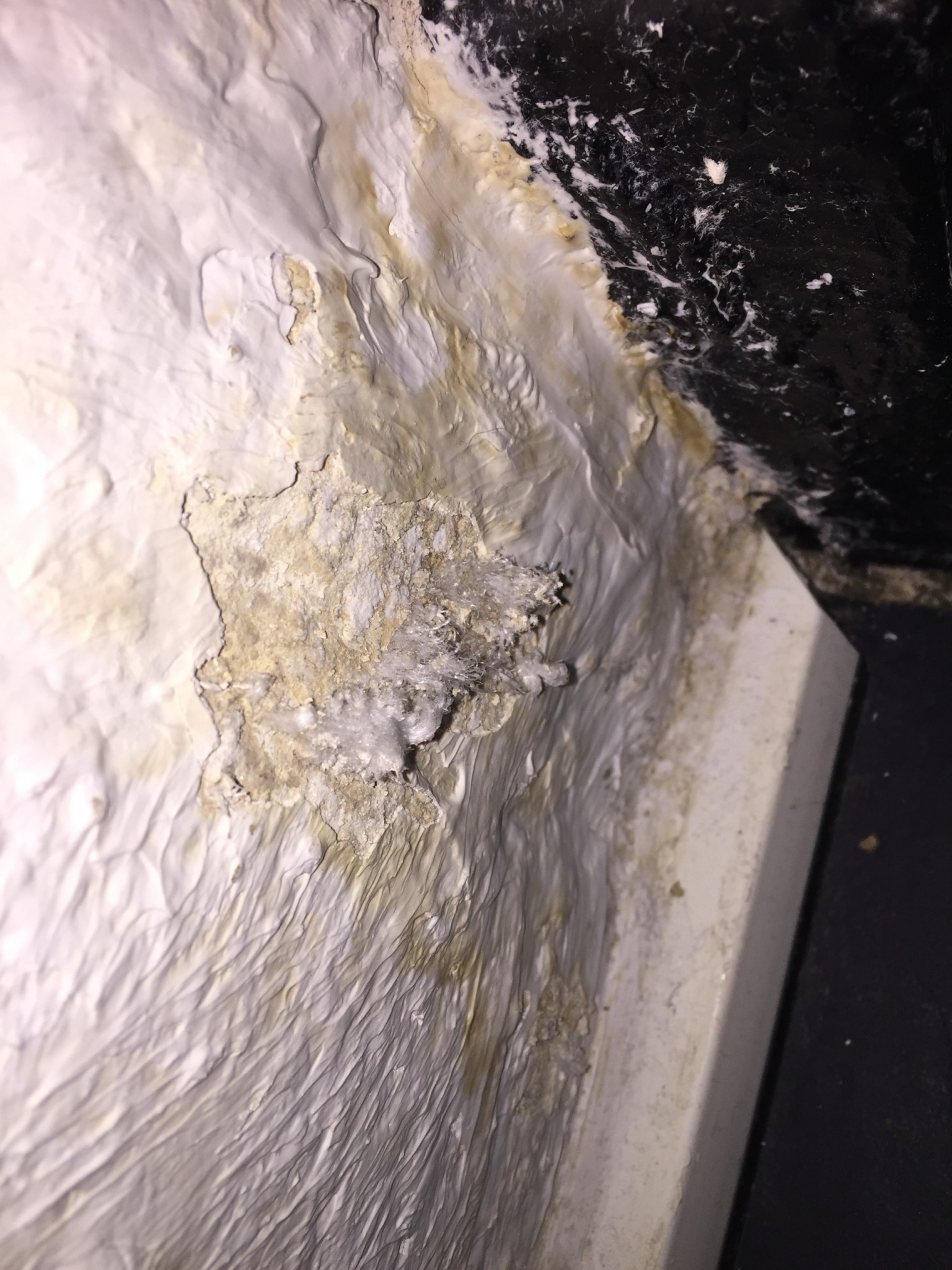
Need good advice. Old brick/plastered wall in the boiler room, where I have stopped using the boiler and instead have a ground source heat pump. Just a few centimeters above the floor on the wall, I've discovered a line with a thin white soft, almost silk-like, powder that seems to have emerged from the wall. Can't see any other reason why the white is there as a line..it doesn't seem to have come there in any other way, so it must have come from the wall.
What could this be?
When you touch it between your fingers, it's completely silk-like.
Feels almost like soft powder.
Wondering if it could be old lime emerging from the old plaster for some reason. What do you think? And why?
Hope it's not due to moisture or similar issues.
Anyone familiar with lime in old plaster potentially emerging from the plaster?
And if so, why? Does it feel like a silk-like powder?
I can add that a company rolled the walls with LipPrimer54 a few years ago, to bind the plaster that started to dry and easily crumbled. Could that have been a mistake? Does it trap moisture in the wall?
I can add that the boiler room is sunken a couple of steps, i.e., down into the old torpargrund.
Thus, the floor in the boiler room is lower than the floor as such on the ground floor.
I have the same phenomenon in my basement and outdoors under a plastered stair. Also don't know what it is, so there is interest in finding out what it could be.
Hello!
What you see is lime precipitation!
Since you switched from burning in the boiler room to using a heat pump, the so-called waste heat in the room has decreased.
The temperature in the room was probably significantly higher before, and with the current installation, it's lower, which results in moisture penetrating further into the floor and wall than before, starting a reaction in the lime and manifesting as the precipitation you see!
There's nothing to worry about as long as you don't have any organic material in the floor/wall (e.g., wood). However, keep an eye on it once a year.
It's hard to know if there is organic material in the wall. I think there probably is because they are interior walls.
I see, among other things, old "vassmatta" on one of the walls where the plaster has come off. I see wood in another place.
How on earth can I keep track of this once a year.. What should I watch out for and how?
I've heard that dry rot thrives in lime-rich environments, for example, around old chimneys that have become cold in the crawl space after, for example, ceasing to heat it. Unfortunately, I don't have a crawlable crawl space... Impossible to keep track. Can only peek through small openings.
Can the lime deposits seen on the boiler room wall also be around the chimney in the foundation? Dry rot in the lime? Or do you think the phenomenon mainly occurs on the boiler room wall now that the boiler room is colder than before and moisture is penetrating the floor/walls?
Is it from a moisture perspective inappropriate to have LipPrimer54 rolled on the old plastered walls? Could it be a contributing cause to moisture problems with lime deposits on the wall? Or can moisture still pass through the wall, i.e., breathe and not remain in the wall, under the primer?
Thanks in advance!
Click here to reply
Vi vill skicka notiser för ämnen du bevakar och händelser som berör dig.