
2,341 views ·
14 replies
2k views
14 replies
What is this material? Asbestos?
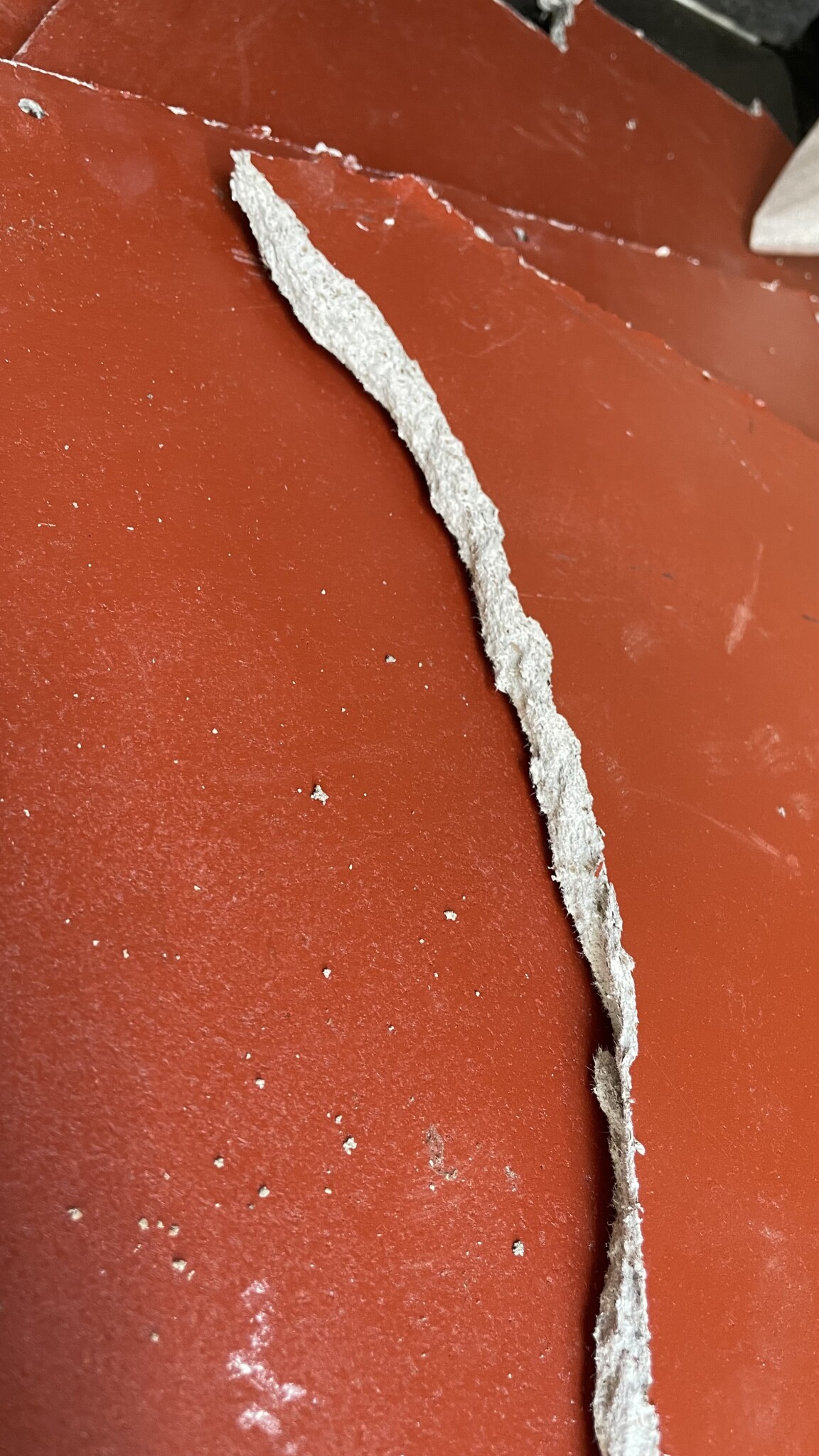
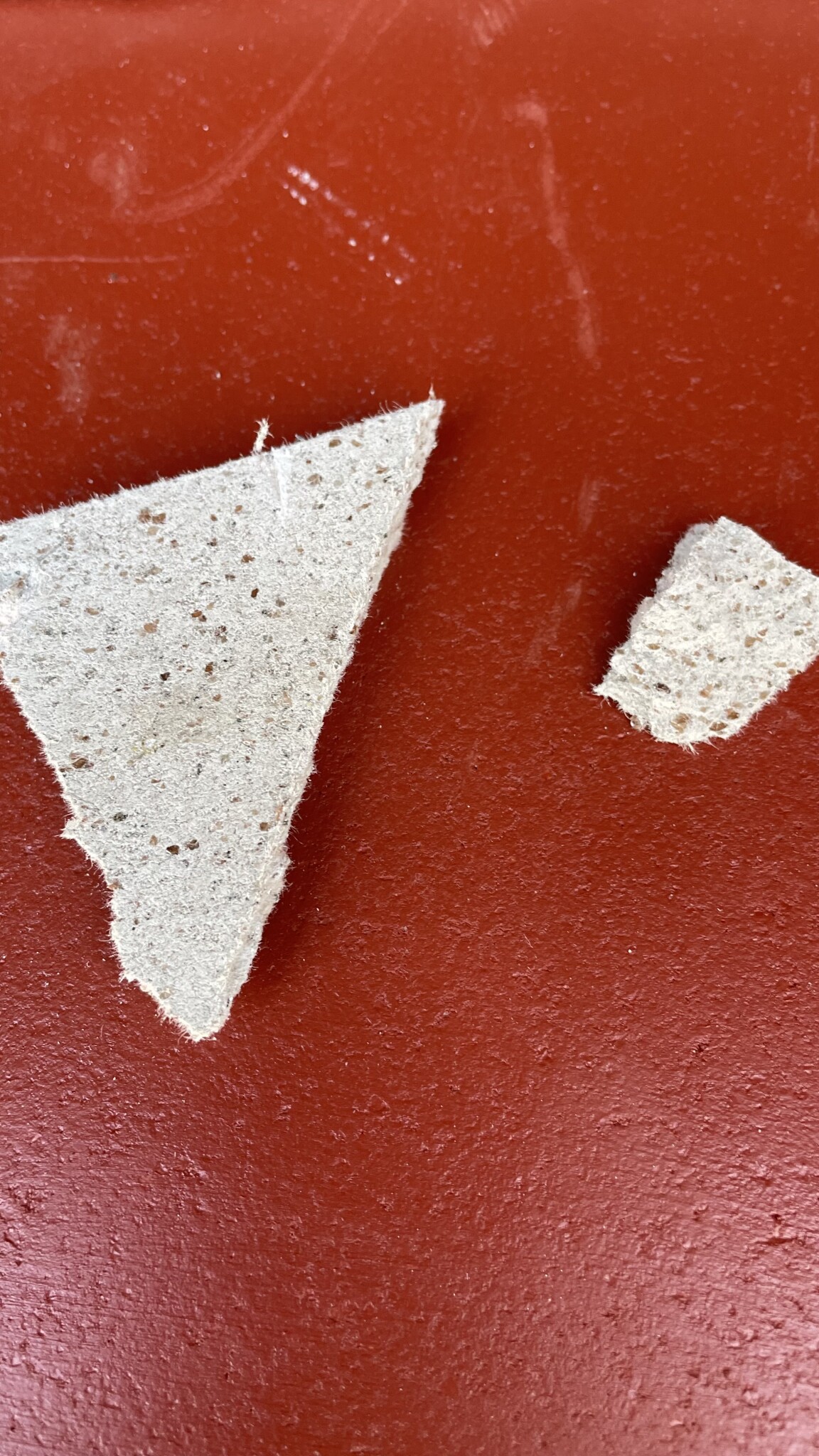
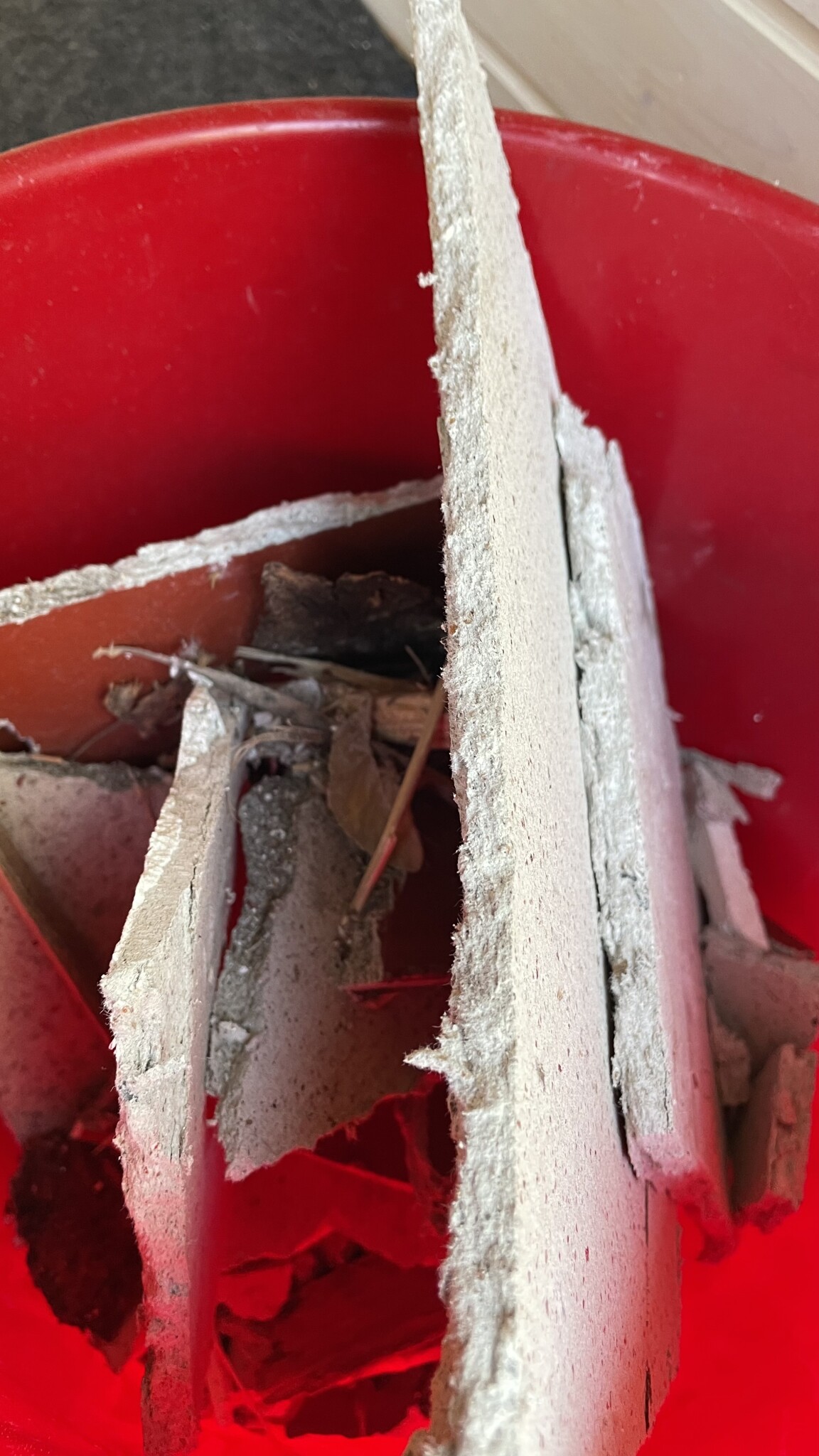

I also believe it is asbestos unfortunately. So ventilate and stop the demolition until you or someone else can do it safely. Asbestos can be handled with the right protective equipment and by encapsulating and disposing of it in a controlled manner.


Kan själv!
· Trelleborg
· 20 154 posts
If you want to know, it's basically analysis that applies.
I've used Evema, they were cheap and nice.
I've used Evema, they were cheap and nice.

Very possible that it is fiber cement and if you've broken it off. Don't worry, it's already gone, and nothing will happen to you, it just needs to go to the waste disposal center in sealed bags. The asbestos thing has become a recurring topic on the forum. It's not dangerous in itself unless it's processed with a saw or something else that creates dust. The doomsday is not here yet, as some emphasize and claim it's deadly, almost just by looking at it. Or when it lies as a roof or exterior siding.C carinaboren said:
Thanks for the answer, but I've already removed it. Now it will probably have to stay until a remediation company comes and collects it. It seems to be difficult to leave it at a recycling center since you can only leave a small bag there.O onaka said:
I have basically broken it as I went hard with a crowbar to remove it. Glad you mentioned that I don't need to be too worried, which I actually have been. It seems to be difficult to dispose of at a recycling center as they only accept smaller packages. This is about 4m2.J jonaserik said:Very possible that it is eternit and you have broken it off. Don't worry, it's already gone and nothing will happen to you, just take it to the recycling center in tightly sealed bags. The asbestos issue has become a recurring topic on the forum. It's not dangerous in itself unless it's processed with a saw or other tool that creates dust. Doomsday isn't here yet, as some emphasize it should be extremely dangerous, practically just by looking at it. Or if it lies as roofing or exterior panels.
With us, you can drop off a small bag of asbestos for free at the recycling center. For larger amounts, you need to go to a special place, weigh in, weigh out, and pay per kg instead.
So ask your recycling center what to do with larger quantities than a carry bag.
Personally, I've never understood that setup. There are probably quite a few frugal people who throw it in the green bin instead of going through the procedure and paying for it.
So ask your recycling center what to do with larger quantities than a carry bag.
Personally, I've never understood that setup. There are probably quite a few frugal people who throw it in the green bin instead of going through the procedure and paying for it.
It's a small amount, have you asked how much can be left? If I am not mistaken, they should accept smaller amounts from private individuals. Many rebuild and demolish ventilation ducts from kitchens, as it was common in the past for fire safety. Take the scrap and go there. And read on the municipality's website first about it, so you are sure about leaving it. As the staff might have their own ideas on this.C carinaboren said:
Yep 4 m2 is not much and can be broken into smaller pieces without getting contaminated by it. A few pieces in the bag every week and it disappears. Not really something to think about, but what can you do.B BSOD said:With us, you can leave a small bag of asbestos for free at the recycling center. Larger amounts require a trip to a special place, weighing in, weighing out, and paying per kg instead.
So ask your recycling center what to do with larger amounts than a shopping bag.
Personally, I've never understood that setup. There are bound to be plenty of stingy people who toss it in the green bin instead of going through that procedure and paying for themselves.
That is not eternit. Eternit contains 80-90% cement and 10-20% asbestos, and is a hard material. Judging by image 1, the material looks quite soft, so the sheets might be 100% asbestos. In that case, a significant amount of asbestos fibers can be released during processing. Be careful.
The sheets are hard and quite heavyA academia said:
May I guess that it's not eternit anyway. It's more porous. The color is also wrong. It's probably something more gypsum-/lime-/cement-based. However, most materials from that time can contain small amounts of asbestos, so one still can't be sure.

If it is already done, you parquet them and send them to recycling.
Then make sure to forget it and enjoy the summer with everything it entails.
If you can't leave that much, check with the neighboring municipalities.
But don't hang yourself up on what is done. Extremely low risk and it can't be reversed.
Then make sure to forget it and enjoy the summer with everything it entails.
If you can't leave that much, check with the neighboring municipalities.
But don't hang yourself up on what is done. Extremely low risk and it can't be reversed.
Member
· Västernorrland
· 12 093 posts
I don't think it looks like anything asbestos-related. More like some newer type of fiber cement board. It's not even certain that they were installed in 1965 just because the house was built then.
Click here to reply