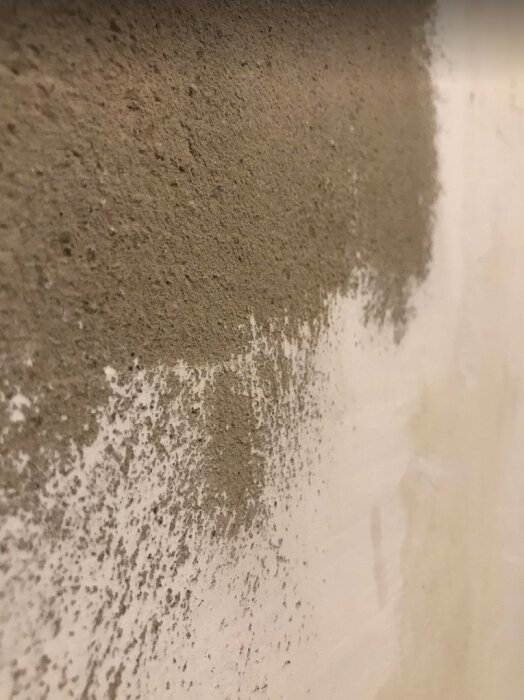
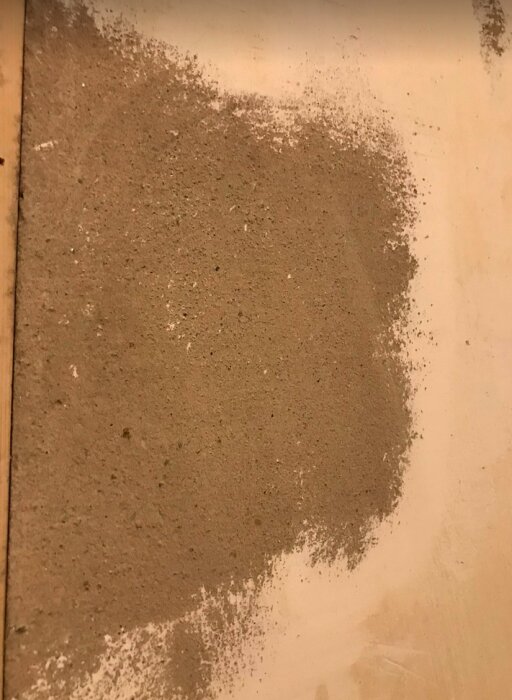
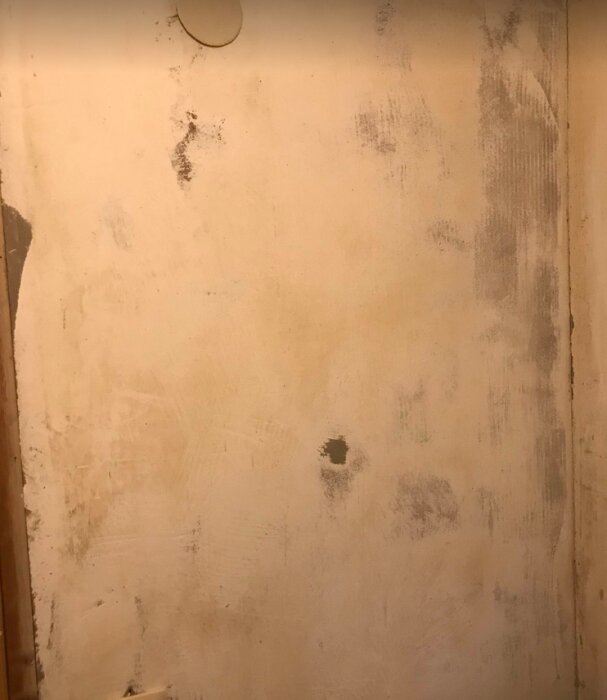
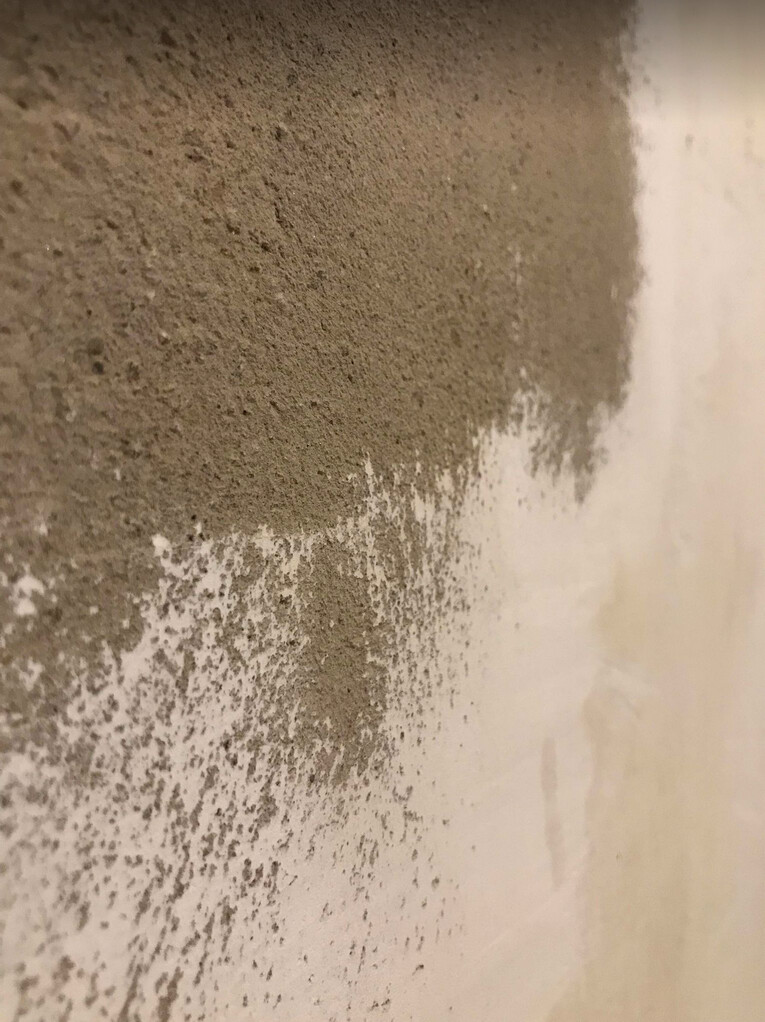
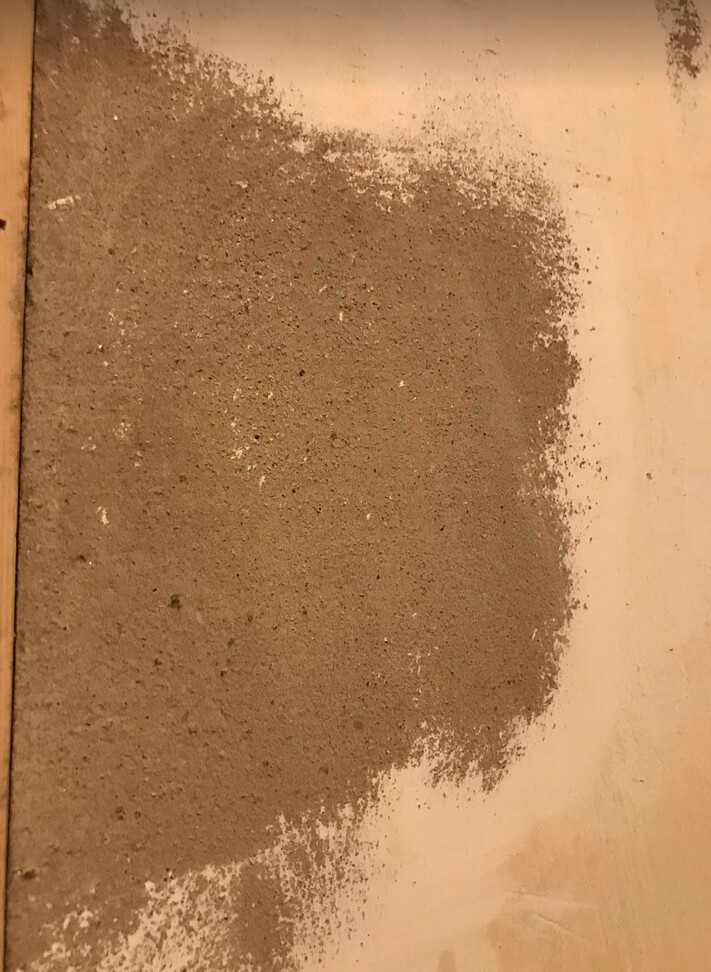
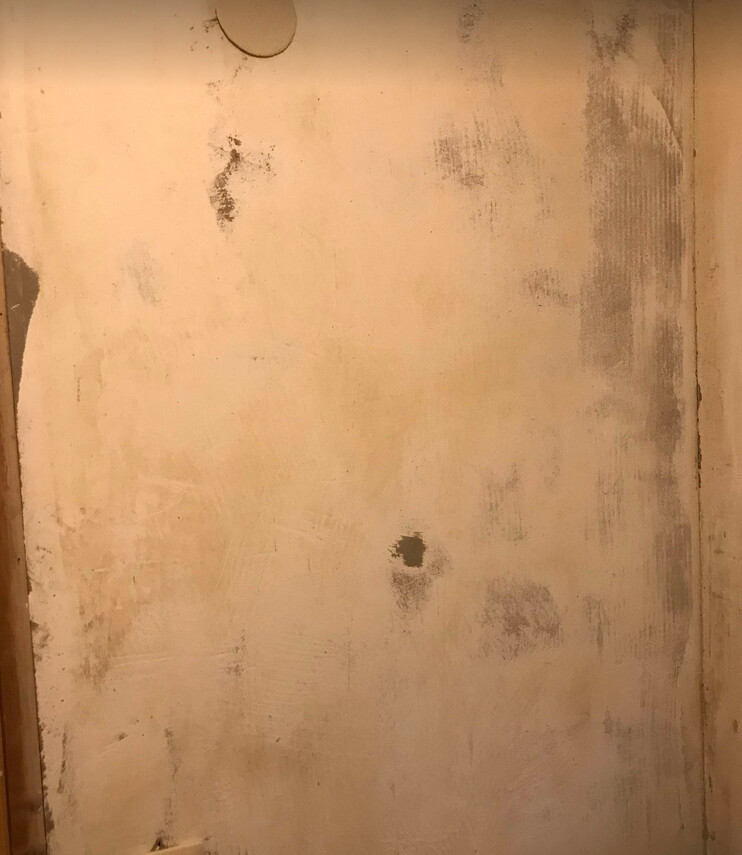
Need to prepare the bathroom walls in my old basement bathroom before finishing, and outside the shower area there was fiberglass/textile wallpaper. When we've scraped it off, a white surface remains. The question is whether it's wallpaper paste or if it's gypsum filler, or something else?
I am preparing the bathroom walls in my old basement bathroom before adding surface layers, and outside the shower area, there has been fiberglass/woven wallpaper. After scraping it down, a white surface remains. The question is whether it's wallpaper paste or if it's gypsum filler, or something else?
[image] [image] [image]
So I'm really wondering if it's something organic.
Flexa is in my world a decontamination cutter, used among other things by asbestos cleaners to remove fix that contains asbestos but is of course just as good for the same task without asbestos.
But considering the job and the post, maybe a concrete grinder (like an angle grinder with a diamond grinding wheel) is what is meant and it might be a bit more suitable for what needs to be done?
Flexa = scrape? Or some magical tool? It's stuck insanely hard.. seems important to remove it if organic.
No space for discs, the concrete is the perfect base for the next step.
Rickard. said:
In my world, "flexa" is a remediation cutter, used by asbestos cleaners to remove adhesive containing asbestos, but it's just as good for the same task without asbestos.
But considering the job and the post, perhaps a concrete grinder (like an angle grinder with a diamond grinding disc) is what's meant and maybe it's a bit more suitable for what's being done?
I've used an angle grinder + diamond grinding disc, but it dusts like hell and becomes uneven. Smoothness here is very valuable. Is it easier to maintain smoothness (cast concrete vs. lightweight concrete wall) with this cutter you are referring to?
A milling cutter is a coarse tool for quickly removing softer materials such as fix, light concrete, etc., I believe they don't work on concrete.
A concrete grinder is better than an angle grinder, I don't know how much work is really necessary, but if you want to grind, it's not a bad idea to rent a grinder and vacuum for a weekend.
Probably some old glue or paint, flex away the junk or glue lux boards.
Rickard. said:
A remediation grinder is a coarse tool for quickly removing softer materials like fix, light concrete, etc., I think they don't work on concrete.
A concrete grinder is better than the angle grinder, I don't know how much work is truly necessary but if you want to grind, it's not a bad idea to rent a grinder and vacuum for a weekend.
Scraped some down with my Bacho two-hand scraper. It's tough on hands and shoulders but worked, and creates less dust. The question is, how do you know if something is asbestos-based?
Then I come to the light concrete wall with similar covering, but got "wavy" and uneven results there previously with scraping—so I'm considering just leaving it there and filling over it. After all, it's sat there for 50 years without peeling or bad smell.
Last edited:
Click here to reply
Vi vill skicka notiser för ämnen du bevakar och händelser som berör dig.

KJD said:
I am preparing the bathroom walls in my old basement bathroom before adding surface layers, and outside the shower area, there has been fiberglass/woven wallpaper. After scraping it down, a white surface remains. The question is whether it's wallpaper paste or if it's gypsum filler, or something else?
Rickard. said:
In my world, "flexa" is a remediation cutter, used by asbestos cleaners to remove adhesive containing asbestos, but it's just as good for the same task without asbestos.