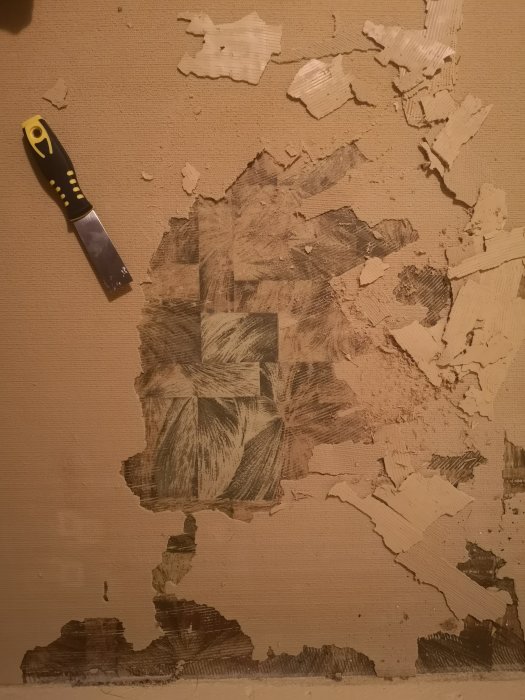
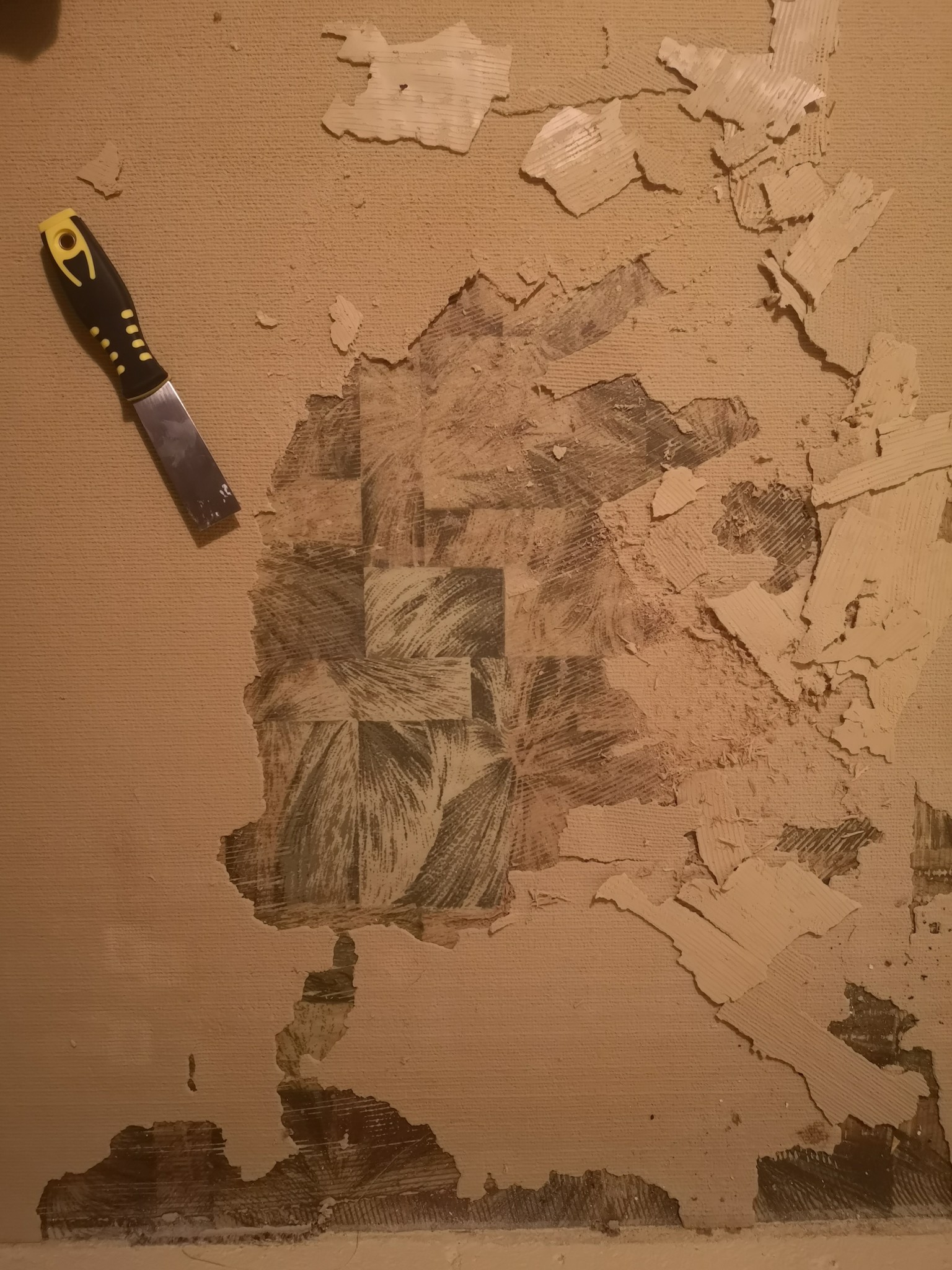
Ever since we moved in six months ago, I've been eager to pull up the floor mat in the basement. Tonight I finally started!
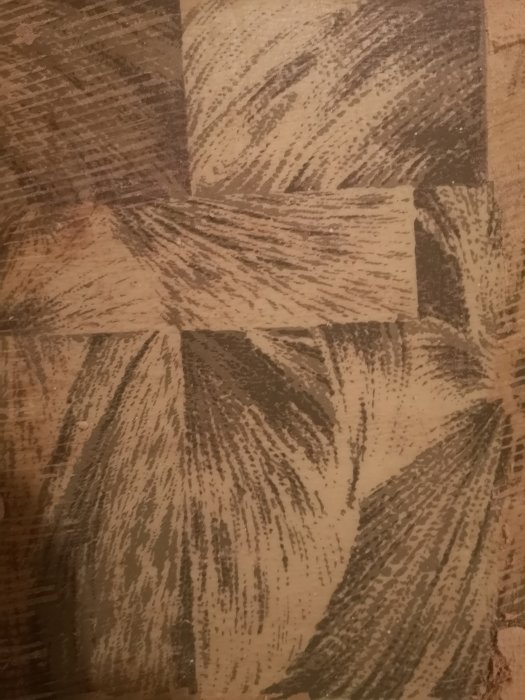
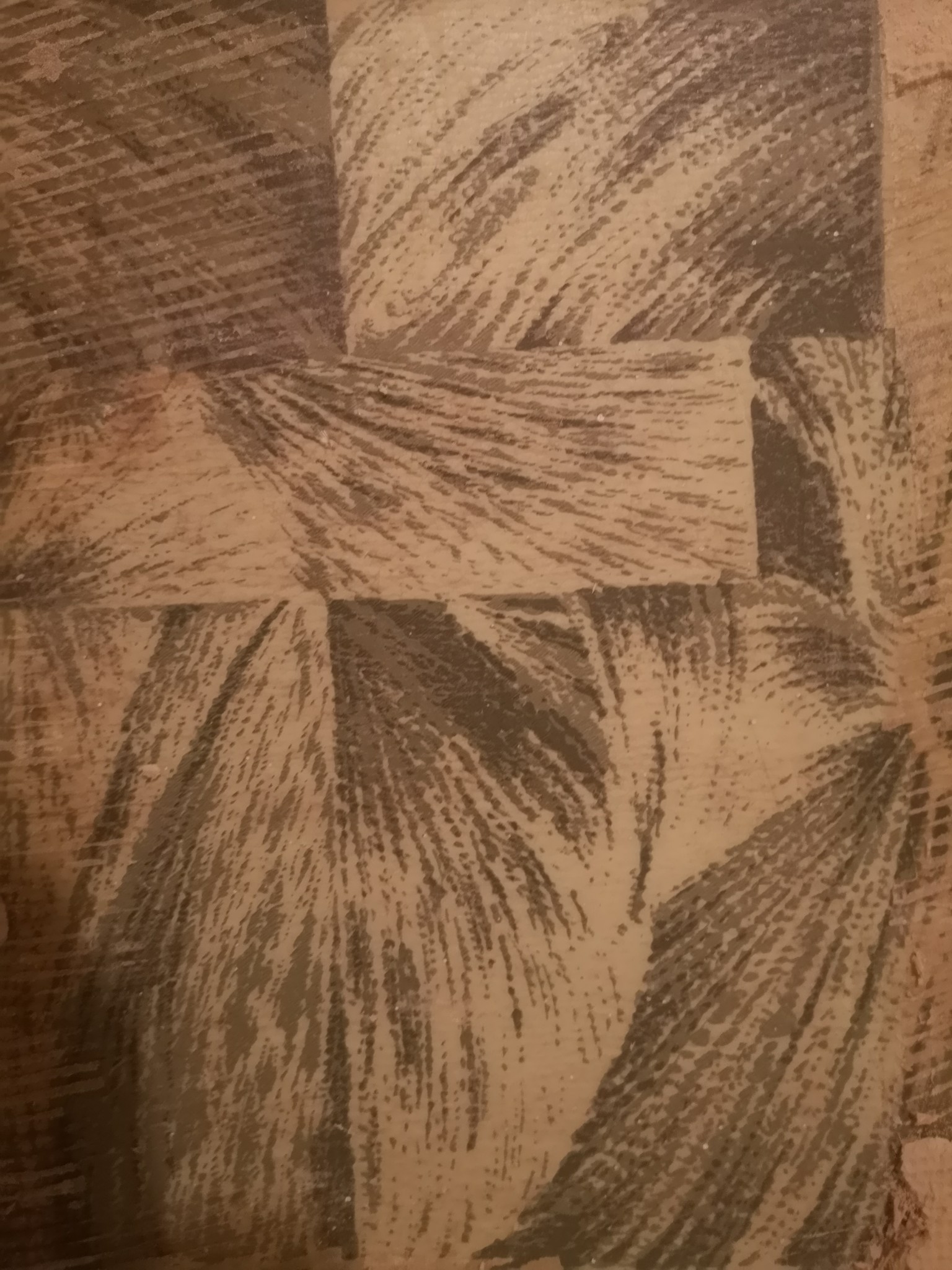
I thought I would find some boring concrete floor underneath to lay tiles on, but that wasn't the case at all. It was some kind of green patterned floor. The house is from 1964. Does anyone know what it is?
Edit: Tried to delete the post because I figured out what the floor was, but I don't understand how to delete a post, so it'll just stay. It turned out to be just an old vinyl mat! Oh well, better than the old disgusting carpet anyway! I'll see if I leave it or tear it up as well
Plastic flooring can be good to remove from a basement floor. It can direct ground moisture to rise through the walls instead of diffusing through the floor, so you end up with moisture and plaster separation even on interior walls. Salt deposits can also form under the mat, especially in the edges and seams that are not welded. We had this in the basement of our previous house. It resulted in a musty smell and an uneven floor that crunched where the salt lay in thick layers. The only advantage of the plastic flooring was that it kept furniture and items directly on the floor dry.
Thanks for the info! Then I'll tear that up too, and use a concrete floor until we get the tiles fixed
Regarding what you wrote about the vinyl sheet being good for keeping furniture dry. If I'm going to assemble a wardrobe, does that mean I should place it on something first? Or is it okay to place it directly on the concrete?
Thanks for the info! Then I’ll tear it up as well and go with a concrete floor until we can arrange tiles
Regarding what you wrote about the plastic mat being good for keeping furniture dry. If I'm going to install a wardrobe, does that mean I should put it on something first? Or is it okay to place it directly on the concrete?
@mrsnhp
It depends on how much ground moisture you have coming up through the floor, which in turn depends on soil conditions and how it is drained underneath. Unfortunately, I don’t know what the substrate is usually like in houses from the '60s, but you’ll notice when you lift the plastic mat if there’s a lot of salt or moisture underneath.
In our previous '50s house, it was all slimy under the plastic mat, and there I wouldn’t have placed something as big/dense as a wardrobe directly on the concrete floor. In our current house (a bit older still), there seems to be less ground moisture, and I might chance it with a cabinet with a sufficient plinth so that the bottom plate doesn’t end up right at the floor.
If you’re planning to renovate and lay tiles in a few years, there’s the option of leaving the plastic mat until then. It has been there a long time, and it won’t noticeably worsen over a couple of years.
Keep in mind that both the vinyl flooring and the adhesive underneath it may contain asbestos, so it might be appropriate to send a piece for analysis.
I agree, you should be careful with that flooring.
But that only applies if we remove the vinyl flooring, right? Removing the carpet and leaving the vinyl is harmless?
Yes, however, the vinyl flooring might not be a good base for tiles. At the very least, it would be pointless to lay tiles just so the moisture in the concrete slab can evaporate.

 Oh well, better than the old disgusting carpet anyway! I'll see if I leave it or tear it up as well