
1,533 views ·
20 replies
2k views
20 replies
What is the best tip for aligning and planing wood for cutting boards

I have bought some fine lumber, walnut, oak, etc., which I plan to make cutting boards from. The problem is that I have very limited space and don't have room to buy large jointers and planers. Does anyone have tips on a good small and preferably cheap machine that can do both? The alternative I'm looking at is building a setup to surface plane, but I would prefer a jointer and planer because it feels quicker and more convenient.
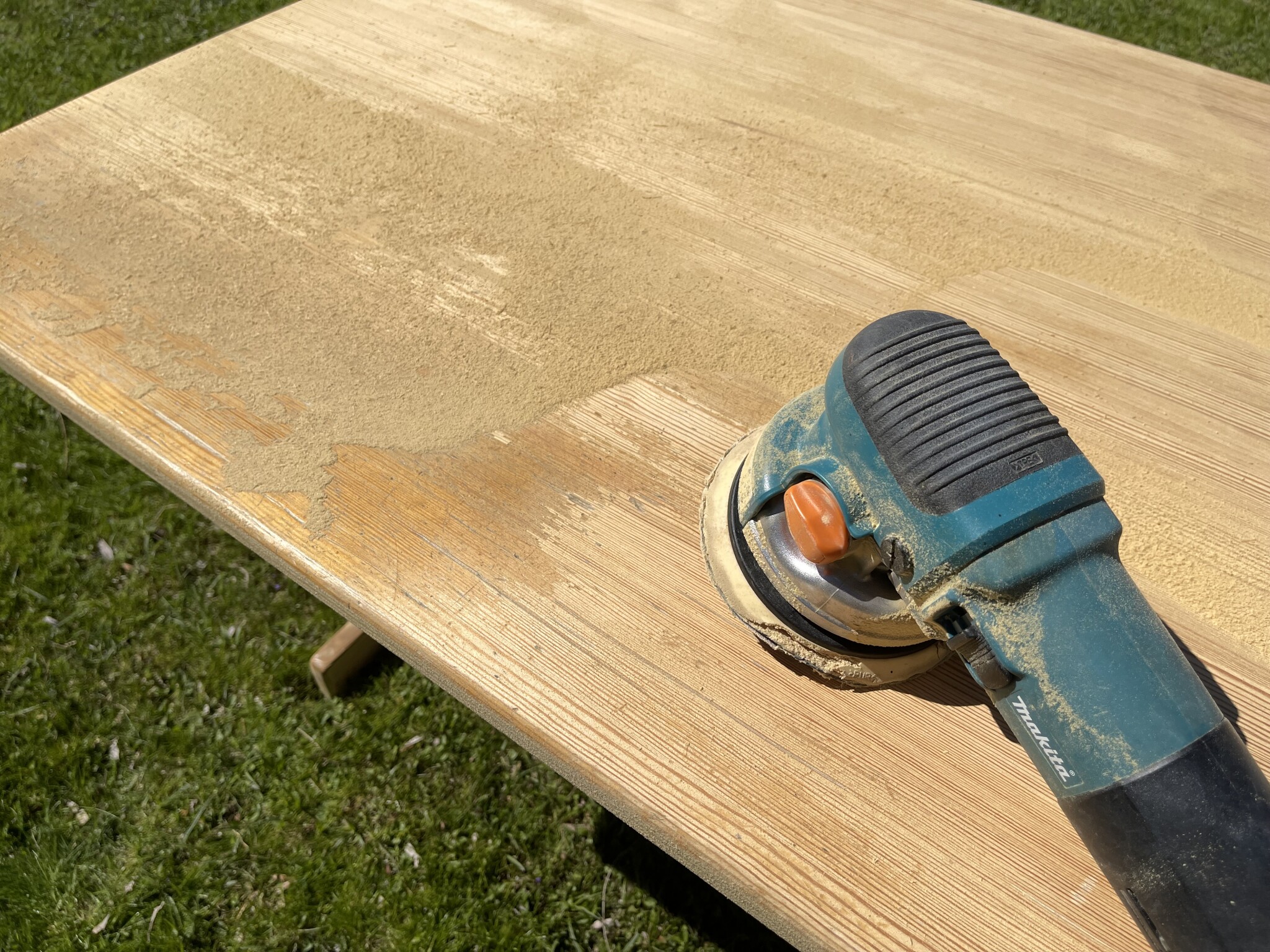
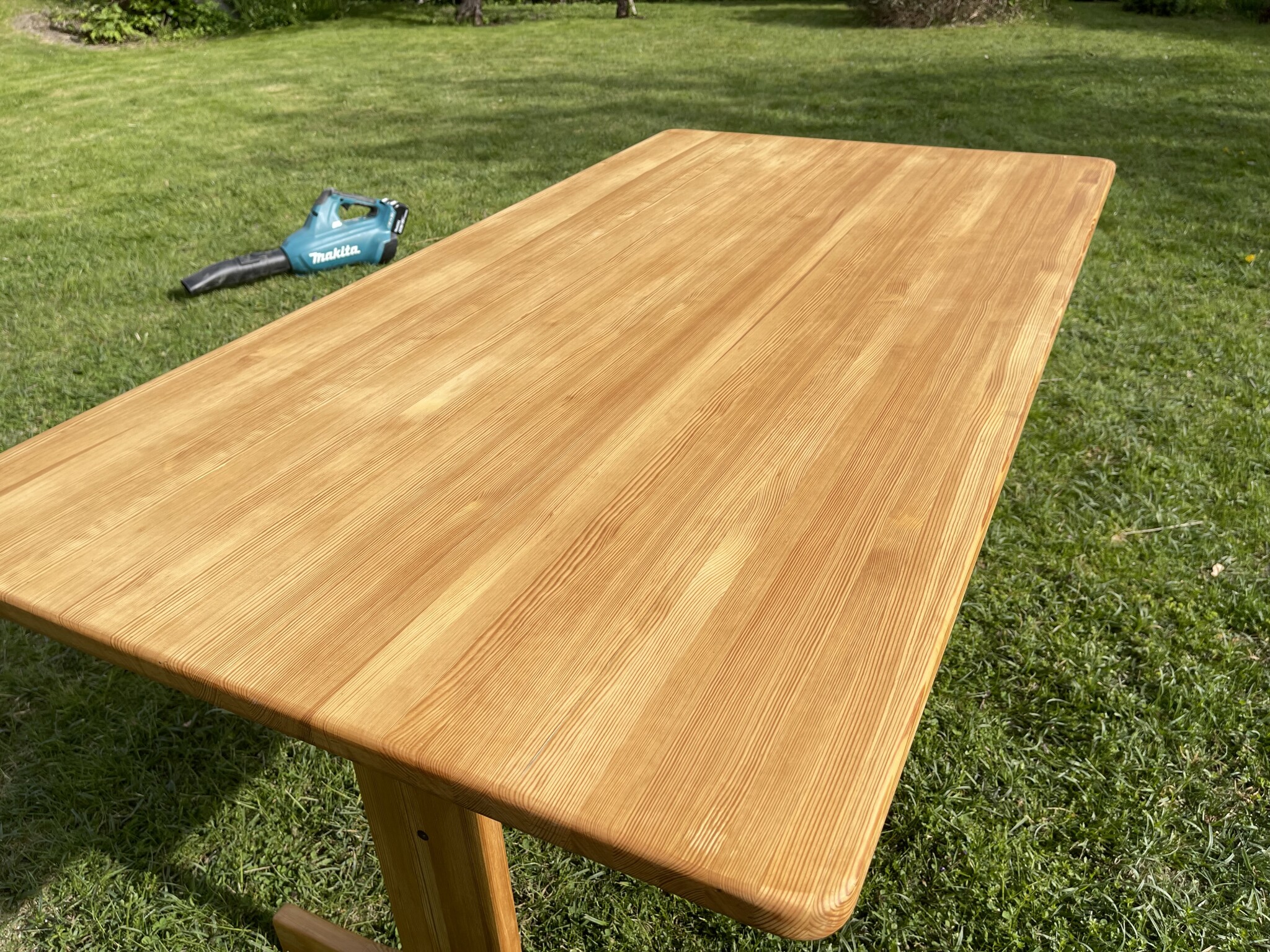
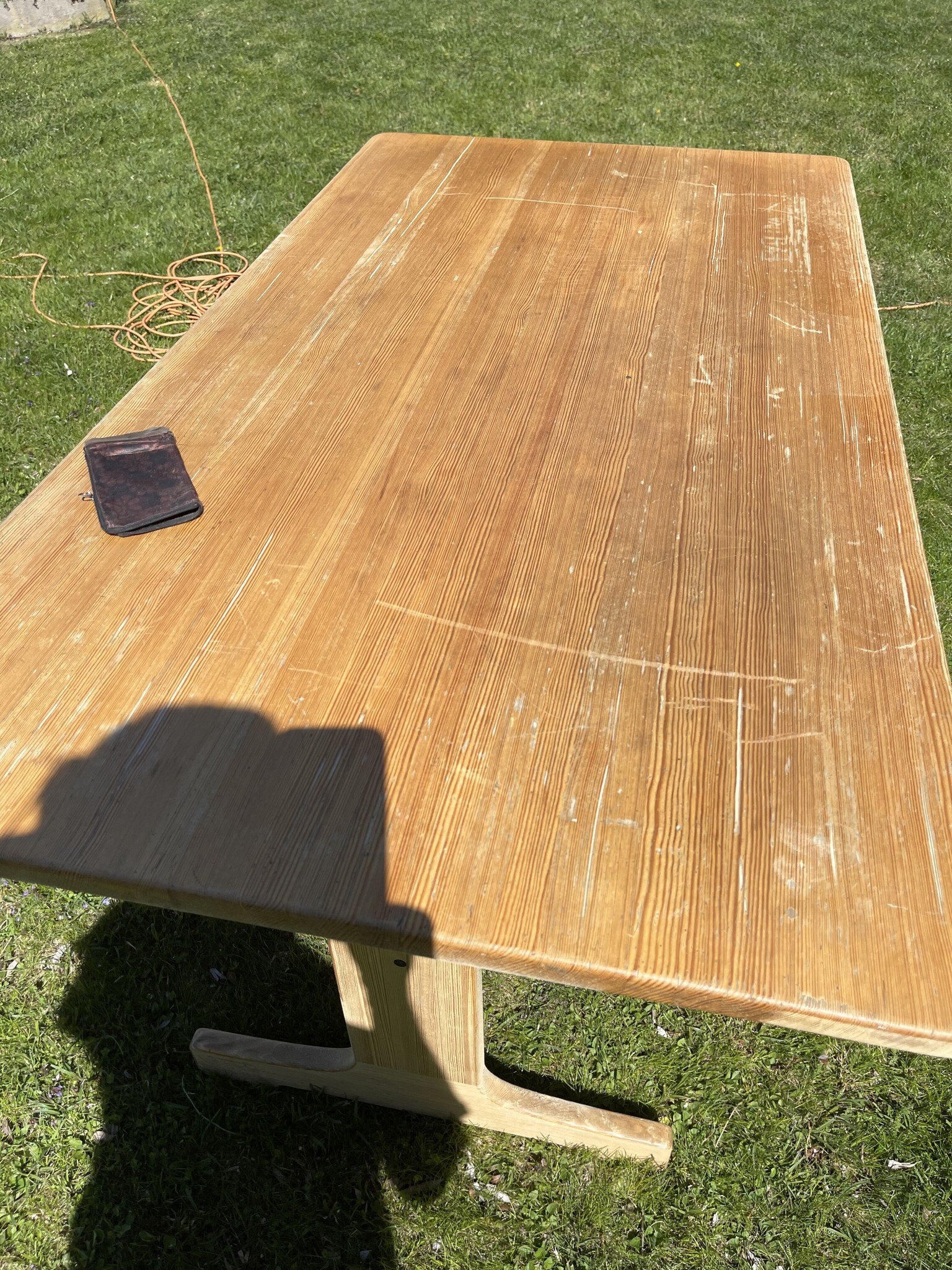
I had used my forced rotation Makita BO6040. An unevenness in a table top of a few mm is eaten for breakfast, and with a good surface finish already with coarse paper. A later successor is called BO6050. Bosch and a few others have similar options, Rotex and whatever they might be called. However, don’t be cheap and buy a model without forced rotation. That's the key feature.
Thanks! I will of course sand afterwards and Makita seems to be a good option, but what I need to do first is straighten skewed wood and then plane them down to a certain thickness.rakt09 said:
I would have used my forced rotation Makita BO6040. An unevenness in a tabletop of a couple of mm it eats for breakfast, and with good surface finish already with coarse paper. A recent successor is called BO6050. Bosch and a few others have similar options, Rotex and whatever they're called. However, don't be foolishly cheap and don't buy a model without the forced rotation. That's the key.
.
I have both a jointer and a planer, as well as a router jig to be able to flatten larger pieces. To be completely honest, the router jig is easier to use. But to get to the point where it can be used, I use the jointer and planer a lot to prepare material for gluing the pieces together.
An alternative is a larger handheld planer for everything. It requires a bit more from you, but turns out well with some work.
An alternative is a larger handheld planer for everything. It requires a bit more from you, but turns out well with some work.
Yes Per, in that situation, a jointer seems valuable  However, only the sides of each piece need to be flat against each other, so you should manage with a small model. The surface of the finished cutting board is easy to work on with, for example, my suggestion above.
With wavy grain, a plane might tear out small chunks from the surfaces that are later visible, creating a need for filling. My suggestion largely avoids this.
If the pieces have uneven grain, moisture tension might arise later. If you biscuit the cutting board together, it will become more robust. There are biscuit joiners, but a router will suffice.
However, only the sides of each piece need to be flat against each other, so you should manage with a small model. The surface of the finished cutting board is easy to work on with, for example, my suggestion above.With wavy grain, a plane might tear out small chunks from the surfaces that are later visible, creating a need for filling. My suggestion largely avoids this.
If the pieces have uneven grain, moisture tension might arise later. If you biscuit the cutting board together, it will become more robust. There are biscuit joiners, but a router will suffice.
Yes, of course, that's the optimal solution. I'm a bit envious of those who have such large spaces available because that's how it "should" be done.Bart said:
I have both a jointer and planer as well as a router sled for flattening larger pieces. To be entirely honest, the router sled is easier to use. But to get to the point where it can be used, I use the jointer and planer a lot to prepare the material so that the pieces can be glued together.
An alternative is a larger handheld planer for everything. It requires a bit more from you, but with some work, it turns out well.
Okay, I was thinking of leveling the wood with small wedges to get it reasonably flat and then running it through a router sled. Once one side is done, you have a flat side that can be placed against the workbench to do the other side. Is this an option if you don't have either a jointer or planer like you?
Nah, I'll probably get tired of hand planing pretty quickly if I know myself right 😄
then a real DIY-tip. I have never gotten around to buying clamps. I mean, they don't cost much, but I've solved the problem of gluing sheet material together every time it's been needed - with packing tape.
If you overstretch it and go around a couple of times, surprisingly good compression is achieved.
And you get the absence of edge damage as a bonus.
If you overstretch it and go around a couple of times, surprisingly good compression is achieved.
And you get the absence of edge damage as a bonus.
Ok, then we're thinking alike. Yes, exactly. If I run the wood through a planer, it becomes flat but not straight against the other side. If I only use a jointer, any warping will remain in the board even if the sides are flat against each other, so I need both. I've seen that you can support the wood with wedges before running it through the jointer to get one side flat, then flip it to do the other side. That way, you could manage with just a jointer, but I'm unsure how to handle the edges? Can you run the wood on its edge in a jointer?Yes Per, in that situation a jointer seems valuable
And with wavy grain, a plane might chip out concave bits from the surfaces that you see afterward, so there's a need for, for example, filling. You mostly avoid this with my suggestion.
Then if the pieces have uneven grain, moisture tensions might also arise later. If you biscuit the cutting board together, it becomes more robust. There are biscuit joiners, but a hand router will do nicely.
Best answer
A benchtop planer model can also act as a jointer. Secure what you want to joint-plane on a board so that it stays still and send it through the planer. Such a planer doesn't take up much space and can often handle fairly wide workpieces, so the need for a router jig may not always be necessary.
Thank you, that's exactly the model I've been looking at, and the tips in the video are spot on, which I tried to describe in one of my replies in the thread. As you say, you get both jointing and planing in one. I'll continue to look at these; I've found several in the price range of about 4000 kr.
Whether the "small" jointer can plane depends on how wide the boards are (placed on edge) and, as I understand it, on how strong the fixture is on the sled. I haven't gotten far enough to test. The thickness also affects it, as there is a minimum that can be processed.
If you have jointed the wood, you can mill the edge along a track, level, or really straight board. An adjusted circular saw also works, or a plunge saw (haven't tried).
I've ended up with a small planer and then some reasonable method to fix the alignment. From hand plane, router, or band saw (I have the luxury of fitting one) depending on what I need to do. I'm also not averse to sanding, which poses the least risk of tear-out. Attach the paper to a straight guide and sand to make it reasonably straight.
If you have jointed the wood, you can mill the edge along a track, level, or really straight board. An adjusted circular saw also works, or a plunge saw (haven't tried).
I've ended up with a small planer and then some reasonable method to fix the alignment. From hand plane, router, or band saw (I have the luxury of fitting one) depending on what I need to do. I'm also not averse to sanding, which poses the least risk of tear-out. Attach the paper to a straight guide and sand to make it reasonably straight.
Here's another practical tip.
If the baseboards are warped and after splitting them into pieces to glue together, you alternate each piece, the angle errors will cancel out. Nothing will be visible on the finished cutting board.
Any possible curvature on the surfaces to be glued can be easily removed by sanding against a sheet of sandpaper placed on a flat surface. It's about removing a limited amount of material.
Getting the surface flat and nice on the finished cutting board, as we've seen, is an easy job.
Ultimately, it depends on how many cutting boards you plan to make and any other use of the potential tools you purchase.
More generally useful tools for woodworking, in my opinion, are a plunge saw, multi-tool saw, angle grinder with 24 grit paper, and of course, the forced-action orbital sander. It's also common to own a pendulum jigsaw and a smaller orbital sander for finishing. Useful but not essential are an electric plane and a router.
None of these require their own space with free surfaces around them like a jointer and thickness planer do. In my opinion, that's quite a big step to take. Expect that 10 square meters will cost a thousand a month to maintain. Cutting boards quickly become quite expensive unless there is additional use....
If the baseboards are warped and after splitting them into pieces to glue together, you alternate each piece, the angle errors will cancel out. Nothing will be visible on the finished cutting board.
Any possible curvature on the surfaces to be glued can be easily removed by sanding against a sheet of sandpaper placed on a flat surface. It's about removing a limited amount of material.
Getting the surface flat and nice on the finished cutting board, as we've seen, is an easy job.
Ultimately, it depends on how many cutting boards you plan to make and any other use of the potential tools you purchase.
More generally useful tools for woodworking, in my opinion, are a plunge saw, multi-tool saw, angle grinder with 24 grit paper, and of course, the forced-action orbital sander. It's also common to own a pendulum jigsaw and a smaller orbital sander for finishing. Useful but not essential are an electric plane and a router.
None of these require their own space with free surfaces around them like a jointer and thickness planer do. In my opinion, that's quite a big step to take. Expect that 10 square meters will cost a thousand a month to maintain. Cutting boards quickly become quite expensive unless there is additional use....
Thanks! Yes, I have a good circular saw and have created really good jigs for 90-degree edge sawing, so if it doesn't work in the jointer, of course, this works. I also have an router that would work, but it's of course easier if you can joint and plane all surfaces simultaneously in the same machine 😊Z z_bumbi said:Whether the "small" jointer can handle jointing depends on how wide (placed on edge) the boards are and, as I understand it, how strong a fixture you have on the sled. I haven't gotten to the point where I test it. Thickness also affects since there's a minimum limit that can be run.
If you have planed the timber, you can rout the edge along a guide rail, level, or a really straight board/plank. An adjusted circular saw also works, or a plunge saw (haven't tried).
I've ended up with a small planer and then some reasonable method to fix the jointing. From hand planer, router, or bandsaw (I have the luxury to fit one) depending on what I’m doing. I'm also not opposed to sanding, which poses the least risk of tear-out. Attach the paper to a straight rail and sand, so it becomes reasonably straight.
Unfortunately, I will never be able to fit a bandsaw in my current house, but we'll see in the future...