I think it looks like ready-made elements of lightweight concrete placed on a partially cast and masonry foundation. They are 500mm wide with beveled edges.
I think I found a spot where I could send up an inspection camera through the joist from the crawl space. I'll have to try that next time I feel like getting really dirty. It feels like Stranger Things "the upside down" down there.
I'm following up on my own thread now that I've found the answer.
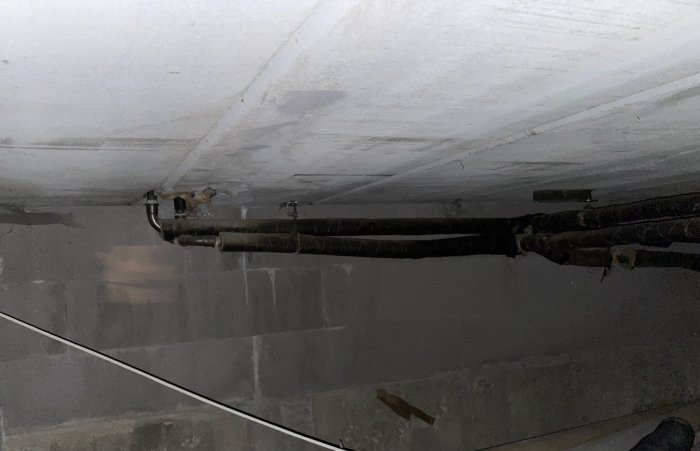
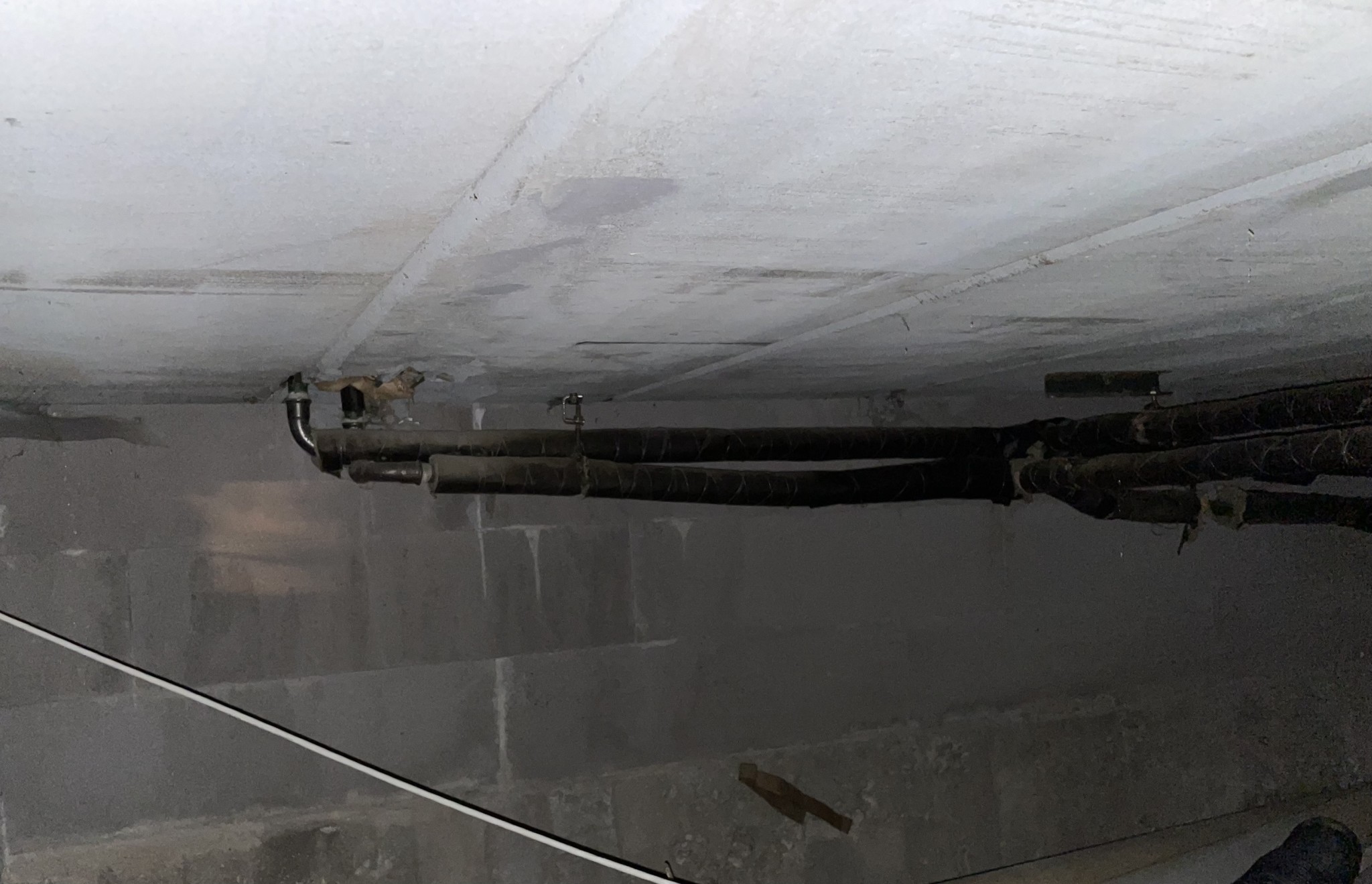
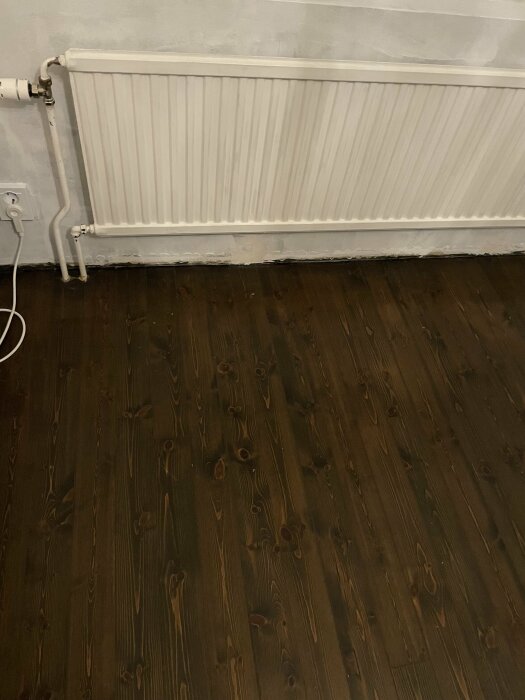
I posted a picture from the crawl space where the pipes go up; it's exactly directly above that the radiator is located, and it looks the same from underneath for the other two radiators.
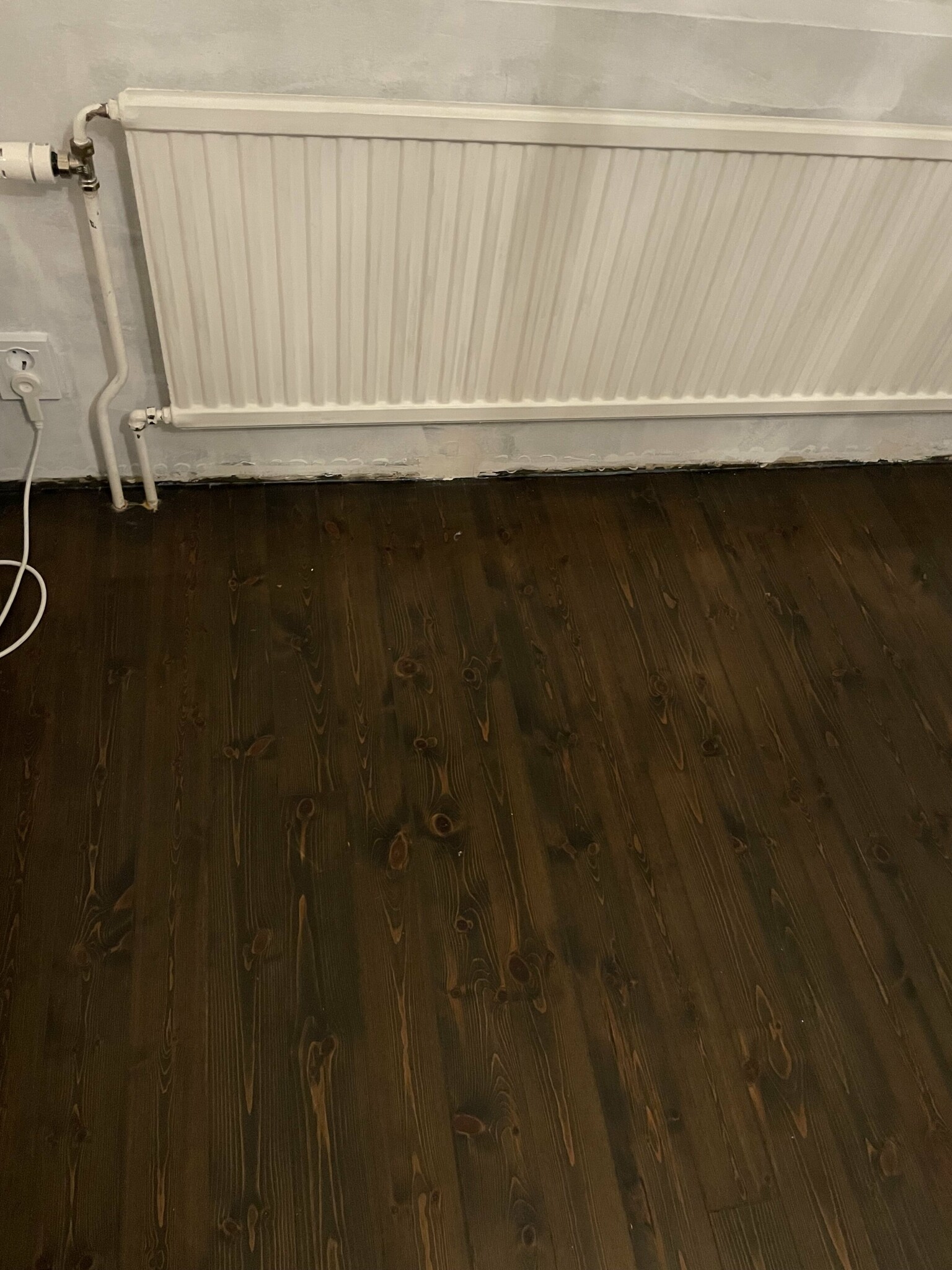
This is what it looks like from above.
No surprises so far.
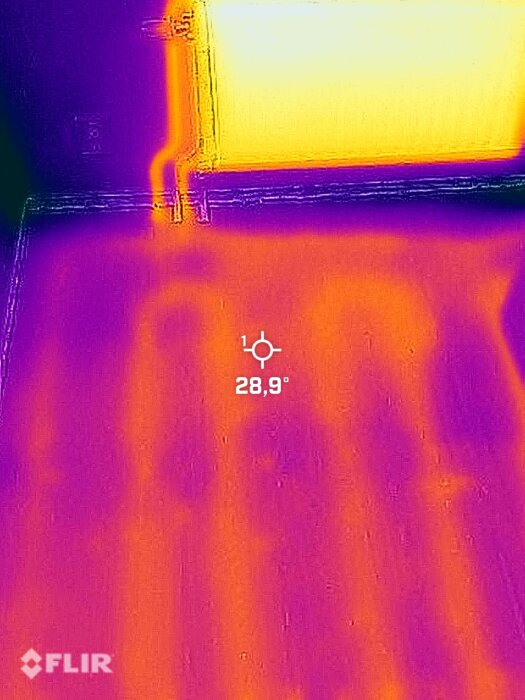
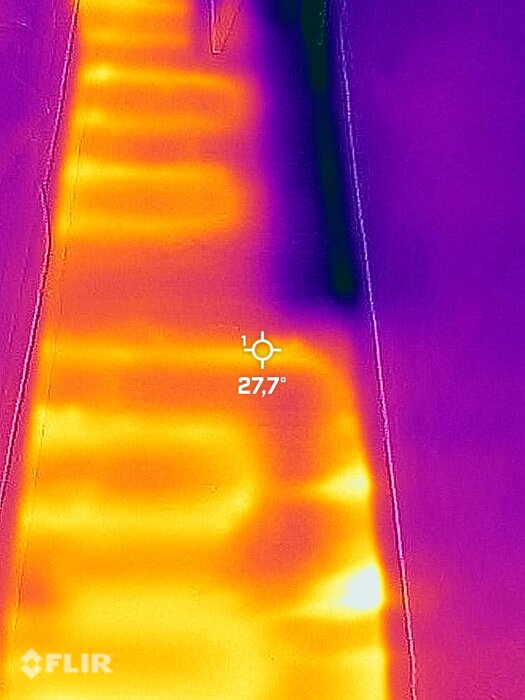
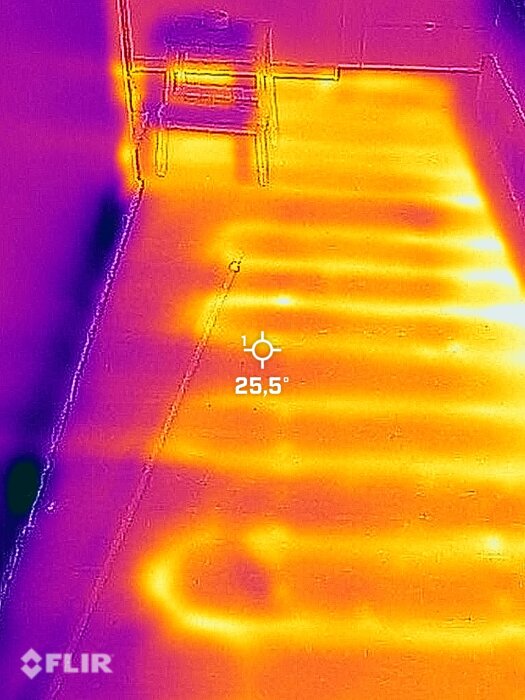
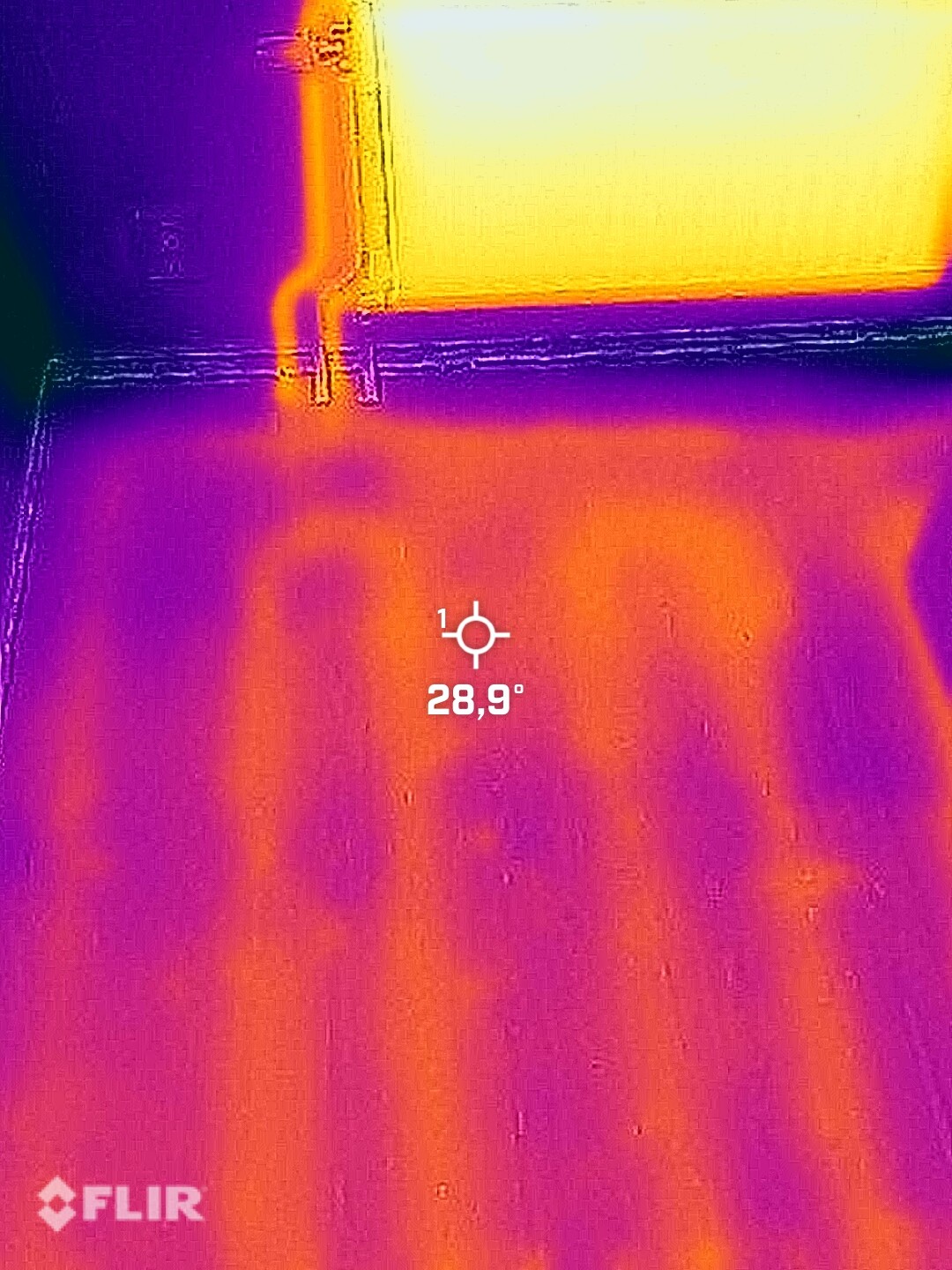
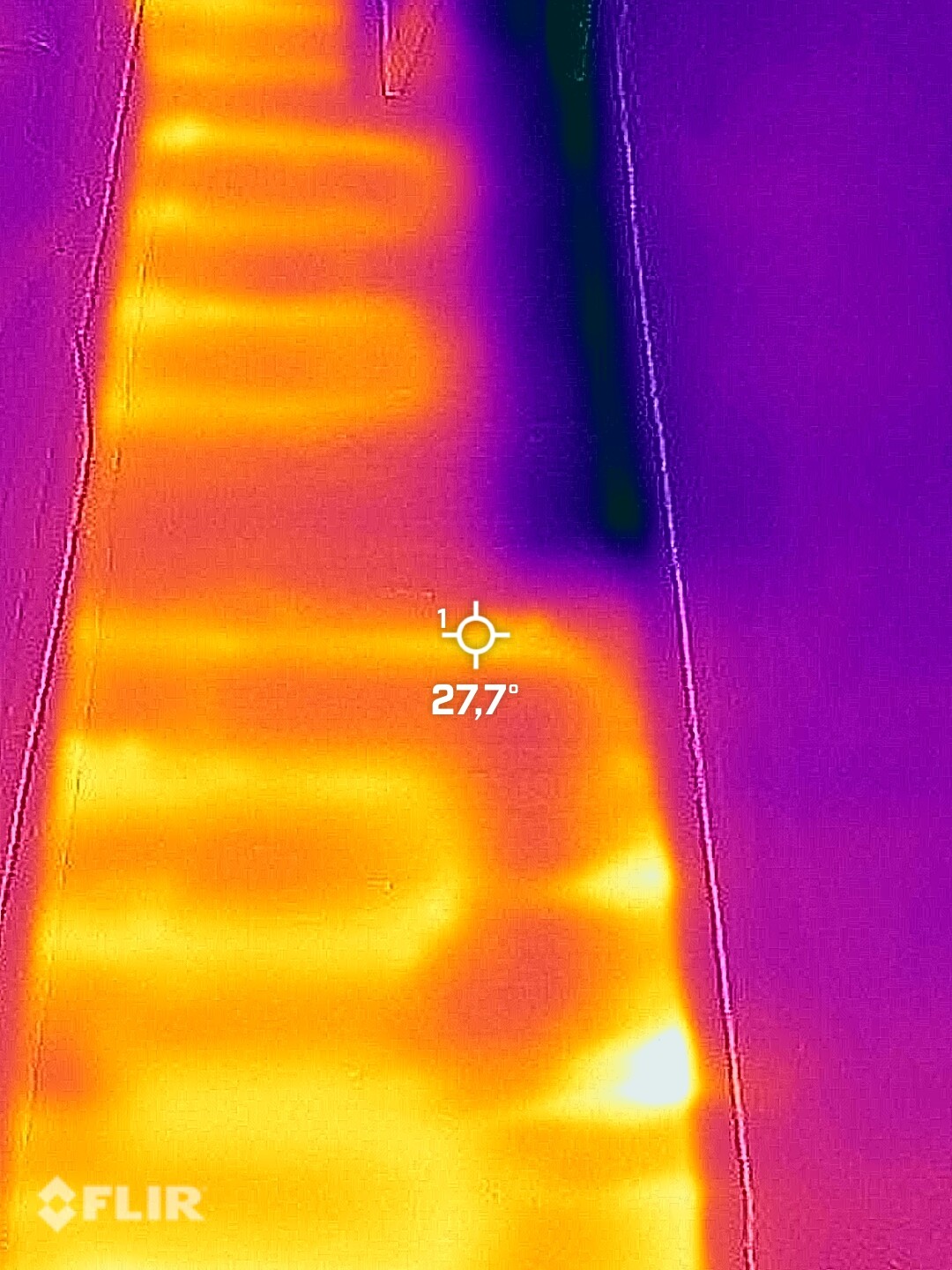
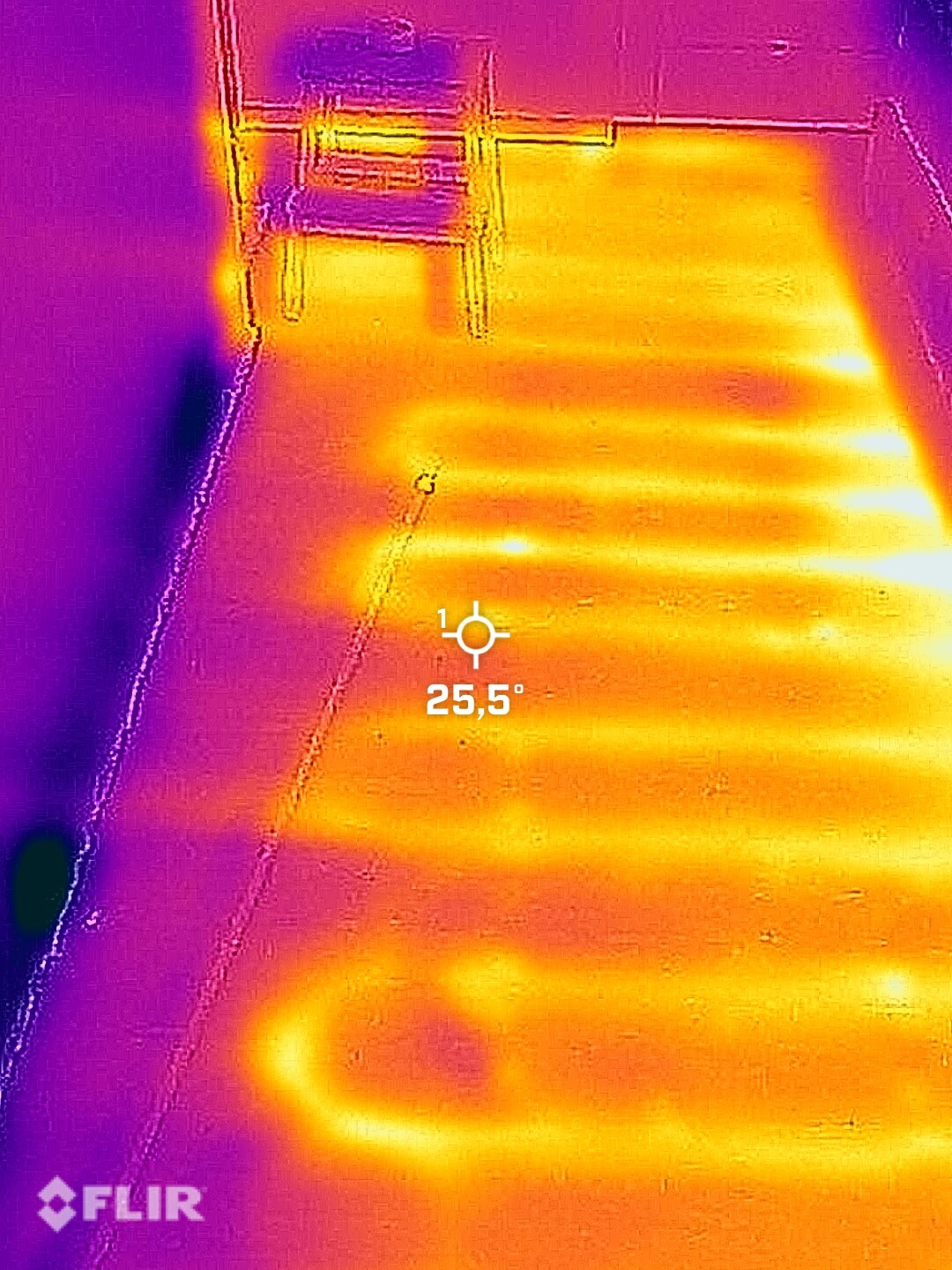
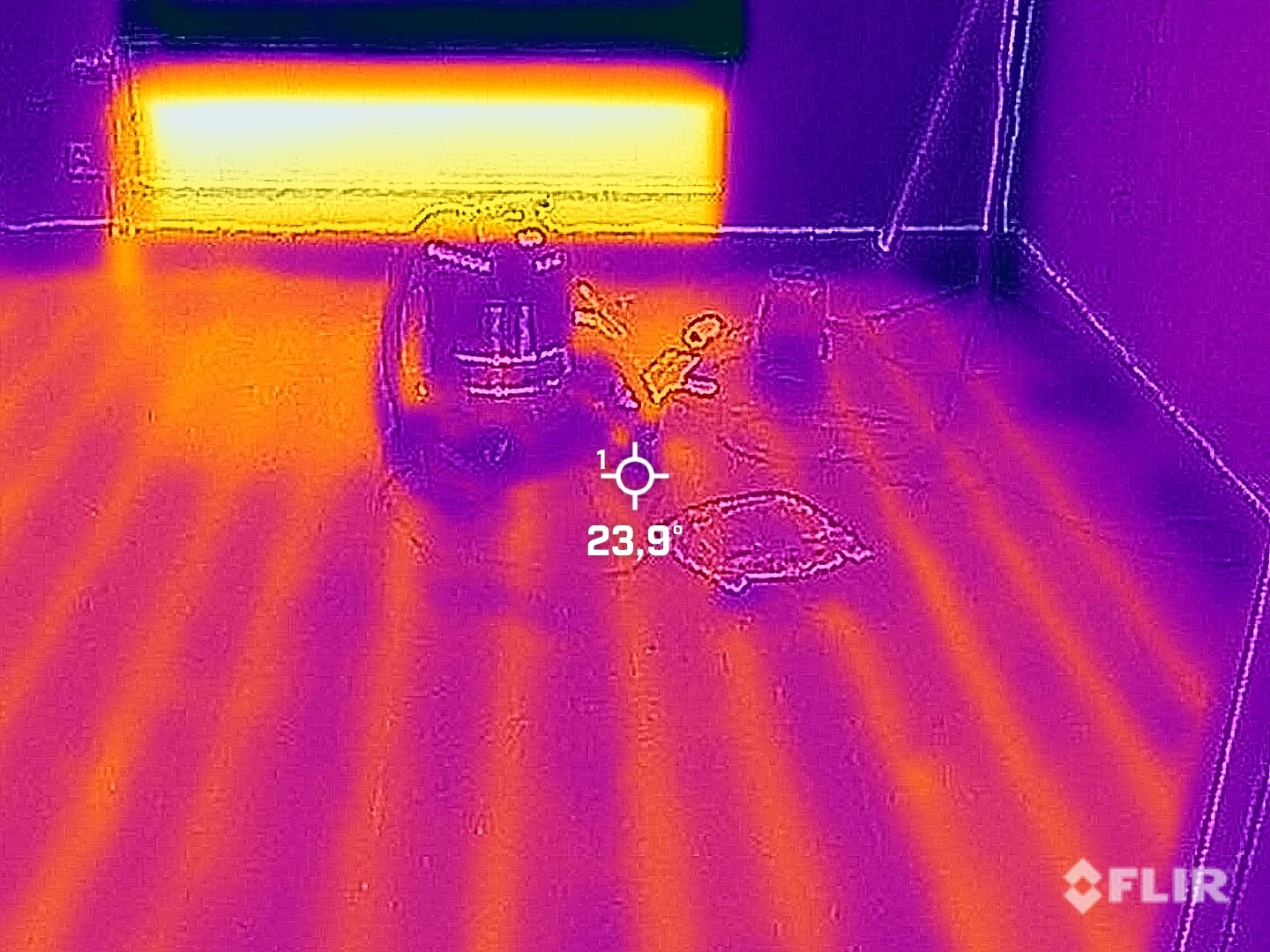
But then I borrowed a fun gadget, a thermal camera add-on for the phone, and it became clear.
Just as you described @Argastesnickaren @Huddingebo was also right. It's underfloor heating. It is located between the lightweight concrete floor slab and the wooden floor.
Not particularly energy-efficient, I would think. But yes, it is warm and cozy in the room.
Just as you described @Argastesnickaren
@Huddingebo was also right. It's underfloor heating. It is located between the lightweight concrete floor and the wooden floor.
Not particularly energy-efficient, I would think. But yes, it is warm and cozy in the room.
Nice descriptive photos!
Since you have a crawl space, you can probably insulate from underneath with, for example, 10cm Styrofoam that is glued in place.
Since you have a crawl space, you can surely insulate from underneath with, for example, 10cm of foam that is glued in place.
I have the same situation and have been considering this. Some mention moisture issues, but there is nothing organic here anyway. However, the reinforcement in the concrete can rust!
I have the same situation and have been thinking about this. Some mention moisture issues, but there's nothing organic here anyway. However, the reinforcement in the concrete can rust!
Has anyone done this?
If you insulate something, you raise the temperature. That makes it drier.
All houses have insulation underneath, what would the risk be?
I have 10cm of foam insulation in the ceiling of my crawl space.
Above that, a regular floor structure with fiberglass wool.
Dry and nice.
Moisture in the crawlspace is a spring problem, that is when warm humid air comes in and meets something colder. It's mostly on the outside of the insulation itself, so it shouldn't be a problem. It gets worse if it condenses between the insulation and the beams, I think. We have, for example, a radon extractor which should partially solve the problem, as air won't want to move upwards into the house. But then maybe we get the opposite problem instead, warm humid air is sucked out in the winter and gets trapped between the beams and insulation? Seems far-fetched though. The insulation will be warm-ish.
But this feels theoretically non-applicable when you have underfloor heating primarily?
Since you have a crawl space, you can probably benefit from insulating from underneath with, for example, 10cm of Styrofoam that is glued in place.
Did you notice a significant difference after insulating?
Does it need to be airtight, or is it mostly about the area covered? In other words, the area of the joists covered by Styrofoam?
To go back to the original post: Do you know that the floor is original? I also have underfloor heating in lightweight concrete in almost the entire house, but it was done around 20 years ago. Someone claimed that they milled the loops directly into the lightweight concrete!
Did you notice a significant difference after you insulated?
Does it need to be tight, or is it mostly the surface that counts? That is, the area of the flooring covered by Styrofoam?
What material is your flooring made of?
It is half the surface on the entrance level that has a crawl space; it is entirely an extension that was made in 2018.
Wooden flooring with fiberglass in between.
10cm of Styrofoam underneath that is glued together as tightly as possible.
So a total of 22 + 10cm of insulation.
The floor is wooden, and there are radiators under the windows.
To go back to the original post: Do you know that the floor is original? I also have underfloor heating in light concrete in almost the entire house, but it was done about 20 years ago. Someone claimed that they milled the loops directly into the light concrete!
No, I do not know for sure. I moved in 5 years ago. Before that, the same family had lived here for a very long time, but it's unclear if it was that family who built this extension in 1967.
I have not opened the floor to check, I drilled through it once 5 years ago but can't remember what I learned then.
It is a light concrete beam slab, I can see that, and on top, there is a plank floor of the quality that was usually used as a base. There was a carpet there until 6 years ago. A sky-blue carpet. I should have done a carbon-14 dating on it. Which decade was it last popular? When it was removed, the plank floor was not tight, so it was sanded and filled between the planks.
What is between the wooden planks and the slab I can only guess. I believe there is a gap with joists and wood chips. The floor is not hard; it gives a little if you stomp on it.
Obviously, there are also pipes that come from the radiator system. Whether these are milled into the light concrete or lie between the joists, I do not know.
Click here to reply
Vi vill skicka notiser för ämnen du bevakar och händelser som berör dig.

Huddingebo said: