
5,156 views ·
12 replies
5k views
12 replies
What happens if you don't glue linoleum flooring?
All the instructions I have found about laying roll linoleum flooring say that the floor must be glued. But what are the consequences if you don't do it? I would really like to know! I fully understand that it is required in larger spaces. In a room of about 3x4 m, maybe the conditions are different?
(I have come across a roll of linoleum very cheaply. The goal is to preserve the wooden floor that is currently in the room... I think it's worth trying...? The idea is to tape the seam that will form according to what is stated in the installation instructions for other types of floor coverings.)
(I have come across a roll of linoleum very cheaply. The goal is to preserve the wooden floor that is currently in the room... I think it's worth trying...? The idea is to tape the seam that will form according to what is stated in the installation instructions for other types of floor coverings.)

Try, the worst that can happen is that you have to glue it at a later stage. I have laid regular plastic flooring in the hall, and it's fine to vacuum as long as you don't use the smooth nozzle and lift the vacuum nozzle in a corner.


Thank you for your response! Now, this wasn't a question of whether it's a good idea or not but an attempt to find out any potential consequences that I can't foresee myself 
I am also extremely curious about the difference between linoleum and vinyl flooring rolls. In laying instructions for vinyl flooring, it states that the floor CAN be glued but it's perfectly fine to loose-lay it. For linoleum flooring, however, it states SHOULD be glued. What is the basis for this difference?
Vacuuming is not a problem because I hate vacuum cleaners and instead use a microfiber mop and broom.
The durability of the seams is what I see as the biggest problem, but I will simply have to be prepared for other solutions in that case.
In what way can bubbles form on linoleum flooring that is loose-laid?
I am also extremely curious about the difference between linoleum and vinyl flooring rolls. In laying instructions for vinyl flooring, it states that the floor CAN be glued but it's perfectly fine to loose-lay it. For linoleum flooring, however, it states SHOULD be glued. What is the basis for this difference?
Vacuuming is not a problem because I hate vacuum cleaners and instead use a microfiber mop and broom.
The durability of the seams is what I see as the biggest problem, but I will simply have to be prepared for other solutions in that case.
In what way can bubbles form on linoleum flooring that is loose-laid?

Diversearbetare
· Göteborg
· 11 369 posts
Your goal is to use the linoleum mat you have acquired while preserving the underlying wooden floor. Do as has been done throughout the ages and lay an underfloor on which you glue the mat.
https://www.moelven.com/se/se/plywood-och-skivor/mdf/funktion-mellangolv-mdf/
https://www.moelven.com/se/se/plywood-och-skivor/mdf/funktion-mellangolv-mdf/

Our subfloor from 1980, which the vinyl flooring was glued to, consisted of Masonite boards and about half a billion nails. On 8 sqm.
Be reasonable with the amount of nails if you plan to nail it at all. A couple in the corners would have sufficed, not every 5 centimeters in all directions.
Be reasonable with the amount of nails if you plan to nail it at all. A couple in the corners would have sufficed, not every 5 centimeters in all directions.
Diversearbetare
· Göteborg
· 11 369 posts
The subfloor can be laid floating on felt paper. Does not need to be nailed.

My experience is that it's specifically the seam that gives way over time! In my summer cottage, a previous owner leveled the floor using masonite boards and then laid a carpet loosely, with a seam in the middle of the room. This is likely a linoleum carpet, as the carpet is hard and has a paper-like underside. It was certainly laid before 1975 but isn't worn out in itself. Just the seam where the edges fold upwards and thus wear on the edges, which start to come apart from each other.M morr said:Thanks for the response! Now, this wasn't a question about whether it's a good idea or not, but an attempt to find out any potential consequences that I can't foresee myself
I'm also extremely curious about the difference between linoleum flooring and vinyl flooring on a roll. In installation instructions for vinyl flooring, it says the floor CAN be glued but that it works just fine to lay it loosely. For linoleum flooring, however, it says it MUST be glued. What is the basis of this difference?
Vacuuming isn't a problem since I despise vacuum cleaners and use a microfiber mop and broom instead.
The durability of the seam is probably what I see as the biggest problem but will simply have to be prepared for alternative solutions if needed.
In what way can bubbles form on linoleum flooring that is laid loosely?
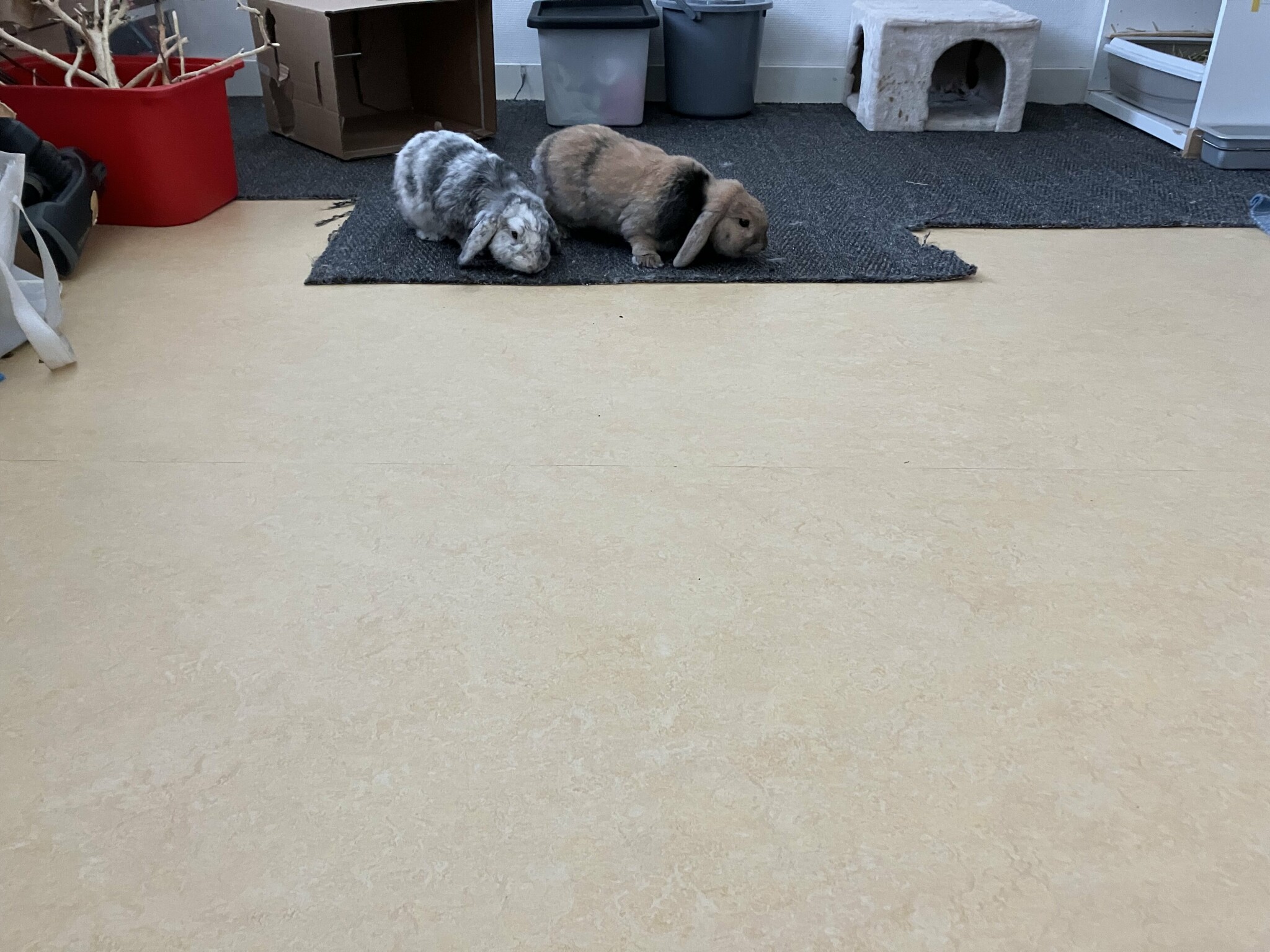
How did it go then? Since I didn't get a clear answer to the question, I decided to test it. So far, I am extremely satisfied!! The long-eared quality inspectors haven't managed to find anything to target either, despite their diligent digging in the floor.
The seam is taped from underneath and is fairly visible. That's probably the first place that will give way, but so far there's no sign of it.
The seam is taped from underneath and is fairly visible. That's probably the first place that will give way, but so far there's no sign of it.
Thank you morr for updating! I've been pondering the same question - living in a rental and wanting to cover up an ugly and worn-out floor with a loosely laid carpet. I'll probably give it a try like you did!M morr said:How did it go then? Since I didn't get a clear answer to the question, I decided to try it out. So far, I'm thrilled!! The long-eared quality inspectors haven't been able to find anything to pick on either, despite diligently digging in the floor.
The seam is taped from underneath and is fairly visible. It's probably the first place that will come loose, but so far nothing is noticeable.
Good luck! If you can consider vinyl flooring, they are probably easier (and cheaper) to work with, both in installation and maintenance, but I'm still satisfiedN Norbybo said:
Click here to reply