
51,840 views ·
52 replies
52k views
52 replies
What gravel/crushed stone should you use when mixing concrete?
2kubik with roll yourself so you're probably a bit tired in the body

It was a long and challenging day, a bit stiff in the back today, to say the least. But I should learn to handle a shovel with a left grip, I tried, but half of the sand ended up outside the mixer every time. 
But I finished eventually. For anyone looking for similar information in the future, I can summarize:
* I started with water and macadam to wash the mixer since the last run, checked that no clumps were stuck.
* Then I added cement.
* Then more water until there was no dry cement left, just a thick porridge or clay.
* After that sand, I had rather moist sand, and it didn’t make much difference to the consistency. I added maybe 2/3 of the sand, let it run for a minute until it was a good porridge-like consistency again, and then added the rest.
If it was too dry (a big lump that didn’t mix), I had to add more water. If it became too loose, I took a bit more cement and sand at random.
So the recipe wasn’t as precise as I thought, but more a guideline on where to start. Good lesson!
But I finished eventually. For anyone looking for similar information in the future, I can summarize:
* I started with water and macadam to wash the mixer since the last run, checked that no clumps were stuck.
* Then I added cement.
* Then more water until there was no dry cement left, just a thick porridge or clay.
* After that sand, I had rather moist sand, and it didn’t make much difference to the consistency. I added maybe 2/3 of the sand, let it run for a minute until it was a good porridge-like consistency again, and then added the rest.
If it was too dry (a big lump that didn’t mix), I had to add more water. If it became too loose, I took a bit more cement and sand at random.
So the recipe wasn’t as precise as I thought, but more a guideline on where to start. Good lesson!
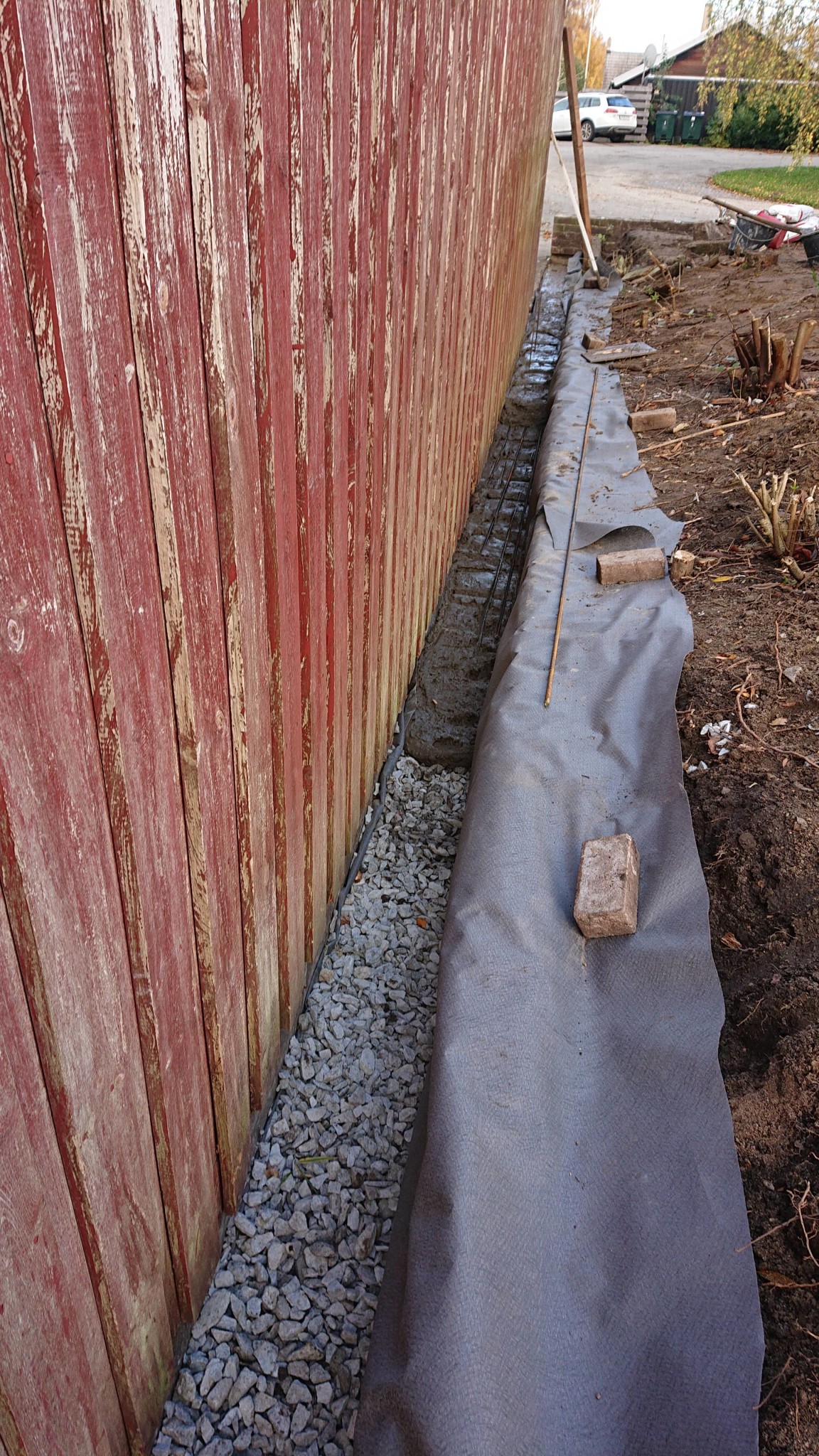
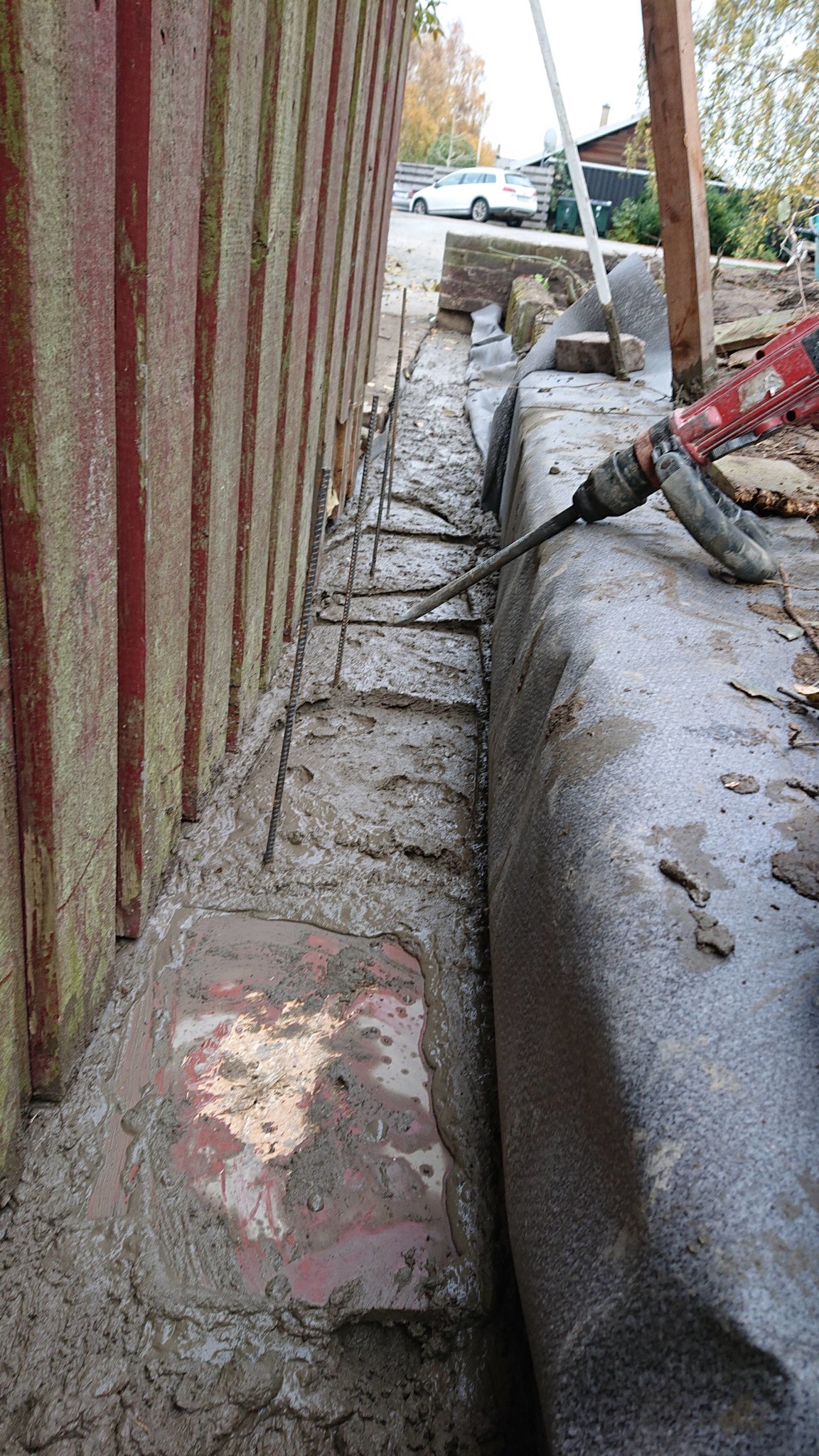
No, I trimmed it to the right height, just where I poured. It's the neighbor's garage, so that panel will come down completely later when I build on this foundation. The plan was to have taken down that panel first, but I didn't have time; I had to do the pouring before winter... The panel will come down and be replaced with a water-resistant "cement-board".H heimlaga said:




It concerns natural sand 0-8 and the coarser aggregate is crushed stone, macadam. Finer crushed stone with zero fraction often results in concrete with poorer or uncertain strength.
That said, I mixed concrete using road gravel 0-18 mm, i.e. crushed stone, for the greenhouse foundation a few years ago. Three shovels of crushed stone and one shovel of cement. With the higher cement content, the concrete turned out very fine and durable. I cast pillars for the garden fence in the same way. Mix as dry as possible but so that it still comes together after a few minutes in the mixer, almost earth-moist concrete.
That said, I mixed concrete using road gravel 0-18 mm, i.e. crushed stone, for the greenhouse foundation a few years ago. Three shovels of crushed stone and one shovel of cement. With the higher cement content, the concrete turned out very fine and durable. I cast pillars for the garden fence in the same way. Mix as dry as possible but so that it still comes together after a few minutes in the mixer, almost earth-moist concrete.
Last edited:
Click here to reply