
5,831 views ·
24 replies
6k views
24 replies
What goes in this concrete pipe
An acquaintance of mine encountered such a cable during ground work, 8 meters away from the designated area. At first, he thought it was a high-voltage cable because there was a grounding wire next to it. The power grid company said they had no cables on that side of the road and that it wasn't theirs. The power grid company even went out to the site to inspect the cable. The experienced surveyor suspected it might be an old national telecom cable.
Scanova said their cable was 8 meters away, closer to the road. To which my acquaintance said, then I'll cut the cable, no no said Scanova and immediately sent out personnel. They confirmed it was their cable, which was still partially in use.
Line Check is all well and good, but everything depends on documentation and experience...
Scanova said their cable was 8 meters away, closer to the road. To which my acquaintance said, then I'll cut the cable, no no said Scanova and immediately sent out personnel. They confirmed it was their cable, which was still partially in use.
Line Check is all well and good, but everything depends on documentation and experience...
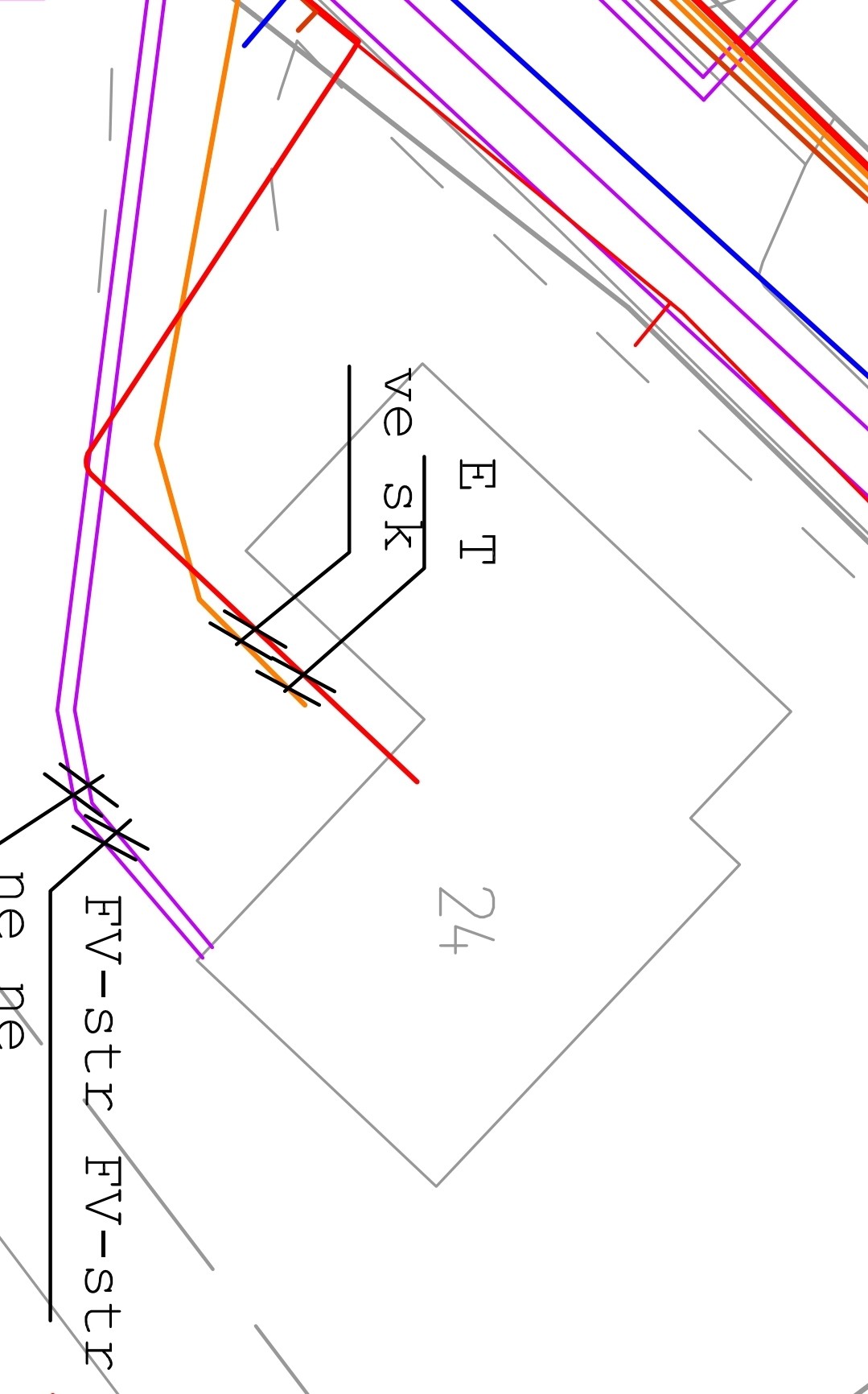
But it matches quite well with the fact that the two go exactly where they are drawn, and not 1m next to in pipes.
The old incoming electrical and telephone lines are in the room where the lines enter and come up in the wall right there.
I am completely sure that they would bring the fiber into a drawn 95(?) pipe together with the telephone. And there is no newly laid fiber in this pipe. However, I can't find the note or drawing that showed it now.
The old incoming electrical and telephone lines are in the room where the lines enter and come up in the wall right there.
I am completely sure that they would bring the fiber into a drawn 95(?) pipe together with the telephone. And there is no newly laid fiber in this pipe. However, I can't find the note or drawing that showed it now.
Last edited:
Now after days of chasing, the waterfall came and removed the cable. However, I wasn't home so my dad supervised to ensure the cable would be sealed correctly.
So now I need to seal it at the ends myself or get a new electrician.
Can I do the job myself or do I need to get someone to do it right? Know an electrician? If I can do it myself, which shrink/melt sleeves should I buy?
So now I need to seal it at the ends myself or get a new electrician.
Can I do the job myself or do I need to get someone to do it right? Know an electrician? If I can do it myself, which shrink/melt sleeves should I buy?
End cap is what they're called at Ahlsell, measure the cable first to make sure you buy the right one.
End cap, shrink cap, yes, beloved things have many names...
Remove the tin band and yarn. Measure the diameter of the lead.
Ahlsell, Elektroskandia, etc. have them, and surely also electrical firms that deal with industrial electricity.
The other electrical firms can surely order them.
End cap, shrink cap, yes, beloved things have many names...
Remove the tin band and yarn. Measure the diameter of the lead.
Ahlsell, Elektroskandia, etc. have them, and surely also electrical firms that deal with industrial electricity.
The other electrical firms can surely order them.
No, the water company should fix that. It's a major environmental offense to leave an oil cable open, so it will be sorted, don't worry.Agge8080 said:
Now after days of chasing, the water company came and removed the cable. However, I was not home, my dad supervised to ensure the cable would be properly sealed. So now I need to seal the ends myself or get a new electrician. Can I do the job myself or do I need to get someone who does it right? Do you know an electrician? If I can do it myself, which shrink/melt sleeves should I buy?
One might think so, but maybe he didn't have the equipment in the car. They drive out and take a look. Tell you. Then wait for your call. IF you call then. Then it becomes their responsibility again.
Click here to reply