
7,315 views ·
25 replies
7k views
25 replies
What can be under roofing felt in 50s houses?
We have taken over a house in Västerbotten from the early '50s, and were planning to repaint, starting with our son's room, to make it a bit brighter. All bedrooms are on the upper floor, and two of them have roofing felt. We noticed that the felt is hanging loose and bulging in some places in his room, so we probably need to tear it out, I suppose. Can anyone guess what might be underneath? Could it be wood paneling or something else? If so, can it be painted directly, or does the roofing felt serve an insulating function? We had hoped it wouldn't be a huge project, so it's good to have some idea before we start tearing it down.
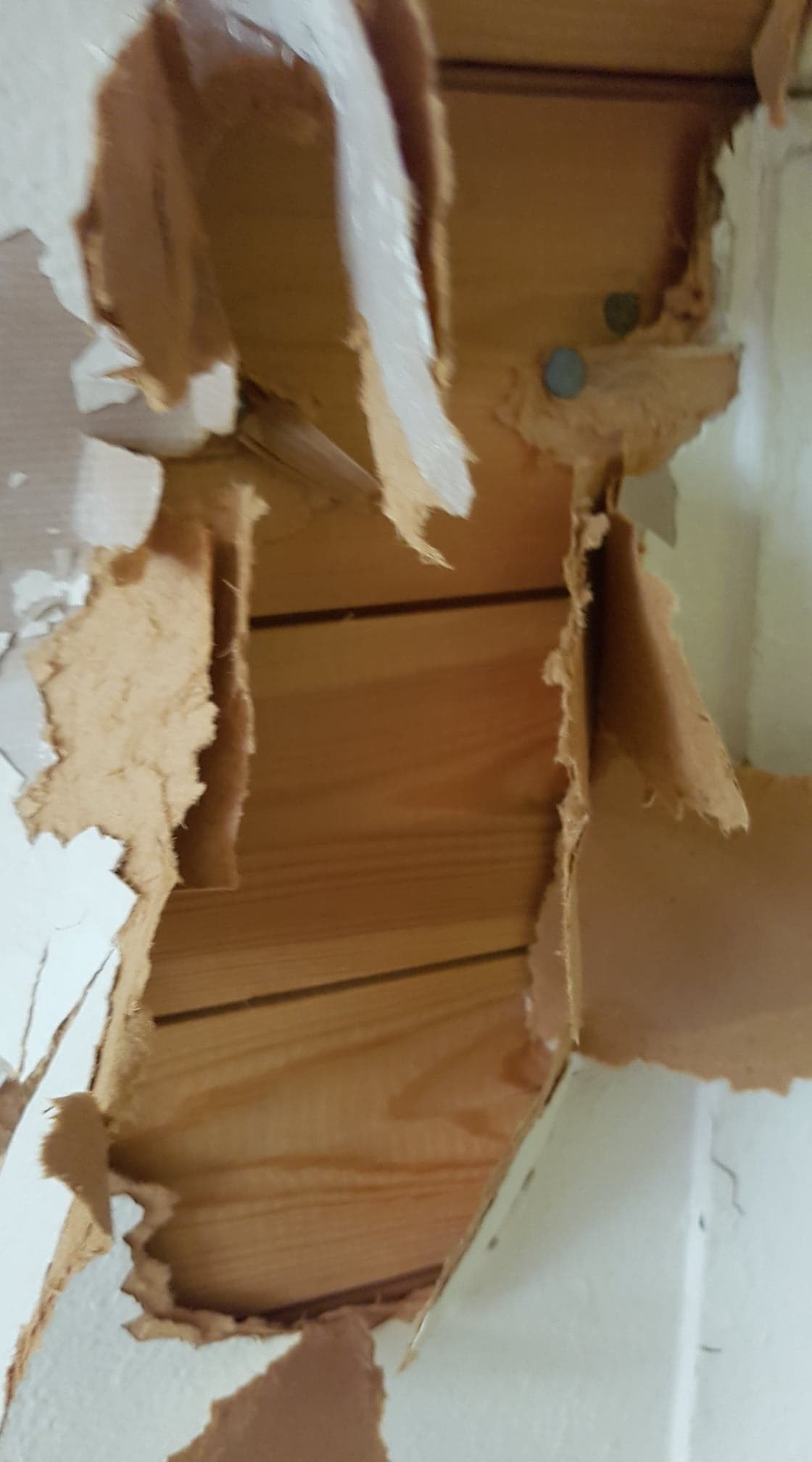
It is probably tension paper. Underneath there might be treetex board and below that, planks. It is probably not paneling or similar if the house was built in the 50s. Or it could be paper stretched directly on the plank ceiling, and then shavings and similar might fall through gaps if you only have the plank ceiling. If it's shavings used as insulation.
You can nail up the paper again or put up plasterboards if you prefer, or use ceiling gypsum or paneling. There are many possibilities.
Make a small hole and see what it looks like.
You can nail up the paper again or put up plasterboards if you prefer, or use ceiling gypsum or paneling. There are many possibilities.
Make a small hole and see what it looks like.
Thanks for the reply! We would prefer a solution that is not too time-consuming, especially when it comes to nailing up panels and the like. But it's a good idea to open up a small hole, just didn't want to start tearing things down without knowing what we're getting into...
Yes, it seems to be raw board (I'm not entirely sure about the difference between raw board and narrow planks but it's wood anyway, with a few millimeters of gaps in between. The paper is quite thick but not too difficult to remove, I think, except that it makes a mess.
Isn't it possible to paint directly on the board you think? How do you know if there are chips above?
Isn't it possible to paint directly on the board you think? How do you know if there are chips above?
What else is the house insulated with?P Petronille said:Yes, it seems to be råspont (I'm not entirely clear on the difference between råspont and narrow boards, but it's wood anyway, with a few millimeters of gaps in between. The paper is quite thick but not so hard to remove, I think, except that it makes a mess.
Isn't it possible to paint directly on the paneling, I wonder? How do you know if there is sawdust above?
You can certainly paint the paneling/board ceiling directly, but it's not always a smooth surface, and it can end up looking quite rough. Additionally, if there is sawdust as insulation and no paper underneath, sawdust will fall down between the gaps.
Do you have a picture where the ceiling is visible?
If it is tensioned paper, it is nailed with lots of nails. But it's usually not too difficult to reattach tensioned paper. What does it look like in the space above? Is it a room or an attic?
Spännpapp always sags a little, as it is, as its name suggests, stretched. It is mounted damp and stretches when it dries. If you remove it, you will encounter lots of pappnubb in every seam of the paper.P Petronille said:Yes, it seems to be råspont (I'm not entirely clear on the difference between råspont and narrow boards, but it's wood nonetheless, with a few millimeters gap between. The paper is quite thick but probably not too hard to remove, except for the mess it makes.
Isn't it possible to paint directly on the spont? How can you tell if there's sawdust above?
So let it be a little arching. You can easily repair holes with paper, using a few layers of newspaper for small holes, dipped in wallpaper paste, to glue over any holes.
Then paint everything with solvent-based ceiling paint and accept that the ceiling "hangs a little" in some places.
I would think that's the least amount of work.
Sometimes the spännpapp can become so brittle that it is difficult to repair sustainably. Otherwise, you can glue thin paper as described above.
As for paint, it may have been previously painted with distemper. To get new paint to adhere, it is said that you may need to "patent" it, i.e., dilute a solvent-based paint thinly so that it adheres through the distemper.
As for paint, it may have been previously painted with distemper. To get new paint to adhere, it is said that you may need to "patent" it, i.e., dilute a solvent-based paint thinly so that it adheres through the distemper.
Of course, it's possible, but as others have said, there might be nail rows or the choice of timber might be quite ugly.P Petronille said:
Above the paneling, there is 98% certainty of having a tar paper and above that, chipboard.
I'll try to get a picture. Had to tear off some to be able to see. The boards look planed, but there seem to be some tack nails.Jiji said:
What else is the house insulated with?
It's definitely possible to paint the panel/plank ceiling directly, but it's not certain that it's a planed surface, and then it will be very rough. Additionally, if there is sawdust as insulation and no paper underneath, sawdust will fall between the gaps.
Do you have a picture where the ceiling is visible?
If it's stretching paper, it's nailed with lots of nails. But it usually isn't too difficult to reattach stretching paper. What does the space above look like? Is it a room or attic?
There's no attic above, just slanted ceilings in two of the bedrooms. There are some sort of attic spaces on the sides—I forgot the name now, just like a space extending from the sloped ceiling, so to speak—and there's some sawdust and on the outer walls, there seems to be some form of thick insulation board that looks like kind of like masonite or very thick cardboard (of course that's not it, but to describe what it looks like).
Aha, interesting. The problem is that it has twisted in some places and cracked, so that's why I thought it needed to be removed. But good tip on repairing with paper, although I guess you have to remove larger parts if you want to fix it nicely when it's cracked and wrinkled? What can you use to repair it then?GoC said:
Spännpapp always hangs a bit, as it is, as the name suggests, stretched. It is mounted damp and tightens as it dries. If you remove it, you will encounter lots of paper nails in every seam of the paper.
So let it be a bit bulging. Repair holes easily with paper, a few layers of newspaper will work for small holes, dipped in wallpaper paste to glue over any holes.
Then paint everything with solvent-based ceiling paint and accept that the ceiling “hangs a bit” in some places.
I think that would be the least work.
Can you use protective paper that someone suggested in another thread, instead of roofing paper? Is it possible to repair it nicely, do you think?M MagHam said:Sometimes the tension paper can become so brittle that it is difficult to repair sustainably. Otherwise, you can glue thin paper as described above.
As for the paint, it might have previously been painted with glue paint. To get new paint to adhere, it is said that you may need to "patent" it. That is, dilute a solvent-based paint thinly so that it adheres through the glue paint.
Regarding the glue paint, we had a huge problem with it in our apartment (also from the 50s), where the seller quickly repainted the entire apartment and the ceiling paint started to peel off shortly after. We then tore down the loose paint (a huge job indeed) and successfully painted the ceilings with egg oil tempera.
But thanks for all the great tips! It would undoubtedly be nice if it were possible to just splice, because I understand that it's not a small job to tear everything down, and as soon as you pull at it a little, piles of paint chips fall off.
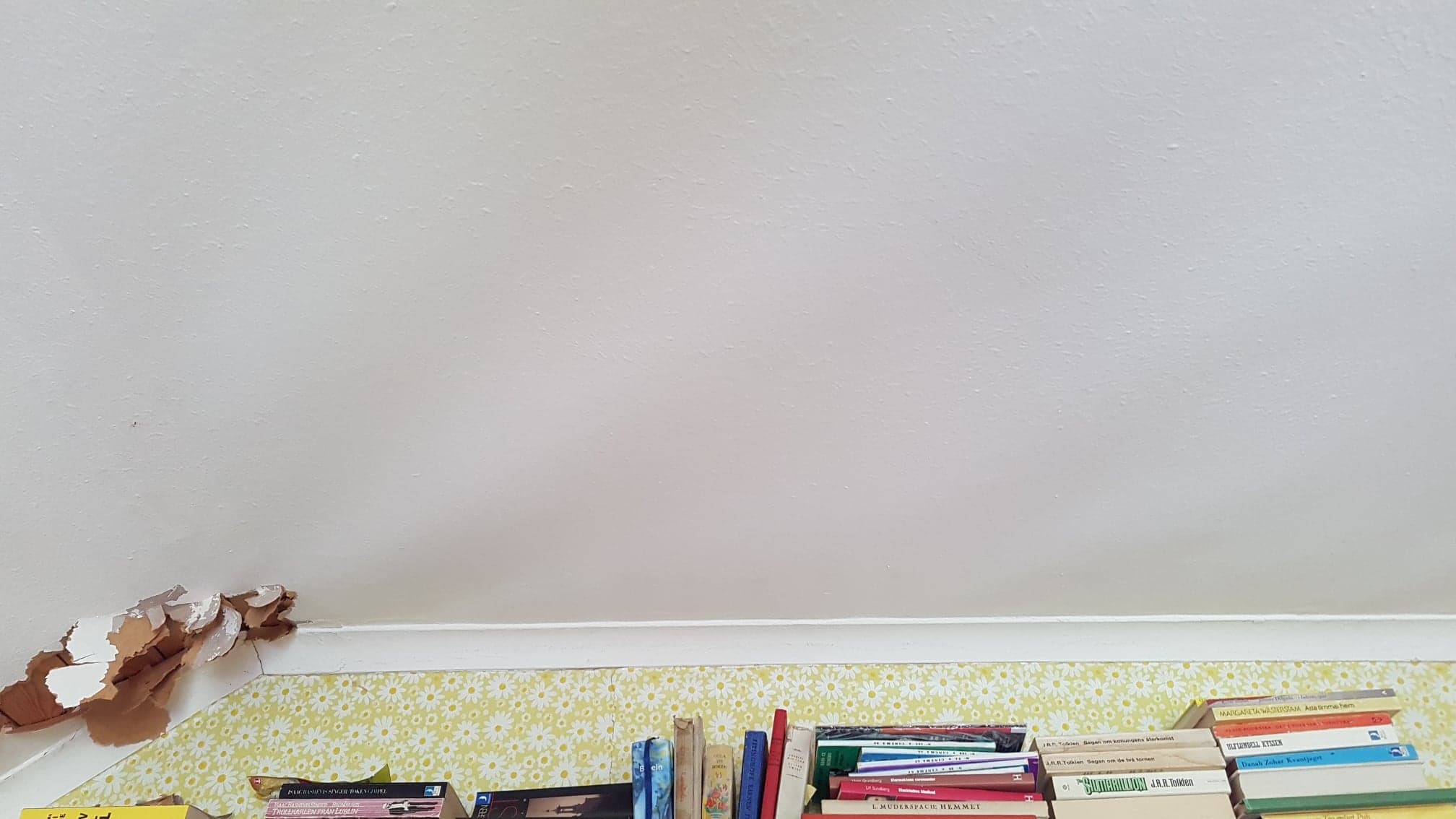
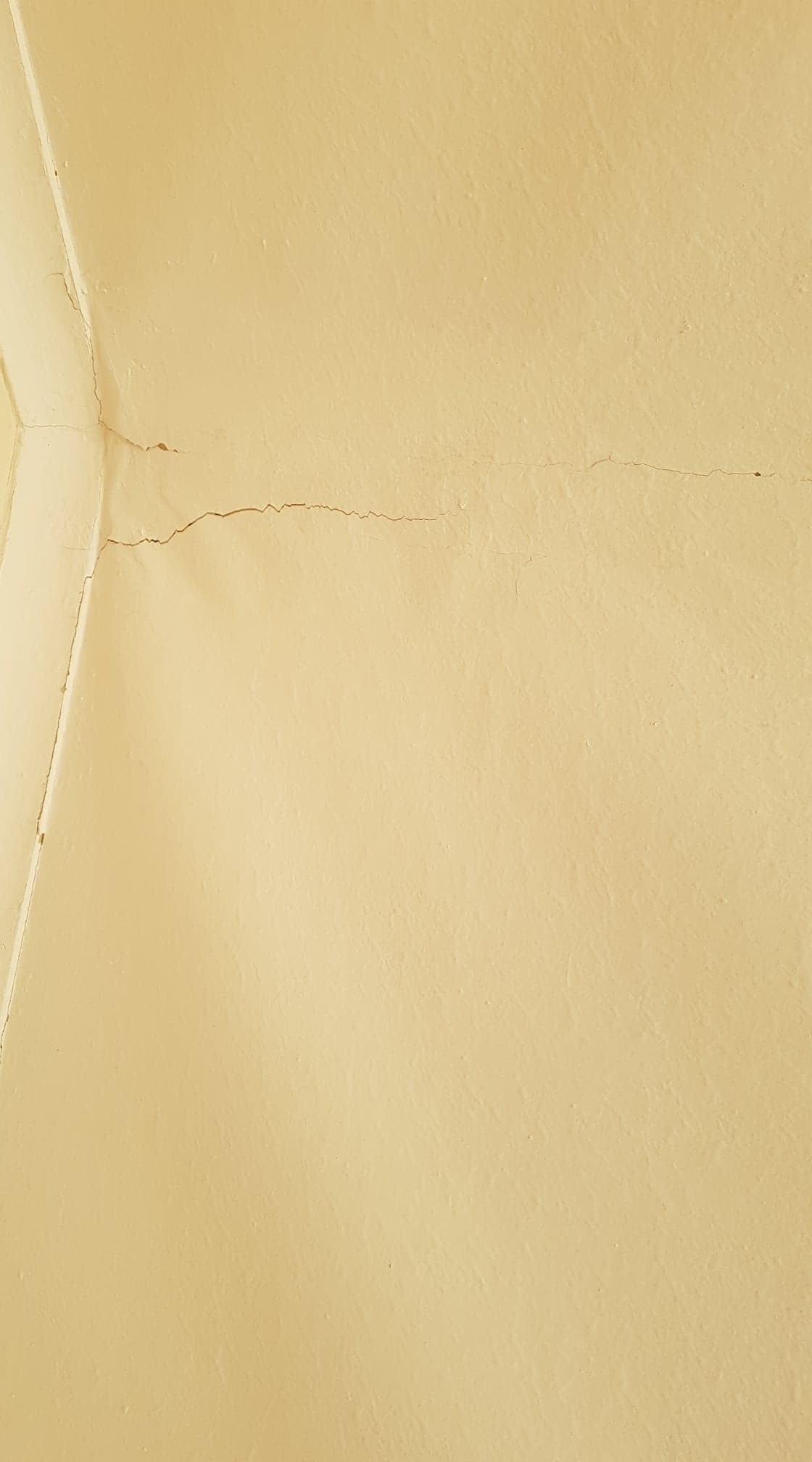
Those little imperfections are no problem to fix. You have to expect some waviness here and there as the house moves a little almost all the time. And don't cut where you need to repair, tear the paper pieces you will use to cover the damages. Do not use a ruler or anything, but tear so you get an irregular "soft" edge and place the paper pieces in wallpaper paste. Stick them over the damage. And then paint. Should turn out great.