I am going to replace electric radiators with a water-based heating system using Lenhovda sectional radiators, which are quite heavy.
However, the walls are made of single-layer drywall, and of course, there are no studs or crossbeams in suitable places to hang the radiators, and it feels like a tedious job to open the wall under all the windows to insert studs.
One idea is to put thick (about 20mm) plywood boards on the entire wall under the windows, large enough to be screwed into the studs on either side of the windows and a stud that is directly under the windows, and then screw the radiator brackets onto the plywood boards.
Sure, the plywood boards will protrude from the wall, meaning the baseboards will be cut against the boards, but once it's installed, painted, and finished, I still think it could look pretty okay.
I think it should be strong enough to support the radiators, but I would welcome any feedback.
It probably works. I had radiators mounted in single drywall. It didn’t work so well. Tore holes in the drywall. I made a hole large enough to fit a stud that I screwed through the drywall. Then I repaired the wall and mounted the radiator.
Isn't it worth taking a multicutter and opening the walls, installing studs, and rebuilding if you're already taking on such a big project as converting from electric to water-based heating? It feels like you will regret it in the future, and then it's even harder to redo.
Isn't it worth using a multicutter to open the walls, install studs, and rebuild if you're already undertaking such a large project like converting from electric to water-based heating? It feels like you might regret it in the future, and then it would be even harder to redo.
Yes, it feels like the best option and will probably end up that way eventually.
Are they brackets that the radiators are hung on?
With the right drywall anchors and more than two mounting holes per bracket, there's no problem with normal radiators, but maybe these were extra heavy as mentioned.
I installed a radiator 900x900mm with double convector plates (45kg) and it went great.
Do you never have any stud somewhere behind the radiator? If so, you can use three brackets if they aren't of an unsightly type that is very visible.
Are those brackets for hanging the radiators?
With the right drywall anchors and more than two mounting holes per bracket, there is no problem with normal radiators, but maybe these are extra heavy as mentioned.
I installed a radiator 900x900mm with double convection plates (45kg) and it went perfectly.
Do you never have any stud somewhere behind the radiator? In that case, it's possible to use three brackets if they aren't of an unattractive type that is very visible.
These are Lenhovda section radiators about 1200 x 600mm which are quite heavy, with 3 brackets whose placement can only be adjusted by a few cm.
The walls are single drywall, made in the early '70s.
I've come to the conclusion that it feels best to open the wall under each window and install studs in the "right" place.
I have had radiators with brackets in single drywall. When they broke, I simply put support behind them. Whether it was plywood or studs, I don't remember; it might have been different for different brackets. It worked well. It was an uninsulated wall.
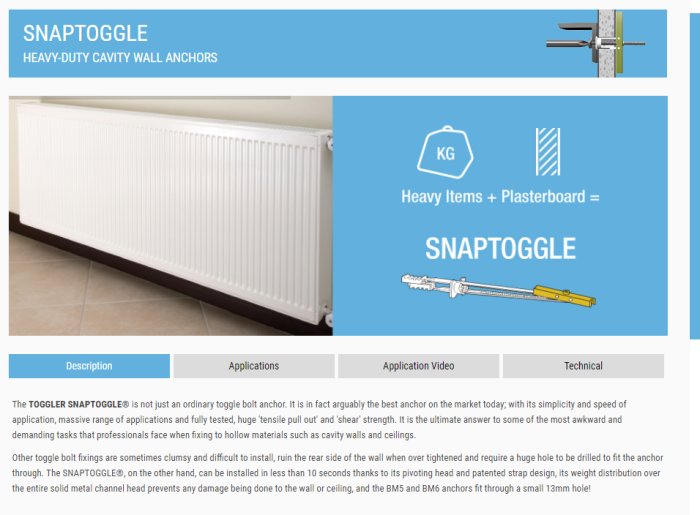
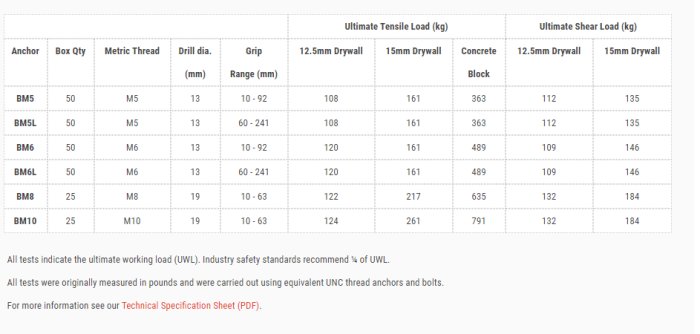
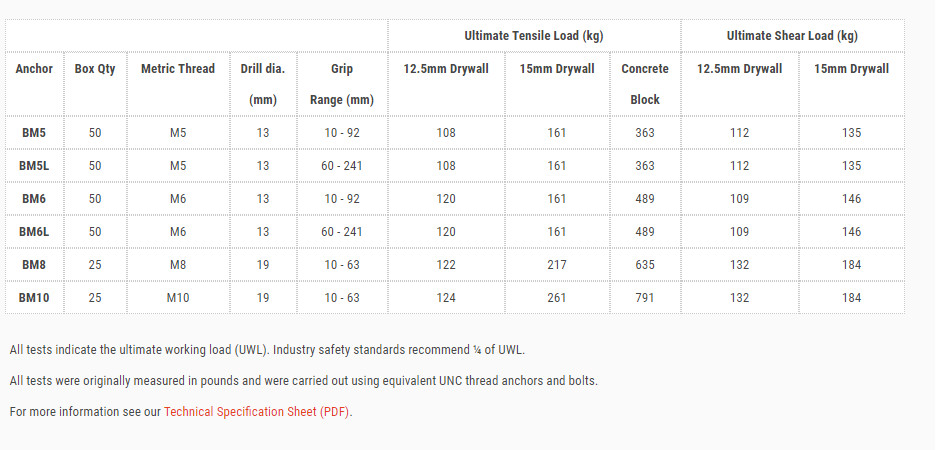
I installed our kitchen cabinets with the snapptoggle plug, which according to the manufacturer can handle heavy loads, they're still holding up. You might just add an extra bracket in the middle of the radiator to get 6 or more attachment points?
The best thing is of course to open up and reinforce the wall as you're considering. I am in the same situation, but I have the advantage of having a standing stud right under the windows where I can screw in; however, an extra bracket is required.
If it's the classic Lenhovda, they should have legs for them, right?
I thought I saw it on some advertisement image on their site.
The radiators come with brackets for consoles as standard, but there are other options such as legs.
I want consoles as it makes for a "cleaner" installation.
Click here to reply
Vi vill skicka notiser för ämnen du bevakar och händelser som berör dig.



martin43 said:
Are those brackets for hanging the radiators?