Built a CLT house (with visible CLT interior walls) and have now lived in it for just over a year. Chose edge-glued CLT to minimize/avoid cracks. When we moved in, it was fantastically nice!
BUT the big disappointment is all the cracks in the interior walls, uneven surfaces, air leaks, and separated joints, etc., that have occurred over the past year. And they just keep occurring.
The builders spent a lot of time and energy on a nice surface finish, a year later it's gone. It feels like the whole house is drying apart and getting ruined. It's not particularly dry, it's within the normal range in RH according to the National Board of Housing, Building and Planning: as low as about 25% in winter and 50-60% in autumn.
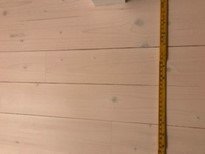
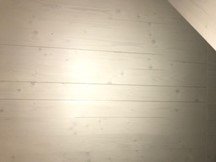
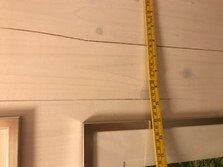
The builders have been here several times and sealed around all the windows because the wind blew straight in (the CLT has shrunk) and sealed joints otherwise. The planed and sanded surface is now uneven and dried together. The whitewashed walls are already starting to turn yellow (dried out?). In the ridge, there is a 5-6 mm gap where flies are building nests. Lots of LARGE cracks of 1-2 mm, both in the glued wood joints and in the boards themselves. I'm attaching some pictures but it's hard to take photos of this.
Anyone have experience with anything similar?
Is this normal for CLT (as the builder says)??
One must consider that KL is developed for industrial structural building in wood and not directly to be a surface layer. It is often clad in fire protection gypsum.
One must consider that KL is developed for industrial frame construction in wood and not directly for use as a surface layer. It is often covered in fire protection gypsum.
Wwitten said:
One must consider that KL is developed for industrial frame construction in wood and not directly for use as a surface layer. It is often covered in fire protection gypsum.
There are different quality standards, one for frames and one for visible parts. The visible one has significantly higher quality requirements and is also more dried out.
Doesn't look good! Which supplier did you use? Looking at KL + Isotimber but finding very little info?
True that there's no information anywhere about this issue. That's why I'm suspicious that my particular KL-wood has been delivered or handled incorrectly. Hence my question if others have experienced this. But so far no answers....
The supplier is Stora Enso who claims this is completely normal. I'm skeptical.
There are different quality standards, one for frames and one for visible parts. The visible one has significantly higher quality requirements and is also more dried.
Have standards actually been developed? I thought every manufacturer used their own classification for appearance.
All the CLT houses I've seen develop large cracks as they dry, and those who live in them talk about it sounding like gunshots when the tensions release, but that it goes away after a while.
Sometimes it cracks "nicely" with small cracks evenly distributed, but just as often there are a few large and ugly ones. I was at a place where 6-7 houses were being built, and we had guessing games about how many years it would take before all of them were covered with gypsum
True that there is no information anywhere about this problem. Therefore, I become suspicious that just my KL timber has been delivered or handled incorrectly. Hence my question if more have experienced this. But so far no answers...
The supplier is Stora Enso who claims that this is completely normal. I'm skeptical.
The reason you don't see it so often, I think, is that it's covered with plasterboard as mentioned.
We have KL and Isotimber framework. However, all walls are plastered.
Don't people typically use birch plywood on the walls if they want a nice and durable wooden interior? KL feels a bit like tongue and groove paneling to me, and I wouldn't use that as a surface layer inside the house.
Click here to reply
Vi vill skicka notiser för ämnen du bevakar och händelser som berör dig.