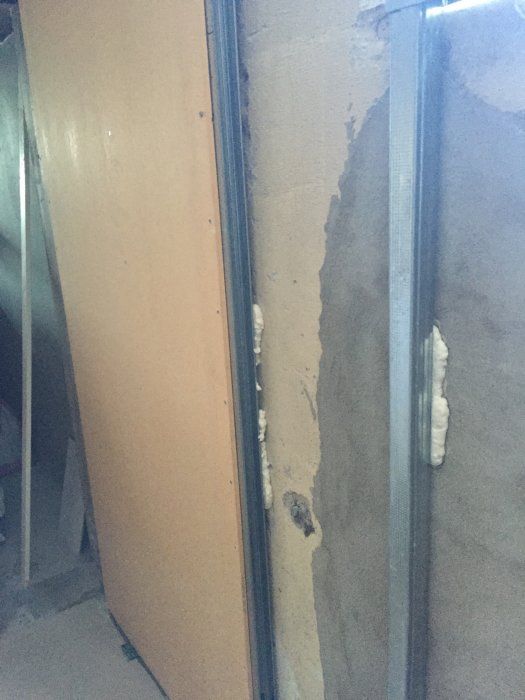
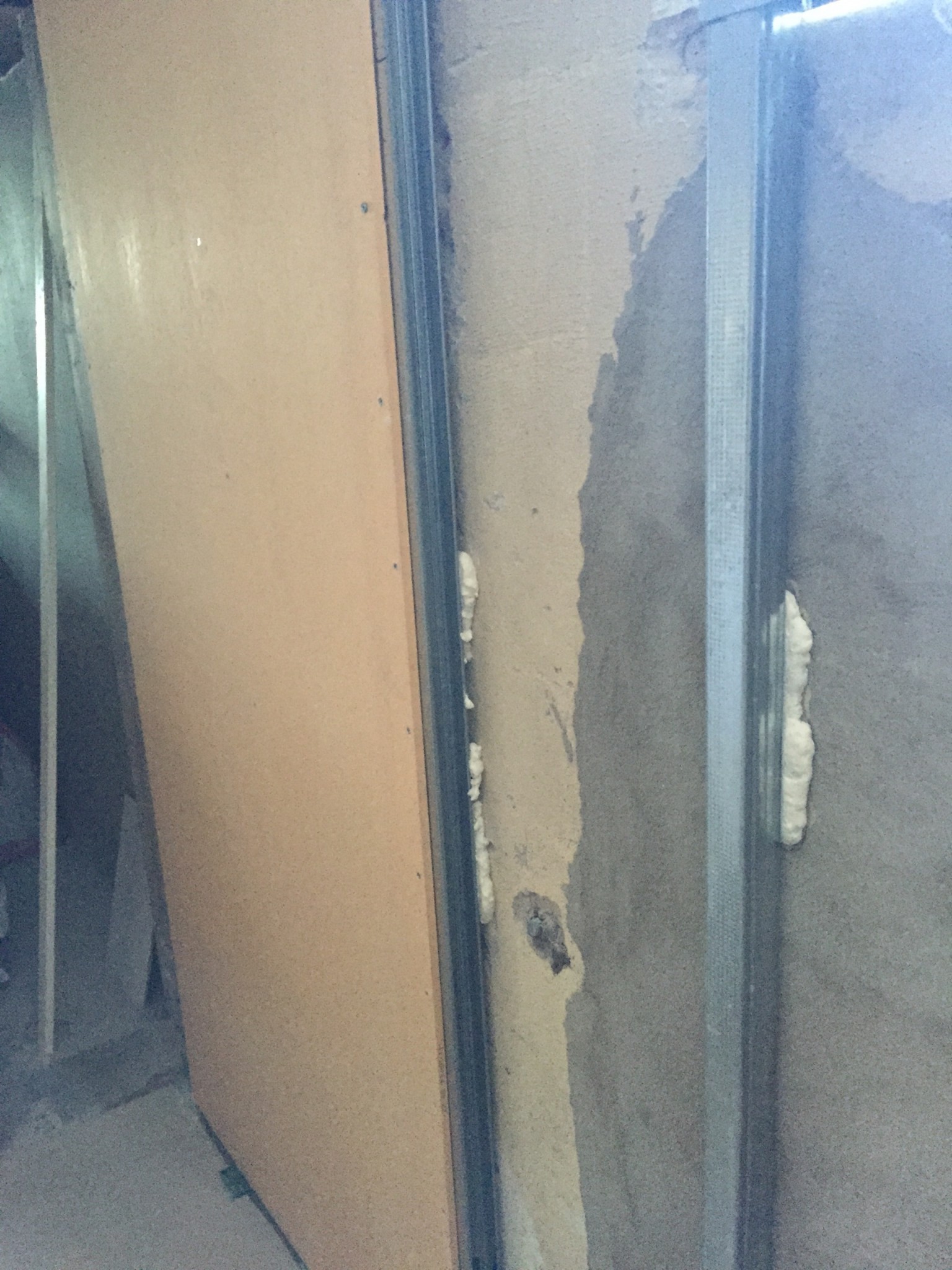
After much deliberation, I have decided to go with the following solution regarding one of our basement exterior walls. The wall has been redrained and moisture-proofed with isodrän. The inside will be framed with 45 steel studs and then covered with waterproof gypsum board. I know the best solution would have been to replaster, but that's not how it's going to be now.
The actual question is regarding foam sealant. The basement wall is faulty, and the new stud wall doesn't support all the way. I thought an easy way to get support is to put in some foam sealant in the middle between the wall and the stud. Now I'm wondering if there are any risks with foam sealant in this location?
What does the foam sealant solve? I have installed metal studs in a basement, and it becomes stable enough with tracks in the ceiling, floor, and panels. It doesn't matter if there is air behind the studs.
Then I would have chosen regular drywall + OSB (or another board) instead of moisture-resistant drywall. If you need moisture-resistant drywall, you have other problems that need to be addressed. Spend the money on something better, such as a dehumidifier and ventilation.
The reason for using wet room plasterboard is that it makes me feel better. The walls were dry before I insulated with isodrän and should be now as well. I also have a dehumidifier. But I would never put cardboard plasterboard against the outer wall regardless, as there is always some moisture in a basement outer wall. With wet room plasterboard, the risk of mold is significantly reduced. A small cost in the context, so I can afford it.
The foam stabilizes the stud in a quiet and efficient way. I attached furniture angles to some studs but got tired of it and realized that the foam supports just as well and that it takes 1 second to apply. The question was more whether the foam can start behaving strangely for some reason, start smelling, molding, or something similar?
Okay, no I don't see any problem with using foam like that, it can handle a bit of moisture and you seem to have dry walls anyway. I filled some holes in the basement walls 15 years ago and the foam looks the same today as when I sprayed it there.
Click here to reply
Vi vill skicka notiser för ämnen du bevakar och händelser som berör dig.