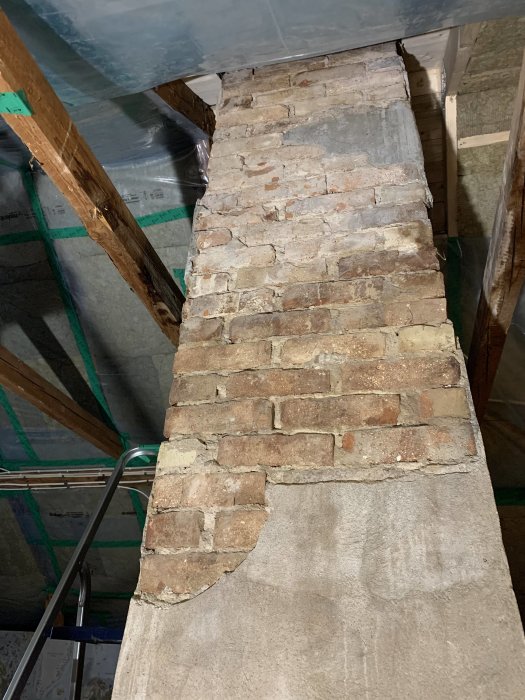
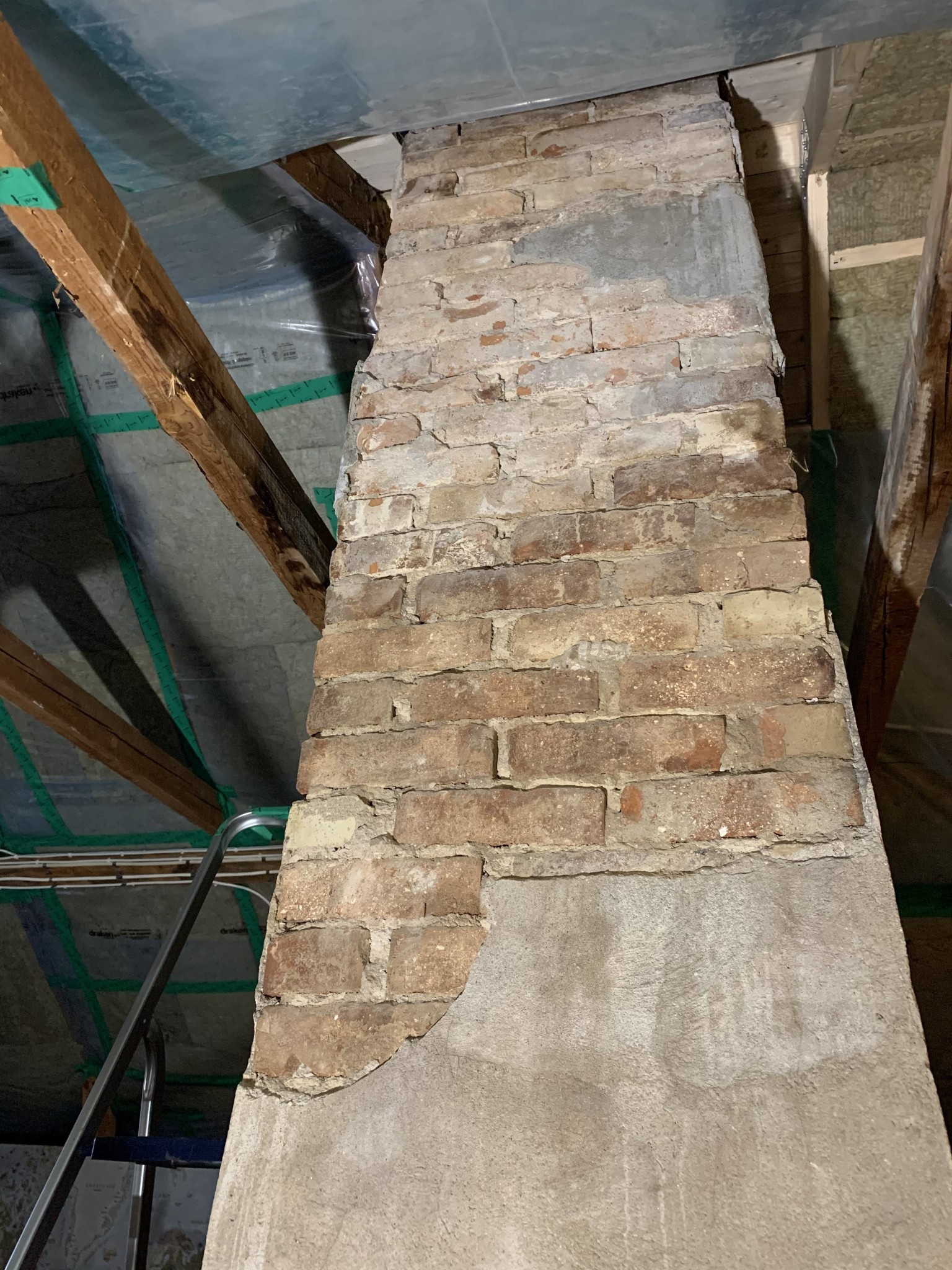
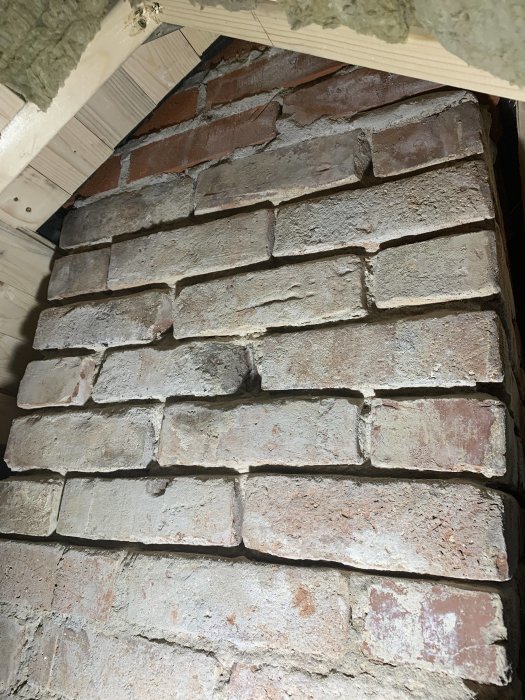
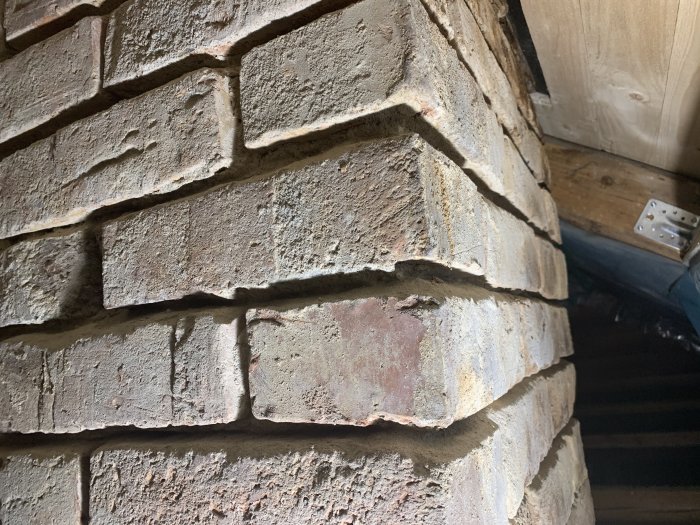
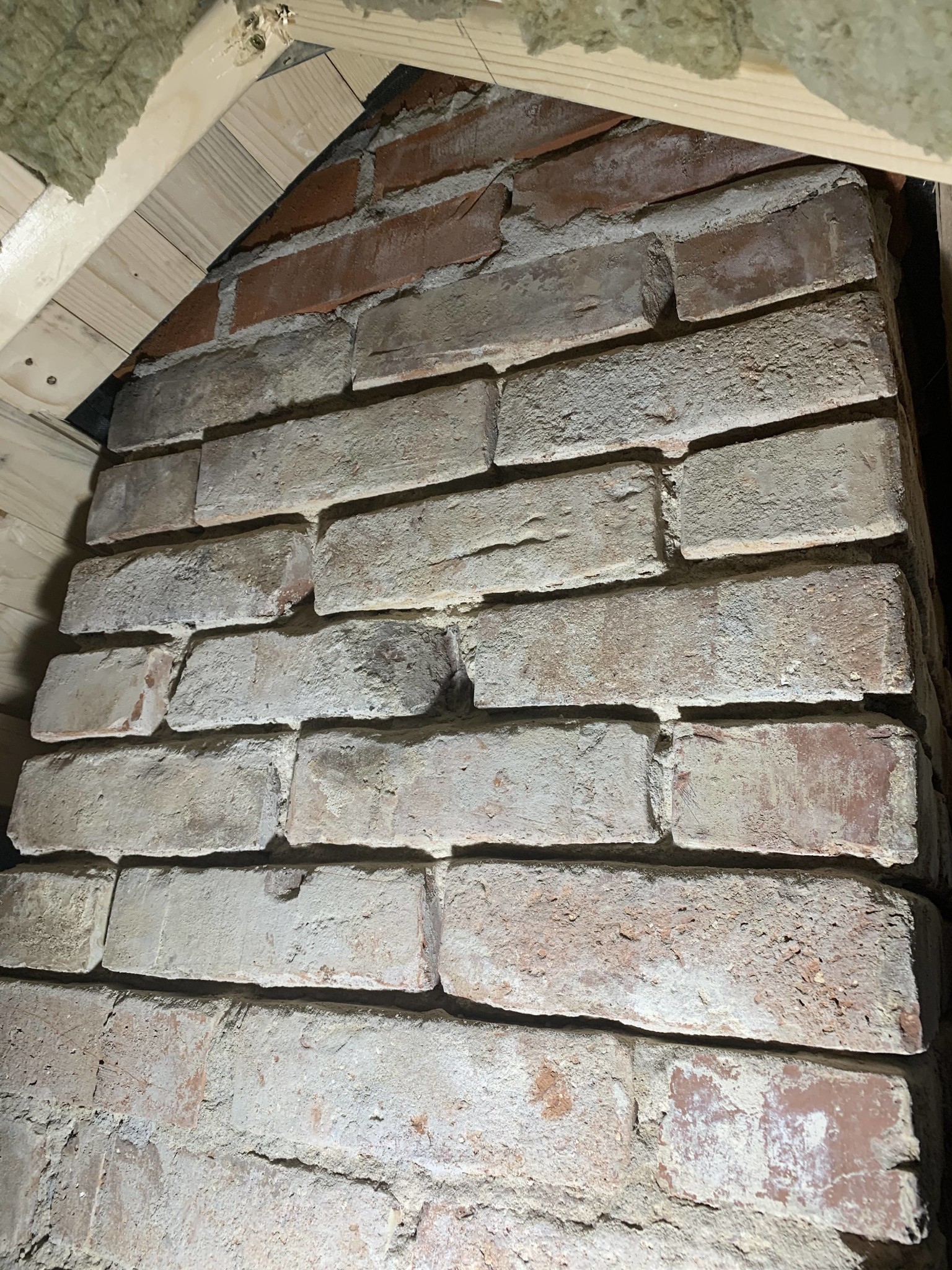
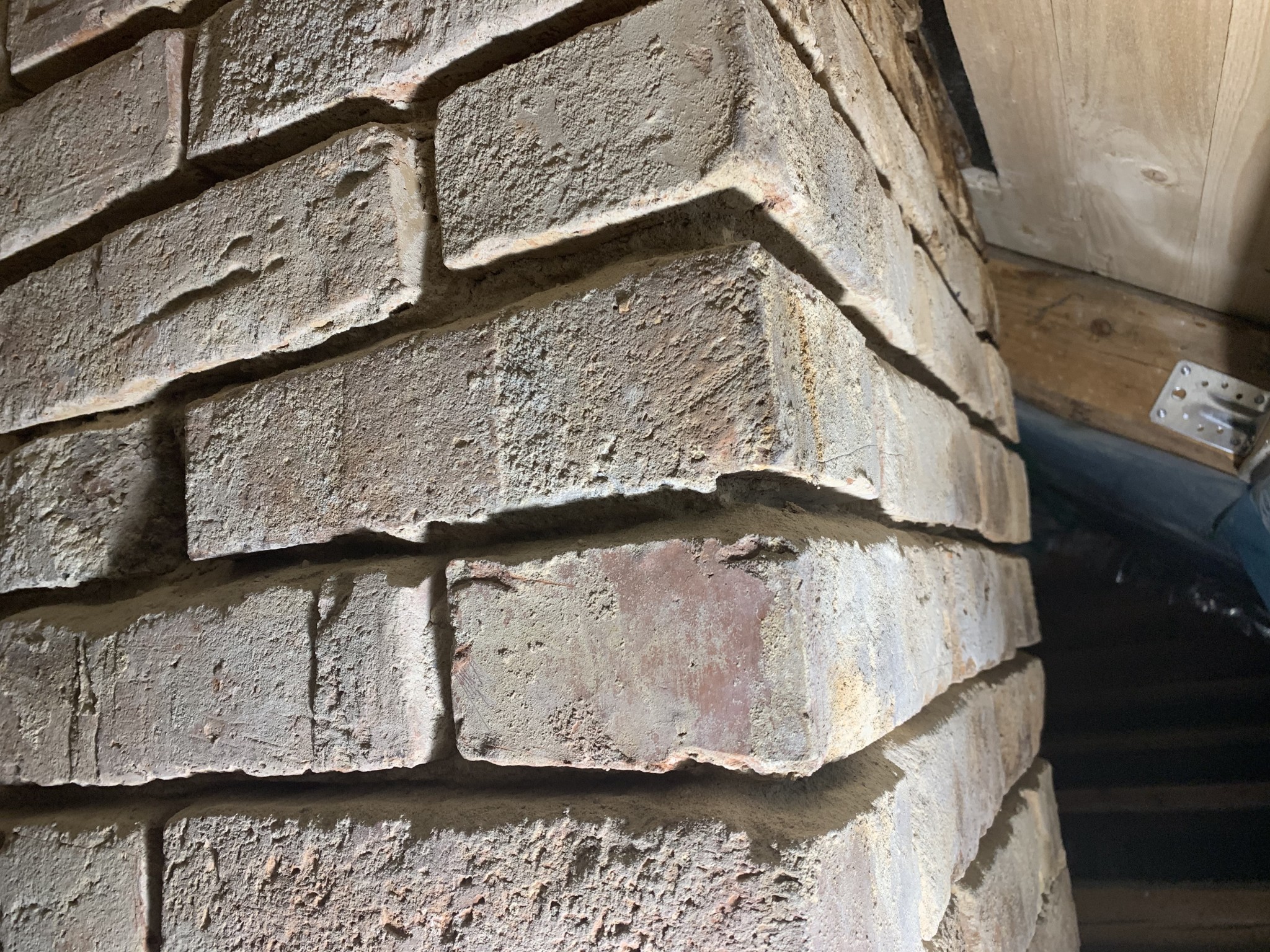
We are in the process of furnishing the attic in our 1930s villa. The plaster on the chimney was loose in some areas, so I started stripping it. We think it looks nice without the plaster. The joints are "sandy," so I'm thinking of removing 2 cm and re-grouting. Which mortar should be used for this? Kc 50/50 or lime mortar? The chimney is not currently in use, but eventually, we will have a tiled stove and a cast iron stove operating. As for the plaster, does it have any function for the chimney's tightness? I know it leaks, so it will be relined internally when we get to that point. But we would gladly skip the plastering and keep it rustic in the attic. Does this work? Or does removing the plaster damage the structure?
I think the chimneysweepers require rendering. But it is probably more so that cracks are more visible rather than sealing them. Talk to the local chimneysweeper about what applies. They are the ones who must approve.
It should be lime mortar and the reason it's crumbly is that it's indeed lime mortar. It never hardens and it's usually perfectly fine to take down such a chimney. Just brush off the worst and repoint it. You don't need to dig deep into the joints because it's likely just as "crumbly" all the way through.
I myself used what they have at Bauhaus, combimix hydraulic lime mortar coarse. I've used it to both build the chimney and do some plastering. They also have something that is not hydraulic but I haven't delved much into what the differences are. The product sheets describe the usage in a similar way.
Exactly, the plastering is part of the edge protection, partly for sealing but also for leak detection.
Regular lime mortar works well indoors. It is slaked lime (=mason's lime) mixed with plaster sand. It is mixed with water and does not harden. You can have a bucket with a lid standing for weeks or months and it only becomes smoother and better from that storage. Only when the water evaporates after plastering does it harden and begin a slow curing process by carbonating with the oxygen in the air.
In hydraulic lime mortar, ash (volcanic ash) has been added, which allows the mortar to set even in water. It is suitable for chimneys outdoors. It is harder than lime mortar.
Ok, I have been out and bought some wire brushes, also found a small wire brush disc that I can attach to my polishing/grinding machine. I will try this weekend to see if I can remove a bit from the joints. Tomorrow, I'll try to get in touch with the chimney sweep, and we'll see what he says about the unplastered chimney.
I chiseled out my joints 2-3cm by hand with a hammer and various chisels. Then I re-grouted with regular plaster and varnished the entire chimney with matte concrete oil. Then I had a company come and do a slip casting of a pipe. No problem getting it approved by the chimney sweep. It is the slip casting that makes it airtight.
Yes, but that's what I think too, that it's the slip casting that makes it tight. I thought my chimney guy would do that. We have a tight budget and I need to do as much as possible myself. But this thing with masonry/jointing/plastering is a new chapter for me. So it'll be elementary school à la YouTube.
The difference between regular and hydraulic is probably quite small. It becomes harder but still not like cement mortar. It is still possible to carve out with a knife from joints.
What I like about regular lime mortar is that you can mix a few buckets and keep it covered for the days-weeks you need it. It only gets better and stickier over time. Hydraulic sets like that, so you mix what you need and apply it directly.
Building conservators think the modern hydraulic is too hard for many needs.
I have cleaned some grout with a chisel and then I bought a grout remover for tiles which was really good to use.
.
Spoke with the chimney sweep and unfortunately everything outside the fireplace should be plastered as an extra protection.
Click here to reply
Vi vill skicka notiser för ämnen du bevakar och händelser som berör dig.