
4,345 views ·
10 replies
4k views
10 replies
Unstable intermediate joist in log house
Hello!
I'm planning to open up to the ridge in one third of the house. So now it's time to do something about the bouncy floor. The house was built around 1860, so they probably didn't have the same flex requirements back then...
The room is about 5200x5800mm, and the beams run in the 5800mm direction. The beams are about 140x140mm.
They are spaced at approximately 900mm centers.
Currently, there are 45mm thick tongue and groove planks over these, heavy as heck!
The ceiling height downstairs is only 210cm, so we can't add any support beams.
I have about 260mm to work with upwards before reaching the door opening. Then I have exposed beams with 192cm clearance to the underside on the upper floor. So if I use the full 260mm, I should be able to fit 220x45mm beams with 22mm glued and screwed floorboard, then 15mm parquet flooring.
My question is, will this intervention make any noticeable difference?
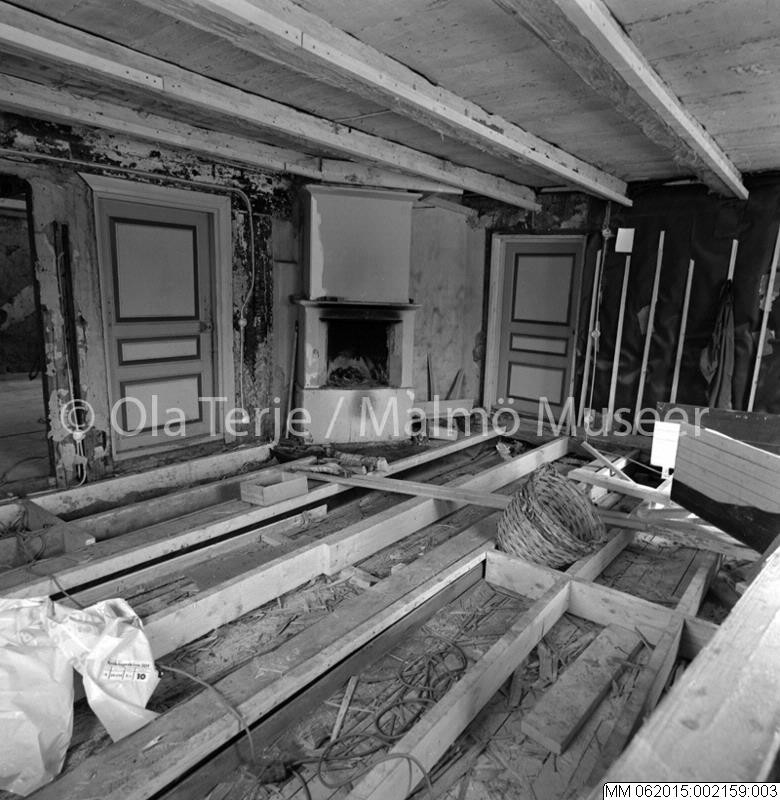
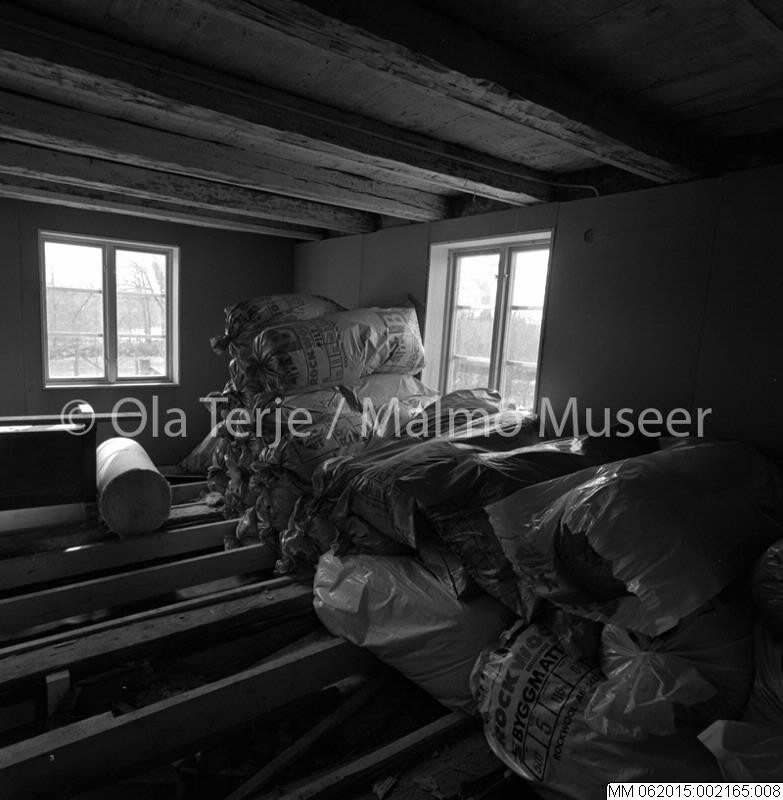
Attaching some pictures from the underside, pictures taken in 1968 during a major renovation of the house.
More pictures are available here for those interested http://carlotta.malmo.se/carlotta-mmus/web/object/1140791
Click on Alsjökulla further down the page to access all the pictures.
I'm planning to open up to the ridge in one third of the house. So now it's time to do something about the bouncy floor. The house was built around 1860, so they probably didn't have the same flex requirements back then...
The room is about 5200x5800mm, and the beams run in the 5800mm direction. The beams are about 140x140mm.
They are spaced at approximately 900mm centers.
Currently, there are 45mm thick tongue and groove planks over these, heavy as heck!
The ceiling height downstairs is only 210cm, so we can't add any support beams.
I have about 260mm to work with upwards before reaching the door opening. Then I have exposed beams with 192cm clearance to the underside on the upper floor. So if I use the full 260mm, I should be able to fit 220x45mm beams with 22mm glued and screwed floorboard, then 15mm parquet flooring.
My question is, will this intervention make any noticeable difference?
Attaching some pictures from the underside, pictures taken in 1968 during a major renovation of the house.
More pictures are available here for those interested http://carlotta.malmo.se/carlotta-mmus/web/object/1140791
Click on Alsjökulla further down the page to access all the pictures.

It is not possible to solve the deflection problem without using glulam. The span is simply too large. If you can fit glulam 140x260 mm at c/c 600 mm (requires ripping or special order), it will work. Likewise, if you place glulam 215x225 mm in the middle between the existing beams (i.e., c/c 900 mm). In the latter case, the floor chipboard plus thin parquet will be too springy. The best solution is either thick (approx. 30 mm) tongue-and-groove floorboards or K-plywood plus floorboards.
It's an old house, so trying to meet today's deflection requirements at any cost is something I find hard to understand. In old houses, there are often compromises. But if you do as you have planned, it will certainly be better. It might be possible to cross-brace between the beams which I believe would improve it. I read about someone who "hung" the floor joist in the rafters as an alternative.
One should limit the deflection for comfort reasons, not due to regulatory requirements. If the floor joists are to be visible from below, cross bracing is not a good option. Additionally, it is not possible to achieve acceptable results with the combination of regular construction timber and cross bracing when the span is as long as 5.8 meters.
Member
· Västernorrland
· 12 065 posts
It sounds completely insane to tear out such floors to install subfloor and mediocre parquet flooring instead? Why not just live with the flex and slopes? It's part of such old houses.
Hi Stefan,S Stefan1972 said:
I agree with you, but the floor was damaged during renovation in the 70s. Half of the room's floor has been removed and replaced with modern tongue-and-groove timber. Most likely, this floor was in poor condition.

Why not check what a completion of the old floor costs?
I have personally ordered from https://www.lgbtimmerhus.se
Very satisfied!
I have personally ordered from https://www.lgbtimmerhus.se
Very satisfied!

Member
· Västerbottens län
· 18 062 posts
Is it a possible approach to glue and screw 15 mm plywood on the top and underside of the beams to create a sandwich construction?
Usually, it's common to reinforce with a steel beam.
Why should one live with uneven and sagging floors when they know and can build better?
Protte
Usually, it's common to reinforce with a steel beam.
Why should one live with uneven and sagging floors when they know and can build better?
Protte
Click here to reply