
1,971 views ·
12 replies
2k views
12 replies
Underspiked panel directly on the sheathing in the gable overhang? - urgent.

Hello
I'm building a house with a complete contract.
The house was delivered unprimed because it will be stained.
The problem:
The roof decking is primed white. This means it won't be the right color when we stain over white primer. When the rest of the house is bare wood.
Proposed solution:
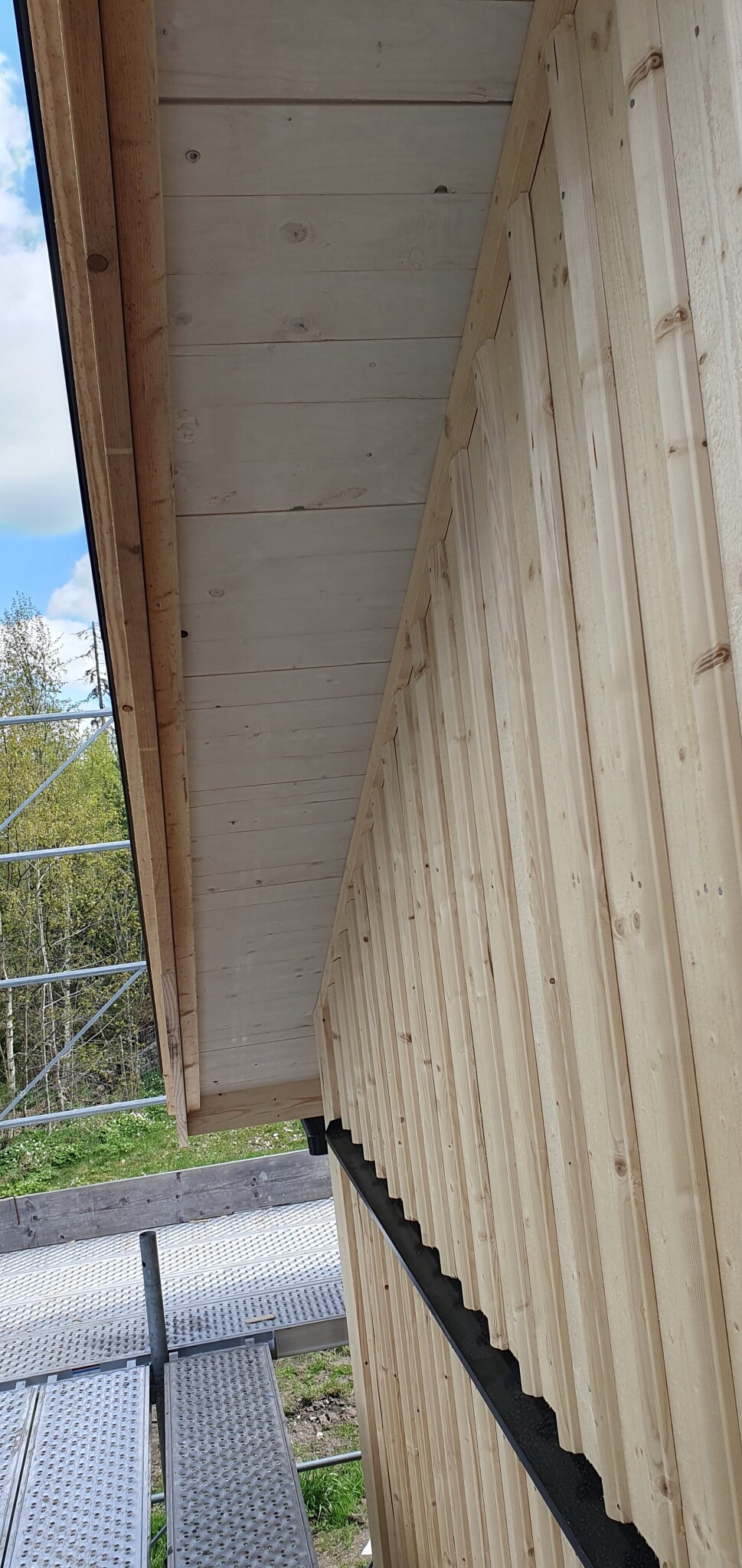
Eaves/overhang on the long sides. Panels nailed to the rafters.
For the gable overhang, it is suggested to attach the panel directly to the roof decking.
I interpret that there is no air gap between the panel and roof decking in this case. Is it okay to build like that? Disadvantages? Advantages?
Aesthetically:
Wouldn't it look nicer if it's placed on top of the small rule next to the bargeboard rather than inside when you're going to nail the panel lengthwise anyway?
I'm building a house with a complete contract.
The house was delivered unprimed because it will be stained.
The problem:
The roof decking is primed white. This means it won't be the right color when we stain over white primer. When the rest of the house is bare wood.
Proposed solution:
Eaves/overhang on the long sides. Panels nailed to the rafters.
For the gable overhang, it is suggested to attach the panel directly to the roof decking.
I interpret that there is no air gap between the panel and roof decking in this case. Is it okay to build like that? Disadvantages? Advantages?
Aesthetically:
Wouldn't it look nicer if it's placed on top of the small rule next to the bargeboard rather than inside when you're going to nail the panel lengthwise anyway?
Admittedly, but planks that lie directly on each other without distance also retain moisture once it gets there. The panel will also be glazed. I am not skilled in construction, but logically for me, it creates a worse condition. For example, planks in the lumberyard also lie with spacers. If moisture gets there, the chances of quick drying increase with an air gap.P Posselosse said:
ChatGPT also gave the answer that panel on panel is not recommended, but I take AI with a pinch of salt and wanted some different thoughts from real people with real knowledge. 😇
It was difficult to find construction facts on the matter, I couldn't find the right search terms. But I also can't find anywhere where they've specifically examined the gable overhang and explained how they proceeded.
Please link if anyone knows where I can read about what is customary and why. 🙏
On this question, you overanalyze the challenge. Painting with plastic paint and trapping moisture is bad, but it's bad whether you paint on the panel directly on the sheathing or if you paint directly on the sheathing. In your case, you're painting with glaze, which doesn't trap moisture.
That said, ask them to build with an air gap if you want that. It should take about the same amount of time.
That said, ask them to build with an air gap if you want that. It should take about the same amount of time.
Last edited:
Thank you for the understanding 😇P Posselosse said:
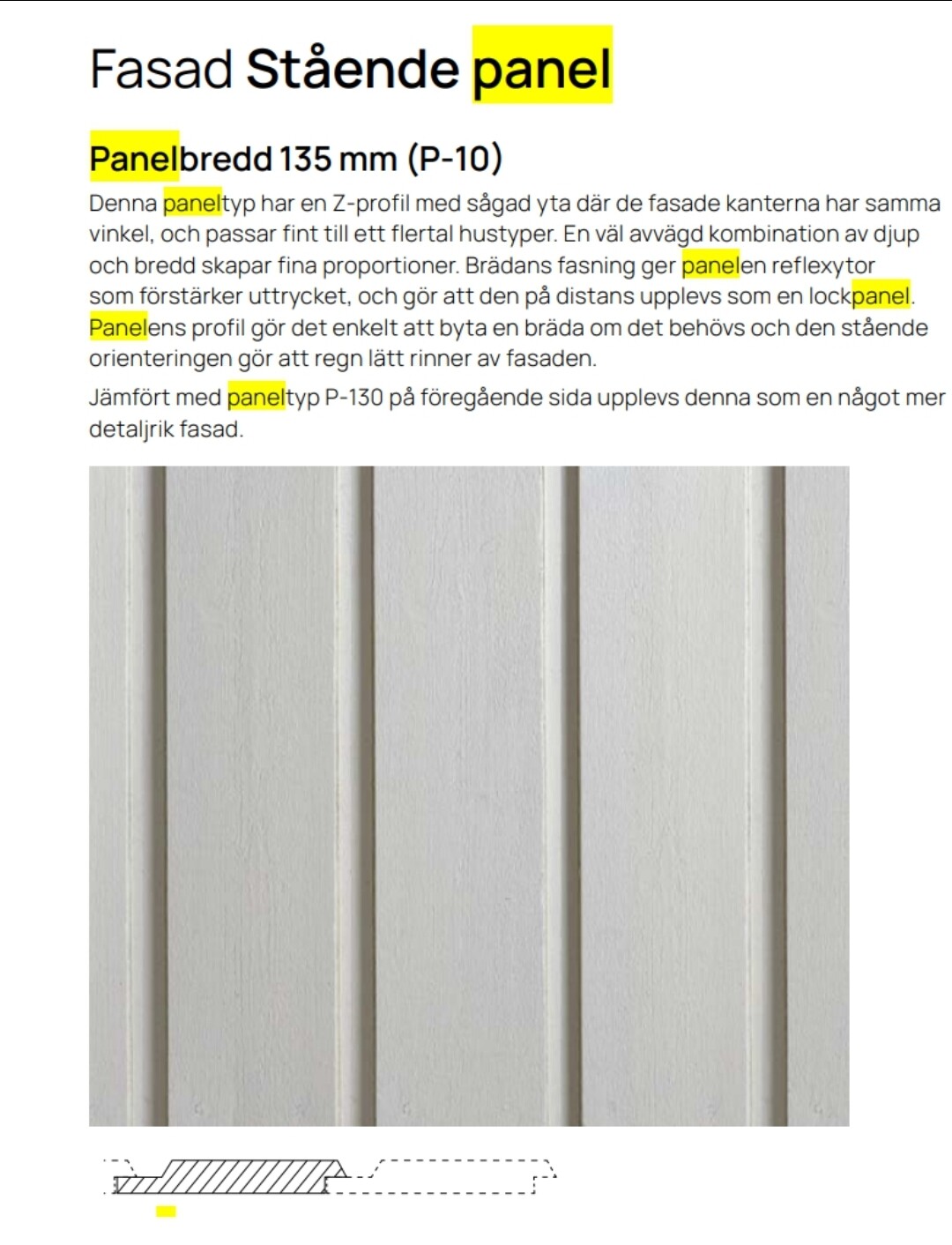
This is the kind of panel that will be installed, so it will be completely sealed. The roof is not ventilated at the eaves. There are mold stoppers (I believe they are called) in the roof.
So I am unnecessarily worried, right? I'm thinking that moisture that dries slowly because there is a larger surface area of panel against panel in an eave where it becomes shady, and moisture/condensation can still remain a bit more than on an overlapping panel, which covers a short bit and can thus dry faster and has an air gap behind.
No risk that any moisture that wood, as a living material, absorbs and dries slowly because of board against board causing the stain to release without an air gap?
Yes, now I'm analyzing again


It becomes quite a bit lighter, you have to coat at least 4 times to approach the facade's color. Dark gray. Which becomes really tricky around the eaves since the rafters are untreated and should only be coated 2 times, while the sheathing needs to be coated 4 times.useless said:
Since we are not painting ourselves and the house is not delivered with untreated eaves, it will be the builder who has to handle the solution with the soffit. We think that a soffit will look good anyway.
The alternative is that they have to mask/cover the rafters and all other unprimed surfaces they encounter and paint the eaves and gable overhangs at least 4 times. With a result that is not perfect but perhaps good enough. 🤷♀️
So, we think the soffit seems like the best solution.
The alternative is that they have to mask off/cover roof rafters and all other surfaces they encounter that are not primed and paint the eaves and gable overhangs at least 4 times. With a not-perfect result but maybe good enough. 🤷♀️makhno_ said:
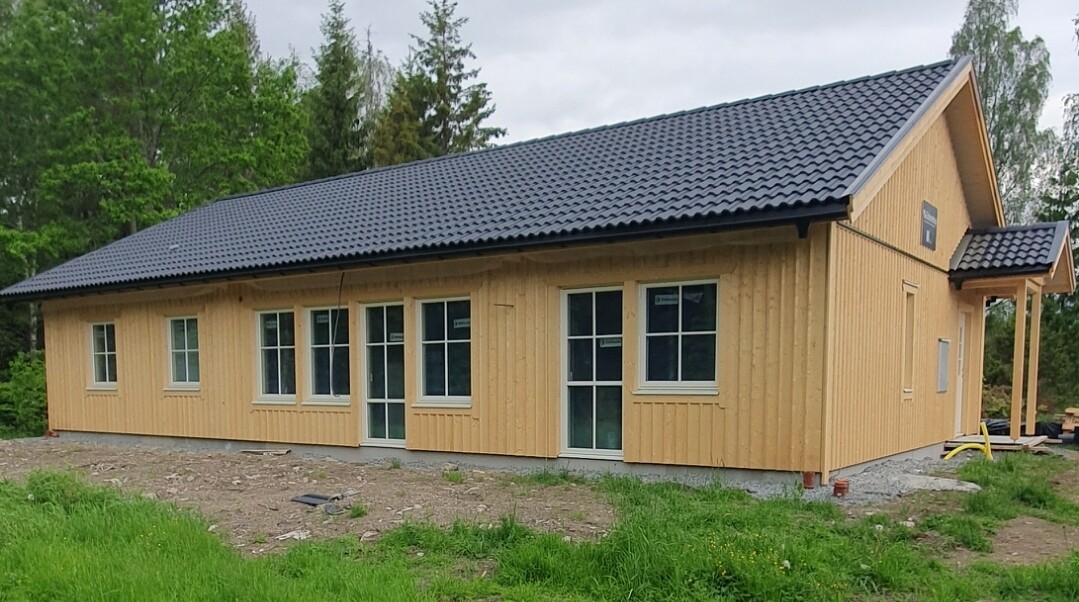
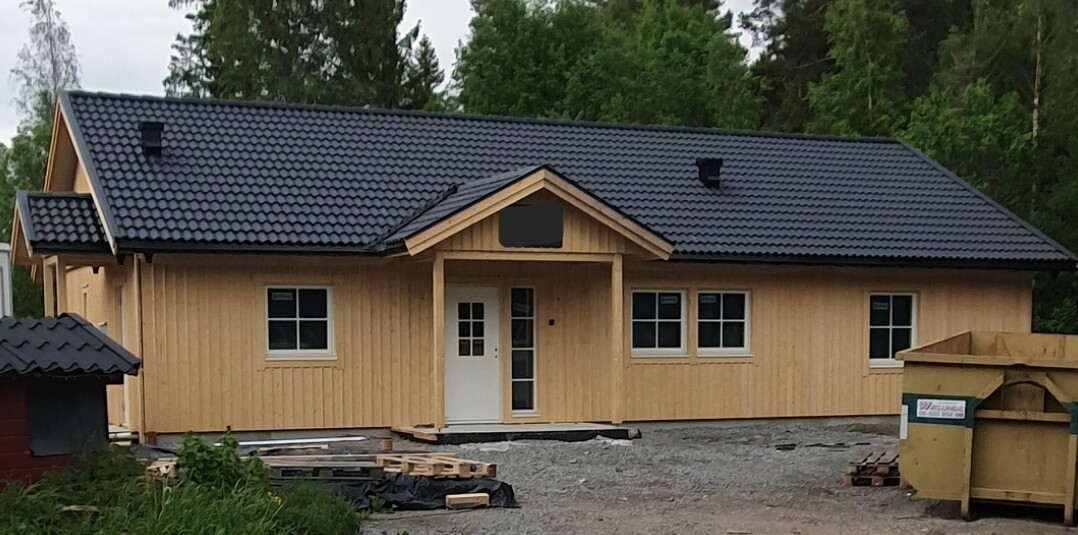
Fairly clean lines. I would probably try applying a glaze on a piece and see how much it differs. The surface is in permanent shadow and without other elements on the same plane. Could it be difficult for the eye/brain to see the difference?
4-5 coats. I've already tested it. The surface is grooved on the white primed raw board, so it gives a slightly shiny and different gloss. But as mentioned, it becomes tricky when it's glaze because everywhere it meets bare wood, you have to mask and cover since you can't apply more than 2 coats there. Each coat makes a darker, more opaque result. It then becomes patchy.
Click here to reply