
4,545 views ·
10 replies
5k views
10 replies
Two questions about vapor barrier
I'm going to install a vapor barrier in the Attefall house and have some questions about the vapor barrier.
The insulation is 170mm in the floor, 140mm in the walls, and 195mm in the ceiling. Some say that a vapor barrier is not needed under 200mm insulation, but I'm going to use it anyway.
Now to the questions.
1. How do I best connect the plastic to windows and doors?
2. Should I also have vapor plastic on the floor? The floor consists of chipboard panels and then laminate flooring on top.
The insulation is 170mm in the floor, 140mm in the walls, and 195mm in the ceiling. Some say that a vapor barrier is not needed under 200mm insulation, but I'm going to use it anyway.
Now to the questions.
1. How do I best connect the plastic to windows and doors?
2. Should I also have vapor plastic on the floor? The floor consists of chipboard panels and then laminate flooring on top.
There are many answers to this. Which one is correct, the future will likely show. The thicker insulation you have, you should consider a vapor barrier or variable vapor barrier. If the house is to be unheated at times, you might want to opt for a variable vapor barrier that allows the house to "breathe"; otherwise, you could have problems with condensation in the wall coming from outside. If the house is to be heated, you might consider a completely tight vapor barrier, meaning one that doesn't let through any moisture. Good ventilation with mechanical extraction is also beneficial.
There is always moisture in a wall, and if you approach 30 cm thick insulation, which you mention you won't have, there is a risk that the moisture won't dry out in a wall, regardless of whether the moisture comes from inside or outside. But the thicker insulation you have, the greater the requirement for a proper vapor barrier. Take a cold drink and place it in a plastic bag in the sun, and it tells you something about moisture movement where warm meets cold. A wall must be able to dry out!
There is always moisture in a wall, and if you approach 30 cm thick insulation, which you mention you won't have, there is a risk that the moisture won't dry out in a wall, regardless of whether the moisture comes from inside or outside. But the thicker insulation you have, the greater the requirement for a proper vapor barrier. Take a cold drink and place it in a plastic bag in the sun, and it tells you something about moisture movement where warm meets cold. A wall must be able to dry out!
Not that I know if this is 100% correct. But this is how I did it. Go out as far on the frame as you can but still make sure you can completely cover the tape with the trims.T Ejmelie said:
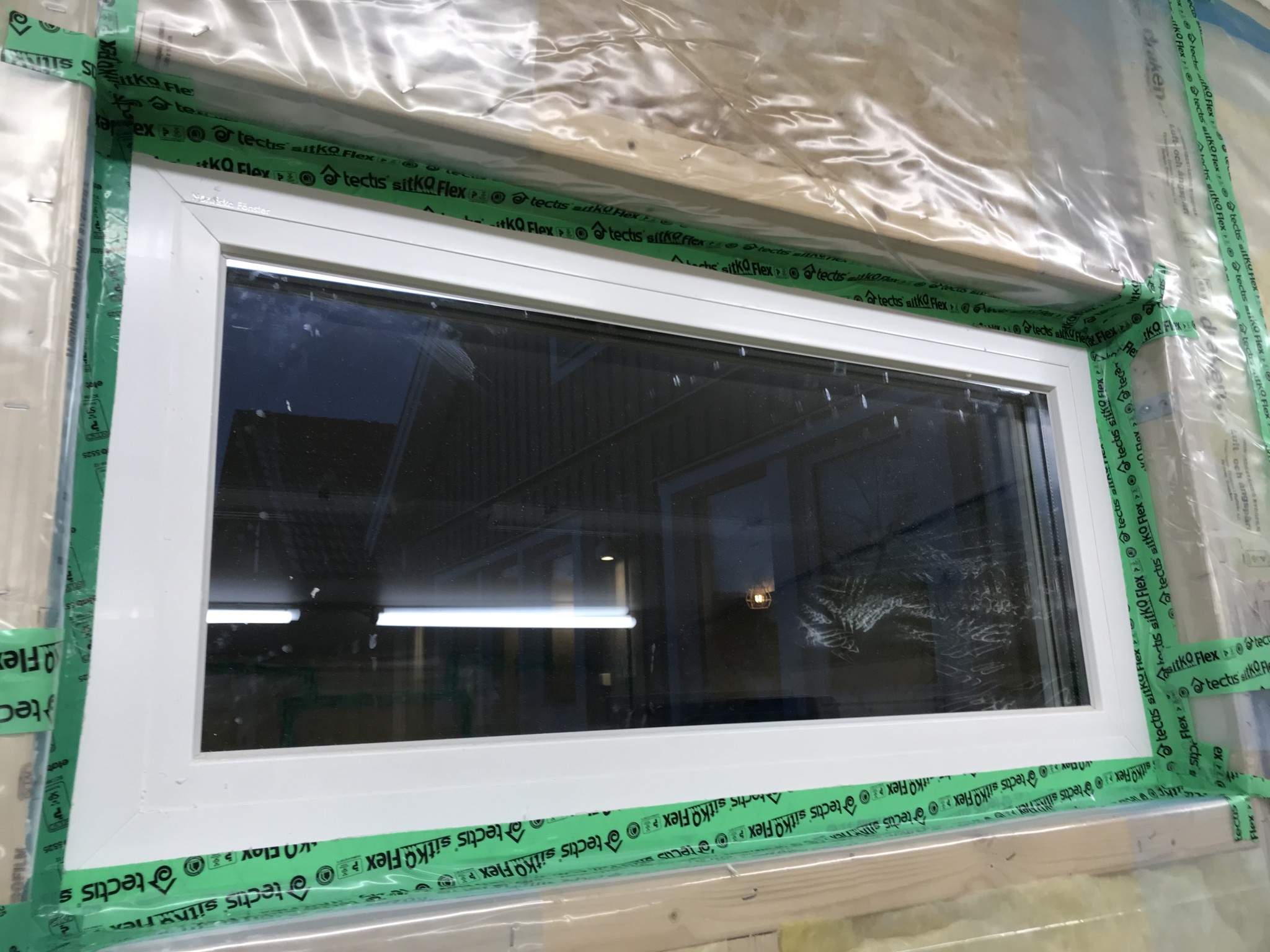
https://www.byggahus.se/forum/threads/mitt-bygge-av-snickarbod.322972/page-9#post-3187914
I've done it as shown here. I placed the plastic close enough to the frame so that I could put half of the tape on the frame and the other half went over the plastic. It's worked for me anyway.T Ejmelie said:

surris
Construction veteran
· Sverige
· 1 692 posts
surris
Construction veteran
- Sverige
- 1,692 posts
Depending on your floor construction and flooring, you might need some kind of vapor barrier for the floor. There is foam with plastic that you can use.
For windows and doors, there are various simple solutions. But fold the plastic into the reveals and tape the seams onto the frames (not further than what will be hidden by the reveals later).
For windows and doors, there are various simple solutions. But fold the plastic into the reveals and tape the seams onto the frames (not further than what will be hidden by the reveals later).

Click here to reply