1,912 views ·
31 replies
2k views
31 replies
Tretex vs. plasterboard, as well as beadboard behind radiator
Often, it is the case for a house with older construction techniques that if a craftsman routinely recommends switching to modern materials, they lack knowledge of the old building techniques.
We have some walls with treetex and old wallpaper, and we don't notice any problems.
That said, gypsum provides a nice surface for wallpapering, but in an old house, it can be perceived as giving a dead and sterile surface; it simply becomes too perfect. We also have wallpaper on paper-stretched walls, which gives a very lively surface and accommodates any movements that old houses might have.
So, whether or not to use gypsum depends on the house's conditions, preferences, and taste. But in any case, choose a craftsman who knows what they are doing, otherwise, it won't turn out well.
We have some walls with treetex and old wallpaper, and we don't notice any problems.
That said, gypsum provides a nice surface for wallpapering, but in an old house, it can be perceived as giving a dead and sterile surface; it simply becomes too perfect. We also have wallpaper on paper-stretched walls, which gives a very lively surface and accommodates any movements that old houses might have.
So, whether or not to use gypsum depends on the house's conditions, preferences, and taste. But in any case, choose a craftsman who knows what they are doing, otherwise, it won't turn out well.

Yes, not only a dead and sterile surface, there can also be (cold) drafts in the wall, and then the gypsum board will cool the wall in fall and winter so much that the electric companies rub their hands together.Microkatten said:
Often, for a house with older construction techniques, if a craftsman routinely recommends replacing with modern materials, they may not have knowledge of the old construction techniques.
We have a few walls with treetex and old wallpaper, and we don't notice any problems.
That said, gypsum provides a nice surface to wallpaper on, but in an old house, it can feel like it gives a dead and sterile surface, it simply becomes too perfect. We also have wallpaper on paper-stretched walls, which gives a very lively surface and accommodates any movement that old houses may have.
So, using gypsum or not depends on the house's conditions, preferences, and taste. But regardless, choose a craftsman who knows what he/she is doing, or else it won't turn out well.
Exaggerated fantasies about Tretex's insulating ability are being spread in various building conservation groups but are of, to say the least, questionable significance. In the 30s to 70s, there were fewer options for insulation compared to today.
When Tretex was sold new, it was marketed as being able to help seal old, often drafty timber houses, and it's often confused with insulation. It's more of a windbreak. Today, we mount it at the outermost part of the wall under the panel, which has significant advantages.
In reality, the cold that has made it all the way through the wall to the inside surface under the wallpaper has already passed everything intended to keep the cold out, and with actual measurement of insulation value, it is unlikely to make any measurable difference between Tretex board and plasterboard as layers under the wallpaper.
Keeping Tretex today to insulate the house is quite pointless, and it's much smarter to add exterior insulation when installing new paneling to get rid of that old flammable junk material that never wants to be completely smooth.
As several have pointed out, different wallpapers with different textures and how much one cares about wavy walls that aren't smooth varies, but don't blame the painter if it doesn't look smooth when finished.
And no, it goes better with a primed base-painted Tretex, but you'll quickly spend more time than re-plasterboarding and still have an uneven junk wall.
Take down the Tretex and put up plasterboard; that is the sensible decision.
And for all who still don't realize that Tretex is some old junk that best belongs in the garbage... take a plasterboard piece and a piece of Tretex and try to set them on fire, and you'll probably have an "aha, oh" moment.
When Tretex was sold new, it was marketed as being able to help seal old, often drafty timber houses, and it's often confused with insulation. It's more of a windbreak. Today, we mount it at the outermost part of the wall under the panel, which has significant advantages.
In reality, the cold that has made it all the way through the wall to the inside surface under the wallpaper has already passed everything intended to keep the cold out, and with actual measurement of insulation value, it is unlikely to make any measurable difference between Tretex board and plasterboard as layers under the wallpaper.
Keeping Tretex today to insulate the house is quite pointless, and it's much smarter to add exterior insulation when installing new paneling to get rid of that old flammable junk material that never wants to be completely smooth.
As several have pointed out, different wallpapers with different textures and how much one cares about wavy walls that aren't smooth varies, but don't blame the painter if it doesn't look smooth when finished.
And no, it goes better with a primed base-painted Tretex, but you'll quickly spend more time than re-plasterboarding and still have an uneven junk wall.
Take down the Tretex and put up plasterboard; that is the sensible decision.
And for all who still don't realize that Tretex is some old junk that best belongs in the garbage... take a plasterboard piece and a piece of Tretex and try to set them on fire, and you'll probably have an "aha, oh" moment.
Last edited:

I don't think it was completely unfounded at the time. Tretex has a low U-value. A summer cottage from the time Tretex was sold could have thin uninsulated wooden walls. A 13 mm layer of insulation on that gives a completely poorly insulated wall. But still, it might have become twice as well insulated as before. We completely agree that Tretex does not serve a purpose for insulation in a residential house. But it could have done so in a summer cottage from the time it was sold.P polaris78 said:When Tretex was sold new, it was marketed as something that could help seal drafty old houses, often drafty log houses, and people often mix it up with insulating... it is more of a wind barrier... we now install it on the outermost part of the wall under the panel instead, which has great advantages...
Completely agree! However, I really feel that our painter is very knowledgeable, I know she lives in a similar house herself, and she recommended us to keep the treetex in the living room.Often, for a house with older construction techniques, if a craftsman routinely recommends switching to modern materials, they may not have knowledge of the old building techniques.
We have some walls with treetex and old wallpaper, and we don't notice any problems.
Having said that, plasterboard provides a nice surface for wallpapering, but in an old house, it can feel like a dead and sterile surface; it becomes simply too perfect. We also have wallpaper on paper-stretched walls, which gives a very lively surface and absorbs any movements that old houses may have well.
So, plasterboard or not depends on the house's conditions, tastes, and preferences. But regardless, choose a craftsman who knows what he/she is doing, otherwise, it won't turn out well.
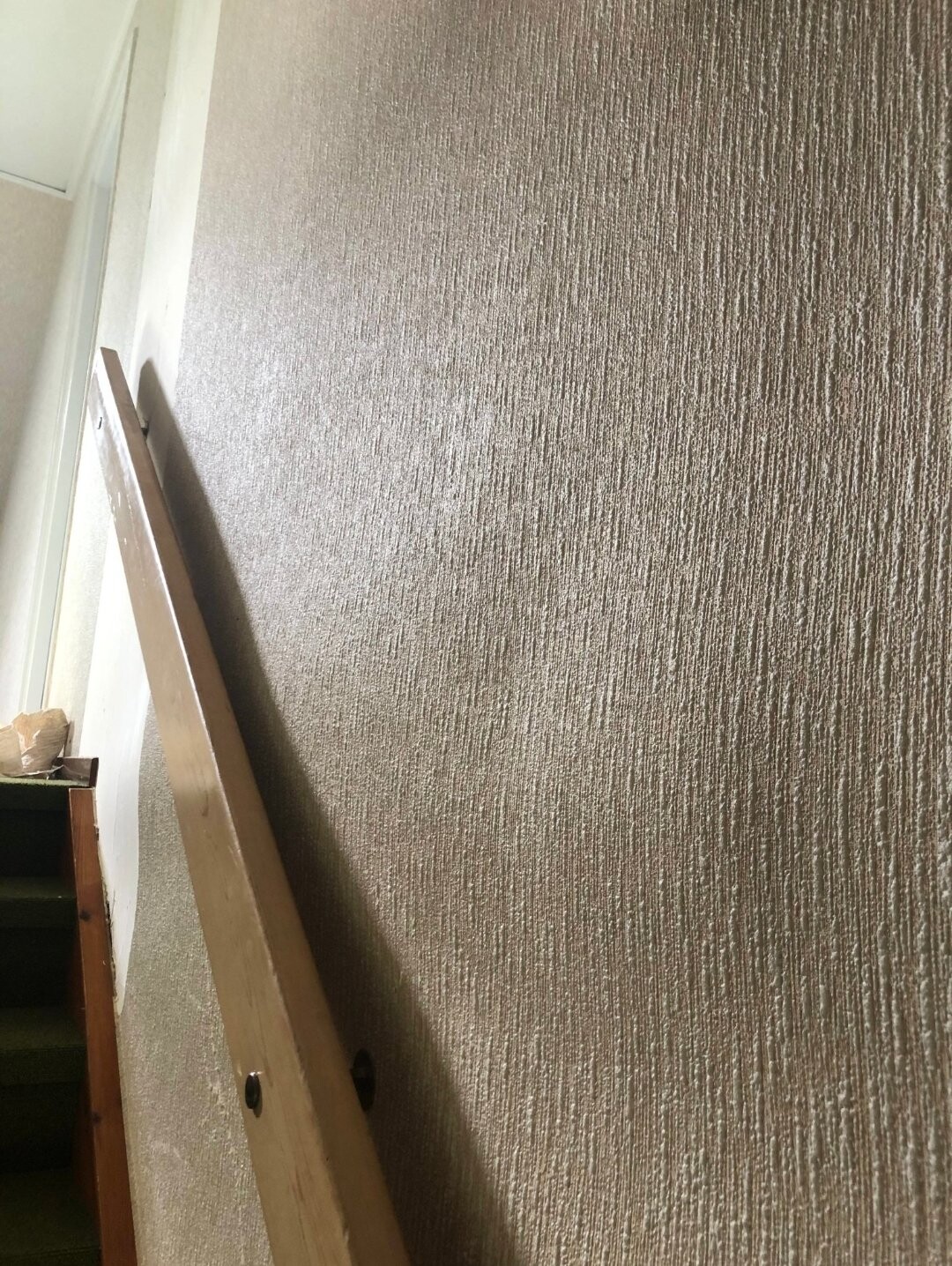
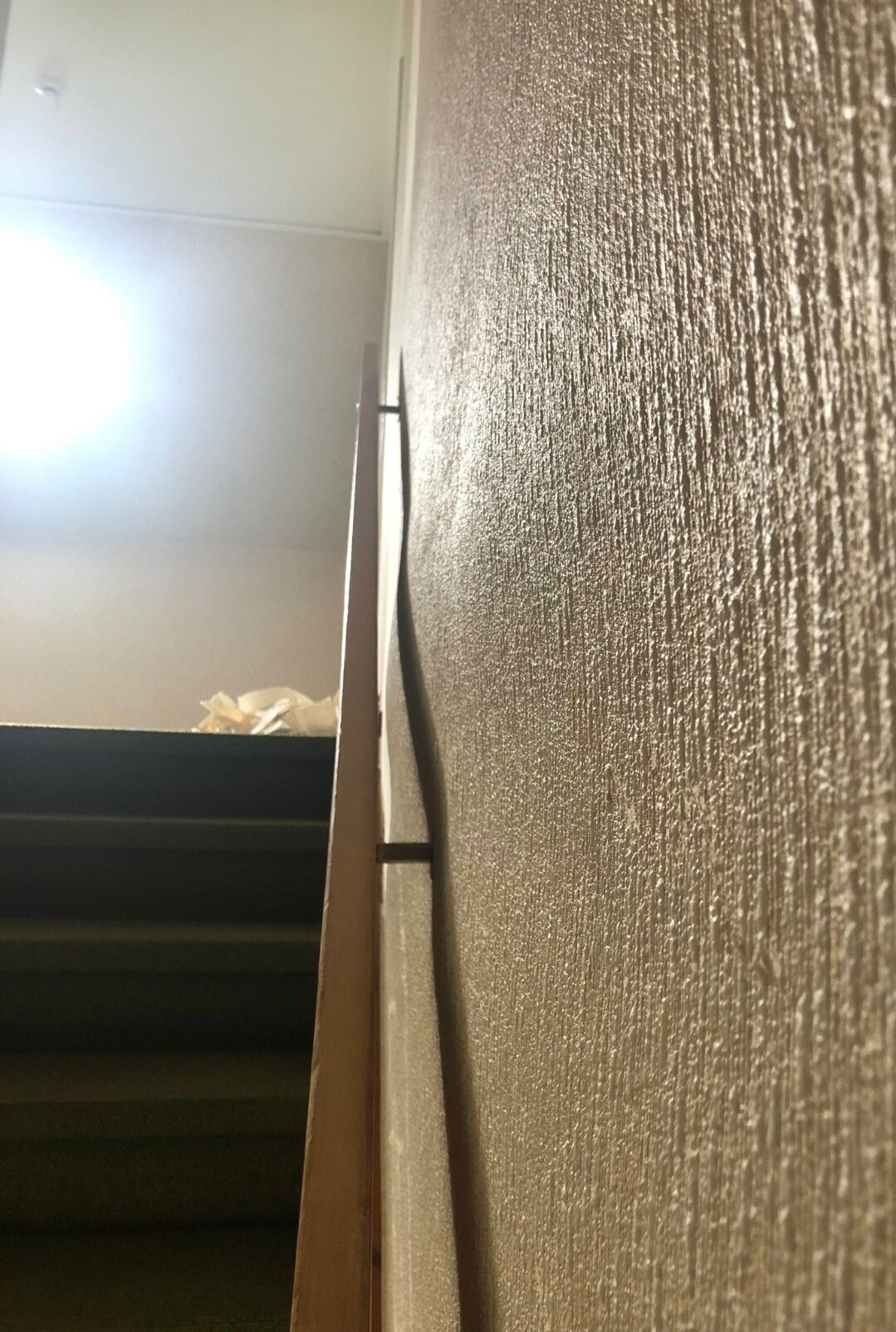
I don't think perfect walls are important, otherwise I would have bought something other than a sparingly renovated 1920s house, but it would have been interesting to see HOW bad it can look with wallpaper on treetex. Does anyone have an example?
Unfortunately, I don't have a good picture of my own where it's visible.. Sometimes it's hard to capture clearly in a picture.
These images are borrowed from another thread here on byggahus..
But it's not unusual for it to bulge in waves up to 5-7 cm depending on the distance between nail rows.. Sometimes several waves along entire walls..
These images are borrowed from another thread here on byggahus..
But it's not unusual for it to bulge in waves up to 5-7 cm depending on the distance between nail rows.. Sometimes several waves along entire walls..

Unfortunately away over Christmas but have no such waves after fixing the walls. With us, however, there is solid panel behind all treteex in all interior walls, so it's nailed to the max. Never seen the unevenness mentioned here in the thread. Have a summerhouse which is an old timber house with tretex that we gypsum instead of plastered (personally I regret it, don't agree with the above, plastering would have been less work) and a 60's house with woven wallpaper and tretex that I plastered. The woven wallpaper peels off like a banana peel from the tretex so if we hadn't torn it down it would have buckled but after I haven't noticed any difference from the few walls I re-plastered due to damage.E erkana said:
This thread has also opened my eyes to how much emotion tretex evokes. Had no idea! 😅
Indeed! Fun reading! It's likely going to be wrong (and right) no matter how I choose to do it… 😅Vrana said:
Unfortunately, I'm away over Christmas but don't have any such waves after fixing the walls. In our case, there is a solid panel behind all the tretex on all interior walls, so it’s nailed a thousand times. I've never seen the irregularities mentioned here in the thread. We have a cabin that is an old log house with tretex, which we covered with gypsum instead of plastering (personally, I regret it, I don't agree with the above, plastering would have been less work) and a 60s house with woven wallpaper and tretex that I've broadly plastered. The woven wallpaper peels like a banana peel from the tretex, so if we hadn’t removed it, it would have buckled, but afterward, I haven't noticed a difference from the few walls I re-gypsumed due to damage.
This thread has also opened my eyes to how much emotion tretex evokes. I had no idea! 😅
My house also has treetex in the living room, under woven wallpaper. The painter thought I should keep the treetex there and broadly plaster on the woven wallpaper before wallpapering, but if I interpret you correctly, it would be good to remove the woven wallpaper first? Isn't that quite bothersome?
So, no idea in your case but I tried, and it was like peeling a banana at our place. I find that it generally doesn't adhere well to treetex. There was a good tip earlier in the thread to paint it with something cheap to saturate it, making the filling easier.E erkana said:Really! Fun reading! Whatever I choose to do, it's likely to be wrong (and right) somehow… 😅
My house also has treetex in the living room, under the woven wallpaper. The painter suggested I keep the treetex there and apply joint compound over the woven wallpaper before wallpapering, but if I'm understanding you correctly, it would be good to remove the woven wallpaper first? Isn't that quite troublesome?
We have woven wallpaper on concrete in the basement, and it sticks like glue; we'll probably need a flamethrower before winning that battle. But I found woven wallpaper on treetex much easier to remove, no idea if that's a universal phenomenon.
Weaving on Tretex is often like "peeling a banana." I had wallpaper in several rooms where I ripped it off and tried to keep it, but ended up with a complete removal of all Tretex...
Before I gave up, I tried repainting the wallpaper in part of a room, and the wallpaper detached when the wall absorbed moisture from the paint. The same happened when attempting to wallpaper over another sanded wallpaper. Sometimes, however, it works out well, and the old wallpaper really sticks to the Tretex, but it's quite common for issues to arise.
There are several reasons why painters often recommend drywalling instead.
But if you decide to wallpaper on Tretex, you have to accept that it won’t lead to perfectly smooth walls and that problems might occur immediately with layers detaching from the porous Tretex board.
I painted a room with wallpaper for a friend where Tretex was involved, and it consumed 3-5 times more paint as the Tretex absorbed all the paint, layer after layer until the underlying layer showed through. I think we painted six times before the result was satisfactory.
Everything depends, of course, on the standards you set for the outcome.
Before I gave up, I tried repainting the wallpaper in part of a room, and the wallpaper detached when the wall absorbed moisture from the paint. The same happened when attempting to wallpaper over another sanded wallpaper. Sometimes, however, it works out well, and the old wallpaper really sticks to the Tretex, but it's quite common for issues to arise.
There are several reasons why painters often recommend drywalling instead.
But if you decide to wallpaper on Tretex, you have to accept that it won’t lead to perfectly smooth walls and that problems might occur immediately with layers detaching from the porous Tretex board.
I painted a room with wallpaper for a friend where Tretex was involved, and it consumed 3-5 times more paint as the Tretex absorbed all the paint, layer after layer until the underlying layer showed through. I think we painted six times before the result was satisfactory.
Everything depends, of course, on the standards you set for the outcome.

I have treetex in the walls and initially planned to apply a skim coat over the wallpaper, but the skim coat caused the wallpaper to peel off. So, I had to remove all the wallpaper, soaked it thoroughly, waited 10 minutes, and then scraped it off.E erkana said:Really! Fun reading! It will probably go wrong (and right) no matter how I choose to do it… 😅
My house also has treetex in the living room, under wallpaper. The painter thought I should keep the treetex there and apply a skim coat on the wallpaper before wallpapering, but if I understand you correctly, it would be good to tear off the wallpaper first? Isn't that quite a hassle?
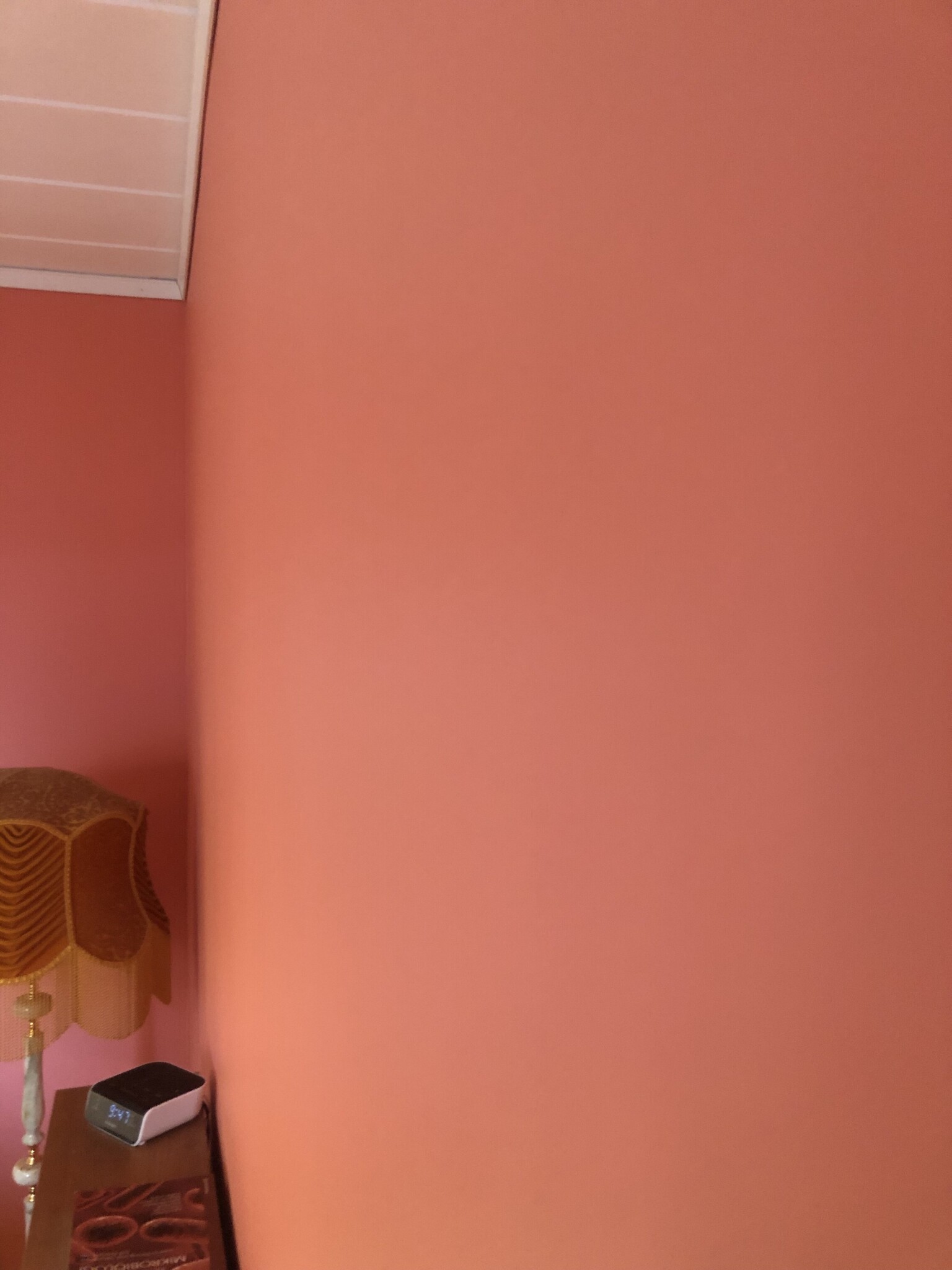
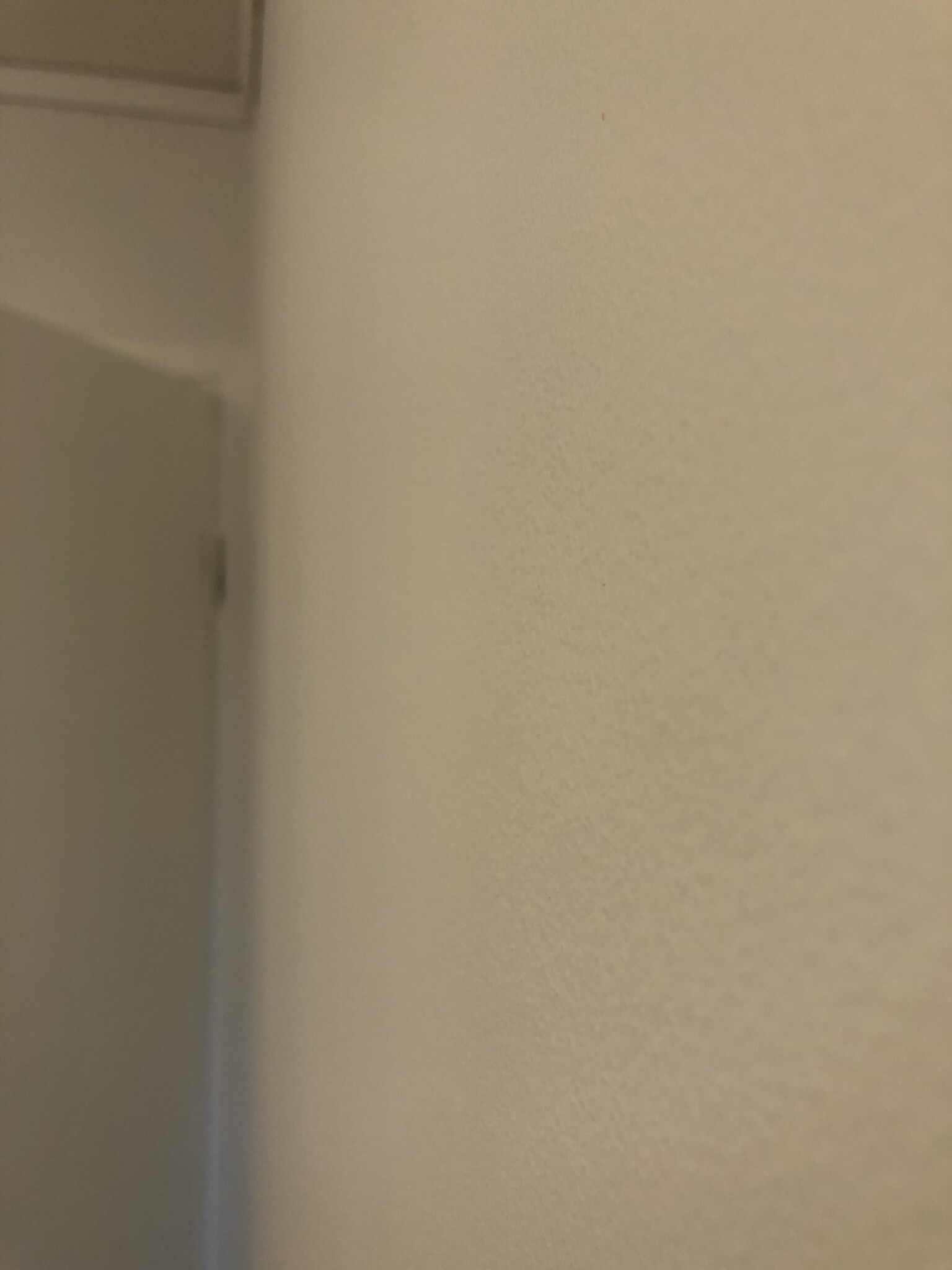
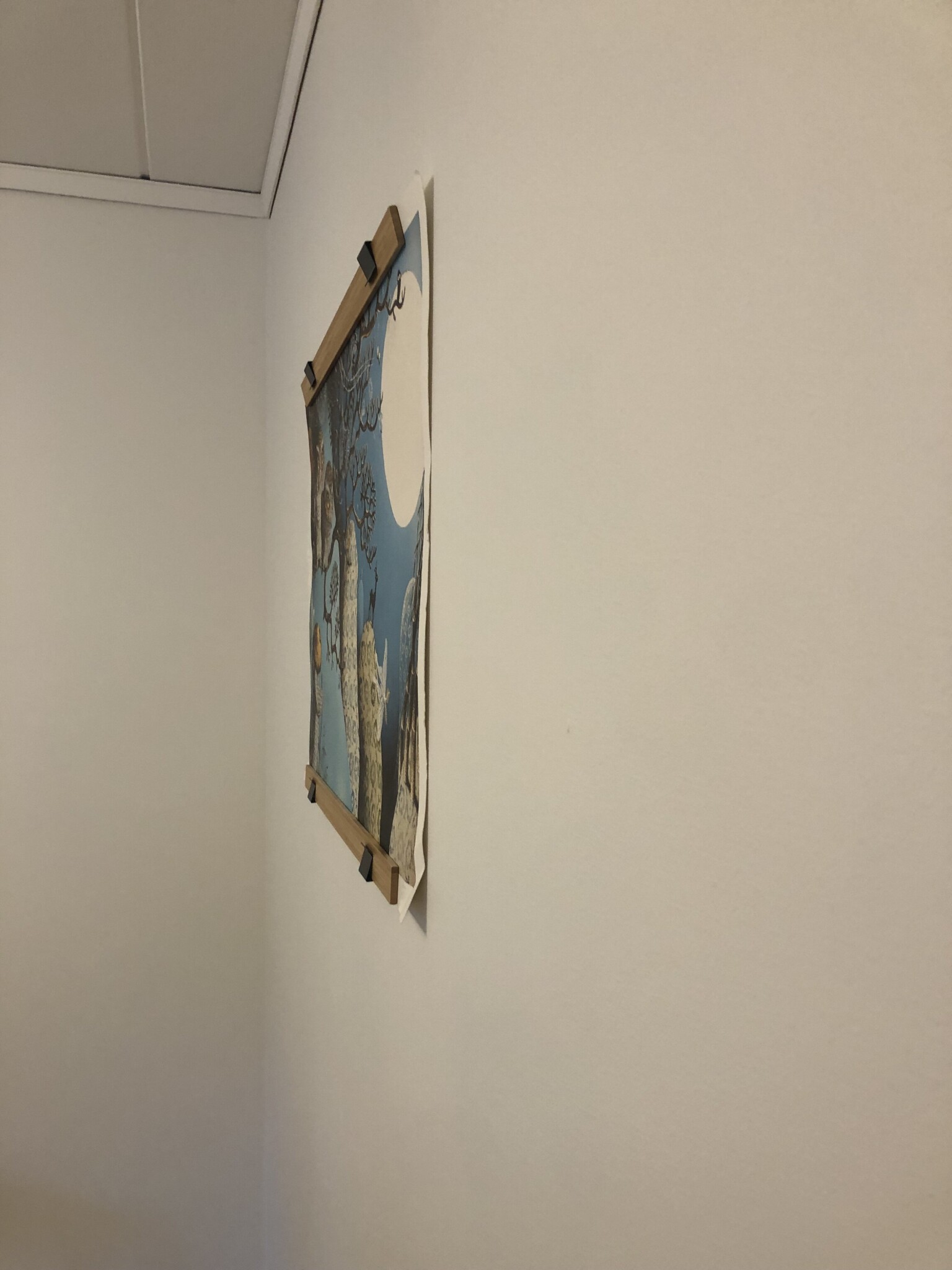
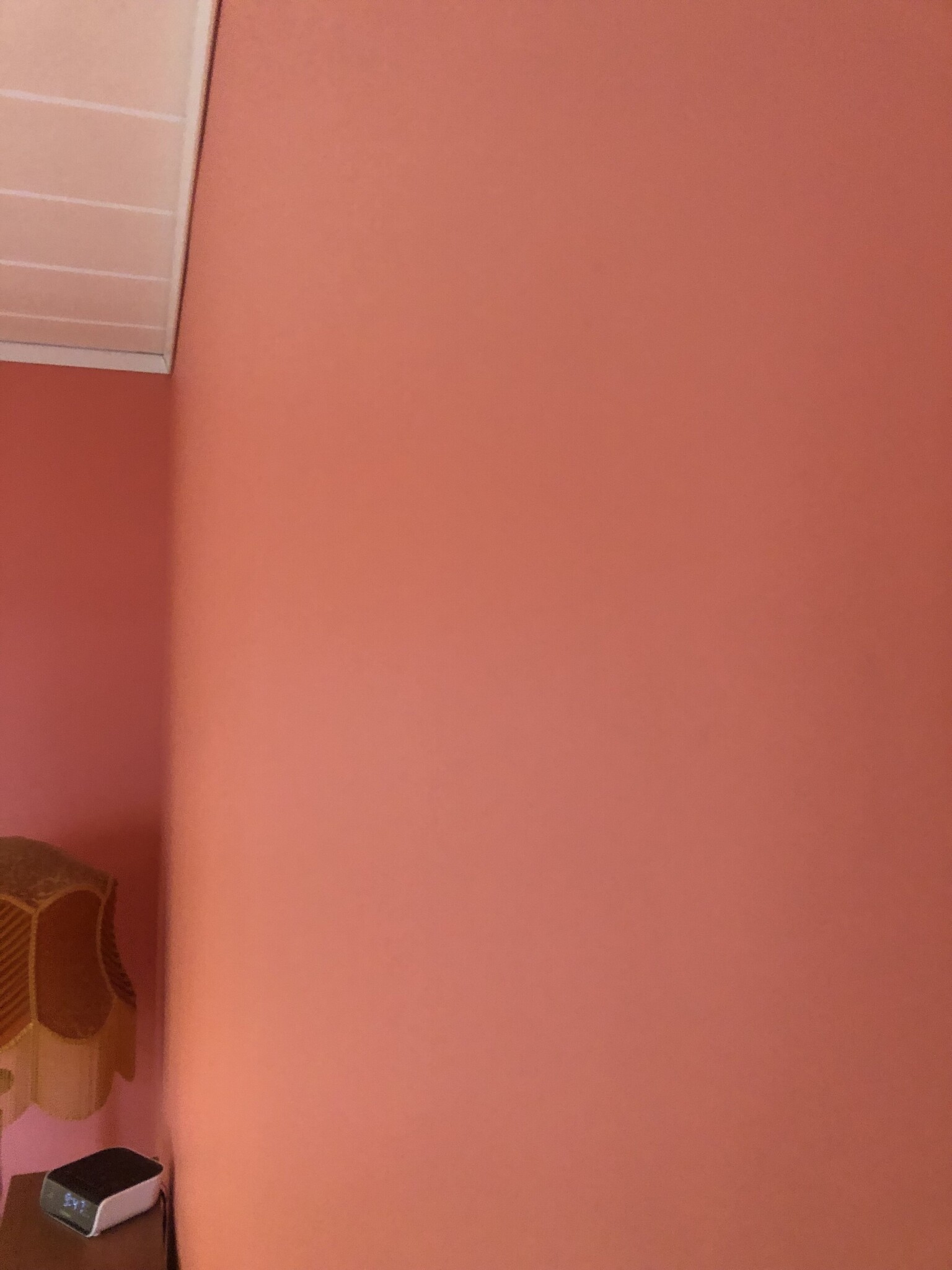
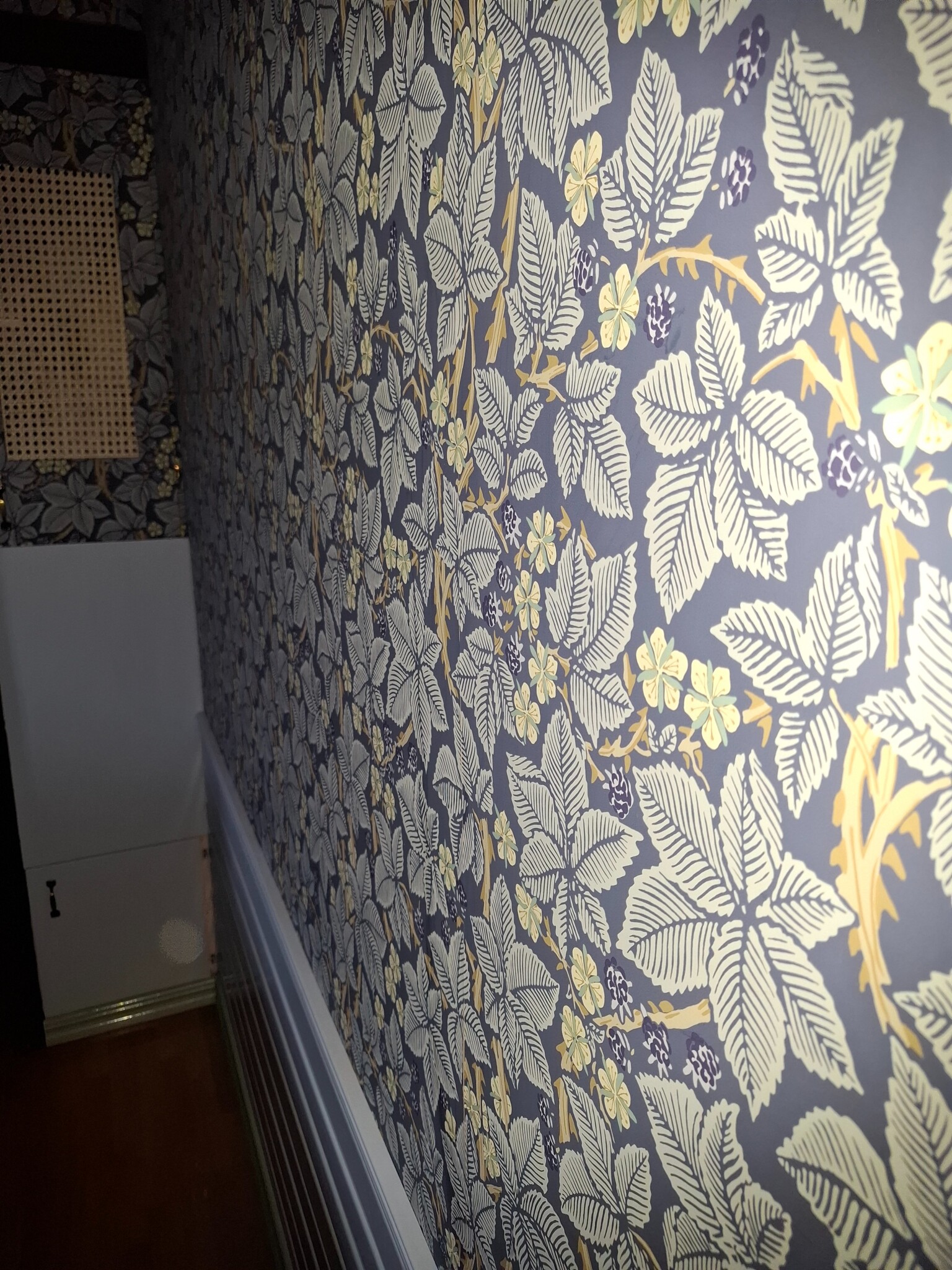
Now I got some pictures! Hard to photograph unevenness I don't feel exists but this is at least my result of putty+paint on treetex.E erkana said:Really! Fun reading! It will probably be wrong (and right) no matter how I choose to do it… 😅
My house also has treetex in the living room, under wallpaper. The painter suggested I keep the treetex there and skim coat on the wallpaper before wallpapering, but if I interpret you correctly, it would be good to remove the wallpaper first? Isn't that quite a hassle?