
1,959 views ·
4 replies
2k views
4 replies
To tear down wall or not? (basement)
Hello, I live in a house from the 40s with a lot of treetex. On the upper floor, I haven't had any notable problems related to it during renovations. Regarding the basement, most rooms have concrete walls. However, there is one room that is a bit more "cozy" in the basement with installed treetex boards, wooden floors, wallpaper, etc.
I thought everything was okay and started tearing down the old textured wallpapers, etc. However, I was a bit bothered by the fact that the wall facing outdoors was slightly "wobbly" in a corner, so I decided to take a closer look at this.
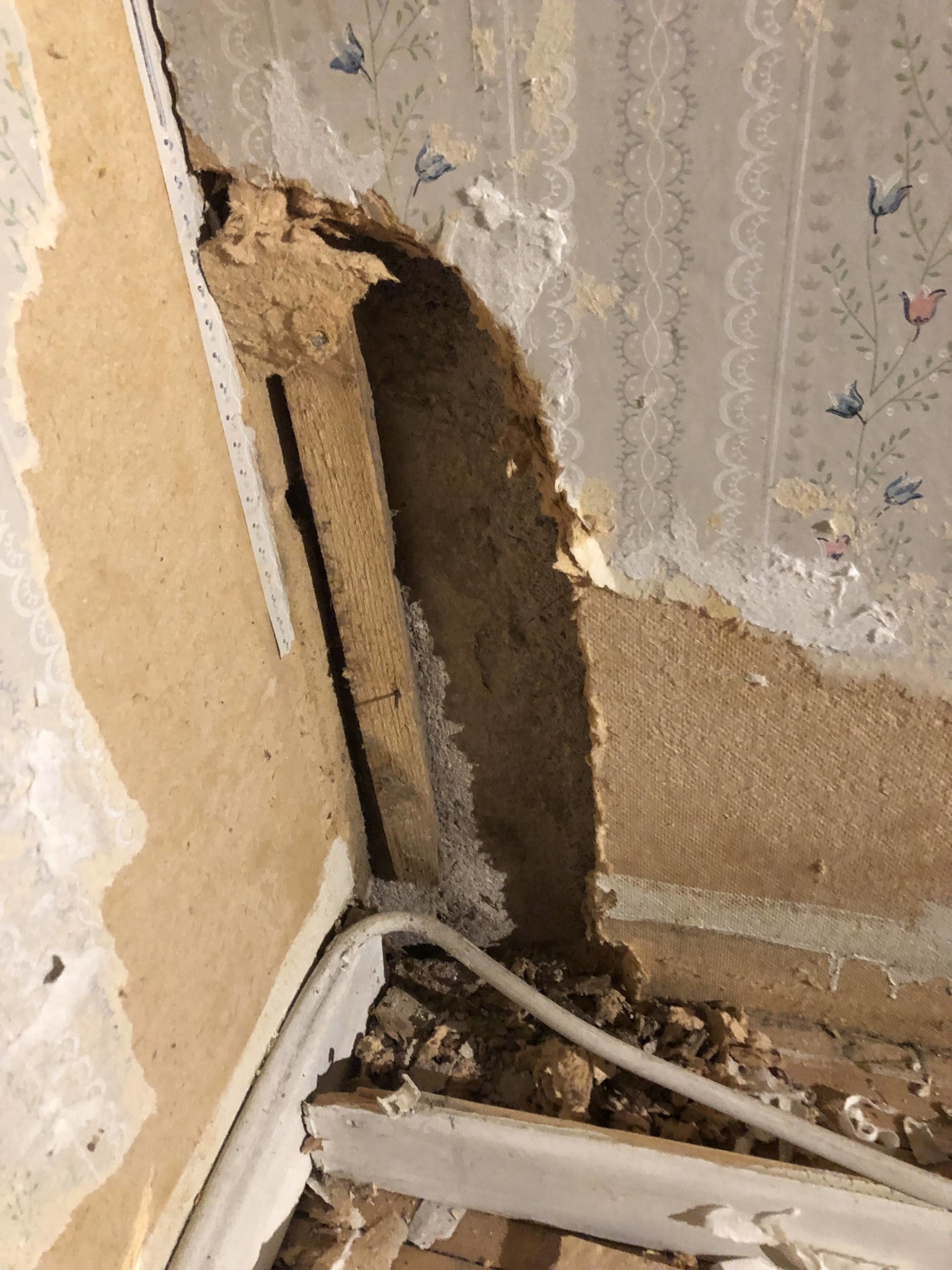
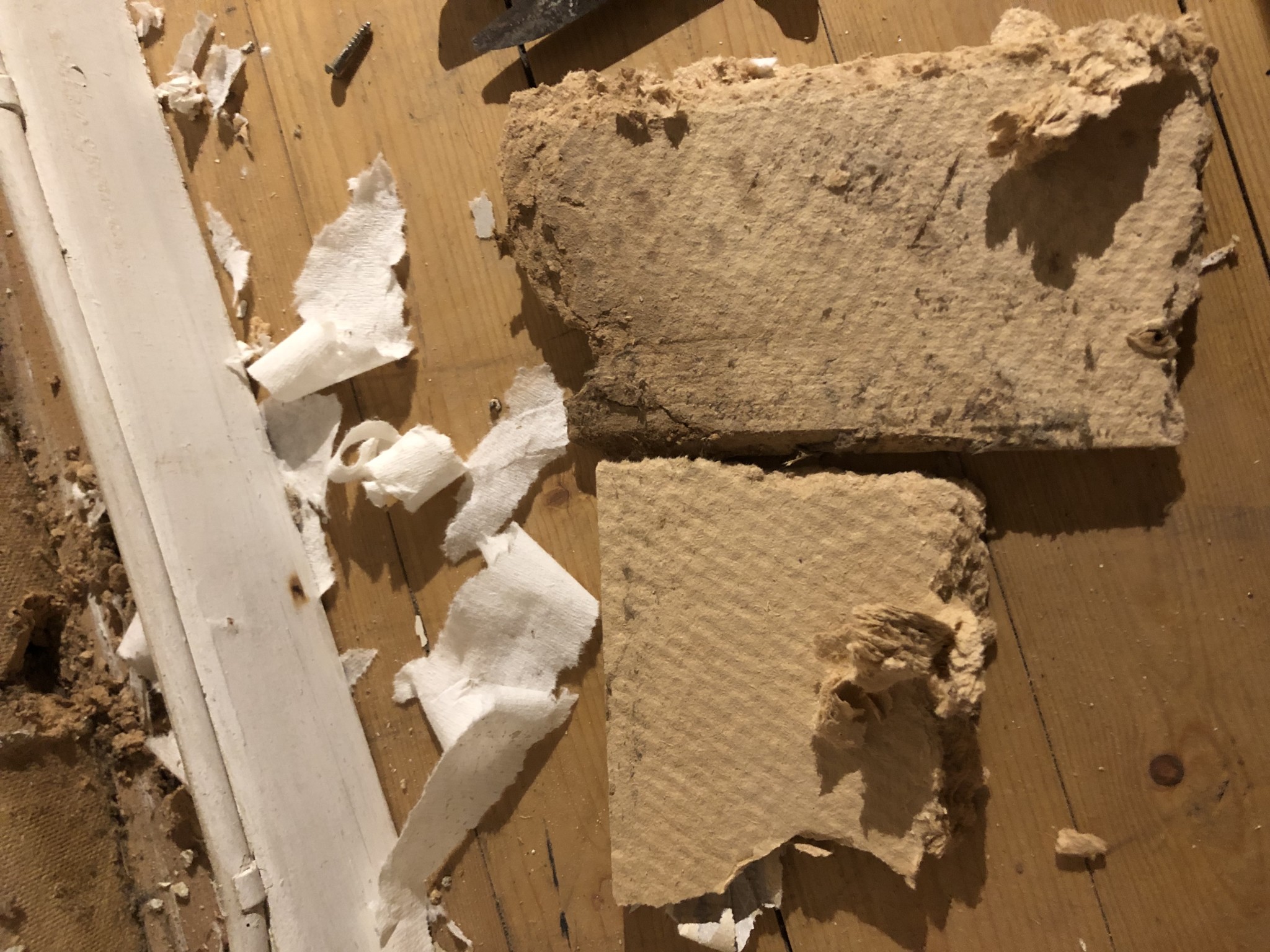
I first noticed a slightly darker color/discoloration at the bottom near the molding and the beginnings of crumbling right at the bottom. I checked some nails that were located low and they seem to be rusty as well. Then, I couldn't help myself, so I cut off a corner as I wanted to see the truth behind the board. It seemed to be mounted on some basic wooden framework, which should be far from optimal from a basement perspective? (though this room is not very much underground). I saw a grayish stud, and the treetex was grayish near the floor but seemed very fresh a little higher up.
Overall, the wall must definitely have been exposed to moisture, which might not be so surprising. But how bad do you think it is? Do I have to replace the whole lot, or can I get away with how it is today? Or is it enough to fix the wall that only faces the garden? I can add that it smells like "wood" in the room! I don't know exactly how it would smell if there was a lot of mold, but I think it mostly smells like wood, as I said...
I would really like to make it as simple and cheap for myself as possible, if I may say so.
Picture 1: Cut-off corner, stud
Picture 2: Comparison of treetex above molding and at the bottom near the molding
Picture 3: Some "treetex crumbs"
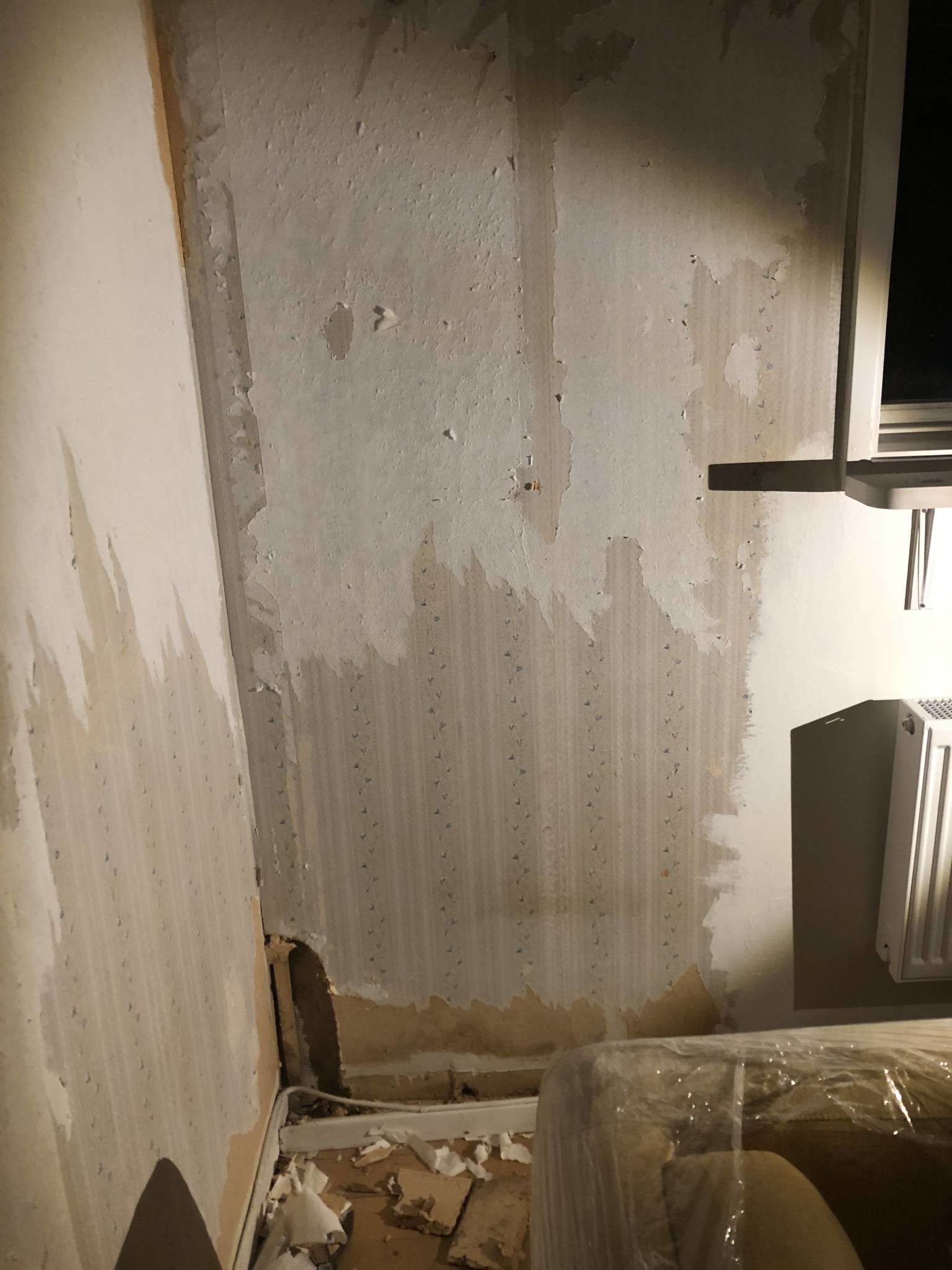
Picture 4: The walls in their entirety
I thought everything was okay and started tearing down the old textured wallpapers, etc. However, I was a bit bothered by the fact that the wall facing outdoors was slightly "wobbly" in a corner, so I decided to take a closer look at this.
I first noticed a slightly darker color/discoloration at the bottom near the molding and the beginnings of crumbling right at the bottom. I checked some nails that were located low and they seem to be rusty as well. Then, I couldn't help myself, so I cut off a corner as I wanted to see the truth behind the board. It seemed to be mounted on some basic wooden framework, which should be far from optimal from a basement perspective? (though this room is not very much underground). I saw a grayish stud, and the treetex was grayish near the floor but seemed very fresh a little higher up.
Overall, the wall must definitely have been exposed to moisture, which might not be so surprising. But how bad do you think it is? Do I have to replace the whole lot, or can I get away with how it is today? Or is it enough to fix the wall that only faces the garden? I can add that it smells like "wood" in the room! I don't know exactly how it would smell if there was a lot of mold, but I think it mostly smells like wood, as I said...
I would really like to make it as simple and cheap for myself as possible, if I may say so.
Picture 1: Cut-off corner, stud
Picture 2: Comparison of treetex above molding and at the bottom near the molding
Picture 3: Some "treetex crumbs"
Picture 4: The walls in their entirety

It doesn't look particularly bad for being a basement, but as you've mentioned yourself, having wooden studs against basement walls is asking for trouble. Unfortunately, patching and repairing is rarely a good method. Sure, you can remove the width of one board, replace it with steel studs and drywall, and then plaster over the transition to the old wall. But whether that's good or not, probably no one here can answer, and if the musty smell in the room is still there, you'll just have to start over by tearing down more...
Click here to reply