
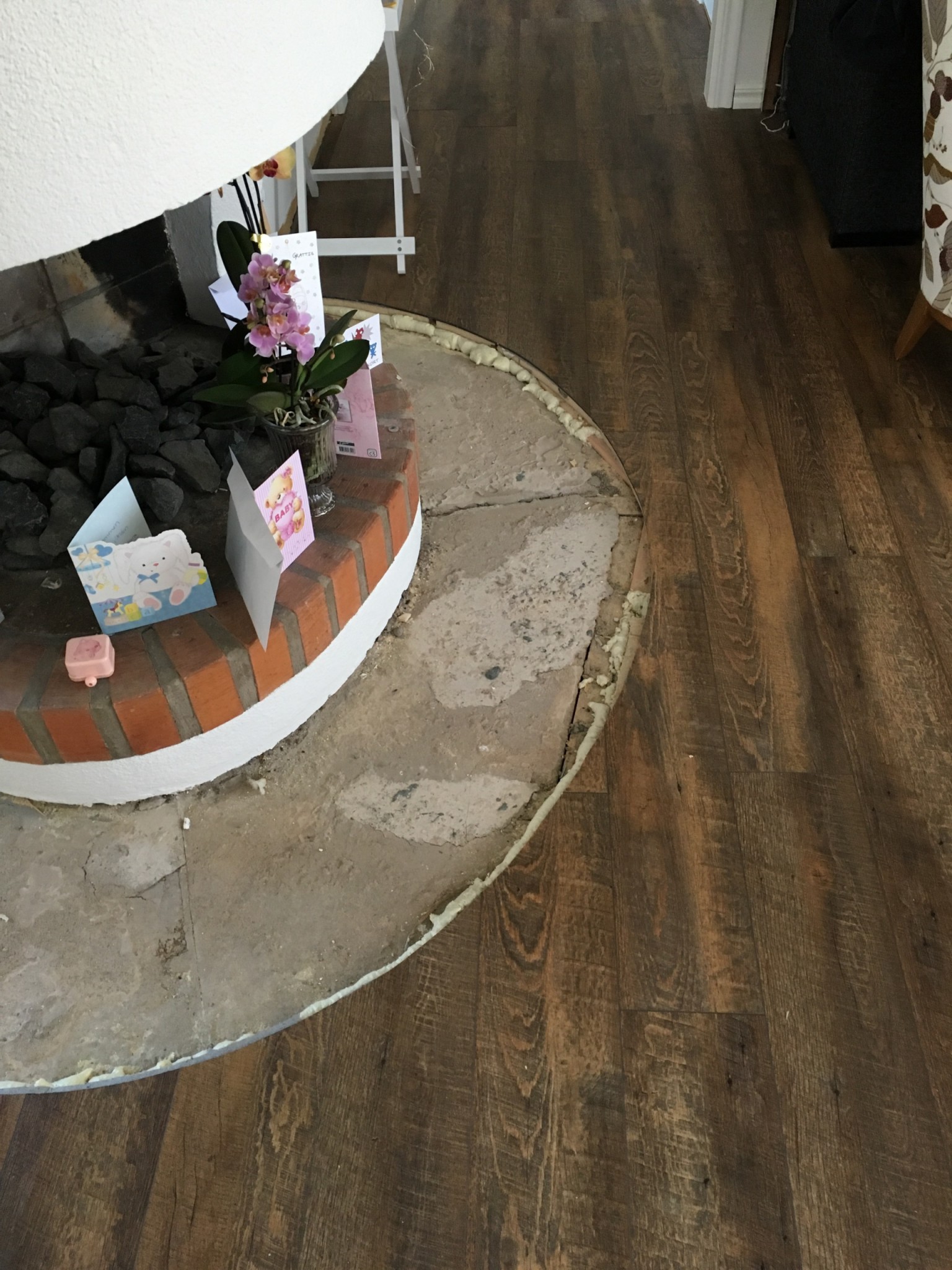
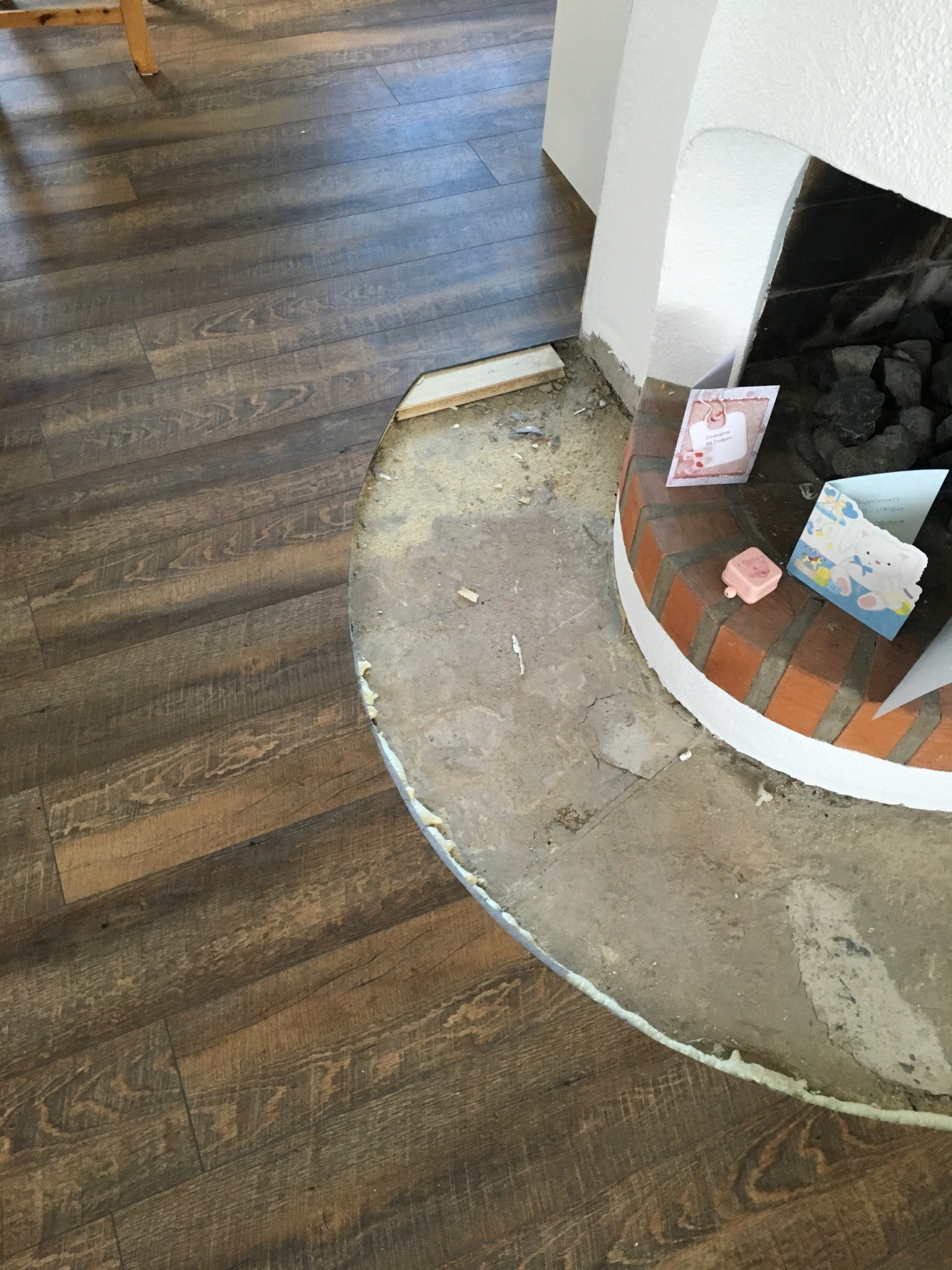
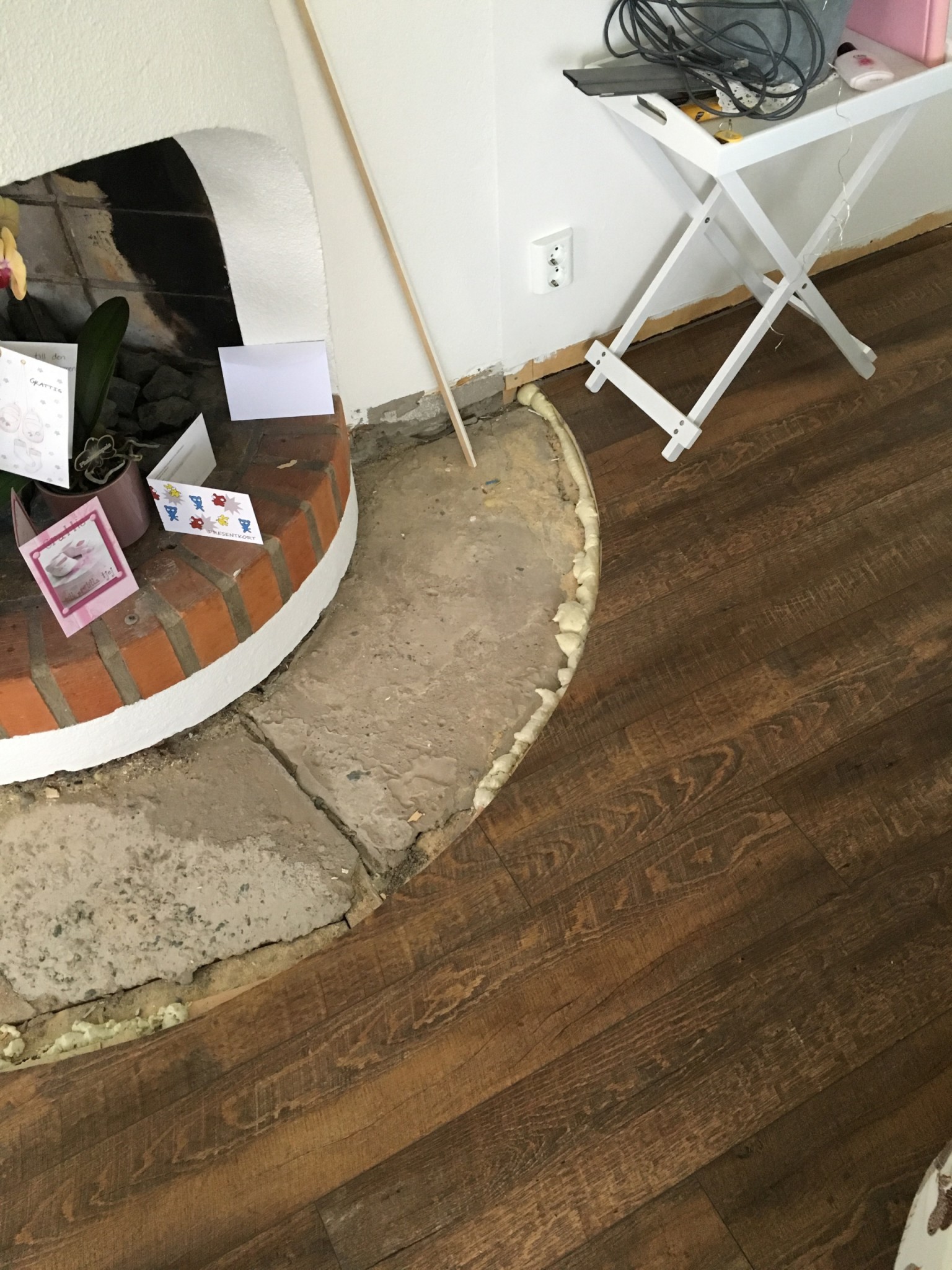

Since there is a fireplace there, there is probably a requirement for some non-combustible material. I would have added a soft joint against the edge of the wooden floor (so that it can move a bit), applied self-leveling compound, and laid some nice tiles.

We have considered those as well, but I'm a bit hesitant about how to break tiles to get the angle. I read that a water jet can work. But it seems difficult to get it really good. Since you can't use a trim to hide the edge between the floor and tiles.Jumos said:


Have been thinking about casting, but we concluded that it won't look as nice if not colored, which is hard to get a shade, you only have one attempt. And trying to get a good/pretty surface on them. You can't exactly sand, as it will cause dust, or use water then. But then it becomes a mess instead.
But great idea with crushing tiles
Edit: do you have any pictures of them?
But great idea with crushing tiles
Edit: do you have any pictures of them?
Last edited:
There are stylish glass options to use as fire protection under stoves, if you can find a frosted one in the right shape perhaps? I'll leave the required groundwork to make it work to the experts, but aesthetically it might be an idea? If you paint the surface under the glass in any color of your choice? Although it will be difficult with the trim against the floor there as well...
There are a lot of options. Regarding the list, you can either shape a curved metal list yourself or have a blacksmith make one, or use a flexible sealant.
Tiles: Create a template from OSB or something similar so that it's easy to measure and measure all the tile pieces and cut with an angle grinder to make nice curves. Mosaic/crushed/river stone is not ideal because it results in too much grout that absorbs dirt near a stove.
Glass: Make a cardboard template and order from a glazier.
Sheet Metal: Make a cardboard template and talk to the sheet metal worker. You may need to fill in the "groove" first.
Spackling: Apply flexible sealant against the wood and fill with self-leveling compound; you should be able to add pigment if you like.
Casting: Concrete/terrazzo and grind down, build a plastic tent around it to control the dust.
Tiles: Create a template from OSB or something similar so that it's easy to measure and measure all the tile pieces and cut with an angle grinder to make nice curves. Mosaic/crushed/river stone is not ideal because it results in too much grout that absorbs dirt near a stove.
Glass: Make a cardboard template and order from a glazier.
Sheet Metal: Make a cardboard template and talk to the sheet metal worker. You may need to fill in the "groove" first.
Spackling: Apply flexible sealant against the wood and fill with self-leveling compound; you should be able to add pigment if you like.
Casting: Concrete/terrazzo and grind down, build a plastic tent around it to control the dust.

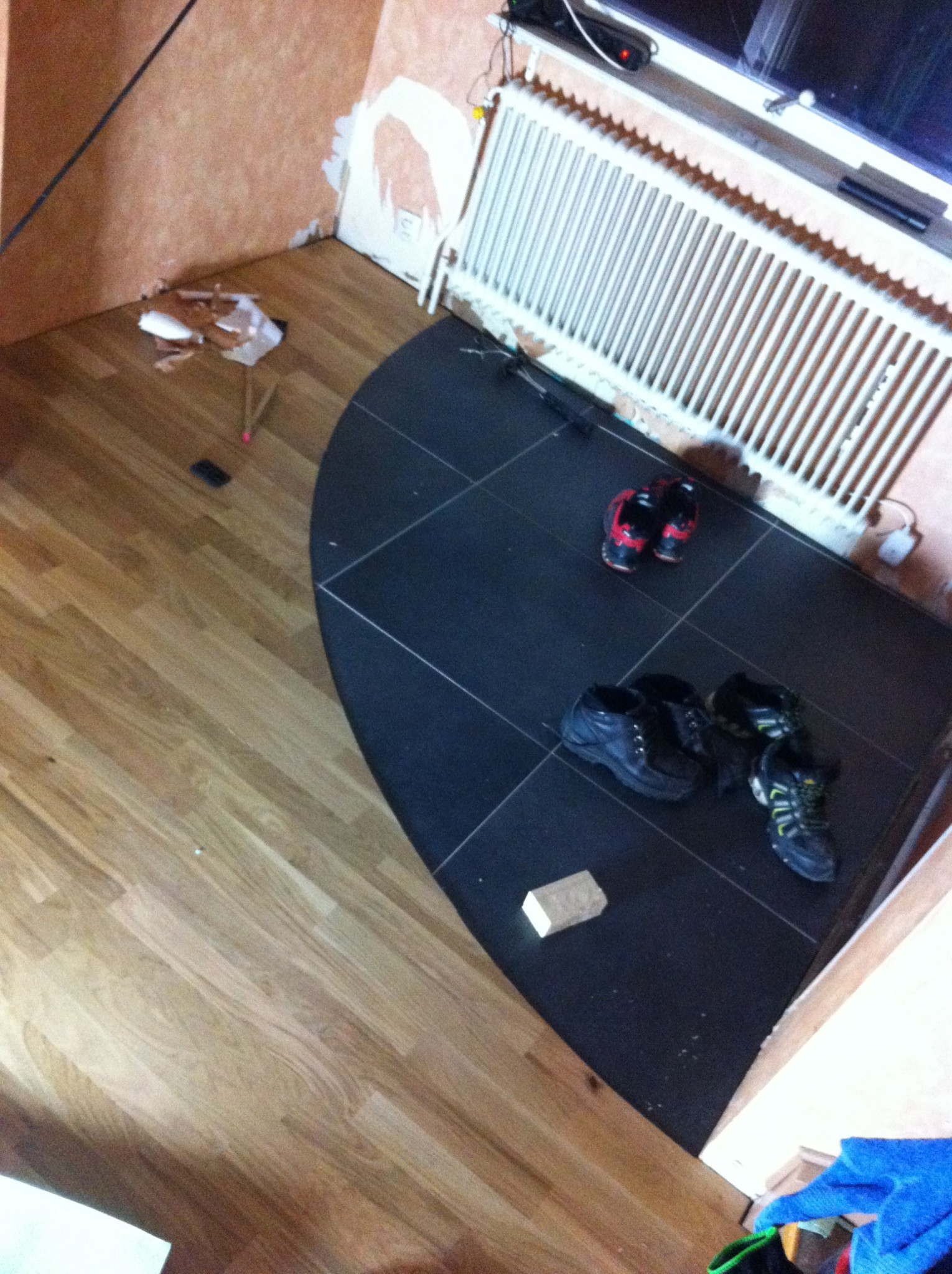
I've seen it in real life when I went into a house (well, it was in two places, two houses), but unfortunately, I don't have any pictures of it. It looked nice anywayberne88 said:I was considering casting as well, but we concluded that it wouldn't look very nice unless colored, which is difficult to get a nice shade, as you only have one go at it. And trying to get a nice/smooth surface on them. You can't exactly sand them, as it will create dust, or water then. But then it becomes mush instead. But a good idea with crushed tiles.
Edit: do you have any pictures of them?
 One house created a slightly wider joint as a "list" against the wooden floor.. the other one I think had small squares in like black tiles and made a rounded edge with them (inside were the irregular/crushed pieces)
 If I come across a picture, I'll keep your thread in mind!
Best regards, Sandra
Click here to reply