I'm considering how to construct a removable "wall" to place against the part of the basement wall that is below ground level. Briefly, the idea is to have metal studs to attach any type of wood to. The construction will then be hung on a couple of mounts on the wall or something; I haven't quite thought that part through yet... What I'm currently wondering is if there is anything that can be used that extends less from the wall than the 45 mm, which is the smallest size for metal studs (at least that I can find)? About 30 mm would be ideal. Tips are gratefully received!
And if anyone's wondering, the purpose is as follows. The wall above ground level is painted. However, the lower part cannot be painted because we would need to re-drain around the house = the walls become too damp. We will not be draining within the next six months or even a year, and the moisture of course means that the paint peels off and the plaster crumbles. This, in turn, means that nothing can be leaned against the wall. With a solution like the one I described above, we could hang up a "protective wall" and place a bed against it for those occasions when our grown-up children come home and need a place to sleep for a few nights.
A sheet metal worker usually books according to the measurements you want, doesn't usually cost much either, I assume you're planning to drain within a year anyway.
Use a hanging rail and support strip such as the Elfa sparring system.
Builds just under 25mm.
You screw the board onto the rail through the rail.
Finish with a strip to hide the support strip.
(If you want to come out a few more mm, just attach a corresponding strip as a spacer) http://elfa.com/sv-se/forvaring/produkter/system/wall-hang
Use hanging rail and carrier rail like Elfa sparring system. Builds just under 25mm.
Ssmurfen72 said:
On the other hand, if the wall is damp, it's probably good to have a substantial distance to allow for ventilation.
I have also thought about Elfa tracks, but I think it might be too small a distance from the wall (it also becomes more expensive than a standard metal frame). However, I think that a slightly smaller air gap can be used than for a permanent wall, since this one will be, so to speak, movable. It will probably hang there for a maximum of a couple of weeks at a time, usually less than one (1) week. It should also not go all the way to the floor, partly because the floor consists of bare concrete slab (moisture again) and partly to allow proper air circulation behind the "wall."
How much area are we talking about? If the idea is just to have a wall when needed, why not make it simple and hang the panels in loops from the ceiling with screwed spacers behind.
How large of an area are we talking about? If the idea is just to have a wall when needed, why not make it simple and hang the panels in loops from the ceiling with screwed spacers behind them.
The wall is about 5 m, but I'm not sure if I'm going to cover the entire length. At least 3 m for a "bed corner." The solution you suggest is exactly how my thoughts are going, except for the loops in the ceiling—I imagine instead something on the outer wall to hook the loose "wall" into. Just a few simple screws, for example, that you insert into one of those holes that look like an upside-down keyhole, you know. Or something. I haven't thought that through yet. Alternatively, it could be free-standing on the floor, but I haven't really considered that either, so I don't have a perfect solution in my mind… However, I do think the best thing is some kind of mounting against the outer wall.
How large an area are we talking about? If the idea is just to have a wall when needed, why not keep it simple and hang the panels on hooks from the ceiling with screwed spacers behind.
I think the easiest thing is to skip everything, hiding moisture is like pointless, everyone knows there's moisture there and if you're going to make a neat solution, it's too much work for a temporary fix. Hang a piece of fabric on the wall the days they are there, but make sure to remove it afterward.
I think the simplest thing is to skip everything altogether; hiding moisture is pointless as everyone knows it's there, and if you want to achieve a nice solution, it becomes too much work for a temporary fix. Hang a piece of fabric on the wall on the days they are there, but make sure to remove it afterwards.
It's not about hiding anything. We already have a sofa bed there today, but it's not very pleasant to sleep there with those walls, and you constantly have to ensure the sofa/bed doesn't end up against the wall. If you accidentally push it against the wall, you'll get small debris in it when you touch the wall because the plaster comes off where the paint has peeled, and the furniture becomes relatively quickly damp. So a removable "wall" would make it feel like a much nicer place to sleep, simply more cozy and nice (also known as an optical illusion ), and we could push the sofa - which we are going to replace with a box spring on legs, but that's less important - against the wall. Easier, nicer, better than it is now. Fabric wouldn't have the same effect/function.
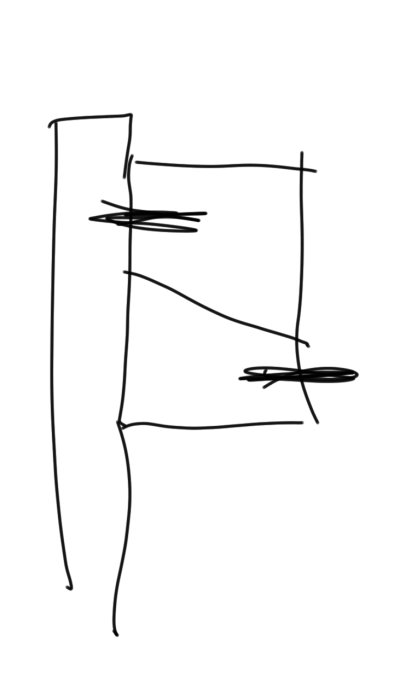
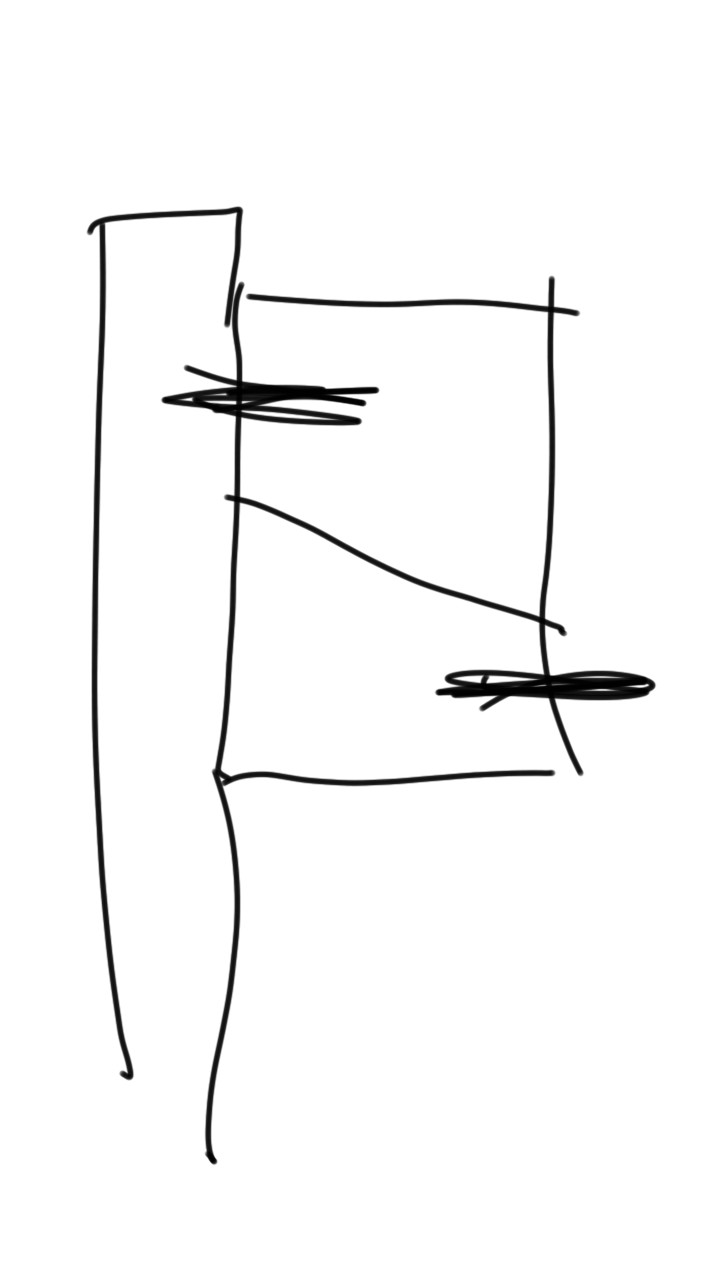
IF you are going to start over completely from scratch, place a miter cut molding with a corresponding one in the board... not entirely correct considering the moisture, but should work until you redo.....
(sorry for the sloppy drawing)
IF you're going to start from scratch, set an angled cut list with the corresponding in the board.. not entirely correct considering the moisture, but should work until you redo it.....
(sorry for the sloppy drawing)
[image]
Otherwise, these or similar ones will work.
Mount one rail vertically, slide in the board, mount the next rail, new board...etc.
There are a multitude of variants that can be used.
Best regards, P-A
Vi vill skicka notiser för ämnen du bevakar och händelser som berör dig.

Mazen said:
 ), and we could push the sofa - which we are going to replace with a box spring on legs, but that's less important - against the wall. Easier, nicer, better than it is now. Fabric wouldn't have the same effect/function.