The headline requires an explanation, so it's just as well to start with some background...
In preparation for the house expansion, I've been contemplating drilling deep piers down to bedrock. It might even be called a pile when they are about and over 4 meters deep... the reason being that I've noticed the geotechnical conditions aren't much to boast about, so I want to secure against settling. One solution would be to build with a basement even in the extension, but I'm not too keen on that...
I'm currently redoing the drainage around the house and ahead of the house expansion, I thought I'd include part of the foundation work while I have the wall open. At the moment, I'm only thinking of the piers I want against the wall to avoid complications with drainage, fabric, etc. when the extension begins.
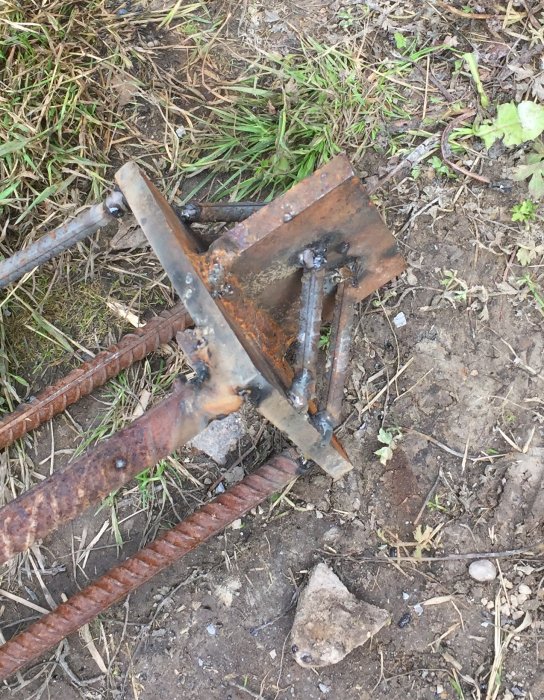
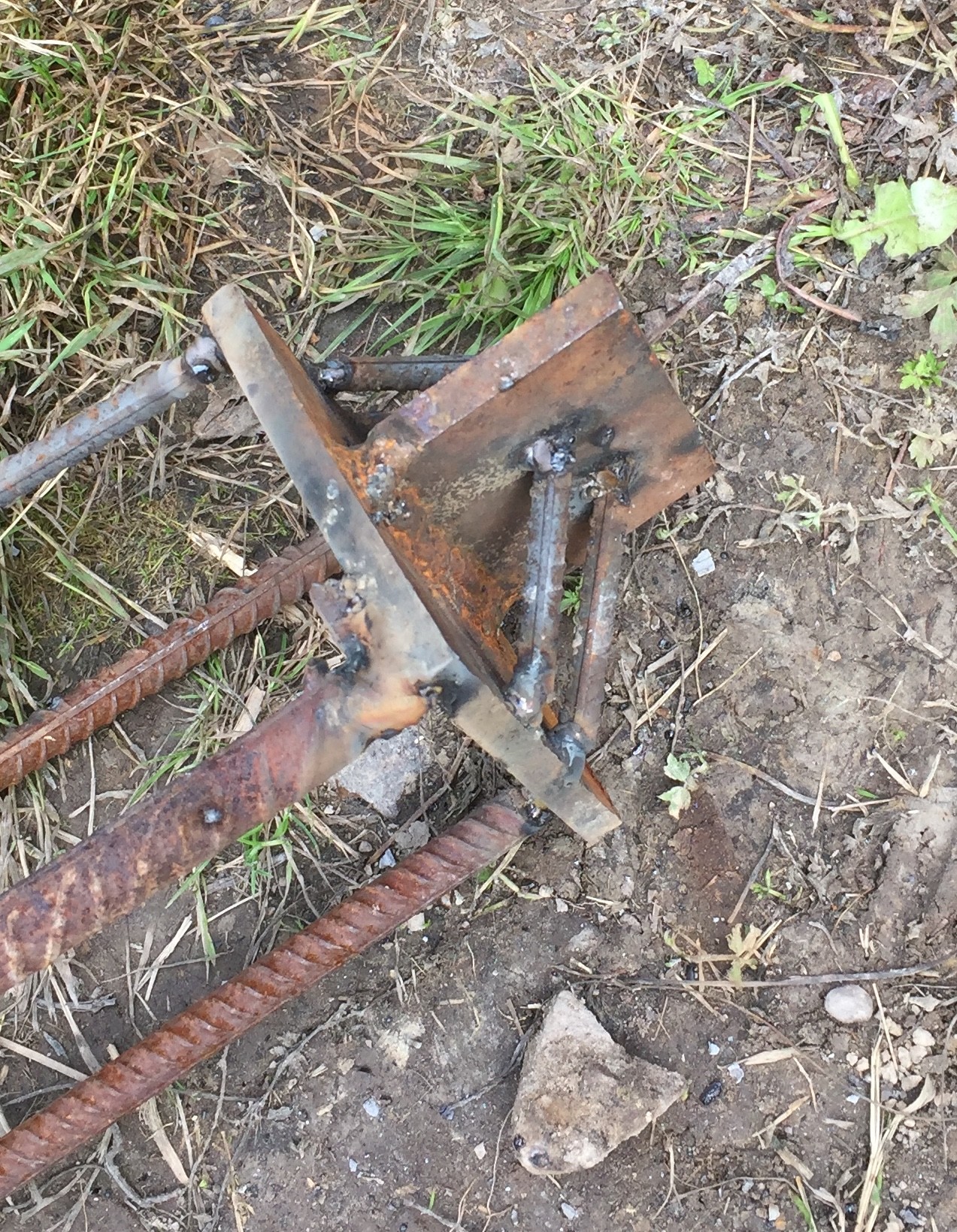
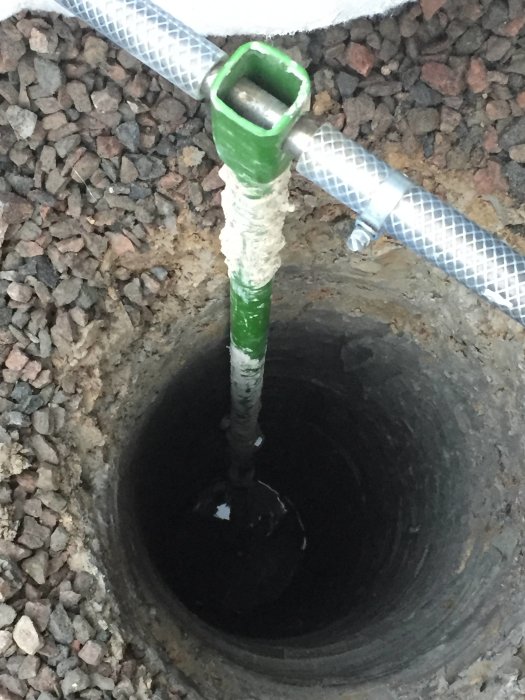
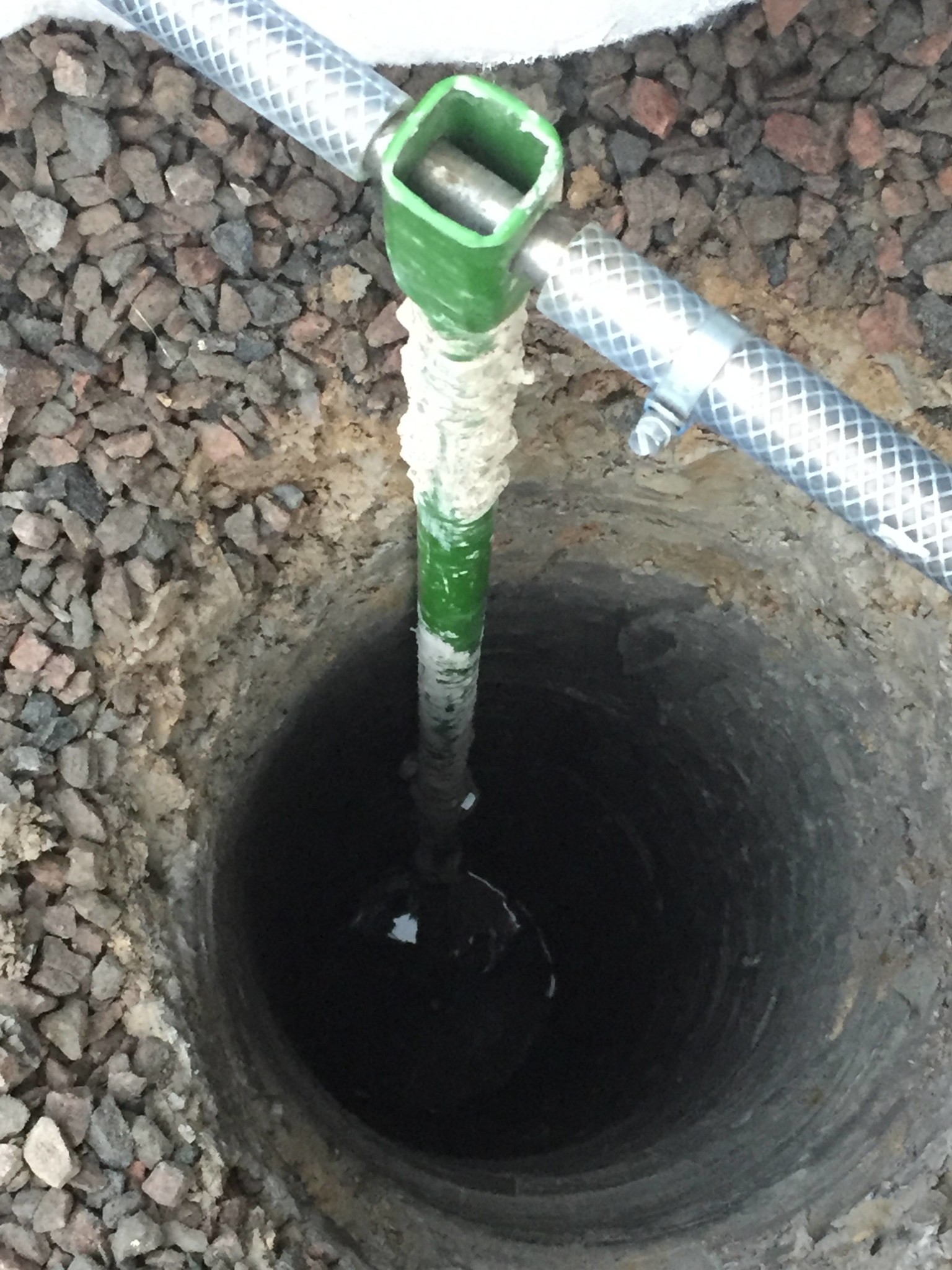
Since I suspected that bedrock wasn't too far down, I tested drilling down (275mm diameter). It worked perfectly, and now I have bedrock at the bottom of the drilled test hole at two meters (about 3.7 m below ground). However, there are a few cm of clay at the bottom that can be tricky to clear out, so I'm considering if anyone has tips on a convenient solution with some type of pile shoe or similar that can be hammered in before or together with the reinforcement. The purpose is to penetrate the clay and get a direct hold against the bedrock with a steel shoe. Is there perhaps a thicker post shoe or something similar? When pouring the concrete, it will settle on top of the clay.
Drilling down iron into the rock might be complicated...
I hope to do something similar soon, so I'm definitely curious about how you solve it. Is the clay at the bottom because the center drill reaches the bedrock? If you're okay with buying another crown, you could cut it off, alternatively after you've finished drilling the holes.
Otherwise, shouldn't it be enough to just drive down a number of reinforcement bars for the pole to rest on?
I hope to do something similar in the near future, so I'm definitely curious about how you solve it. Is the clay at the bottom because the center drill bottoms out against the rock? If you're okay with buying another crown, you could cut it off, alternatively after you've finished drilling the holes.
Otherwise, wouldn't it be enough to just drive down a number of rebar for the stake to rest on?
Yes, the center drill hits the rock, so those centimeters of clay remain. Furthermore, the rock is likely neither smooth nor completely perpendicular to my borehole, so I think a steel shoe is the easiest option to get against the rock. I believe I should weld something together, but I initially wondered if there might be something available in stores that could be used, which would have been convenient. Now, I can barely weld, but this won't be visible, and I think I can manage to put together something that holds.
Yes, the center drill hits the rock so those centimeters of clay remain. Then it's likely that the rock is neither smooth nor completely perpendicular to my drill hole, so I think a steel shoe is the simplest option to get against the rock. I think I should weld something together but first wondered if there might be something in the store that could be used, which would have been convenient. Now I can hardly weld, but this won't be visible, and I should be able to put something together well enough to hold.
Why not just simple rebar then? They will all rest on the rock and share the weight between them. At 5 cm or whatever it becomes, they should be able to take quite substantial loads.
Will they rust away? In my case, the bottom of the hole is below the groundwater at an oxygen-free depth, so I myself wouldn't worry about that part. Your holes look drier.
Or could one complement with some loose bottom cuts if one is going to engage in some utility welding anyway. They don't need to dig deep or be troublesome, so the requirements are likely to be quite low.
If you plan to pour directly into the hole, reinforcements etc. are needed anyway. Then it's easy to put a stronger rebar in the last part that everything will stand on. Or you can throw down some suitably sized stones first and then put down the cage and cast. This will not move in the foreseeable future.
One alternative might be to use a water hose or pressure washer (with an extension rod) to blow away the last layer of clay?
Admittedly, you then get a new problem, having to pump the holes clean before you can start casting, but you should have a clean rock at the bottom for the reinforcement to rest on.
Certainly you then encounter a new problem, having to pump the holes clean before you can start pouring, but you should get clean rock at the bottom for the reinforcement to rest on.
No, concrete is heavier than water, so it will instead become a sort of underwater casting. It's important to release the concrete through a "sock" deep into the hole. This is to avoid aggregate separation. On the other hand, the sock would probably be needed anyway considering how deep the hole is.
Clay or not, the shrinkage of the concrete will still be a problem, so injecting reinforcement into the rock is necessary if you want to counteract settlement.
(Edit: In practice, it probably won't be a problem for a long time, but some settlement will occur)
The casting itself in the hole is not an issue, provided you cast with, for example, a hose and start at the bottom and don't vibrate until all the water has been pushed out of the hole.
As Åsa mentioned above, pipes/hoses are needed anyway; concrete, regardless of type, should preferably not be dropped freely over 150 cm.
The groundwater is still rising in the hole. Yes, a pressure washer might be an option, but the holes will probably get deeper, which could make it tricky. Furthermore, the clay is quite loose against the rock, so there may be a risk of washing forward new clay.
How big of a problem is the drop height really? Especially since it's a coarse concrete bag and 0-8 aggregate... I'd prefer to avoid pipes/hoses. I think I can remove most of the water in the hole with a pump.
Yes, I've thought about coarse stone and it is an option. However, depending on the slope of the rock, one might get a better grip with a steel shoe on the end of the reinforcement.
I forgot to consider shrinkage. Do you think the concrete is hanging on the wall and lifting off from the bottom? You don't see this in wood formwork...
Should it be divided into pour stages where you take 50cm at the bottom first?
Clay or not, the shrinkage of the concrete will become a problem, so injecting reinforcement into the rock is still necessary. If one wants to counteract settlement, that is.
(Edit: In practice, it probably won't be an issue for a long time, but some settlement will occur)
The casting itself in the hole is not a problem, provided you cast with, for example, a hose and start at the bottom and don't vibrate until all the water is pushed up out of the hole.
Just as Åsa mentioned above, pipes/hoses are still needed; concrete, regardless of type, should preferably not be dropped freely over 150 cm.
However, it's difficult to drill this yourself without having extensions of +2 meters for the SDS drill. If you had a rock drill, it would be easier...
Under these conditions, injection might also be difficult to solve?
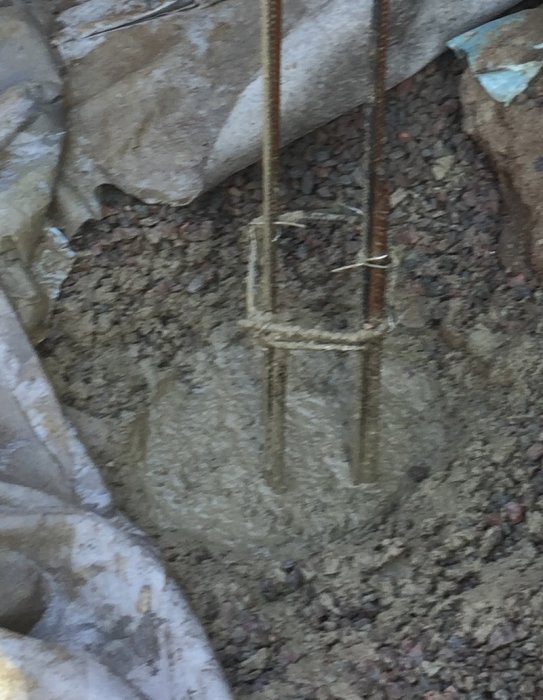
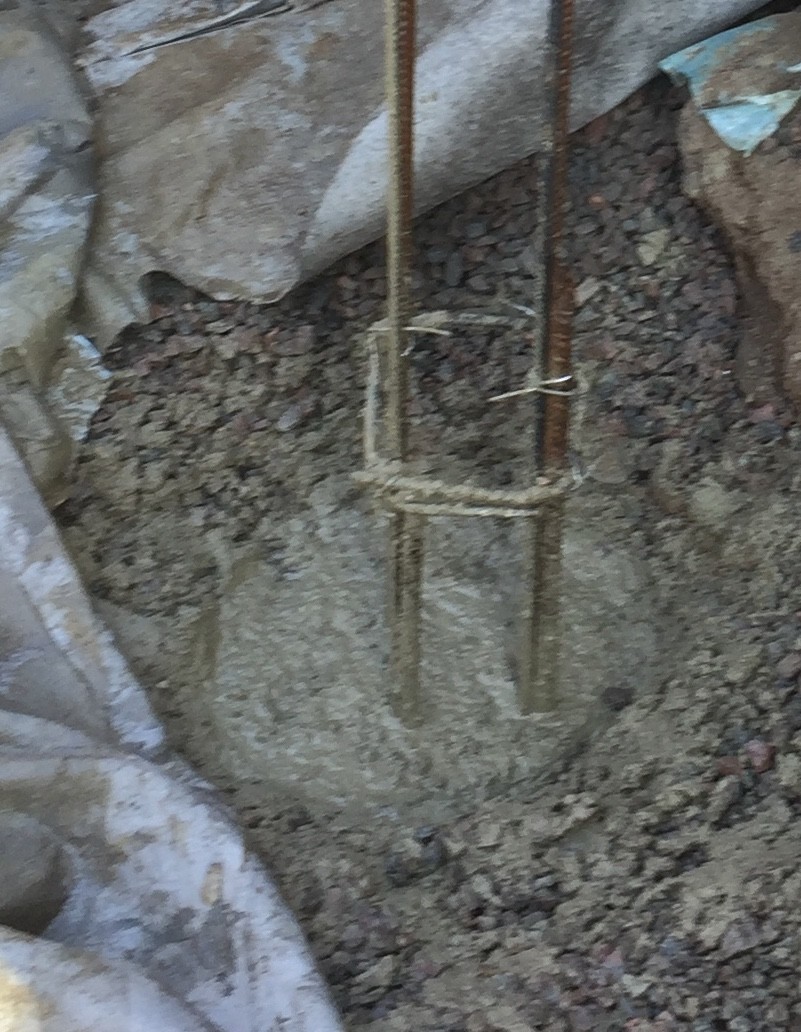
The first hole poured. It ended up with a sort of steel shoe at the bottom of the reinforcement.
Apparently, there was leftover reinforcement with various dimensions in the first hole...
I drilled the second hole excitedly, but here it was deep to the rock. I've pumped out the water several times during the work and have realized that the water from the rock under the hole makes it could act as a well.
Where can one buy a suitable sock for underwater casting? Otherwise, I am considering dropping in drain pipes. A sock might, however, be easier to shorten as the concrete rises.
75mm pipes with a sleeve in one-meter lengths secured together with wood screws maybe?
Some kind of funnel on top...
Last edited:
Click here to reply
Vi vill skicka notiser för ämnen du bevakar och händelser som berör dig.


Slumdog said:
Yes, the center drill hits the rock so those centimeters of clay remain. Then it's likely that the rock is neither smooth nor completely perpendicular to my drill hole, so I think a steel shoe is the simplest option to get against the rock. I think I should weld something together but first wondered if there might be something in the store that could be used, which would have been convenient. Now I can hardly weld, but this won't be visible, and I should be able to put something together well enough to hold.
Dowser4711 said: